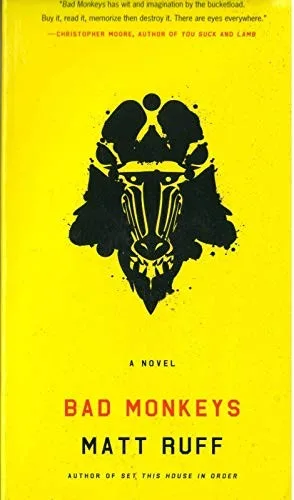
Bad Monkeys
 71
71

Bad Monkeys
Matt Ruff's "Bad Monkeys" is an exercise in narrative disorientation, a novel that deliberately fractures its own coherence to mirror its protagonist's fractured psyche. Jane Doe’s struggle to recall her past as a member of the "Crusade for a Nicer Society" is rendered with a compelling, if at times frustrating, ambiguity. Ruff excels at creating an atmosphere of pervasive unease; the mundane details of Jane's life in the present contrast sharply with the chilling implications of her forgotten actions. The book's central conceit, the pseudo-neurological concept of synaptic pruning used to explain memory alteration, is a clever, if speculative, device that drives the plot. However, the novel's structural complexity, while intentional, occasionally feels like a barrier rather than an invitation into Jane's experience. The pacing can falter as the reader is pulled between Jane's present-day attempts at normalcy and the fragmented revelations of her past. Ultimately, "Bad Monkeys" is a dark, intelligent, and unsettling exploration of identity and consequence, though its deliberate obfuscation may alienate some readers seeking a more straightforward psychological thriller.
📝 Description
71
Matt Ruff's 2008 novel 'Bad Monkeys' begins with a woman confessing to murder.
Jane Doe, a former agent of the "Crusade for a Nicer Society," finds herself in an interrogation room, forced to recount her past. This clandestine organization, which purported to improve the world, employed brutal and morally questionable methods. The narrative unfolds as Jane struggles with fractured memories, guilt over her actions, and a reality that may be as unreliable as her own mind. Ruff blends elements of psychological suspense with speculative fiction, questioning the nature of free will and the definitions of good and evil.
The novel demands close attention from readers who enjoy complex narratives. It suits those interested in the darker corners of the human psyche and the moral compromises made by individuals operating outside societal norms. Readers who appreciate speculative fiction that grounds its unusual premises in a recognizable, albeit unsettling, world will find 'Bad Monkeys' a rewarding experience. The book does not shy away from difficult subjects like trauma and the possibility of redemption.
Published in 2008, 'Bad Monkeys' arrived during a time when literary fiction increasingly incorporated genre elements, particularly those exploring psychological unease and speculative concepts. Ruff's work stands alongside authors who examined societal disillusionment and the fragmentation of self. The post-9/11 atmosphere, marked by heightened anxieties about hidden threats and the rationales for extreme actions, created a fertile ground for stories questioning established social structures and the organizations that uphold them. The novel's focus on hidden societies and their impact on individual lives resonates with a long tradition of occult and conspiratorial narratives.
💡 Why Read This Book?
• Gain an understanding of how Ruff uses the concept of "synaptic pruning" to explore memory manipulation and identity, offering a unique literary lens on psychological trauma. • Experience a narrative structure that intentionally mirrors its protagonist's fragmented mind, challenging conventional storytelling and providing a disorienting yet engaging reading experience. • Examine the ethical implications of "The Crusade for a Nicer Society," a fictional organization that highlights the dangerous allure of extreme methods for perceived societal good, prompting reflection on moral compromise.
⭐ Reader Reviews
Honest opinions from readers who have explored this book.
❓ Frequently Asked Questions
What is the central organization in Matt Ruff's 'Bad Monkeys'?
The central organization is the "Crusade for a Nicer Society," a clandestine group that Jane Doe was formerly a part of. This organization uses extreme and often violent methods to achieve its goals of societal improvement.
What is the primary psychological concept explored in 'Bad Monkeys'?
The novel heavily features a fictionalized concept of "synaptic pruning," used to explain how memories, particularly traumatic ones, can be altered or removed.
When was Matt Ruff's 'Bad Monkeys' first published?
Matt Ruff's novel 'Bad Monkeys' was first published in 2008.
Is 'Bad Monkeys' a supernatural or psychological thriller?
While it contains elements that blur genre lines, 'Bad Monkeys' is primarily a psychological thriller with speculative fiction undertones, focusing on internal struggles and altered realities rather than overt supernatural forces.
Who is the main protagonist of 'Bad Monkeys'?
The main protagonist is Jane Doe, a former operative of the "Crusade for a Nicer Society" who is struggling with fragmented memories of her past actions.
What is the overall tone of 'Bad Monkeys'?
The tone of 'Bad Monkeys' is predominantly dark, disquieting, and psychologically intense, marked by a sense of unease and mystery surrounding the protagonist's history.
🔮 Key Themes & Symbolism
Fractured Identity and Memory
The novel intricately explores the concept of a shattered self, primarily through the protagonist, Jane Doe. Her struggle with memory loss and fragmented recollections of her time with the "Crusade for a Nicer Society" raises profound questions about personal identity. Ruff utilizes the fictionalized "synaptic pruning" to illustrate how traumatic experiences can be excised or altered, leaving individuals adrift from their own histories. This theme explores the philosophical implications of consciousness and the self when the continuity of memory is compromised, suggesting that identity is not a fixed entity but a fluid construct dependent on narrative coherence.
The Perversion of Altruism
At the core of "Bad Monkeys" lies the "Crusade for a Nicer Society," an organization that embodies a dangerous perversion of good intentions. This group believes its extreme, often violent, methods are justified by its ultimate goal of societal betterment. The narrative probes the ethical abyss that opens when the ends are believed to justify any means, regardless of the moral cost. It serves as a critical examination of utopian ideals taken to their logical, destructive conclusions, highlighting how ideology can become a justification for atrocity, blurring the lines between savior and perpetrator.
Agency and Determinism
The novel constantly questions the extent to which individuals are truly in control of their actions. Jane Doe's journey involves grappling with the possibility that her past deeds were not entirely her own, but rather the result of manipulation or conditioning by the "Crusade." This theme explores the philosophical debate between free will and determinism. Ruff presents a world where external forces and deeply embedded psychological mechanisms can dictate behavior, forcing readers to consider the nature of responsibility and culpability when agency is in doubt. The narrative's structure, with its unreliable narrator, further emphasizes this uncertainty.
The Subjectivity of Truth
Through Jane Doe's unreliable narration and the fragmented nature of her memories, "Bad Monkeys" emphasizes that objective truth can be elusive, especially when filtered through trauma and psychological manipulation. The reader, much like Jane, is tasked with piecing together what actually happened, often presented with conflicting accounts or incomplete information. This exploration highlights how personal perception, memory distortion, and external narratives shape our understanding of reality. The novel suggests that 'truth' in such contexts is often a constructed narrative, a personal interpretation of fragmented evidence rather than a definitive account.
💬 Memorable Quotes
Direct passages from the work, attributed to the author.
“Jane Doe’s mind was a battlefield, littered with the debris of forgotten actions.”
— This interpretation highlights the internal conflict and psychological damage experienced by the protagonist. It suggests her past actions, though suppressed, have left indelible marks on her psyche, creating a constant internal struggle.
“She was a ghost in her own life, haunted by the deeds of a stranger she used to be.”
— This interpretation emphasizes Jane's profound disconnect from her past self. It illustrates the theme of fractured identity, where the present self feels estranged from the actions and persona of the past.
💡 Key Ideas
Editorial paraphrase of the work's core concepts — not direct quotes.
The Crusade for a Nicer Society believed that in order to improve the world, one had to be willing to break it.
This quote captures the novel's central theme of radical, destructive methods employed in the name of progress. It underscores the dangerous paradox of an organization dedicated to 'niceness' through brutal means.
Synaptic pruning wasn't just a biological process; it was a tool for crafting reality.
This paraphrase points to the novel's speculative element, re-contextualizing a neurological term as a mechanism for psychological control and memory alteration, central to the plot's unfolding mystery.
Even the most horrific acts could be justified if they served a sufficiently noble purpose.
This paraphrased concept represents the moral relativism explored by the "Crusade." It questions the boundaries of ethical conduct when individuals or groups believe their cause transcends conventional morality.
🌙 Esoteric Significance
Tradition
While "Bad Monkeys" is not explicitly tied to a single esoteric tradition, its themes of hidden knowledge, secret societies, and the manipulation of consciousness can be loosely linked to Gnostic and Hermetic thought. The "Crusade for a Nicer Society" functions as a dark, fallen demiurge, believing it possesses the ultimate truth and the right to reshape reality according to its flawed vision. The protagonist's journey of fragmented memory recovery mirrors the Gnostic quest for gnosis, a path to understanding one's true self and escaping a corrupted reality, albeit within a secular, psychological framework.
Symbolism
The concept of "synaptic pruning" serves as a key symbolic motif, representing not just memory erasure but the deliberate amputation of aspects of the self to conform to an external agenda. The "Crusade for a Nicer Society" itself symbolizes the dangerous potential of organized ideology to become a destructive force, a twisted perversion of societal improvement. Jane Doe's fragmented consciousness symbolizes the fractured modern psyche, struggling to reconcile past actions with present identity in a world where reality can be subjectively manipulated.
Modern Relevance
Contemporary interest in "Bad Monkeys" often stems from its exploration of psychological manipulation and the nature of truth in an era of pervasive media and information control. Thinkers and practitioners interested in critical theory, the psychology of cults, and the ethics of information warfare may find its themes particularly relevant. The novel's deconstruction of seemingly benevolent organizations speaks to modern skepticism towards powerful institutions and the potential for hidden agendas, making it a touchstone for discussions on societal control and individual autonomy.
👥 Who Should Read This Book
• Readers interested in psychological thrillers that explore the darker aspects of human nature and the concept of unreliable narration. • Speculative fiction enthusiasts who enjoy narratives that blend grounded reality with unsettling, mind-bending concepts. • Individuals drawn to philosophical explorations of identity, memory, and the ethical complexities of societal control and radical activism.
📜 Historical Context
Published in 2008, Matt Ruff's "Bad Monkeys" arrived during a period of increased interest in narratives that deconstruct societal norms and explore the psychological underpinnings of clandestine organizations. The post-9/11 world, grappling with issues of surveillance, national security, and the ethics of extraordinary rendition, provided a backdrop where fictional explorations of secret societies and morally compromised actions held particular resonance. Ruff's novel can be seen in conversation with contemporary works that blended psychological thriller elements with speculative fiction, questioning the nature of heroism and the justifications for extreme measures. While not directly engaged with a specific intellectual movement, its themes echo concerns prevalent in the early 21st century regarding the potential for institutions, even those with ostensibly good intentions, to engage in destructive practices. The novel’s reception was generally positive, with critics noting its intricate plotting and dark thematic exploration, though some found its structural complexity challenging.
📔 Journal Prompts
The 'Crusade for a Nicer Society's' methods and goals.
Jane Doe's perception of her own actions.
The implications of 'synaptic pruning' on selfhood.
Moments of perceived reality breakdown.
The justification for extreme measures in pursuit of ideals.
🗂️ Glossary
Crusade for a Nicer Society
A clandestine organization from the novel 'Bad Monkeys' that employs extreme and morally questionable methods to achieve its perceived goal of societal improvement.
Synaptic Pruning
In the context of 'Bad Monkeys,' this is a fictionalized concept representing the deliberate alteration or removal of memories, particularly traumatic ones, to reshape an individual's identity and behavior.
Jane Doe
The protagonist of 'Bad Monkeys,' a former operative of the 'Crusade for a Nicer Society' who struggles with fragmented memories and a fractured sense of self.
Operative
A member of a clandestine organization, such as the 'Crusade for a Nicer Society,' who carries out specific missions or tasks, often involving covert or morally ambiguous actions.
Fractured Psyche
A state of mental or psychological fragmentation, often resulting from trauma or extreme experiences, leading to a distorted perception of reality and a divided sense of self, as seen in Jane Doe.
Unreliable Narrator
A storytelling device where the narrator's credibility is compromised, often due to mental instability, deliberate deception, or memory issues, forcing the reader to question the presented information.
Moral Ambiguity
Situations or characters exhibiting unclear ethical boundaries, where actions cannot be easily categorized as right or wrong, a prominent feature in 'Bad Monkeys.'
🔮 Readers Also Liked
Browse all →








More by Matt Ruff
All books →

More Free Occult Philosophy Books
View all →