Islamic geomancy and a thirteenth-century divinatory device
 61
61

Islamic geomancy and a thirteenth-century divinatory device



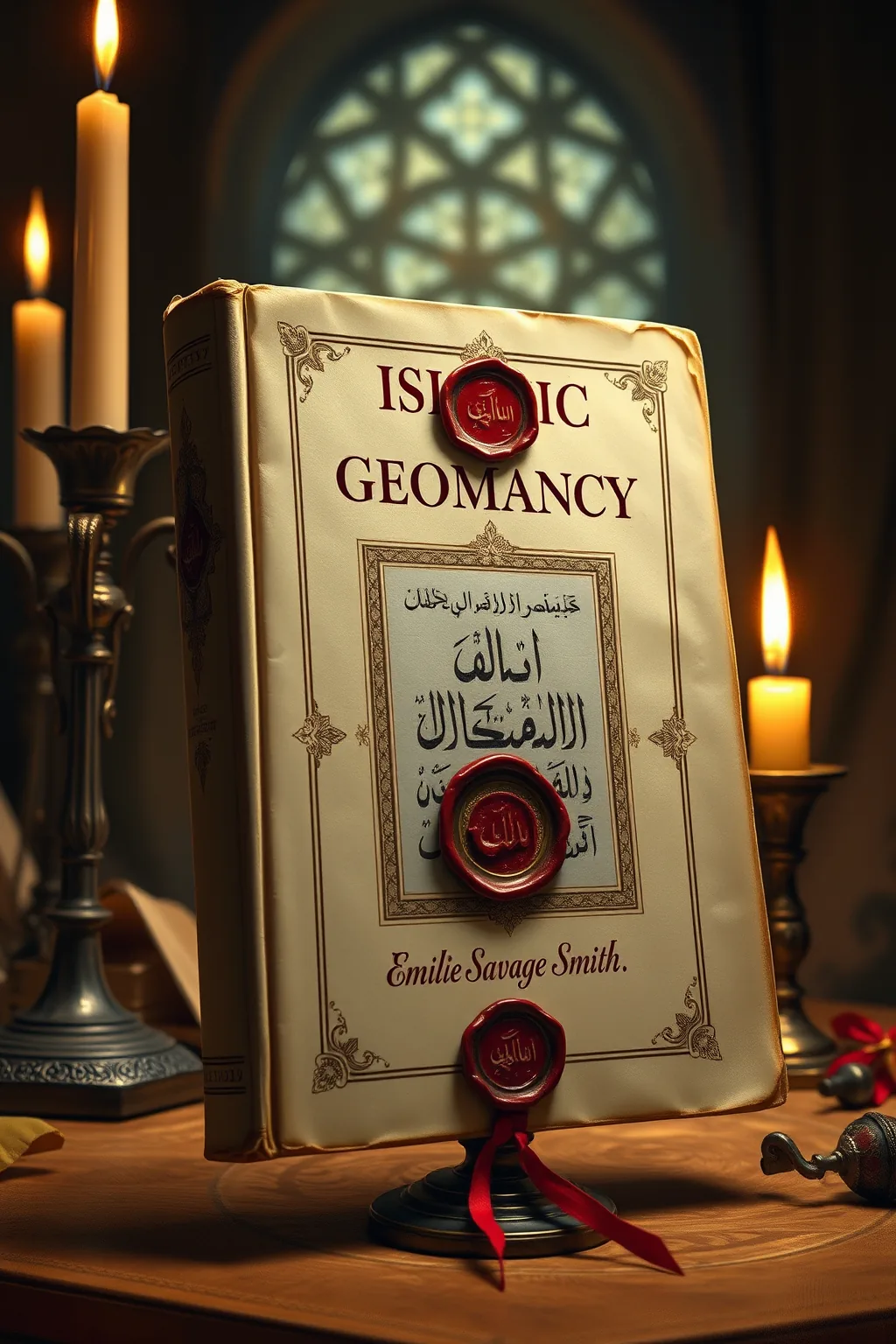
Emilie Savage-Smith's 'Islamic Geomancy and a Thirteenth-Century Divinatory Device' is an extraordinary scholarly achievement that pierces the veil of esoteric history. Savage-Smith masterfully reconstructs the intricate mechanics and philosophical underpinnings of 'ilm al-raml, a practice often misunderstood or overlooked in Western occult studies. Her lucid prose and deep engagement with primary sources bring a forgotten art to vibrant life, revealing its sophisticated symbolic system and its place within Islamic intellectual traditions. This work is essential for anyone seeking authoritative insights into the history of divination, particularly those drawn to the rich, often hidden, spiritual currents of Islam. A must-read for scholars and dedicated practitioners alike.
📝 Description
61
Emilie Savage-Smith's 1997 book examines a 13th-century Islamic divinatory device.
This study analyzes 'ilm al-raml, or Islamic geomancy, focusing on a specific divinatory instrument from the 13th century. Savage-Smith details the historical development and practice of geomancy within Islamic culture, showing its connections to mysticism, astrology, and numerology. The book unpacks the symbolic systems and geometric patterns used in geomantic divination.
It also discusses the philosophical ideas that supported these practices. The author investigates how geomancy was understood as a way to access hidden knowledge and understand cosmic influences. This work provides a thorough look at a complex esoteric tradition and its material artifacts.
Islamic geomancy, or 'ilm al-raml, is a divinatory art that flourished within the Islamic world. It involves casting figures by chance, often using lines drawn in sand or dirt, which are then interpreted based on established patterns and rules. This practice is linked to broader traditions of astrology, numerology, and a philosophical understanding of correspondences between the earthly and celestial realms. The book places this specific 13th-century device within this rich history, showing how such instruments served as tools for both practical divination and intellectual engagement with esoteric cosmology.
💡 Why Read This Book?
Uncover the hidden spiritual mechanics of Islamic geomancy, a potent divination art rooted in cosmic symbolism and esoteric wisdom. This book offers a rare glimpse into a sophisticated divinatory tradition, ideal for scholars, mystics, and practitioners seeking to expand their understanding of historical occult practices and their enduring philosophical significance. Discover the elegance of 'ilm al-raml and its connection to the celestial dance.
⭐ Reader Reviews
Honest opinions from readers who have explored this book.
❓ Frequently Asked Questions
What is Islamic geomancy?
Islamic geomancy, known as 'ilm al-raml,' is an ancient divinatory art practiced in the Islamic world, involving the casting of points or lines to form geometric figures that are then interpreted to answer questions or predict future events.
What is the significance of the thirteenth-century divinatory device?
The device serves as a tangible artifact of the sophisticated geomantic practices of the era, offering concrete evidence of the methods and understanding employed by practitioners of Islamic geomancy during a pivotal period in its development.
Who developed Islamic geomancy?
While its origins are debated, geomancy was adopted and integrated into the intellectual and spiritual traditions of the Islamic world, with scholars and mystics contributing to its development and systematization over centuries.
Is geomancy related to astrology?
Yes, Islamic geomancy is closely related to astrology, often utilizing astrological principles for interpretation and understanding the celestial influences that inform the divinatory figures.
Can modern practitioners use this information?
Absolutely. This book provides a deep historical and theoretical foundation for understanding geomancy, which can inform and enrich modern divinatory practices for those interested in this ancient art.
🔮 Key Themes & Symbolism
The Art of 'Ilm al-Raml
This theme looks at the core principles and practices of Islamic geomancy, exploring its historical development and its intricate system of interpretation. It highlights how the casting of figures from random points was perceived as a method to tap into divine knowledge and understand the subtle forces governing the universe. The focus is on the symbolic language of the sixteen figures, their associations with celestial bodies and elements, and their application in seeking answers to a wide range of inquiries, from personal matters to broader societal concerns.
Symbolism and Cosmic Connections
This theme unpacks the profound symbolic layers embedded within Islamic geomancy. It examines how the geometric patterns are not merely arbitrary designs but represent a microcosm of the macrocosm, reflecting celestial alignments, elemental forces, and spiritual principles. The book explores the collection of symbolism, linking geomantic figures to astrological houses, planetary influences, and even ethical or moral concepts, thereby revealing a sophisticated worldview where the earthly realm is intimately connected to the divine architecture of the cosmos.
The Thirteenth-Century Divinatory Device
This theme centers on the specific artifact discussed in the book – a remarkable thirteenth-century divinatory device. It details its construction, function, and the historical context in which it was created and utilized. The exploration of this device offers a tangible link to the past, illustrating the practical application of geomantic knowledge and the ingenuity of medieval Islamic scholars in creating tools for esoteric inquiry. It provides insight into the craftsmanship and scientific understanding that underpinned these ancient practices.
💬 Memorable Quotes
Direct passages from the work, attributed to the author.
“Geometry whispers the divine will.”
— This highlights the sacred nature of the geometric figures in geomancy, suggesting that their precise forms and relationships carry messages or intentions from a higher power, waiting to be deciphered.
“Each figure, a cosmic echo.”
— This emphasizes the symbolic resonance of geomantic figures, implying that they are not isolated symbols but echoes or reflections of larger cosmic patterns and universal truths.
“From chaos, clarity emerges.”
— This speaks to the transformative power of geomancy, where the act of casting figures from seemingly random elements leads to clear insights and clear answers to complex questions.
“The earth breathes celestial secrets.”
— This poetic phrase suggests that the very earth, through practices like geomancy, can reveal hidden knowledge and cosmic truths that are otherwise inaccessible to ordinary perception.
💡 Key Ideas
Editorial paraphrase of the work's core concepts — not direct quotes.
The sand, a mirror to the unseen.
This quote expresses the core belief in geomancy that the seemingly random patterns formed in the sand are not accidental but reflect a deeper, hidden order of the universe, accessible through careful observation and interpretation.
🌙 Esoteric Significance
Tradition
Islamic geomancy is a core part of esoteric traditions within Islam, often studied by Sufis and scholars of occult sciences. It bridges the gap between the physical and metaphysical, employing a symbolic language derived from Islamic cosmology, numerology, and astrology. Its practice is seen as a method of receiving divine guidance and understanding the subtle currents that influence human affairs, aligning the seeker with the divine order through the interpretation of cosmic patterns manifested in earthly form.
Symbolism
The symbolism in Islamic geomancy is rich and complex, with sixteen primary figures, each possessing unique characteristics, planetary associations, and elemental correspondences. These figures are formed through a specific casting method and are interpreted based on their arrangement, relationships, and inherent qualities. The symbolism extends to their role in representing celestial configurations, personal qualities, and even abstract concepts, offering a complex visual language for understanding the universe and its intricate workings.
Modern Relevance
In contemporary times, Islamic geomancy offers a unique lens through which to explore historical divination practices and their philosophical underpinnings. For practitioners and scholars, it provides a rich source of esoteric knowledge, fostering a deeper understanding of symbolic systems and the human quest for meaning. Its emphasis on observation, pattern recognition, and the interconnectedness of all things speaks to modern interests in mindfulness, intuition, and the study of ancient wisdom traditions, offering a contemplative and analytical approach to divination.
👥 Who Should Read This Book
This important work is essential for scholars of Islamic history, occult sciences, and comparative religion. Aspiring and experienced practitioners of divination, particularly those interested in geomancy or historical occult arts, will find invaluable insights into a sophisticated and often misunderstood tradition. Seekers of hidden knowledge and philosophical depth will be drawn to its exploration of symbolic systems and the medieval worldview. Beginners to esoteric studies can approach it as a foundational text, while advanced practitioners will appreciate its scholarly rigor and detailed analysis.
📜 Historical Context
This book transports us to the vibrant intellectual milieu of the medieval Islamic world, particularly during the Crusader period. The thirteenth century was a time of significant cultural exchange and scholarly advancement, where Islamic science, philosophy, and mysticism flourished. Geomancy, or 'ilm al-raml,' was deeply integrated into this landscape, studied by scholars and mystics alike, often alongside astronomy, mathematics, and medicine. It was not merely a folk practice but a sophisticated system of knowledge, influenced by earlier traditions and adapted to Islamic cosmology. The existence of elaborate divinatory devices from this era underscores the seriousness with which these practices were approached and the advanced understanding of symbolic systems prevalent at the time, reflecting a world where the spiritual and material realms were perceived as intrinsically linked.
📔 Journal Prompts
Reflect on the concept of 'ilm al-raml as a divinely inspired art form. How does this perspective differ from purely secular divination?
Consider the symbolism of the geometric figures. If you were to create your own symbolic language, what principles would guide its development?
Imagine you are an apprentice in the thirteenth century learning geomancy. What challenges and excitements would you anticipate in mastering this art?
How does the connection between the earthly and celestial realms, as depicted in geomancy, influence your understanding of the world around you?
Explore the idea of 'chaos yielding clarity.' How can the process of interpreting seemingly random patterns lead to profound understanding in other areas of your life?
🗂️ Glossary
'Ilm al-Raml
The Arabic term for geomancy, literally meaning 'the science of lines' or 'the science of sand,' referring to the practice of divination through geometric figures cast on a surface.
Geomantic Figures
The sixteen distinct geometric patterns generated during a geomantic reading, each possessing its own name, characteristics, and symbolic associations.
Astrological Houses
In astrology, the twelve divisions of the celestial sphere, each associated with different aspects of life and experience, which are often integrated into geomantic interpretations.
Esoteric
Relating to or accessible only by a relatively small number of people with a specialized knowledge or interest; mystical or secret.
Divination
The practice of seeking knowledge of the future or the unknown by supernatural means, often through interpreting omens or signs.
This book appears in 3 collections
🔮 Readers Also Liked
Browse all →









More by Emilie Savage-Smith
All books →
From the “Geomancy” Collection
View all →







More Free Divination & Tarot Books
View all →