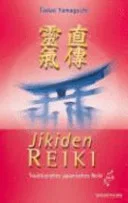
Jikiden Reiki
 83
83

Jikiden Reiki
Tadao Yamaguchi’s *Jikiden Reiki* offers a compellingly straightforward account of the energy healing modality as practiced in its original Japanese context. The book’s strength lies in its directness; it eschews elaborate metaphysical theorizing in favor of practical instruction and historical fidelity. Yamaguchi’s lineage is presented as the most authentic conduit to Usui Mikao’s original vision, a claim that, while potentially contentious for practitioners of other styles, provides a clear anchor for the reader. The clarity with which concepts like 'Byosen' and 'Kekko Ho' are explained is commendable, offering tangible methods for diagnosis and treatment. However, the very focus on direct transmission and adherence to tradition might leave those accustomed to more expansive interpretations of Reiki feeling that some of its broader spiritual or therapeutic potential is understated. A passage detailing the precise hand positions for treating specific ailments, for instance, feels both highly practical and somewhat restrictive. Ultimately, *Jikiden Reiki* serves as an essential, unvarnished primer for understanding the roots of Usui's system.
📝 Description
83
Tadao Yamaguchi's Jikiden Reiki transmits Usui Mikao's original teachings, emphasizing direct application.
Jikiden Reiki details the original principles of Mikao Usui's system, as passed down through Tadao Yamaguchi's lineage. This approach prioritizes practical use and direct transmission, differing from some Western adaptations. The book explains Usui's initial vision for Reiki as a path for personal growth and healing, rather than solely a therapy. It covers the core techniques and philosophical ideas that have remained unchanged since the system's beginning.
This text suits Reiki students and practitioners who want to grasp its roots and essential principles from a recognized master in the Jikiden tradition. It will appeal to those who favor a straightforward learning method, without what they might see as unnecessary additions. Readers interested in the historical and philosophical background of energy healing practices, especially those from Japan, will find value here. It is also for those wishing to deepen their practice by returning to Usui Mikao's original intent.
Emerging in early 20th century Japan, Reiki was founded by Mikao Usui, who blended healing methods with Buddhist philosophy for self-improvement. The Jikiden system, preserved by Tadao Yamaguchi, asserts a direct continuation of Usui's original teachings. This contrasts with later Western developments, which began in the 1930s. Jikiden Reiki focuses on maintaining the original Japanese structure, including specific terminology and initiation rites, presenting a particular interpretation within the broader spectrum of energy healing traditions.
💡 Why Read This Book?
• Learn the core principles and techniques of Usui Mikao's original Reiki system, as transmitted through the Jikiden lineage, to gain a foundational understanding distinct from later Western adaptations. • Understand the concept of 'Byosen' and how to apply the 'Kekko Ho' blood purification technique, providing practical diagnostic and healing methods directly from the founder's original teachings. • Grasp the historical context of Reiki's emergence in early 20th century Japan and its philosophical underpinnings, offering a unique perspective on spiritual healing practices.
⭐ Reader Reviews
Honest opinions from readers who have explored this book.
❓ Frequently Asked Questions
What is Jikiden Reiki and how does it differ from other Reiki styles?
Jikiden Reiki is a system that aims to preserve the original teachings of Mikao Usui as passed down through the lineage of Tadao Yamaguchi. It emphasizes direct experience and practical application, often using original Japanese terminology and techniques that differ from many Western-developed Reiki styles.
Who founded the original Reiki system?
The original Reiki system was founded by Mikao Usui, a Japanese Buddhist, in the early 20th century. He developed it as a method for self-improvement and healing.
What is the concept of 'Byosen' in Jikiden Reiki?
'Byosen' refers to the detection of 'poison' or blockages in the body's energy field through the practitioner's hands. It is a diagnostic method used to identify areas needing treatment.
When was Reiki first introduced to the West?
Reiki was introduced to the West in the 1930s by Hawayo Takata, a Japanese-American woman who learned Reiki from Chujiro Hayashi, a student of Mikao Usui.
What are the five Reiki principles (Gokai)?
The five Reiki principles are ethical and spiritual guidelines intended to promote well-being and personal growth. They typically include principles related to living in the present, not worrying, being grateful, working diligently, and showing compassion.
What is 'Kekko Ho'?
'Kekko Ho' is a specific technique within Jikiden Reiki focused on blood purification. It is considered one of the original methods for improving overall health and vitality.
🔮 Key Themes & Symbolism
Direct Transmission Lineage
The book strongly emphasizes the concept of direct transmission, tracing the teachings of Usui Mikao through a specific lineage to Tadao Yamaguchi. This focus highlights the importance of maintaining the integrity of the original methods and attunements, differentiating Jikiden Reiki from other branches that have evolved over time. The text posits this unbroken chain as crucial for the authentic practice and efficacy of Reiki, presenting a clear argument for the preservation of Usui's initial intent and techniques.
Byosen and Kekko Ho
Central to the practical application of Jikiden Reiki are the concepts of 'Byosen' and 'Kekko Ho.' Byosen involves the practitioner's hands sensing energetic blockages or 'poison' in the recipient's aura and physical body, guiding the treatment. Kekko Ho, or blood purification, is presented as a fundamental technique for enhancing vitality. These elements are detailed not as abstract theories but as concrete, actionable methods for healing, reflecting the system's emphasis on experiential learning and tangible results.
Usui's Original Intent
A recurring theme is the restoration and adherence to Mikao Usui's original vision for Reiki. The book argues that while Reiki has spread globally, its essence as a path for both physical healing and spiritual self-improvement (Anshin Ritsumei) has sometimes been diluted. Jikiden Reiki is presented as a return to this original purpose, advocating for a balanced approach that integrates personal growth with therapeutic practice, rather than focusing solely on external healing modalities.
Simplicity and Practicality
The approach advocated in Jikiden Reiki is characterized by its deliberate simplicity and practical focus. The text avoids complex philosophical discussions or esoteric jargon, instead prioritizing clear instructions and direct experience. This ethos is evident in the explanation of techniques and the emphasis on consistent, dedicated practice. The aim is to make the healing art accessible and effective for anyone willing to learn and apply its methods diligently, mirroring Usui's own pragmatic approach.
💬 Memorable Quotes
Direct passages from the work, attributed to the author.
“The essence of Reiki is direct experience.”
— This statement underscores the Jikiden Reiki philosophy that true understanding and mastery come not from theoretical study but from consistent, hands-on practice and personal application of the techniques.
“Byosen is the 'poison' in the body.”
— This highlights the diagnostic aspect of Reiki in the Jikiden system, where the practitioner's intuition is used to detect energetic imbalances or 'blockages' that manifest as discomfort or illness.
“Kekko Ho aims to purify the blood.”
— This refers to a specific Jikiden Reiki technique focused on improving circulation and vitality, presented as a fundamental method for enhancing the body's natural healing capabilities.
“Reiki is for self-improvement and healing others.”
— This captures the dual purpose of Reiki as taught in the Jikiden tradition: fostering personal spiritual growth and providing a means to alleviate suffering in others, reflecting Usui's holistic vision.
“Maintain the original way of teaching.”
— This emphasizes the Jikiden lineage's commitment to preserving the methods and principles of Mikao Usui without alteration, distinguishing it from adaptations that have occurred in other Reiki traditions.
🌙 Esoteric Significance
Tradition
Jikiden Reiki aligns with the broader Japanese spiritual traditions that blend Buddhist and Shinto elements, particularly concerning personal cultivation and healing. While not strictly Hermetic or Kabbalistic, it shares with these Western esoteric paths a focus on energetic principles and self-transformation. Its distinctiveness lies in its emphasis on practical application and a lineage-based transmission model, seeking to reconnect with what is presented as Usui Mikao's original, relatively unadorned spiritual-healing system.
Symbolism
The key symbols in Jikiden Reiki, often referred to as 'Kanji,' are integral to the attunement and practice. While not extensively detailed in every text, these symbols represent specific energetic frequencies and intentions. For instance, the Cho-Ku-Rei symbol is often associated with power and grounding, while Sei-Hei-Ki relates to emotional balance and purification. Their use is primarily functional, intended to enhance the flow of Reiki energy during practice and attunements, rather than for complex meditative contemplation.
Modern Relevance
Contemporary practitioners and schools of Jikiden Reiki continue to offer training worldwide, emphasizing its authentic transmission. Thinkers and practitioners interested in comparative energy healing systems, or those seeking a direct, less Westernized approach to Reiki, often turn to Jikiden resources. Its focus on practical application and a clear lineage also appeals to those in holistic health fields looking for established, disciplined modalities. The system's emphasis on self-healing aligns with modern trends in personal wellness and mind-body practices.
👥 Who Should Read This Book
• Students of energy healing seeking a direct, unadulterated understanding of Reiki's origins and foundational techniques as taught by Usui Mikao. • Practitioners of other Reiki styles curious about the historical development and distinct methodologies of the original Japanese system. • Individuals interested in Japanese spiritual practices and philosophies, looking for a practical application rooted in early 20th-century Japanese culture.
📜 Historical Context
Mikao Usui founded Reiki in Japan around 1922, during a period when interest in various spiritual and healing practices, including Budo (martial arts) and Shinto-Buddhist syncretism, was prevalent. Usui's system drew upon existing Japanese philosophies and therapeutic techniques. The Jikiden Reiki lineage, as presented by Tadao Yamaguchi, asserts its direct continuity from Usui through his student Chujiro Hayashi and Hayashi's student Chiyoko Yamaguchi (Tadao's mother). This contrasts with the more widely known Western transmission initiated by Hawayo Takata in the 1930s, which led to the development of numerous Reiki styles. While Usui's work was not subject to widespread censorship, the rapid proliferation of spiritual movements in early 20th century Japan sometimes led to scrutiny from authorities. The Jikiden system's emphasis on maintaining original Japanese terminology and practices positions it as a conservative branch within the broader Reiki movement, aiming to counter perceived Western 'dilutions'.
📔 Journal Prompts
The concept of Byosen and its application to personal well-being.
Reflecting on the five Reiki principles (Gokai) and their role in daily life.
The significance of direct transmission in spiritual or healing lineages.
How the practice of Kekko Ho might influence one's physical vitality.
Comparing the original intent of Usui Mikao with modern interpretations of Reiki.
🗂️ Glossary
Jikiden Reiki
Literally 'directly taught Reiki,' referring to the system that preserves the original teachings of Mikao Usui through a specific lineage.
Usui Mikao
The founder of the original Reiki system, who developed the practice in Japan in the early 20th century.
Byosen
A method of sensing energetic blockages or 'poison' in the body through the practitioner's hands, guiding the healing process.
Kekko Ho
A specific Jikiden Reiki technique aimed at purifying the blood and enhancing overall vitality and health.
Gokai
The five principles or precepts of Reiki, serving as ethical and spiritual guidelines for practitioners.
Anshin Ritsumei
A Japanese phrase often translated as 'peace of mind and body' or 'inner peace,' representing a core goal of Reiki practice.
Sei Hō
The three original Reiki techniques taught by Usui Sensei for self-treatment and healing others.