Augury
 84
84

Augury
Eric Pankey's *Augury* offers a concentrated exploration of how the world speaks to us, if only we learn its language. The collection excels in its granular focus, transforming the everyday – the flash of a lizard, the arc of a snail’s trail – into moments of profound contemplation. Pankey’s strength lies in his ability to ground abstract notions of the divine in tangible, observed reality. One passage that particularly lingers is the description of a tree marked by lightning, serving as a stark, physical inscription of an unseen force. A minor limitation, perhaps, is that the relentless focus on minute observation, while powerful, can occasionally feel repetitive, demanding a sustained meditative state from the reader. Nevertheless, *Augury* succeeds in revealing the extraordinary potential for meaning inherent in the seemingly ordinary.
📝 Description
84
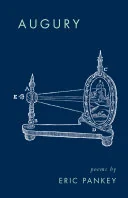
Eric Pankey's 2017 poetry collection, *Augury*, finds the sacred in the everyday.
In *Augury*, published in 2017, Eric Pankey turns to the minute details of the natural world, drawing inspiration from ancient Roman augury. He focuses on how the physical realm itself serves as a source of revelation. Poems in this collection treat elements like a lizard's quick movement, a tree struck by lightning, or the curve of a snail's shell as significant portents.
This work appeals to readers who notice the subtle connections between the observable world and their inner thoughts. It is for those who value poetry that engages with philosophical questions and finds meaning in overlooked aspects of life. Anyone interested in nature, semiotics, or the poetic expression of spiritual presence will find *Augury* a rewarding experience.
The practice of augury, dating back to ancient Rome, involved interpreting bird flight to discern divine will. This tradition, a formal religious and political institution, sought guidance in natural phenomena. Pankey revisits this ancient art in *Augury*, viewing ordinary natural events and forms as omens. His work centers on the idea that the physical world is imbued with meaning, accessible through careful observation and imaginative interpretation, echoing the concept of immanence where the divine is present within the world.
💡 Why Read This Book?
• Gain a new perspective on natural signs by examining Pankey's detailed observations of elements like a lizard's movements or a snail's shell, learning how the mundane can function as augury. • Understand the concept of immanence, as explored through Pankey's 2017 collection, by seeing how the divine is presented as present within the physical world rather than external to it. • Develop a heightened awareness of the connection between the sensory and imagined realms, as Pankey critically scrutinizes physical details for deeper significance, mirroring ancient Roman augury practices.
⭐ Reader Reviews
Honest opinions from readers who have explored this book.
❓ Frequently Asked Questions
What is the origin of the practice of augury that Eric Pankey references?
Augury originates in ancient Rome, where priests called augurs observed the flight patterns and behavior of birds to interpret the will of the gods for state affairs.
When was Eric Pankey's book 'Augury' first published?
Eric Pankey's collection 'Augury' was first published on November 14, 2017.
What kind of natural details does Pankey focus on in 'Augury'?
Pankey focuses on small, seemingly ordinary details such as a lizard's movements, a tree scarred by lightning, and the curve of a snail's shell.
What is the central theme explored in 'Augury'?
The central theme is finding the presence of the divine or sacred in the ordinary details of the natural world and scrutinizing the physical for meaning.
Is 'Augury' a book of poetry or prose?
'Augury' is a collection of poetry by Eric Pankey.
What ancient practice does the title 'Augury' refer to?
The title refers to the ancient Roman practice of divination by observing birds, suggesting a focus on signs and omens found in nature.
🔮 Key Themes & Symbolism
Nature as Divine Text
The collection posits that the natural world functions as a text, offering revelations akin to ancient augury. Pankey elevates minute observations—a lizard's dart, a lightning scar—into portents. This perspective shifts the locus of the divine from the transcendent to the immanent, suggesting that meaning and spiritual insight are woven into the fabric of everyday existence, accessible through attentive observation and poetic interpretation.
The Physicality of Revelation
Pankey's work interrogates how spiritual or profound meaning can be apprehended through purely physical phenomena. Unlike traditional religious texts or dogma, revelation here is material: inscribed on a tree by lightning, traced in a snail's shell. The collection scrutinizes the tangible, asserting that the sensory world is not merely a backdrop but an active participant in the unfolding of meaning and the perception of the sacred.
Collision of Worlds
A core theme is the unexpected convergence of the sensory and the imagined. Pankey demonstrates how acute observation of the physical world can trigger imaginative leaps, blurring the lines between what is seen and what is felt or conceived. This collision creates moments of wonder and insight, suggesting that true understanding arises from the dynamic interplay between empirical reality and internal consciousness.
Modern Augury
By invoking the ancient Roman practice of augury, Pankey frames his poetic method as a contemporary form of divination. Instead of priestly rituals, the tools are keen eyes and a contemplative mind. The poems suggest that in our modern age, the act of finding omens in nature’s minutiae is a vital practice for reconnecting with a sense of deeper meaning and cosmic order.
💬 Memorable Quotes
Direct passages from the work, attributed to the author.
“The ancient Romans practiced augury, reading omens in bird's flight patterns.”
— This sets the foundational metaphor for the collection, linking the book's title and thematic concerns to a specific historical practice of seeking divine communication through natural observation.
“Revelation is found in nature's smallest details: a lizard's quick movements, a tree scarred by lighting, the white curve of a snail's shell.”
— This directly articulates the collection's central thesis: that profound meaning and spiritual insight are not confined to grand events but are discoverable in the overlooked, minute phenomena of the natural world.
“Here the sensory world and the imagined one collide in unexpected and wonderful ways.”
— This highlights the poetic process at work, emphasizing how Pankey's meticulous observation of the physical ('sensory world') sparks creative and imaginative responses, merging perception with inner experience.
“Pankey scrutinizes the physical for meaning.”
— This concisely describes the author's method and the collection's underlying philosophy: a deep, analytical engagement with tangible reality to uncover layers of significance and symbolic import.
“From award-winning poet and author of Crow-Work...”
— This contextualizes Pankey's work within his established literary career, signaling his credentials as a poet and suggesting a continuity of themes or stylistic approaches from his previous works.
🌙 Esoteric Significance
Tradition
While not strictly adhering to a single esoteric lineage like Hermeticism or Kabbalah, *Augury* draws from the perennial philosophical impulse to find divine presence within the material world. It speaks to animistic traditions and nature-based spiritualities that view the environment as alive with meaning and agency. The collection’s focus on signs and portents also aligns with the broader esoteric interest in divination and symbolic interpretation as pathways to understanding.
Symbolism
Key symbols include birds (recalling classical augury), lizards (representing quick perception and subtle movement), trees scarred by lightning (physical manifestations of unseen forces or divine intervention), and snail shells (evoking slow, deliberate processes and the traces left behind). These elements function as mediators between the mundane and the sacred, inviting contemplation on nature's inherent communicative power.
Modern Relevance
In contemporary times, *Augury*'s emphasis on finding meaning in overlooked details offers a potent antidote to information overload and digital distraction. Thinkers and practitioners in fields like eco-philosophy, contemplative photography, and mindfulness-based approaches to nature find resonance in Pankey's method of deep, symbolic observation as a means of spiritual connection and ecological attunement.
👥 Who Should Read This Book
• Beginning students of esoteric philosophy seeking accessible entry points into nature-based divination and symbolic interpretation. • Poetry enthusiasts interested in works that bridge the gap between the empirical world and profound contemplation. • Individuals drawn to nature and seeking methods to perceive deeper meaning and sacred presence within their everyday surroundings.
📜 Historical Context
Published in 2017, Eric Pankey's *Augury* emerges in a literary landscape where poetry often engages with ecological concerns and the search for meaning in a secularized world. While ancient Roman augury was a formal, state-sanctioned practice, Pankey's work reflects a contemporary yearning for the sacred embedded within the observable. His approach aligns with a broader trend in post-modern literature that seeks to find transcendence not in religious institutions but in the texture of lived experience and the natural environment. Unlike the more overtly mystical or New Age interpretations of nature prevalent in some esoteric circles, Pankey's method is grounded in precise observation, echoing the empirical yet symbolic focus of early natural philosophers. His work might be seen as a poetic counterpoint to the scientific materialism that often dominates contemporary discourse, offering a mode of seeing that bridges the gap between the physical and the spiritual.
📔 Journal Prompts
The lizard's quick movements as a sign of revelation.
Reflecting on the physical inscription of lightning on a tree.
The white curve of a snail's shell as a symbol of process.
Interpreting the ordinary details of your environment as potential omens.
The collision of the sensory and imagined in your daily observations.
🗂️ Glossary
Augury
An ancient practice, particularly in Rome, of interpreting omens by observing the flight and behavior of birds to understand divine will.
Immanence
The philosophical or theological concept that the divine or sacred is present within the material world, rather than existing separately or transcendentally.
Portent
A sign or omen that indicates a future event, often of a significant or ominous nature; in this context, found in natural phenomena.
Sensory World
The field of reality perceived through the five senses: sight, sound, smell, taste, and touch.
Imagined World
The internal field of thoughts, concepts, emotions, and creative projections, distinct from direct sensory experience.
Scrutinize
To examine or inspect closely and thoroughly, often with the aim of uncovering hidden details or meaning.
Crow-Work
Referenced as a previous work by Eric Pankey, suggesting a thematic or stylistic connection, potentially exploring themes of observation, communication, or the symbolic significance of nature.
This book appears in 1 collection
🔮 Readers Also Liked
Browse all →









From the “Augury” Collection
View all →








More Free Occult Philosophy Books
View all →