Astrology for the Millions

 71
71

Astrology for the Millions
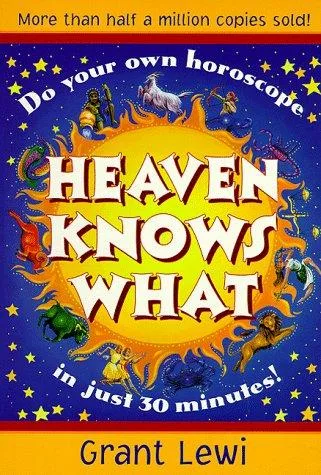
Grant Lewi’s Astrology for the Millions, from its 1990 debut, offers a surprisingly robust framework for understanding astrological mechanics. Unlike many contemporary texts that lean heavily on pop psychology or predictive flair, Lewi grounds his exposition in the systematic interplay of planets, signs, and houses. The section detailing the ‘Degrees of the Zodiac’ provides a granular, often overlooked, layer of interpretation that rewards careful study. However, the prose, while clear, can at times feel a touch dry, lacking the evocative power found in earlier astrological writers. The emphasis on fundamental structure means that advanced predictive techniques are not explored in depth, which might leave some readers wanting more. Still, for a solid, no-nonsense introduction to the architecture of a birth chart, Lewi’s work remains a dependable resource.
📝 Description
71
Grant Lewi's Astrology for the Millions, published in 1990, aimed to make astrological principles accessible.
This book approaches astrology not as a tool for fortune-telling, but as a system to understand personality and life cycles. Lewi demystifies the language of the stars, breaking down complex concepts for a broad audience. It is suitable for beginners or those seeking a structured view beyond simple horoscopes. The work focuses on the archetypal patterns of the cosmos and their potential manifestation in human experience.
Lewi details the fundamental elements of astrology, including zodiacal signs, planets, houses, and aspects. He explains how these components combine to form a natal chart, which he describes as a map of an individual's potential and challenges. The book emphasizes astrology's symbolic language and its use in self-awareness, presenting it as a philosophical framework for life. It prioritizes clear explanations of core astrological mechanics and philosophy.
Published in 1990, Astrology for the Millions appeared during a resurgence of interest in esoteric studies, following the New Age movements. Unlike some contemporaries who focused on psychological astrology, Lewi presented a comprehensive, almost textbook-like explanation of astrological mechanics and philosophy. His work sought to ground astrological practice in understandable principles, moving away from purely divinatory trends and offering a more systematic approach to esoteric subjects.
💡 Why Read This Book?
• Gain a structured understanding of astrological components like the twelve houses, a key framework for mapping life areas, which Lewi meticulously details. • Learn the foundational principles of planetary rulerships, essential for interpreting how different cosmic energies interact within a natal chart as presented by Lewi. • Explore the concept of the Ascendant and Midheaven, specific astrological points Lewi explains as crucial for understanding outward persona and life direction.
⭐ Reader Reviews
Honest opinions from readers who have explored this book.
❓ Frequently Asked Questions
When was Astrology for the Millions first published?
Astrology for the Millions by Grant Lewi was first published in 1990. This edition aimed to provide a comprehensive yet accessible guide to astrological principles for a wide readership.
What are the main astrological elements covered in the book?
The book covers essential astrological elements including the twelve zodiac signs, the planets, the twelve houses, and the aspects between celestial bodies, explaining their individual and collective significance.
Is Astrology for the Millions suitable for complete beginners?
Yes, the book is designed with beginners in mind, aiming to demystify astrological concepts and present them in a clear, systematic manner without assuming prior knowledge.
Does Grant Lewi focus on predictive astrology in this book?
Grant Lewi primarily focuses on the foundational and interpretive aspects of astrology for self-understanding rather than on detailed predictive techniques.
What is the historical period relevant to this book's publication?
The book was published in 1990, a period following the surge of New Age interest, and it sought to provide a more structured and less ephemeral approach to astrology.
Where does Grant Lewi’s approach fit within astrological traditions?
Lewi's approach emphasizes a systematic, almost academic presentation of astrological mechanics, aligning with a tradition that prioritizes understanding the chart's structure and symbolic language.
🔮 Key Themes & Symbolism
The Celestial Architecture
Lewi meticulously breaks down the fundamental components of an astrological chart, presenting them as building blocks of cosmic understanding. The book emphasizes the distinct energies of the twelve zodiac signs, the archetypal roles of the planets (from the Sun to Pluto), and the symbolic meanings of the twelve houses, which delineate areas of life experience. This structured approach allows readers to grasp how these elements interrelate, forming a complex yet coherent system for analyzing personality and potential.
Astrology as a Symbolic Language
Central to Lewi's thesis is the idea that astrology functions as a profound symbolic language, offering a framework for interpreting life's patterns. The work explores how planetary aspects—the geometric relationships between planets in a chart—represent internal dynamics and external interactions. By understanding these symbols, the book suggests, individuals can gain deeper self-awareness, recognize recurring themes in their lives, and approach challenges with a more informed perspective. It moves beyond mere prediction to a philosophical exploration of cosmic influence.
The Natal Chart as a Blueprint
Astrology for the Millions presents the natal chart as a unique blueprint, cast for the precise moment and location of one's birth. Lewi guides readers through interpreting this chart not as a rigid destiny, but as a map of inherent potentials, strengths, and areas for growth. The book focuses on how the placement of planets within signs and houses, and their interactions, offer insights into an individual's psychological makeup, life path, and inherent challenges, encouraging a proactive engagement with one's cosmic inheritance.
Explaining Astrological Concepts
A primary goal of Lewi's work is to strip away the mysticism and present astrological principles in a clear, logical fashion. The book systematically defines terms and explains processes, making it accessible even to those with no prior exposure. This approach explains concepts such as retrogrades, conjunctions, and trines, presenting them as understandable phenomena within a coherent system. The aim is to empower readers with knowledge, enabling them to engage with astrology critically and intelligently.
💬 Memorable Quotes
Direct passages from the work, attributed to the author.
“The planets are the actors, the signs are their costumes, and the houses are the stage.”
— This memorable analogy effectively conveys the fundamental structure of astrological interpretation, illustrating how celestial bodies interact within specific life arenas.
“An aspect is the relationship between two planets.”
— A concise definition highlighting the core concept of astrological aspects, which represent the dynamic interplay and communication between different planetary energies in a chart.
“Understanding the Moon reveals emotional needs.”
— This concept emphasizes the Moon's traditional astrological signification as representing the field of emotions, instincts, and subconscious responses.
“Houses describe the areas of life.”
— A direct interpretation of the function of the twelve houses in astrology, which map the specific domains or circumstances where planetary energies manifest.
💡 Key Ideas
Editorial paraphrase of the work's core concepts — not direct quotes.
The Ascendant sets the tone for the first impression.
This paraphrase points to the Ascendant's role in defining outward personality and how others initially perceive an individual, a key interpretive point in natal astrology.
🌙 Esoteric Significance
Tradition
This work aligns with the Western Esoteric tradition, specifically drawing from Hermetic principles concerning correspondence and macrocosm-microcosm relationships. It fits within a lineage that views astrology not merely as prediction but as a symbolic language reflecting divine order and human potential. While not explicitly Kabbalistic or Gnostic, it operates within the broader Hermetic framework that informed much of Western occult philosophy, emphasizing understanding the celestial patterns as a means of self-knowledge and alignment.
Symbolism
Key symbols include the twelve zodiacal signs, representing archetypal energies and human motivations; the planets, acting as 'actors' embodying different forces or functions; and the twelve houses, symbolizing distinct areas of life experience. The concept of 'aspects' also serves as a symbolic motif, illustrating the dynamic interplay and relationships between these celestial energies, akin to dialogues or conflicts that shape a personal narrative.
Modern Relevance
Contemporary psychological and evolutionary astrologers often draw upon the foundational principles Lewi meticulously outlines. Modern practitioners focused on self-discovery and personal growth continue to utilize the systematic interpretation of natal charts that Lewi champions. The book's emphasis on understanding the 'architecture' of the chart remains relevant for anyone seeking a grounded, non-dogmatic approach to astrological study in an era often dominated by quick-fix interpretations.
👥 Who Should Read This Book
• Aspiring astrologers seeking a systematic introduction to chart interpretation, moving beyond basic sun signs. • Individuals interested in Western Esoteric traditions who wish to understand astrology's role as a symbolic language of the cosmos. • Self-study enthusiasts looking for a clear, foundational text on natal chart components before exploring more specialized astrological techniques.
📜 Historical Context
Grant Lewi's Astrology for the Millions, published in 1990, arrived at a fascinating juncture for esoteric studies. The preceding decades had seen a significant surge in popular interest in astrology, largely fueled by the New Age movement. However, much of this popularization often focused on sun-sign horoscopes or more sensationalistic predictive claims. Lewi's work, in contrast, sought to re-establish a more structured, almost academic approach to astrology, focusing on the mechanics of natal chart interpretation. It emerged in a landscape where figures like Dane Rudhyar had already laid groundwork for psychological astrology, and contemporary authors like Liz Greene were deeply exploring astrological archetypes. Lewi's contribution was to synthesize these elements into a comprehensive guide that, while not overtly academic, prioritized clarity and systematic explanation over purely intuitive or divinatory methods. The book aimed to provide a solid foundation for serious study, distinct from the more ephemeral trends in popular astrology of the era.
📔 Journal Prompts
The Sun sign's core energy and its expression through your Ascendant.
Reflecting on the Moon's placement and its impact on your emotional responses.
Identifying key planetary aspects and their potential meaning in your life.
Considering the significance of the Midheaven in relation to your career or public role.
Exploring the symbolic representation of the twelve houses in your personal experience.
🗂️ Glossary
Zodiac Signs
The twelve constellations forming a belt of the heavens, each representing a distinct archetypal energy pattern and influencing personality traits and life experiences.
Planets
Celestial bodies (Sun, Moon, Mercury, Venus, Mars, Jupiter, Saturn, Uranus, Neptune, Pluto) whose positions and movements in a natal chart symbolize different psychological functions and life forces.
Houses
The twelve divisions of the celestial sphere, based on the time and place of birth, representing different areas of life experience where astrological energies manifest.
Aspects
The angular relationships between planets in a birth chart, indicating how their energies interact, which can be harmonious, challenging, or complex.
Ascendant
The zodiac sign rising on the eastern horizon at the exact moment of birth; it represents the outward personality, physical appearance, and the initial approach to life.
Natal Chart
A map of the heavens at the precise moment and location of a person's birth, used to interpret personality, potentials, and life patterns.
Midheaven (MC)
The highest point in the natal chart, representing career, public standing, and ultimate life direction or achievement.
🔮 Readers Also Liked
Browse all →







More by Grant Lewi
All books →



More Free Astrology & Cosmology Books
View all →