Astrological Analysis of Indian Affairs
 77
77

Astrological Analysis of Indian Affairs
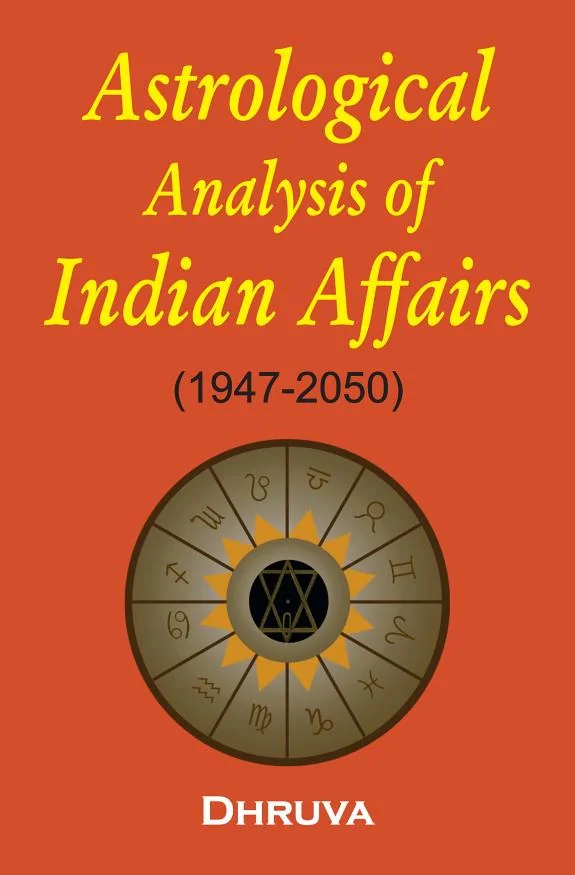
Dhruva's *Astrological Analysis of Indian Affairs* is a commendable, albeit dense, attempt to map India's post-independence journey onto celestial movements. The author’s commitment to chronological event correlation with Vimshottari Dasa periods is rigorous, offering a unique perspective on national developments. A particular strength is the detailed examination of specific Dasa-Antara segments, such as the analysis of the Nehruvian era through astrological indicators. However, the sheer volume of data and astrological terminology can make this work challenging for those not already well-versed in Vedic astrology. The book's analytical depth is undeniable, but its accessibility might be limited to a niche audience. It provides a valuable, if demanding, astrological case study of a major nation's formative decades.
📝 Description
77
Dhruva's 2008 book uses Vedic astrology to map India's post-1947 history.
This work systematically examines India's history since 1947 through the lens of Vedic astrology. Dhruva correlates significant national events with specific Vimshottari Dasa and Antara Dasa periods, using astrological charts cast for the exact moments of key occurrences. The analysis considers prevailing planetary transits to frame national developments across politics, economics, industry, agriculture, and science.
The book applies the Vimshottari Dasa system, a core predictive timing technique in Vedic astrology, to segment historical eras. Dhruva connects Dasa-Antara phases with major national events, also highlighting the role of planetary transits and precise astrological charts, such as the Rashi and Navamsa, for critical junctures like India's independence. It offers an astrological cartography for understanding a developing nation's trajectory.
First published in 2008, Astrological Analysis of Indian Affairs emerged when applying astrological principles to macro-level events gained attention, moving beyond individual horoscopes. This book follows earlier commentators who discussed national affairs astrologically, but it specifically focuses on independent India. It maps India's post-1947 political and economic path using astrological techniques.
💡 Why Read This Book?
• Learn how the Vimshottari Dasa system can be applied to understand specific historical periods in India, such as the analysis of events during the 1970s Dasa periods. • Gain insight into the astrological significance of planetary transits during key national moments, like the economic liberalization reforms initiated around 1991. • Understand the methodology of analyzing national affairs through precise astrological charts, including the chart cast for India's Independence in 1947.
⭐ Reader Reviews
Honest opinions from readers who have explored this book.
❓ Frequently Asked Questions
What is the primary astrological system used in Astrological Analysis of Indian Affairs?
The book primarily utilizes the Vimshottari Dasa system, a fundamental predictive timing technique in Vedic astrology, to segment historical periods and correlate them with national events.
Does the book analyze specific Indian Prime Ministers astrologically?
While the book focuses on national affairs sector-wise, it analyzes key events and trends that occurred during the tenures of various leaders, implicitly linking them to the astrological periods in effect.
When was Astrological Analysis of Indian Affairs first published?
The book was first published in 2008, offering a contemporary astrological perspective on India's modern history.
What historical period does the book cover?
The book covers the history of India from its independence in 1947 onwards, analyzing key events chronologically through astrological indicators.
Besides polity, what other sectors of Indian affairs are analyzed?
The analysis extends to economy, industry, agriculture, and science, demonstrating the broad applicability of astrological interpretation to national development.
What role do planetary transits play in the analysis?
Planetary transits are crucial components of the analysis, examined alongside the prevailing Dasa periods to provide a comprehensive astrological interpretation of significant events.
🔮 Key Themes & Symbolism
Vimshottari Dasa and National Timing
The core of Dhruva's work is the systematic application of the Vimshottari Dasa system to dissect India's post-independence trajectory. This classical Vedic astrological timing technique divides a native's life into periods governed by different planets. In this context, the book maps national historical epochs onto these Dasa-Antara segments, correlating shifts in polity, economy, and society with the prevailing planetary influences. It argues that understanding these cycles provides a predictive and explanatory framework for national events, moving beyond purely secular historical analysis.
Astrological Charts of Critical Junctures
Beyond dasa periods, the book emphasizes the critical role of specific astrological charts cast for central moments in Indian history. This includes the chart for India's Independence in 1947, considered the foundational horoscope of the nation. Dhruva analyzes these charts, including the Rashi and Navamsa, in conjunction with planetary transits occurring at the time of key events. This approach allows for a detailed examination of the underlying cosmic blueprints influencing specific national developments, from economic policy shifts to agricultural reforms.
Sectoral Analysis of Indian Development
Dhruva applies astrological principles not just to political events but also to broader spheres of national development. The book undertakes a sector-wise analysis, examining how astrological configurations might correlate with trends in India's economy, industrial growth, agricultural output, and scientific advancements. This holistic approach suggests that astrological influences permeate all aspects of a nation's functioning, providing a unified interpretive lens for understanding its complex evolution since 1947.
Geopolitical Astrology
This work contributes to the field of geopolitical astrology by demonstrating the potential of Vedic astrological techniques to analyze the affairs of a nation-state. By correlating specific planetary periods and configurations with historical events like major policy changes or national crises, Dhruva posits that celestial mechanics offer a meaningful layer of interpretation for geopolitical phenomena. The book serves as a detailed case study, exploring how astrological factors might be interwoven with the socio-political and economic fabric of a large, developing nation.
💬 Memorable Quotes
Direct passages from the work, attributed to the author.
“Each event has been analysed in the context of prevailing Dasa periods, the transits and, wherever possible, in terms of the Chart cast for the time of the event.”
— This statement expresses the book's core methodology, highlighting the multi-faceted astrological approach combining predictive timing (Dasa), ongoing influences (transits), and foundational horoscopes (event charts).
“The analysis of Indian affairs is made sectorwise - polity, economy, industry, agriculture, science.”
— This indicates the book's comprehensive scope, aiming to demonstrate how astrological principles can illuminate various facets of a nation's functioning, not just its political landscape.
“It presents the key events chronologically along with the important indicators of these events grouped under the Vimshottari Dasa - Antara Dasa segments.”
— This explains the structural approach of the book, emphasizing a chronological mapping of historical occurrences onto specific astrological timing cycles for analytical purposes.
“This book attempts to trace the history of post-Independent India astrologically.”
— This direct statement of intent clarifies the book's primary objective: to apply astrological frameworks to understand the historical development of India since its independence in 1947.
💡 Key Ideas
Editorial paraphrase of the work's core concepts — not direct quotes.
The work presents key events chronologically, linking them to Vimshottari Dasa-Antara Dasa segments.
This paraphrased concept emphasizes the book's method of aligning historical milestones with specific astrological timing cycles for interpretive analysis.
🌙 Esoteric Significance
Tradition
This work is firmly rooted in the Vedic astrological tradition, a lineage originating in ancient India characterized by its complex dasa systems, emphasis on karma, and detailed analysis of planetary influences. Dhruva utilizes the Vimshottari Dasa, a system central to this tradition, to interpret historical events. The book departs from purely individual horoscopic readings, extending these principles to the collective destiny of a nation, aligning with a broader esoteric tendency to find cosmic patterns in collective human experience.
Symbolism
The primary symbolic element is the astrological chart itself, particularly the Rashi (birth chart) and Navamsa (divisional chart), which serve as symbolic maps of cosmic influences at a specific moment. Planetary positions and aspects within these charts symbolize the forces at play in India's national destiny. The concept of 'Dasa' itself is symbolic, representing unfolding karmic cycles that manifest as historical periods and events, guiding the nation's journey.
Modern Relevance
Contemporary practitioners of geopolitical astrology and researchers exploring the intersection of consciousness and national events may draw upon Dhruva's methodology. Thinkers who believe in the influence of cosmic cycles on societal structures, particularly within the Indian subcontinent, find this work a detailed case study. It offers a framework for understanding national development through a lens that integrates astrological timing with historical analysis, relevant to those seeking holistic interpretations of global affairs.
👥 Who Should Read This Book
• Students and practitioners of Vedic astrology seeking to apply their knowledge to geopolitical events and national horoscopes. • Historians and political scientists interested in exploring alternative interpretive frameworks for understanding India's post-1947 development. • Esoteric researchers and enthusiasts curious about the application of astrological principles to macro-level societal and national trends.
📜 Historical Context
Published in 2008, *Astrological Analysis of Indian Affairs* arrived at a time when astrological applications to macro-level events were gaining traction, albeit often overshadowed by more traditional political and economic analyses. The early 21st century saw a global resurgence of interest in esoteric studies, including astrology, with practitioners seeking to apply ancient systems to modern phenomena. Dhruva's work is situated within this trend, offering a detailed Vedic astrological cartography of post-1947 India. It stands apart from purely Western astrological analyses of national horoscopes, focusing instead on the specific predictive techniques and philosophical underpinnings of the Indian tradition. While perhaps not directly engaging with specific named critics or facing overt censorship, such works often operate in academic spheres that remain skeptical of astrological methodologies, contrasting with the growing popular interest.
📔 Journal Prompts
The Vimshottari Dasa periods governing India's key economic reforms.
The astrological chart for India's Independence in 1947 and its prominent planetary indicators.
Planetary transits during a specific national crisis identified in the book.
The correlation between agricultural policy shifts and astrological Dasa-Antara segments discussed.
The symbolic meaning of specific planetary placements within the national chart analyzed.
🗂️ Glossary
Vimshottari Dasa
A predictive system in Vedic astrology that divides a native's life into periods (Dasa) and sub-periods (Antara) ruled by specific planets, used to time events.
Antara Dasa
Sub-periods within the larger Vimshottari Dasa system, offering finer granularity for astrological timing and event correlation.
Planetary Transits
The current movement of planets through the zodiac, analyzed in relation to a natal chart or event chart to understand ongoing influences and potential outcomes.
Rashi Chart
The main birth chart or horoscope in Vedic astrology, showing the positions of planets at the time of birth or a specific event.
Navamsa Chart
A divisional chart in Vedic astrology, considered the most important secondary chart, offering deeper insights into a native's destiny, character, and marital life.
Post-Independent India
Refers to the period of Indian history following the nation's independence from British rule on August 15, 1947.
Sectorwise Analysis
An approach that examines different domains or areas of activity (like polity, economy, etc.) individually to understand their specific dynamics and influences.
This book appears in 1 collection
🔮 Readers Also Liked
Browse all →![[ Stephen Arroyo] Astrology](/img/thumb/stephen-arroyo-astrology.webp)







From the “Mundane Astrology” Collection
View all →









More Free Astrology & Cosmology Books
View all →