Heavenly Stems and Earthly Branches TianGan DiZhi
 63
63

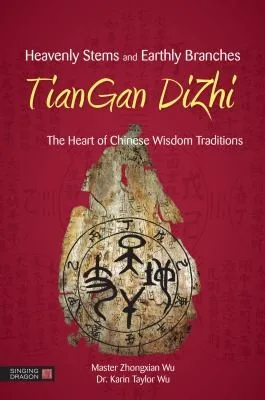
Heavenly Stems and Earthly Branches TianGan DiZhi


Zhongxian Wu's "Heavenly Stems and Earthly Branches" is a monumental achievement, illuminating the esoteric depths of Chinese cosmology with unparalleled clarity. Wu navigates the labyrinthine symbolism of the Tian Gan Di Zhi with scholarly precision and intuitive grace, offering readers a potent key to unlocking ancient wisdom. This text is indispensable for serious students of Eastern mysticism, revealing the subtle energies and cyclical patterns that govern both the macrocosm and the microcosm. Its strengths lie in its comprehensive scope and the author's ability to translate complex philosophical concepts into accessible, yet profound, insights. A must-read for practitioners and scholars alike who seek to integrate celestial wisdom into their understanding of existence.
📝 Description
63
Zhongxian Wu's "Heavenly Stems and Earthly Branches" decodes the 60 combinations of the Tian Gan Di Zhi system.
This book explains the Tian Gan Di Zhi, a core component of traditional Chinese cosmology and daily life. The system uses 60 combinations of Heavenly Stems and Earthly Branches to map time and its influences. Wu details the symbolism within these combinations and their links to Taoist thought and the I Ching. The text shows how these cycles relate to the seasons, years, human destiny, and universal energies.
It addresses the practical application of understanding these cycles for personal insight and awareness. The author connects the Tian Gan Di Zhi to broader concepts of existence and the interconnectedness of natural and human affairs. This work aims to provide a clear explanation of a complex system for those interested in Chinese esoteric traditions.
The Tian Gan Di Zhi system is a central element in Chinese metaphysics and esoteric practices, including aspects of traditional Chinese medicine, astrology, and divination. It provides a framework for understanding the interactions of cosmic forces and their manifestation in the natural world and human life. Wu's work places this system within its historical and philosophical context, demonstrating its role in mapping temporal cycles and energetic patterns. It is a key to understanding the underlying structure of many Chinese spiritual and practical arts.
💡 Why Read This Book?
Uncover the mystical blueprint of time and destiny, deciphering the profound symbolism of the Heavenly Stems and Earthly Branches. Gain a deeper understanding of Taoist philosophy, Chinese astrology, and the cyclical nature of the universe. This book is ideal for spiritual seekers, cultural historians, and practitioners of Eastern wisdom seeking to connect with ancient knowledge and unlock personal insights.
⭐ Reader Reviews
Honest opinions from readers who have explored this book.
❓ Frequently Asked Questions
What are the Heavenly Stems and Earthly Branches?
The Heavenly Stems (Tian Gan) and Earthly Branches (Di Zhi) are a fundamental cyclical system in Chinese cosmology, comprising 10 Stems and 12 Branches that combine to create a 60-year cycle. They represent fundamental energies and influences governing time, fate, and the natural world.
How does this system relate to Chinese Astrology?
The Tian Gan Di Zhi forms the core of Chinese astrology, used to determine personality traits, compatibility, fortune, and auspicious timings based on an individual's birth year, month, day, and hour.
Is this book suitable for beginners?
Yes, while rich in detail, the book is structured to guide newcomers through the foundational concepts, making it accessible to those new to Chinese cosmology.
What philosophical traditions does it draw upon?
It deeply draws from Taoism, Confucianism, and the principles of the I Ching, integrating their concepts of harmony, balance, and cosmic interconnectedness.
Can this knowledge be applied practically?
Absolutely. Understanding the cyclical energies can inform decision-making, personal development, relationship dynamics, and strategic planning in both personal and professional life.
🔮 Key Themes & Symbolism
The Cosmic Dance of Yin and Yang
At the heart of the Heavenly Stems and Earthly Branches lies the dynamic interplay of Yin and Yang, the fundamental dualistic forces that govern all existence. The Stems embody the more active, spiritual energies, while the Branches represent the more receptive, earthly influences. Their perpetual interaction creates the ebb and flow of the universe, influencing everything from celestial movements to human temperament. Understanding this dance is crucial to deciphering the profound symbolism and predictive power of this ancient system, offering insights into balance, harmony, and the cyclical nature of cosmic and personal unfolding.
The Wheel of Time and Destiny
The 60-year cycle of the Tian Gan Di Zhi is a potent representation of the cyclical nature of time, a concept deeply embedded in Eastern philosophy. This system suggests that time is not linear but rather a recurring pattern of energies and influences. Each year, month, day, and hour possesses a unique energetic signature, shaped by the combination of Stems and Branches. By understanding these temporal currents, individuals can gain foresight into the unfolding of events, the opportune moments for action, and the inherent potentials and challenges associated with different phases of life, thereby navigating their destiny with greater awareness.
Symbolism and Energetic Resonance
Every Stem and Branch is imbued with rich symbolic meaning, often associated with the five elements (Wu Xing), animals, and specific qualities. These symbols are not mere representations but energetic archetypes that resonate with the universe. The combination of a Stem and a Branch creates a unique energetic profile, influencing personality, relationships, and the auspiciousness of events. This book studies the profound allegorical language of this system, revealing how these ancient symbols offer a deep vocabulary for understanding the subtle forces that shape our reality and connect us to the greater cosmic order.
💬 Memorable Quotes
Direct passages from the work, attributed to the author.
“The Earthly Branches whisper secrets of the grounded world.”
— Highlights the tangible, influential, and perhaps more intuitive aspects of the Di Zhi, connecting them to the physical realm and its hidden wisdom.
“Heavenly Stems illuminate the path of cosmic intention.”
— Emphasizes the active, guiding, and spiritual nature of the Tian Gan, suggesting they represent the overarching purposes and energies of the cosmos.
“In the dance of sixty, lies the symphony of existence.”
— Refers to the 60-year cycle as a microcosm of the universe's complex and harmonious order, where every component plays a vital role.
“Know the cycles, know thyself.”
— A profound statement on self-awareness, suggesting that understanding the universal cycles of the Tian Gan Di Zhi leads to a deeper comprehension of one's own nature and place.
💡 Key Ideas
Editorial paraphrase of the work's core concepts — not direct quotes.
Time is a river, but its currents are written in the stars.
This quote speaks to the cyclical and interconnected nature of time and celestial influence, suggesting that temporal progression is guided by cosmic patterns.
🌙 Esoteric Significance
Tradition
This work is deeply rooted in the esoteric traditions of Chinese Taoism and its related cosmological systems. It draws heavily from the philosophy of the I Ching (Book of Changes), the concept of Yin and Yang, and the Five Element theory (Wu Xing). The Tian Gan Di Zhi is not merely a calendrical tool but a profound symbolic language used in divination, Feng Shui, and internal alchemy, seeking to harmonize human existence with the energetic flows of the universe.
Symbolism
The core symbolism lies in the 10 Heavenly Stems (representing Yang energies and celestial influences) and the 12 Earthly Branches (representing Yin energies and earthly manifestations, often associated with zodiac animals). Their combinations create 60 unique pairs, each with its own energetic signature, elemental associations, and symbolic meanings. These symbols act as keys to understanding the cosmic blueprint, the cycles of time, and the subtle forces that govern life, fortune, and relationships.
Modern Relevance
In the modern era, the Tian Gan Di Zhi offers a powerful lens for understanding cyclical patterns in personal and global affairs, beyond mere superstition. It provides a framework for mindfulness, strategic planning, and a deeper connection to natural rhythms. For practitioners, it offers tools for energetic assessment and alignment. For scholars and the curious, it unlocks a rich cultural heritage and a profound philosophical system that speaks to timeless questions of existence, destiny, and the pursuit of harmony in an increasingly complex world.
👥 Who Should Read This Book
This book is a treasure for several distinct groups. For the **spiritual seeker**, it offers a profound gateway into ancient Eastern wisdom and a unique perspective on the interconnectedness of all things. **Scholars of history and culture** will find it an invaluable resource for understanding the foundational elements of Chinese civilization and its philosophical underpinnings. **Practitioners of Feng Shui, traditional Chinese medicine, or martial arts** will discover deeper layers of energetic understanding and application. Finally, **aspiring astrologers and those interested in personal development** will find a comprehensive and insightful guide to navigating their own life cycles and understanding the subtle forces that shape their destiny.
📜 Historical Context
The system of Heavenly Stems and Earthly Branches emerged and evolved over centuries within ancient China, solidifying during the Han Dynasty (206 BCE – 220 CE) as a fundamental element of cosmology, calendrics, and divination. Its development was deeply intertwined with the philosophical currents of the time, particularly Taoism and the I Ching, which emphasized cyclical patterns, cosmic harmony, and the interconnectedness of heaven, earth, and humanity. This system served as the backbone for the Chinese lunisolar calendar, dictating agricultural cycles, religious festivals, and imperial decrees. Its influence permeated social customs, governance, and personal understanding of fate and destiny, becoming an indispensable tool for organizing society and interpreting the natural world. Its enduring presence speaks to its profound efficacy and its deep resonance with the Chinese worldview.
📔 Journal Prompts
Reflect on a past event and consider how the energies of its Heavenly Stems and Earthly Branches might have influenced it.
Identify the Earthly Branch animal associated with your birth year and explore its perceived characteristics in your personality.
How does the concept of cyclical time, as presented by the Tian Gan Di Zhi, contrast with your usual perception of time?
Consider a current challenge in your life and imagine how understanding its energetic influences might offer a new approach.
What personal qualities or aspirations do you feel are most aligned with the symbolism of a particular Stem or Branch combination?
🗂️ Glossary
Tian Gan (Heavenly Stems)
The ten cyclical characters (Jia, Yi, Bing, Ding, Wu, Ji, Geng, Xin, Ren, Gui) representing the fundamental active, Yang energies that influence celestial and cosmic forces.
Di Zhi (Earthly Branches)
The twelve cyclical characters (Zi, Chou, Yin, Mao, Chen, Si, Wu, Wei, Shen, You, Xu, Hai) representing the passive, Yin energies, often associated with zodiac animals and earthly manifestations.
Wu Xing (Five Elements)
The fundamental cosmological concept of five interactive elements (Wood, Fire, Earth, Metal, Water) that are intrinsically linked to the Heavenly Stems, Earthly Branches, and all phenomena.
Lunisolar Calendar
A calendar system that tracks both the moon's phases and the sun's yearly journey, forming the basis of the traditional Chinese calendar regulated by the Tian Gan Di Zhi.
Si Zhu (Four Pillars)
The four pairs of Heavenly Stems and Earthly Branches representing the year, month, day, and hour of a person's birth, forming their unique astrological chart.
This book appears in 2 collections
🔮 Readers Also Liked
Browse all →








More by Zhongxian Wu
All books →





From the “Astrology” Collection
View all →








More Free Astrology & Cosmology Books
View all →