Aru Shah and the Tree of Wishes

 78
78

Aru Shah and the Tree of Wishes
Roshani Chokshi’s "Aru Shah and the Tree of Wishes" propels its protagonist into a celestial predicament that tests the limits of her burgeoning divine heritage. The novel excels in its vibrant characterizations, particularly Aru's internal struggles with self-doubt and her fierce loyalty to her friends. One particularly memorable sequence involves Aru navigating the treacherous Whispering Woods, a section that vividly illustrates the book's blend of mythological peril and adolescent anxiety. However, the plot, while engaging, occasionally feels overstuffed with magical elements, at times overshadowing the emotional core. The resolution, while satisfying, perhaps relies a bit too heavily on deus ex machina. Nonetheless, Chokshi delivers a spirited continuation of the Pandava saga.
📝 Description
78
In 2020, Roshani Chokshi published Aru Shah and the Tree of Wishes, the third book in her Pandava Quartet.
This middle-grade fantasy novel follows Aru Shah, a girl who learns she is a reincarnation of a Pandava hero from the Mahabharata. The story centers on her adventures as she grapples with her heritage and the responsibilities that come with it. Aru must confront her own fears and understand the powers she possesses. Her choices have consequences that affect both her world and the celestial realms.
The book is written for young readers, roughly ages 8 to 12, who enjoy action-packed stories rooted in mythology. It will appeal to those who like protagonists who deal with questions of identity and growing up. Readers already familiar with Hindu epics, or those curious to learn more, will find this book an accessible introduction.
The Pandava Quartet series draws directly from the Hindu epic, the Mahabharata, reimagining its ancient narratives for a contemporary young audience. Chokshi's work taps into the rich tradition of Indian mythology, particularly the stories of the Pandavas and their divine connections. This retelling brings concepts like reincarnation, divine lineage, and the cosmic balance of good and evil to the forefront, framing them within a modern fantasy adventure. It reflects a broader trend of making classical religious and mythological texts accessible through popular fiction.
💡 Why Read This Book?
• Gain an engaging introduction to Hindu mythology, learning about figures like the Pandavas and concepts such as the Tree of Wishes, presented in a dynamic, accessible narrative. • Experience a compelling exploration of self-discovery and responsibility through Aru Shah's journey as she grapples with her lineage and the choices she must make. • Discover a story that highlights the importance of friendship and courage, particularly in the face of overwhelming odds, as Aru relies on her companions in the celestial realms.
⭐ Reader Reviews
Honest opinions from readers who have explored this book.
❓ Frequently Asked Questions
What is the significance of the Tree of Wishes in Hindu mythology?
In "Aru Shah and the Tree of Wishes," the Tree of Wishes is a powerful, sentient entity central to the plot, granting boons but also posing dangerous tests. While not a direct historical artifact, it draws on concepts of divine trees and wish-granting deities found in Hindu lore.
Who are the Pandavas in Hindu mythology?
The Pandavas are the five sons of Pandu in the epic Mahabharata. They are central figures in the Kurukshetra War. Aru Shah discovers she is a reincarnation of one of them, linking her modern adventures to ancient lore.
What age group is 'Aru Shah and the Tree of Wishes' suitable for?
This book is primarily aimed at middle-grade readers, typically ages 8 to 12. It features themes and challenges appropriate for this age range, with a narrative that balances action, humor, and emotional depth.
Does 'Aru Shah and the Tree of Wishes' require reading the previous books?
While the book can be enjoyed on its own, reading "Aru Shah and the End of Time" and "Aru Shah and the Song of Death" provides fuller context for Aru's character development and the overarching plot of the Pandava Quartet series.
What mythological elements are present in the book?
The novel heavily features characters, concepts, and settings derived from Hindu mythology, including the Pandavas, Hindu deities, celestial beings, and mythical locations, all woven into a contemporary adventure narrative.
When was 'Aru Shah and the Tree of Wishes' published?
The book was first published in 2020, continuing the popular series that began in 2018 with 'Aru Shah and the End of Time'.
🔮 Key Themes & Symbolism
The Weight of Lineage
Aru's identity is inextricably linked to her Pandava heritage, presenting a constant internal conflict between her desire for normalcy and the responsibilities thrust upon her. The narrative explores how ancient destinies shape present choices, forcing Aru to confront the expectations tied to her lineage. This theme looks at the burden and potential of inherited power and the struggle to forge one's own path, even when bound by epic histories.
Friendship as a Celestial Anchor
The bonds Aru shares with her friends, Mini and Brynne, serve as a vital support system amidst cosmic upheaval. Their unwavering loyalty and diverse strengths are crucial for overcoming the trials presented by the Tree of Wishes. This theme underscores how human connection and mutual reliance can provide solace and power, even when facing gods and demons.
The Nature of Wishes and Consequences
The Tree of Wishes itself embodies the complex relationship between desire and outcome. Each wish granted comes with unforeseen repercussions, teaching Aru about the ethical considerations of power and the interconnectedness of actions. The book uses this motif to explore the idea that true strength lies not in obtaining wishes, but in understanding the wisdom behind them.
Courage in the Face of the Unknown
Aru's journey is a proof of her developing bravery. She repeatedly faces terrifying mythological creatures and daunting challenges, often driven by fear but propelled forward by necessity and her protective instincts. This theme emphasizes that courage is not the absence of fear, but the decision to act despite it, particularly when defending those she cares about.
💬 Memorable Quotes
Direct passages from the work, attributed to the author.
“Aru Shah and the Tree of Wishes (2020)”
— This serves as a direct identifier for the book's publication year, grounding the narrative within its specific release context and distinguishing it from other works.
“The Pandava Quartet series”
— This identifies the larger literary framework to which the book belongs, signaling its connection to a multi-part narrative and the mythological lineage of the Pandavas from the Mahabharata.
“Hindu mythology”
— This highlights the foundational source material for the novel's characters, plot, and world-building, indicating its roots in ancient Indian epics and spiritual traditions.
“Roshani Chokshi”
— Acknowledging the author places the work within its creative origin, important for readers seeking other works by the same hand or for critical analysis of her contributions to children's fantasy literature.
“Middle-grade fantasy novel”
— This categorizes the genre and intended audience, setting expectations for themes, complexity, and narrative style suitable for young readers aged 8-12.
🌙 Esoteric Significance
Tradition
The Pandava Quartet series draws heavily from the Hindu tradition, specifically the epic Mahabharata. While presented through a modern, middle-grade lens, it engages with concepts central to Vedic philosophy, such as karma, dharma, and reincarnation. It departs from strictly academic or ritualistic interpretations by framing these profound ideas within an adventure narrative accessible to young readers, making complex spiritual tenets a vehicle for character development and plot progression.
Symbolism
The Tree of Wishes is a potent symbol, evoking ancient concepts of divine trees like the Kalpavriksha (wish-fulfilling divine tree) in Hindu cosmology. It represents both the allure and the danger of desire, embodying the idea that wishes, while seemingly beneficial, carry inherent consequences tied to one's karma. The Pandava lineage itself symbolizes a connection to ancient heroic archetypes and the ongoing struggle between cosmic forces of good and evil.
Modern Relevance
Contemporary fantasy authors and educators increasingly look to works like Chokshi's to introduce diverse mythologies. The series speaks to modern pedagogical approaches emphasizing cultural literacy and the value of stories from varied global traditions. Thinkers exploring comparative mythology or the psychology of archetypes find rich material in the series' adaptation of ancient Indian narratives for a new generation, demonstrating the enduring power of these stories.
👥 Who Should Read This Book
• Young readers aged 8-12 seeking imaginative adventures rooted in non-Western mythology, offering an alternative to traditional European fairy tales. • Parents and educators looking for engaging literature that introduces children to the richness of Hindu epics and fosters cultural understanding. • Fans of fantasy series like Rick Riordan's works who appreciate modern takes on ancient myths and compelling young protagonists.
📜 Historical Context
Published in 2020, "Aru Shah and the Tree of Wishes" arrived during a robust period for diverse middle-grade fantasy. Roshani Chokshi’s Pandava Quartet series, initiated in 2018, tapped into a burgeoning market eager for myth retellings beyond the standard Greco-Roman fare. This wave saw authors like Soman Chainani and Shannon Hale also exploring fantastical worlds with inclusive casts. The series gained significant traction, receiving praise for its authentic engagement with Hindu epics, a subject often underserved in Western children's literature. While not facing explicit censorship, the series contributed to a broader cultural conversation about representation in publishing, standing alongside Rick Riordan's "Kane Chronicles" (which drew from Egyptian mythology) as popular examples of incorporating non-Western mythologies into mainstream children's fiction.
📔 Journal Prompts
Aru's internal conflict regarding her Pandava heritage.
The ethical implications of wishes granted by the Tree of Wishes.
The role of friendship in overcoming celestial challenges.
Reflections on the concept of dharma as presented through Aru's choices.
The symbolism of the Whispering Woods as a place of trial.
🗂️ Glossary
Pandava
In Hindu mythology, the five sons of King Pandu: Yudhishthira, Bhima, Arjuna, Nakula, and Sahadeva. They are central figures in the epic Mahabharata. Aru Shah discovers she is a reincarnation of one of them.
Mahabharata
One of the two major Sanskrit epics of ancient India, the Mahabharata tells the story of the Kurukshetra War and the fates of the Kaurava and Pandava princes. It is a vast narrative exploring dharma, karma, and duty.
Tree of Wishes
A magical entity within the book that grants wishes, but often with unforeseen consequences. It draws inspiration from the Kalpavriksha, a divine wish-fulfilling tree in Hindu mythology.
Dharma
A fundamental concept in Indian religions, dharma refers to one's duty, righteousness, natural law, or moral order. It guides actions and dictates one's path in life and subsequent reincarnations.
Karma
The spiritual principle of cause and effect where intent and actions of an individual influence their future. Good karma leads to positive outcomes, while bad karma leads to suffering.
Asura
In Hindu mythology, asuras are a group of power-seeking deities, often depicted as antagonists to the devas (gods). They represent forces that oppose cosmic order.
Deva
In Hindu mythology, devas are celestial beings or gods who rule over aspects of the universe. They are often in conflict with the asuras.
🔮 Readers Also Liked
Browse all →









More by roshani chokshi
All books →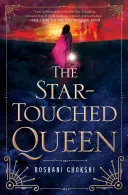





More Free Occult Philosophy Books
View all →