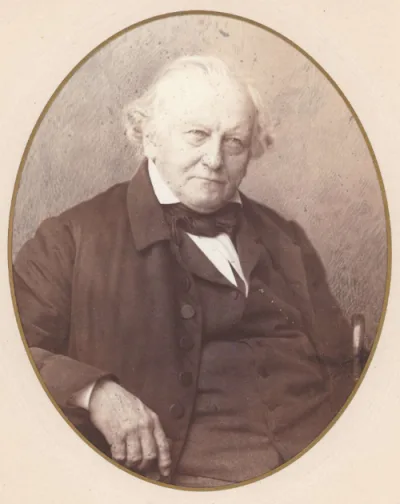
✍️ Author Biography
Lyndy Abraham
🌍 Russian
📚 2 free books
⭐ Known for: Fasciculus Chemicus (circa 1630s)
Arthur Dee was a physician to Russian and English royalty, and an alchemist whose work on the philosopher's stone was later decoded.
Arthur Dee, born in 1579, was the son of the famed John Dee and followed in his father's footsteps as an alchemist, while also establishing a career as a physician. He served as a doctor to Tsar Michael I of Russia for approximately 14 years, primarily in Moscow, where he authored "Fasciculus Chemicus," a compilation of alchemical writings. Upon his return to England after his wife's death in 1637, he was appointed physician to King Charles I.
Dee settled in London initially, advertising cures for various ailments. After his medical career, he moved to Norwich, where he befriended Sir Thomas Browne. His alchemical pursuits continued throughout his life. In 2018, a coded alchemical notebook of his was discovered, containing a purported recipe for the philosopher's stone. This text, deciphered in 2021, detailed a process involving an alchemical egg and a slow-burning furnace, aiming to produce an elixir capable of transmuting metals and granting immortality. Arthur Dee died in 1651, leaving behind many children and his alchemical manuscripts to Sir Thomas Browne. Some of his father's translated works were notably stolen and later recovered.
Early Life and Education
Arthur Dee was born on July 13, 1579, the eldest son of John Dee and his third wife, Jane. He spent his childhood accompanying his father on journeys across Europe, including Germany, Poland, and Bohemia. Upon returning to England, he attended Westminster School, beginning his studies there on May 3, 1592. While historical accounts suggest he may have studied at Oxford, he did not obtain a degree, and the specific college he might have attended remains unknown.
Medical Career and Alchemical Pursuits
Establishing himself in London as a physician, Arthur Dee advertised a list of remedies he claimed could cure numerous diseases. He was summoned by the College of Physicians, though the outcome of this encounter is not recorded. He later moved to Manchester, where he married Isabella Prestwych. Through the patronage of James I, Dee was appointed as one of the physicians to Tsar Michael I of Russia. He resided in Russia for about 14 years, mainly in Moscow, during which time he composed "Fasciculus Chemicus," a significant collection of alchemical texts. Following his wife's death in 1637, he returned to England and became a physician to King Charles I.
The Philosopher's Stone and Later Life
After his royal service, Arthur Dee retired to Norwich, where he formed a friendship with Sir Thomas Browne. His alchemical work continued, culminating in the discovery in 2018 of a coded text within his notebooks. This text, published and deciphered in 2021, presented a recipe for the philosopher's stone, an alchemical substance reputed to transmute base metals into gold and bestow immortality. The decoded instructions described a process involving an alchemical "egg" and a specialized furnace, leading through three stages (black, white, and red) to create a "gold-making elixir." Arthur Dee died in September or October 1651, bequeathing most of his alchemical writings to Sir Thomas Browne.
Key Ideas
- The pursuit of the philosopher's stone as an elixir for transmutation and immortality.
- Alchemical processes involving specific stages and apparatus like the athanor.