Angels, Demons & Gods of the New Millenium
 71
71

Angels, Demons & Gods of the New Millenium
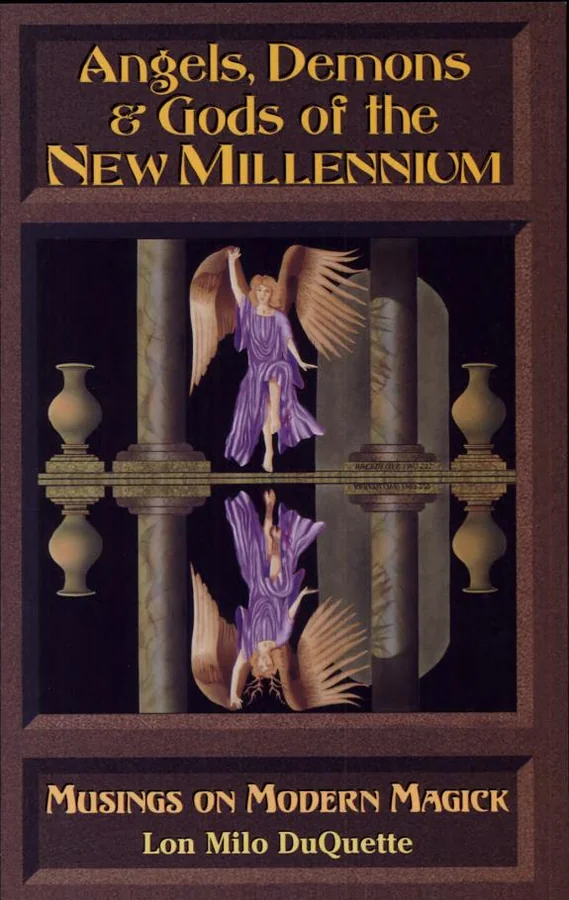
Duquette’s "Angels, Demons & Gods of the New Millenium" immediately distinguishes itself by its author’s unapologetic stance as a working ceremonial magician. He tackles the ethereal with a surprising practicality, eschewing New Age platitudes for explanations grounded in the mechanics of ritual and personal gnosis. The book's strength lies in its author's voice – witty, experienced, and unafraid to be mundane about the miraculous. His personal anecdotes, particularly those illustrating the often-unseen efforts required in magical work, lend an authenticity that many spiritual texts lack. A notable passage that exemplifies this is his discussion on the practicalities of constructing temple spaces, which reveals the material basis for spiritual endeavors. However, the book’s limitation for a broader audience might be its implicit assumption of familiarity with ceremonial magic’s technical vocabulary. While Duquette aims for clarity, some readers might find themselves needing supplemental texts to fully grasp the operational details he assumes. Nevertheless, for those willing to engage with its specific framework, the work offers a uniquely direct perspective on spiritual entities and their place in modern practice.
📝 Description
71
Lon Milo Duquette's 1997 book examines spiritual questions through a ceremonial magician's viewpoint.
Lon Milo Duquette's "Angels, Demons & Gods of the New Millenium" addresses contemporary spiritual inquiries from the perspective of a practicing ceremonial magician. Published in 1997, the book seeks to clarify the nature of entities and forces commonly discussed in New Age circles, drawing explanations from Western Hermeticism. Duquette writes directly and accessibly, merging personal experiences with thoughtful analysis to discuss the reality of spiritual beings and consciousness after death.
This work is intended for those interested in the practical application of esoteric principles, especially those drawn to ceremonial magic. It offers a straightforward view on subjects often presented vaguely. Readers curious about the foundations of the "New Age" movement or practitioners aiming to deepen their understanding of the magical worldview will find Duquette's method valuable. It is appropriate for students of Hermeticism and comparative religion at an intermediate level.
Released in the late 1990s, this book appeared during a time of growing interest in alternative spirituality and the internet's impact on esoteric groups. "Angels, Demons & Gods of the New Millenium" arrived as the New Age movement was solidifying, often with what Duquette critiques as superficiality. The book countered more abstract or philosophical views of magic and spirituality by emphasizing concrete results and personal gnosis, reflecting a stronger tradition of ceremonial practice.
💡 Why Read This Book?
• Gain a practical magician's perspective on the existence and interaction of angels, demons, and gods, moving beyond theoretical New Age concepts as explored in chapters discussing invocation. • Understand the specific spiritual currents and characteristics defining the "New Age" movement as analyzed by Duquette, offering a critical viewpoint distinct from popular interpretations. • Discover the tangible, ritualistic underpinnings of magical work through Duquette's personal anecdotes and explanations of ceremonial practice, providing actionable insight into spiritual mechanics.
⭐ Reader Reviews
Honest opinions from readers who have explored this book.
❓ Frequently Asked Questions
What is Lon Milo Duquette's background relevant to "Angels, Demons & Gods of the New Millenium"?
Duquette is a renowned practitioner and author in Western Esotericism, particularly ceremonial magic. His extensive experience, dating back decades before the book's 1997 publication, informs his practical and often humorous approach to spiritual entities.
Does the book discuss specific rituals or magical techniques?
Yes, while not a step-by-step grimoire, the book references and explains the principles behind ceremonial magical techniques, particularly concerning invocation and the magician's role in interacting with spiritual beings.
What distinguishes Duquette's view of angels and demons from common New Age beliefs?
Duquette presents angels and demons not just as archetypes or abstract concepts, but as distinct intelligences with which a practicing magician can and does interact, emphasizing the reality and efficacy of such engagements.
Is the book accessible to someone new to esoteric studies?
The book is written with a degree of wit and directness that aids accessibility. However, some familiarity with basic esoteric terminology or concepts, particularly from Western Hermeticism, would enhance the reader's comprehension.
What role does consciousness play in "Angels, Demons & Gods of the New Millenium"?
The book explores consciousness as a fundamental force, capable of interacting with spiritual realms and potentially surviving physical death. Duquette frames this within the context of magical practice and gnosis.
When was "Angels, Demons & Gods of the New Millenium" first published?
The original publication date for Lon Milo Duquette's "Angels, Demons & Gods of the New Millenium" was September 1, 1997.
🔮 Key Themes & Symbolism
The Magician's Reality
Duquette posits that angels, demons, and gods are not mere psychological projections but active, intelligent forces accessible through ceremonial magic. He emphasizes the magician's role as an agent capable of direct interaction, drawing upon the principles of Western Hermeticism. This perspective reframes spiritual entities from abstract concepts to tangible components of a magical cosmology, stressing the importance of gnosis and personal experience over dogma.
Defining the New Age
The book critically examines what constitutes the "New Age," moving beyond superficial trends to identify underlying spiritual currents. Duquette analyzes the characteristics that define this era of spirituality, contrasting it with historical esoteric movements. He seeks to establish a framework for understanding contemporary spiritual phenomena through the lens of ceremonial practice, questioning what makes this period distinct in its engagement with the sacred and the occult.
Consciousness and Survival
A significant theme is the nature of consciousness and its potential to transcend physical limitations. Duquette explores the concept of consciousness surviving death, integrating this idea with magical theory. The book suggests that understanding and manipulating consciousness is key to interacting with spiritual hierarchies, offering a practical approach to questions of life, death, and the persistence of the self beyond the material plane.
Practical Esotericism
Central to the work is the idea of esotericism as a practical discipline, not just a theoretical pursuit. Duquette uses personal anecdotes and clear explanations to illustrate how magical principles can be applied to engage with spiritual realities. The book advocates for a hands-on approach, clarifying complex subjects like divine and infernal hierarchies for the dedicated practitioner seeking tangible results in their spiritual work.
💬 Memorable Quotes
Direct passages from the work, attributed to the author.
“Are angels and demons real?”
— This question serves as a central thesis, challenging readers to consider the tangible existence of spiritual entities beyond mere metaphor or psychological construct, setting the stage for Duquette's practical exploration.
“What makes the New Age the New Age?”
— This query frames the book's analysis of contemporary spirituality, indicating an intent to dissect and define the unique characteristics of the late 20th-century spiritual landscape from an esoteric viewpoint.
“Does consciousness survive death?”
— Duquette directly addresses one of humanity's oldest questions, signaling his intention to explore this concept through the pragmatic and experiential lens of ceremonial magic, rather than purely philosophical or religious doctrines.
“Writing from the perspective of a practicing ceremonial magician...”
— This statement establishes Duquette's authority and unique methodology, promising an insider's view grounded in active ritual practice and personal gnosis, distinguishing his insights from purely academic or theoretical analyses.
“Illustrated and with color fold-out.”
— This detail highlights the book's visual components, suggesting that diagrams, symbols, or artistic representations are integral to understanding the concepts presented, enhancing the reader's engagement with the esoteric material.
🌙 Esoteric Significance
Tradition
The work is firmly situated within the Western Esoteric tradition, specifically drawing from Hermeticism and ceremonial magic. Duquette operates within a lineage that views spiritual entities as real forces capable of interaction through ritual. He departs from purely academic or psychological interpretations, emphasizing gnosis and practical application. His approach aligns with the Golden Dawn and similar magical orders, focusing on the magician's will and the structured invocation of various spiritual hierarchies.
Symbolism
Key symbols often explored in Duquette's milieu include the Pentagram, representing the microcosm and the elements, and the Hexagram, symbolizing the macrocosm and the union of opposites (as in the Seal of Solomon). While not explicitly detailed in the blurb, his work typically engages with the symbolism of divine names, angelic sigils, and the architecture of magical temples, all of which serve as focal points for directing consciousness and energy during ritual.
Modern Relevance
Duquette's perspective remains highly relevant for contemporary practitioners of ceremonial magic and Western Esotericism. Thinkers and groups focused on practical ritual, occult philosophy, and the integration of esoteric practices into modern life often cite his accessible yet authoritative style. His work continues to inform those exploring the nature of spiritual entities and the efficacy of magical techniques in the 21st century, bridging the gap between historical magical systems and current spiritual exploration.
👥 Who Should Read This Book
• Aspiring ceremonial magicians seeking a grounded, practical introduction to interacting with spiritual entities beyond purely theoretical New Age concepts. • Students of Western Esotericism and Hermeticism looking for an experienced practitioner's perspective on the nature of angels, demons, and gods in the late 20th century. • Comparative religion scholars or spiritual explorers interested in a frank, often humorous, examination of "New Age" phenomena from a magician's viewpoint.
📜 Historical Context
Published in September 1997, "Angels, Demons & Gods of the New Millenium" emerged during a vibrant, yet often fragmented, period for Western Esotericism. The mid-to-late 1990s saw a surge in popular interest in New Age spirituality, often characterized by eclectic borrowings and a focus on self-help. Duquette’s work, however, consciously anchored itself in the robust tradition of Western Hermeticism, particularly ceremonial magic. It implicitly critiqued the more diluted or superficial aspects of the contemporary spiritual scene by emphasizing rigorous practice and a structured cosmology. While authors like Doreen Virtue were popularizing angel work with a softer, more therapeutic approach, Duquette offered a perspective rooted in older magical lineages, engaging with entities like demons and gods with a magician's directness. The book's reception likely appealed to those seeking a more serious, less whimsical engagement with the occult, valuing Duquette's experienced voice and his commitment to the practical application of magical theory.
📔 Journal Prompts
The magician's role in interacting with spiritual entities, as described by Duquette.
Defining characteristics of the "New Age" movement through a ceremonial magician's eyes.
The concept of consciousness survival and its implications for magical practice.
Personal reflections on the reality of angels and demons as presented in the book.
How the book's blend of humor and seriousness impacts the understanding of esoteric topics.
🗂️ Glossary
Ceremonial Magic
A system of ritual magic, often elaborate and symbolic, practiced within Western Esotericism. It typically involves structured invocations, evocations, and the use of specific tools and correspondences to achieve spiritual or material results.
Hermeticism
A philosophical and religious tradition based on the purported teachings of Hermes Trismegistus. It emphasizes divine wisdom, the interconnectedness of all things, and the pursuit of gnosis through understanding principles like 'As Above, So Below'.
New Age
A broad spiritual movement that emerged in the 1970s, often characterized by eclectic beliefs, holistic approaches to health and spirituality, and an interest in metaphysics, paranormal phenomena, and Eastern/Western esoteric traditions.
Gnosis
Spiritual knowledge or insight, particularly the direct, intuitive understanding of spiritual truths, often seen as a pathway to liberation or enlightenment within esoteric traditions.
Invocation
The act of calling upon or inviting a divine or spiritual entity, force, or quality to manifest or inhabit the practitioner, often for purposes of inspiration, guidance, or empowerment.
Ceremonial Magician
An individual who practices ceremonial magic, engaging in ritualistic practices designed to interact with spiritual or supernatural forces for defined purposes.
Western Hermeticism
The body of esoteric traditions and magical practices in the Western world influenced by Hermetic philosophy, encompassing alchemy, astrology, Kabbalah, and ceremonial magic.
This book appears in 1 collection
🔮 Readers Also Liked
Browse all →









From the “Angels” Collection
View all →


More Free Occult Philosophy Books
View all →