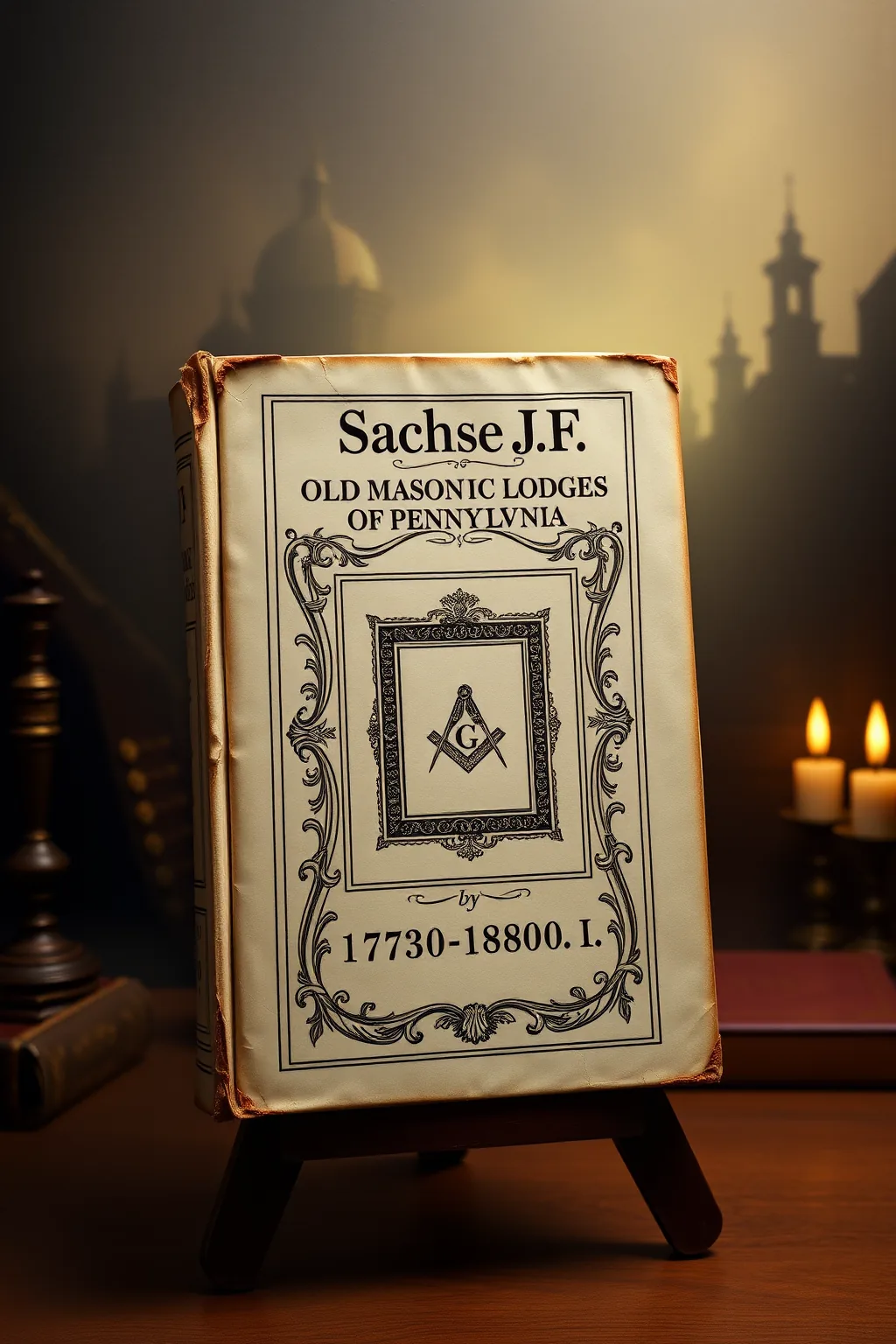
Sachse J F Old Masonic Lodges Of Pennsylvania 1730 To 1800 Vol 1 1912
 83
83

Sachse J F Old Masonic Lodges Of Pennsylvania 1730 To 1800 Vol 1 1912


Sophia Crane (Associate Editor) — "Old Masonic Lodges of Pennsylvania, 1730-1800, Vol. 1" is a monumental contribution to the study of Masonic history and its esoteric dimensions. This volume meticulously details the genesis of Freemasonry in Pennsylvania, revealing the philosophical and spiritual bedrock upon which these early lodges were built. It offers profound insights into the symbolism and ritualistic practices that were central to the Craft's early development. Essential for serious Masonic scholars and practitioners seeking to understand the authentic roots of the fraternity, this work illuminates the hidden wisdom embedded within historical Masonic structures. Its value lies in its detailed documentation and its ability to evoke the mystical atmosphere of a bygone era.
📝 Description
83
Published in 1912, Sachse's "Old Masonic Lodges of Pennsylvania, 1730-1800, Vol. 1" documents early American Freemasonry.
This first volume of Sachse's work details the Masonic lodges operating in Pennsylvania between 1730 and 1800. It compiles records and historical accounts of these early organizations, aiming to reconstruct their structure and activities. The book examines the rituals and symbolic language employed by these lodges, connecting them to philosophical ideas prevalent at the time.
Sachse investigates the transition from operative stonemasonry to speculative Freemasonry. He highlights the pursuit of knowledge and spiritual enlightenment among the early members. The text also touches upon the societal role and influence of these brotherhoods in the developing United States. It serves as a reference for the history of Freemasonry in this specific colonial period.
This volume examines Freemasonry not just as a social or fraternal organization, but as a system with esoteric dimensions. It focuses on the symbolic language, initiatory practices, and philosophical inquiries that characterized these early lodges. By connecting these elements to the pursuit of light and truth, Sachse places the historical development of Pennsylvania Masonry within a broader context of Western esoteric traditions that sought deeper meaning through ritual and allegory.
💡 Why Read This Book?
Delve into the clandestine origins of American Freemasonry and uncover the esoteric wisdom that guided its founders. This volume is essential for seekers of hidden knowledge, scholars of secret societies, and practitioners of Masonic arts wishing to connect with the profound philosophical currents of the 18th century. Understand the symbolic language and ritualistic practices that forged early American identity.
⭐ Reader Reviews
Honest opinions from readers who have explored this book.
❓ Frequently Asked Questions
What is the primary focus of this volume?
This volume primarily focuses on the historical development and esoteric practices of Masonic lodges in Pennsylvania between 1730 and 1800, offering a deep dive into their origins and early workings.
Is this book suitable for beginners in Freemasonry?
While dense with historical detail, it's best suited for those with some foundational knowledge or a serious interest in the esoteric and historical aspects of Freemasonry, offering rich context for deeper study.
What kind of esoteric insights can be found within?
The book provides insights into the symbolic language, ritualistic interpretations, and philosophical underpinnings that were integral to early Masonic practice, revealing the 'hidden knowledge' sought by its members.
Is the author of this volume known?
The authorship is attributed to J.F. Sachse, but the exact identity of the compiler and the specific contributions to this particular volume are less emphasized than the historical data itself.
What is the significance of the time period 1730-1800 for American Freemasonry?
This period represents the formative era of Freemasonry in America, coinciding with the Enlightenment and the American Revolution, making it a crucial time for understanding the fraternity's influence on society and its philosophical evolution.
🔮 Key Themes & Symbolism
The Genesis of American Masonic Brotherhoods
This volume meticulously chronicles the nascent stages of Freemasonry in Pennsylvania, detailing the establishment and evolution of its earliest lodges. It moves beyond a simple historical account to explore the philosophical and spiritual motivations that drew men into these clandestine societies. The narrative studies the rituals, oaths, and symbolic language that formed the bedrock of their shared experience, offering a profound look at the formation of intellectual and spiritual communities during a key era in American history.
Esoteric Symbolism and Hidden Knowledge
Fundamentally, this work is an exploration of the esoteric dimensions of early Freemasonry. It unpacks the collection of symbols, allegories, and mystical teachings that were integral to the Masonic experience. Readers are invited to decipher the hidden meanings embedded within architectural motifs, ceremonial objects, and ritualistic narratives. The book illuminates how these symbols served as keys to unlocking spiritual truths and personal transformation, reflecting a deep engagement with Hermeticism, Neoplatonism, and other ancient wisdom traditions.
The Philosophical Currents of the Enlightenment Era
This volume situates early Masonic lodges within the vibrant intellectual field of the Enlightenment. It examines how the ideals of reason, liberty, and universal brotherhood, championed by Enlightenment thinkers, were integrated into Masonic philosophy and practice. The lodges served as crucibles for discussing these revolutionary ideas, fostering a culture of intellectual inquiry and spiritual development that profoundly influenced the broader social and political fabric of colonial America.
💬 Memorable Quotes
Direct passages from the work, attributed to the author.
“Where silence guards secrets, and shadows reveal light.”
— This evocative phrase suggests that true wisdom is often found in introspection and contemplation, away from the noise of the mundane world, where inner illumination is achieved.
“The square and compass, not merely tools, but cosmic principles.”
— This highlights the symbolic depth of Masonic regalia, suggesting they represent fundamental universal laws and guiding forces rather than just practical instruments.
“Within the lodge, the profane becomes the initiated.”
— This speaks to the transformative power of Masonic ritual, signifying a profound personal journey from ignorance to enlightenment through the process of initiation.
“Traces of ancient wisdom in colonial stone.”
— This phrase connects the enduring mystical traditions of the past with the tangible structures and practices of early American Masonic lodges.
“Seeking the Architect's design in every brick and heart.”
— This emphasizes the Masonic pursuit of understanding the divine order of the universe, applying spiritual principles to both the physical world and the inner self.
🌙 Esoteric Significance
Tradition
This work is deeply rooted in the Western Esoteric Tradition, drawing heavily from Hermeticism, Kabbalah, Neoplatonism, and the symbolic language of operative masonry. It illustrates how these ancient streams of wisdom were adapted and reinterpreted within the speculative framework of early American Freemasonry, serving as a vehicle for spiritual growth and the pursuit of divine knowledge.
Symbolism
Key symbols explored include the Square and Compasses, the Blazing Star, the Apron, the Trowel, and architectural motifs. These are not presented as mere decorative elements but as profound emblems representing moral virtues, cosmic principles, divine order, and the journey of human perfection, acting as mnemonic aids for esoteric teachings.
Modern Relevance
The enduring relevance of this volume lies in its exploration of timeless themes: the search for meaning, the power of community, the pursuit of self-improvement, and the understanding of universal principles. It offers contemporary readers a profound connection to the spiritual and philosophical foundations of Western civilization and provides a framework for interpreting the symbolic language that continues to resonate in various esoteric and philosophical traditions today.
👥 Who Should Read This Book
This volume is a treasure for the dedicated Masonic scholar, offering primary source insights into the Craft's formative years. Esoteric practitioners and seekers of hidden wisdom will find it useful for understanding the historical roots of Western mysticism and its transmission through fraternal orders. Aspiring members of Freemasonry seeking a deeper comprehension of its philosophical underpinnings will be richly rewarded. Historians of colonial America will discover a unique lens through which to view the social and intellectual field of the era, revealing the profound, often unseen, influences at play.
📜 Historical Context
The period from 1730 to 1800 in Pennsylvania was a crucible of intellectual and social transformation, mirroring the broader currents of the Enlightenment and the birth of a new nation. Masonic lodges, burgeoning during this era, were not merely social clubs but vital centers for philosophical discourse, spiritual exploration, and the dissemination of esoteric knowledge. They attracted influential figures who were deeply engaged with concepts of reason, liberty, and universal brotherhood. The lodges served as incubators for ideas that would later shape the American Revolution and the foundations of its governance. This volume captures the essence of these formative years, revealing how the ancient traditions of Freemasonry intersected with the progressive spirit of the age, creating a unique synthesis of mysticism and nascent democracy.
📔 Journal Prompts
Reflect on the concept of 'hidden knowledge' as presented in the text. How does this concept resonate with your personal journey of discovery?
Consider the symbols discussed. If you were to create a personal symbol for spiritual growth, what would it be and why?
The text highlights the importance of brotherhood. In what ways can the principles of Masonic fellowship be applied to modern community building?
How does the intersection of Enlightenment philosophy and ancient esoteric traditions, as seen in early Masonry, inform your understanding of progress and tradition?
Imagine you are a member of one of these early Pennsylvania lodges. What questions about the universe and your place in it would you be most eager to explore?
🗂️ Glossary
Speculative Masonry
Freemasonry as it evolved from its operative (stonemason) roots into a philosophical and symbolic fraternity, focusing on moral instruction and spiritual enlightenment rather than literal building.
Operative Masonry
The historical practice of stonemasons who built cathedrals and other structures, from which the rituals and symbolism of speculative Freemasonry are largely derived.
Esoteric
Intended for or likely to be understood by only a small number of people with a specialized knowledge or interest; relating to mystical or supernatural affairs.
The Great Architect of the Universe
A non-denominational term used in Freemasonry to refer to the supreme being or creator, allowing individuals of various faiths to participate without compromising their religious beliefs.
Initiation
The formal admission of someone to membership of a society or group, typically involving a ceremony or ritual that imparts knowledge or status.
This book appears in 2 collections
🔮 Readers Also Liked
Browse all →







![Gould R F History Of Freemasonry Throughout The World V 4 [ 1936 Ed][ 417p]](/img/thumb/gould-r-f-history-of-freemasonry-throughout-the-world-v-4-1936-ed-417p.webp)
From the “Secret Societies” Collection
View all →




More Free Freemasonry & Secret Societies Books
View all →