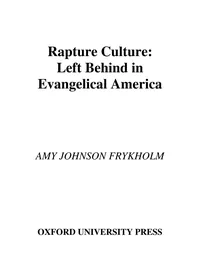
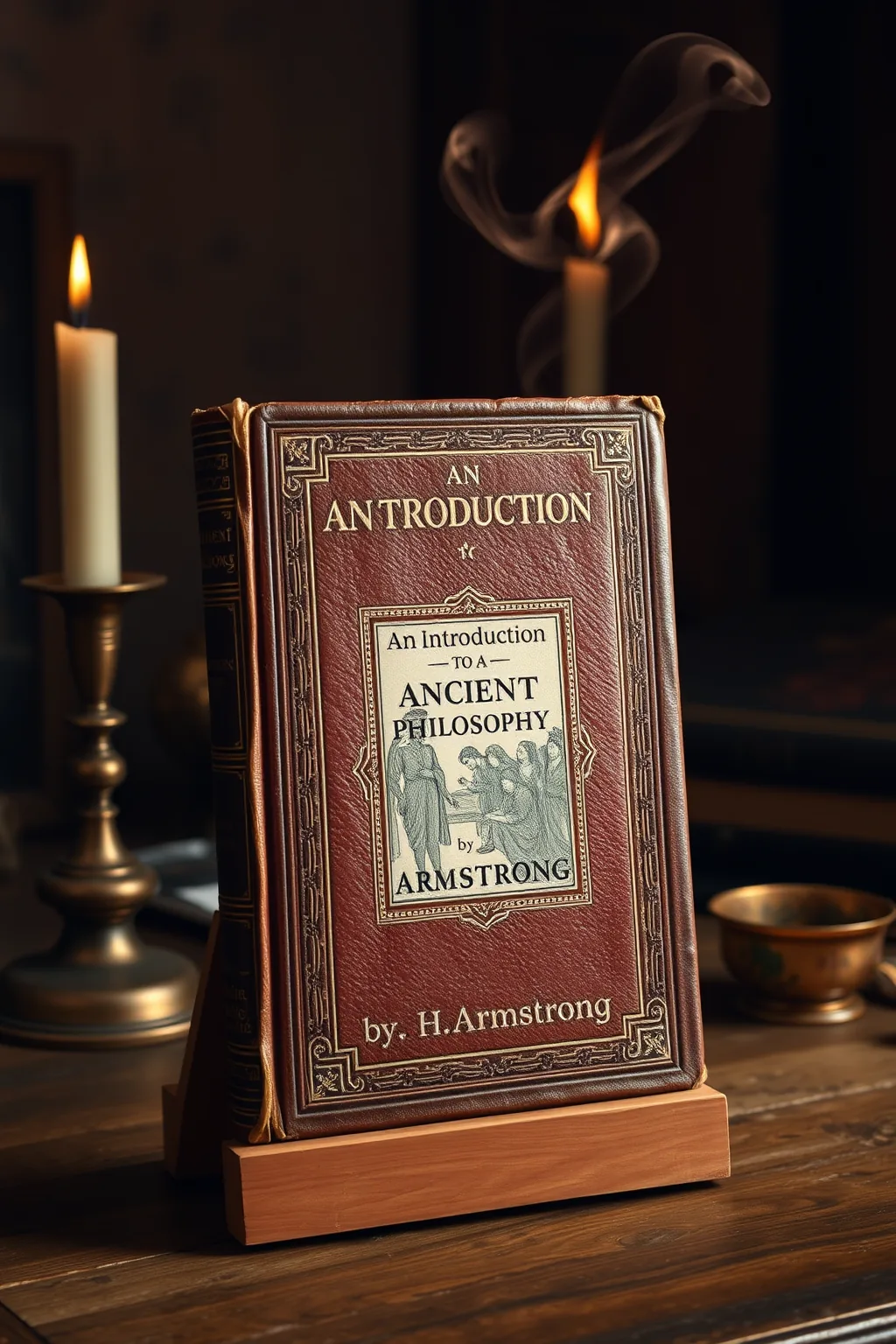
An introduction to ancient philosophy
 74
74

An introduction to ancient philosophy
Armstrong’s survey, An Introduction to Ancient Philosophy, presents a lucid, if somewhat dry, exposition of classical thought. Its strength lies in its clear delineation of major schools and their foundational arguments, particularly its treatment of the Platonic tradition and its subsequent developments into Neoplatonism. However, the book’s 1957 publication date means its scholarly apparatus feels dated; it lacks engagement with later critical perspectives that have reshaped our understanding of figures like Plotinus. The section on Stoicism, while accurate, could benefit from a more dynamic presentation of its ethical implications, which Armstrong tends to present as purely theoretical. Overall, it’s a competent primer for those seeking a foundational understanding of ancient Greek and Roman philosophy, especially as a precursor to later metaphysical systems.
📝 Description
74
A. H. Armstrong's 1957 introduction surveys ancient philosophy beyond mere chronology.
Published in 1957, A. H. Armstrong's introduction offers a survey of ancient philosophy that moves beyond a simple timeline. The book focuses on the core ideas and schools of thought that influenced Western intellectual history. Armstrong examines foundational concepts, significant thinkers, and the progression of philosophical inquiry from its earliest manifestations through the later Hellenistic and Roman eras.
This text is structured for students and enthusiasts of classical philosophy who seek a clear overview. It helps readers understand the development of ideas that led into later metaphysical and esoteric traditions. Those interested in the origins of concepts that still shape modern thought, especially within Western esoteric lineages, will find this a useful starting point. It is suitable for anyone beginning a serious study of pre-Christian and early Christian philosophical systems.
Armstrong's work, published in the mid-20th century, arrived during a time of renewed academic focus on classical antiquity. It contributed to scholarship that sought to interpret and share ancient Greek and Roman philosophy. The book's aim was to present an accessible yet informed account of ancient philosophical movements and thinkers, positioning itself within the academic milieu of its time. It addresses concepts that would later inform various esoteric traditions.
💡 Why Read This Book?
• Gain a foundational understanding of Plato's Theory of Forms, a concept central to Western idealism and esoteric philosophies, enabling you to trace its influence. • Grasp the core tenets of Stoicism as presented by Armstrong, allowing for an informed comparison with modern applications of its ethical framework. • Understand the philosophical underpinnings of Neoplatonism, a school directly influencing Hermeticism and Christian mysticism, providing context for later esoteric developments.
⭐ Reader Reviews
Honest opinions from readers who have explored this book.
❓ Frequently Asked Questions
What ancient philosophical schools does A. H. Armstrong's book primarily cover?
A. H. Armstrong's An Introduction to Ancient Philosophy primarily covers Presocratic thought, Platonism, Aristotelianism, Stoicism, Epicureanism, Skepticism, and Neoplatonism, offering a broad survey of the classical philosophical landscape.
When was 'An Introduction to Ancient Philosophy' first published?
The book 'An Introduction to Ancient Philosophy' by A. H. Armstrong was first published in 1957, placing it within mid-20th century scholarship on classical antiquity.
Does the book discuss Plato's Theory of Forms?
Yes, the work explores foundational concepts like Plato's Theory of Forms, explaining its significance in ancient thought and its role as a precursor to later metaphysical systems.
Is this book suitable for someone new to philosophy?
Yes, as an 'introduction,' the book is designed for students and enthusiasts beginning their study of classical philosophy, providing a structured overview of key thinkers and ideas.
What is the relationship between Neoplatonism and later esoteric traditions discussed?
The book details Neoplatonism, explaining its philosophical concepts which served as a crucial bridge and influence for later mystical, Gnostic, and Hermetic traditions in the West.
Does Armstrong's book mention specific ancient Greek philosophers by name?
Absolutely. The text frequently references key figures such as Plato, Aristotle, Plotinus, Zeno of Citium, and Epicurus, discussing their core philosophical contributions.
🔮 Key Themes & Symbolism
The Theory of Forms
Armstrong's exposition of Plato's Theory of Forms is central for understanding the metaphysical underpinnings of Western thought. This concept posits a area of perfect, eternal, and unchanging 'Forms' or 'Ideas' that are the true reality, with the physical world being merely a shadow or imperfect copy. This dualistic framework—the intelligible versus the sensible—provides a conceptual basis for later Neoplatonic and Gnostic cosmologies, influencing how reality is perceived in esoteric traditions as hierarchical and layered, with ultimate truth residing in a non-material, transcendent realm.
Stoic Ethics and Logos
The book details the Stoic philosophy, emphasizing its ethical system centered on living in accordance with nature and reason (Logos). This rational principle, governing the cosmos, is presented as the key to achieving virtue and tranquility. For esoteric traditions, the Stoic concept of an immanent divine reason offers a bridge to understanding concepts of universal consciousness or a divine order inherent in existence, influencing practices that seek alignment with cosmic principles and the cultivation of inner resilience.
Neoplatonic Metaphysics
Armstrong dedicates attention to Neoplatonism, particularly the ideas of Plotinus. This school synthesizes Platonic thought with mystical elements, describing reality as emanating from a singular, transcendent principle (The One). The process of emanation and the soul's potential for mystical ascent back to The One are core themes. This provides a direct lineage to many Western esoteric paths, including Hermeticism and various forms of mysticism, offering a framework for spiritual experience and a hierarchical understanding of existence.
The Soul and its Destiny
Across various schools discussed, the nature and fate of the soul is a recurring preoccupation. From Plato's immortal soul seeking recollection of the Forms to Neoplatonism's ascent, the book outlines different conceptions of the soul's journey. This focus on the soul’s existential quest and its potential for purification or union with the divine is a fundamental element that resonates through centuries of esoteric thought, providing a framework for understanding spiritual evolution and liberation.
💬 Memorable Quotes
Direct passages from the work, attributed to the author.
“The Forms are the true reality.”
— This concise statement captures the essence of Plato's theory, positing that abstract, perfect concepts are more real than the physical objects we perceive, a foundational idea for idealism and metaphysics.
“Live in accordance with nature.”
— Representing the core ethical imperative of Stoicism, this phrase emphasizes aligning one's actions and will with the rational order of the universe, a principle echoed in many contemplative traditions.
“The One is beyond being.”
— This Neoplatonic concept, attributed to Plotinus, suggests a supreme, ultimate reality that transcends all categories of existence and thought, a key tenet in mystical philosophy.
“Philosophy is the practice of death.”
— While often attributed to Plato, this sentiment reflects the ancient philosophical pursuit of detaching the soul from worldly concerns to focus on higher truths, a theme relevant to ascetic and mystical practices.
“The world is governed by reason (Logos).”
— This Stoic belief in a rational, ordered universe provides a framework for understanding Providence and natural law, influencing later ideas about cosmic structure and divine immanence.
🌙 Esoteric Significance
Tradition
This work is foundational for understanding the philosophical lineage that directly informs Western Esotericism, particularly Hermeticism and Neoplatonism. Armstrong's clear exposition of Platonic Forms and Plotinus' emanations provides the intellectual architecture for many later mystical and occult systems. It outlines the conceptual framework—the hierarchy of being, the nature of the soul, and the pursuit of transcendent knowledge—that underpins esoteric practices seeking union with the divine or comprehension of hidden realities.
Symbolism
Key symbolic concepts include Plato's 'Forms' as perfect archetypes, representing an ideal, immutable reality beyond the sensory world. The Stoic 'Logos' symbolizes the immanent divine reason pervading the cosmos, a universal order. In Neoplatonism, 'The One' signifies the ultimate, ineffable source from which all existence emanates, and the soul's 'ascent' symbolizes the spiritual journey of return to this divine origin.
Modern Relevance
Contemporary practitioners of Hermeticism, Kabbalah, and various forms of modern occultism frequently engage with the philosophical concepts detailed by Armstrong. Thinkers in the perennial philosophy tradition also draw upon his work to identify universal spiritual truths across different cultures and eras. The book's exploration of Neoplatonism remains particularly relevant for understanding the metaphysical underpinnings of contemporary spiritual movements seeking direct experience of higher realities.
👥 Who Should Read This Book
• Students of Western Esotericism seeking to understand the philosophical roots of traditions like Hermeticism and Neoplatonism, gaining context for symbolic systems and metaphysical concepts. • Academic researchers in Classics or the History of Philosophy who require a concise overview of ancient schools and their key thinkers, as presented by mid-20th century scholarship. • Individuals interested in the origins of Western idealism and metaphysics, looking to trace the development of ideas about reality, knowledge, and the soul from ancient Greece to the Roman era.
📜 Historical Context
First published in 1957, A. H. Armstrong's *An Introduction to Ancient Philosophy* emerged during a period of significant academic engagement with classical thought. The mid-20th century was marked by extensive scholarly efforts to interpret and disseminate the works of Greek and Roman philosophers, building upon earlier philological traditions. While figures like Bertrand Russell had offered more polemical histories of Western philosophy, Armstrong's work aimed for a more focused, academic survey. It appeared in an intellectual climate where the legacy of thinkers like Plato and Aristotle was being re-examined, and the development of Neoplatonism was gaining traction as a crucial bridge to later mystical traditions. The book offered a structured counterpoint to more existentialist or linguistic analyses of philosophy prevalent at the time, grounding its discussion in the historical development of ideas, notably the influence of Plotinus on subsequent thought.
📔 Journal Prompts
The Platonic Form of the Good as an ultimate principle.
The Stoic concept of living in accordance with Logos.
Plotinus' description of the soul's emanation from The One.
Aristotle's Prime Mover and its implications for causation.
The philosophical distinction between the sensible and intelligible realms.
🗂️ Glossary
Logos
In Stoic philosophy, the divine reason or universal principle that governs and permeates the cosmos. It represents the rational order of the universe, influencing nature and human reason.
Theory of Forms
Plato's central metaphysical doctrine, proposing that physical objects are imperfect copies of eternal, perfect, and unchanging 'Forms' or 'Ideas' that exist in an intelligible realm.
Emanation
In Neoplatonism, the process by which reality flows or issues forth from a single, transcendent source (The One) in a series of descending levels or hypostases.
The One
The ultimate, ineffable, and transcendent principle in Neoplatonism, from which all existence emanates. It is beyond being, thought, and description.
Metaphysics
The branch of philosophy concerned with the fundamental nature of reality, including existence, being, time, space, causality, and the relationship between mind and matter.
Cosmology
The study of the origin, evolution, and structure of the universe, often encompassing philosophical and theoretical aspects of the physical world and its fundamental laws.
Hellenistic Philosophy
The period of philosophy following Aristotle (roughly 323 BCE to 31 BCE), characterized by schools like Stoicism, Epicureanism, and Skepticism, focusing heavily on ethics and practical living.
🔮 Readers Also Liked
Browse all →









More by A. H. Armstrong
All books →


More Free Occult Philosophy Books
View all →