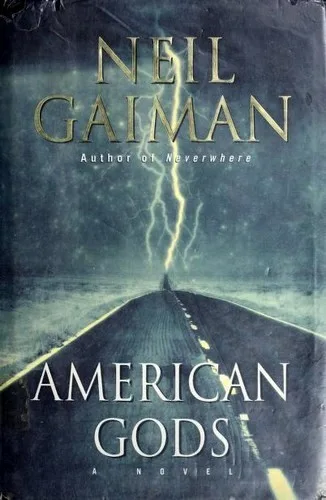
American Gods
 76
76

American Gods
Gaiman's "American Gods" is a sprawling, ambitious novel that interrogates the nature of belief and the American psyche. Its strength lies in its imaginative premise and the sheer scope of its mythological reimagining, placing Odin and Anansi alongside the gods of the internet and television. The character of Shadow Moon is compellingly stoic, serving as an effective anchor in a world of shifting divine allegiances. However, the narrative occasionally feels overstuffed, with certain plot threads and character arcs left less developed than others, particularly in the book's latter half. The depiction of the "new gods" sometimes borders on caricature, though this serves Gaiman's purpose. A passage describing the initial arrival of the Old Gods on American shores, clinging to their fading power, offers a potent metaphor for immigrant experience and the erosion of faith. Ultimately, "American Gods" is a potent, if sometimes unwieldy, exploration of faith and identity in the modern age.
📝 Description
76
Neil Gaiman's 2001 novel pits old gods against new ones in a mythological road trip across America.
Neil Gaiman's "American Gods," published in 2001, imagines a conflict between deities who arrived in America with immigrants and those born from modern obsessions. The story centers on Shadow Moon, a former convict drawn into this divine war as he travels the country. He encounters figures like Odin, now calling himself Mr. Wednesday, and the new gods representing media, technology, and celebrity. The narrative unfolds as a journey through the American landscape, revealing how belief shapes the very existence of gods.
The novel questions the nature of faith and worship in a rapidly changing world. It examines how old deities, once sustained by their followers, fade as new forms of worship emerge. Conversely, the modern era has birthed new gods from our fascination with screens, fame, and innovation. This dynamic plays out as Shadow Moon grapples with his own role in the escalating war between these divine factions. Gaiman blends folklore, mythology, and a distinctly American setting to create a story about belief, identity, and the persistence of the sacred.
"American Gods" taps into a long tradition of exploring how cultural beliefs manifest as divine entities. It echoes ancient myths where the rise and fall of pantheons mirrored societal shifts. The book specifically engages with the idea that gods require worship to survive, a concept found in various mythologies and esoteric traditions. Gaiman's work highlights the mutable nature of faith, suggesting that as human focus shifts, so too do the objects of devotion and the beings that gain power from them. This reflects a broader interest in how spiritual energy coalesces around collective human attention.
💡 Why Read This Book?
• Understand how belief shapes reality, as Gaiman illustrates through the power dynamics between the Old Gods and the New Gods, demonstrating that divine strength is tied directly to human worship, a concept explored through the character of Wednesday. • Gain insight into the immigrant experience and cultural displacement by examining the journey of deities like Czernobog and the various Slavic gods, who represent the fading echoes of ancestral faiths in a new land. • Explore the modern American landscape as a battleground for ancient and nascent mythologies, seeing how concepts like Media and Technology manifest as deities, offering a unique perspective on contemporary obsessions.
⭐ Reader Reviews
Honest opinions from readers who have explored this book.
❓ Frequently Asked Questions
What are the 'Old Gods' in Neil Gaiman's American Gods?
The 'Old Gods' are deities brought to America by immigrants from various cultures, including Norse, Slavic, African, and Egyptian traditions. Examples include Odin (Wednesday), Anansi, and Czernobog, whose power wanes as their followers diminish.
Who is Shadow Moon and what is his role?
Shadow Moon is the protagonist, a former convict who becomes involved with the mysterious Mr. Wednesday. He acts as a reluctant bodyguard and operative for the Old Gods, navigating their conflict with the New Gods.
What are the 'New Gods' in American Gods?
The 'New Gods' represent modern American obsessions and technologies. They include figures like Media (a television personality), Technology (a digital entity), and Mr. World, who thrive on contemporary attention and worship.
What is the significance of the road trip element in American Gods?
The cross-country journey undertaken by Shadow and Wednesday symbolizes the vastness of America and the dispersed nature of both old and new deities. It mirrors the nation's history of migration and the evolving landscape of belief.
Does American Gods have a basis in real mythology?
Yes, "American Gods" draws heavily on a wide array of real-world mythologies, including Norse, Greek, Egyptian, and African folklore. Gaiman reinterprets these ancient figures within a contemporary American setting.
What year was Neil Gaiman's American Gods first published?
Neil Gaiman's "American Gods" was first published in 2001.
🔮 Key Themes & Symbolism
Deities and Belief
The central tenet of "American Gods" is that divine entities exist solely through the belief and worship of humans. Gaiman posits that as immigrants arrived in America, they brought their gods, who drew sustenance from their followers. However, as these followers assimilate or pass away, and as new societal obsessions emerge, the old gods weaken. This creates a fascinating dynamic where the pantheon of deities is constantly in flux, reflecting the shifting range of human faith and attention. The novel meticulously details how figures like Odin, known as Wednesday in the narrative, struggle for relevance against newer manifestations of worship tied to media and technology.
The American Identity
"American Gods" uses its mythological framework to dissect the very concept of American identity. The nation itself is portrayed as a melting pot not just of people, but of their spiritual and cultural legacies. The old gods, representing diverse ancestral traditions, are often depicted as marginalized and struggling to adapt, mirroring the experiences of immigrant communities. Conversely, the new gods, born from contemporary American culture, embody its anxieties and obsessions. Through Shadow Moon's journey, the book explores what it means to be American, caught between inherited traditions and the pressures of a rapidly evolving society.
Tradition vs. Modernity
The novel presents a stark dichotomy between ancient traditions and the relentless march of modernity. The old gods embody the power of established myths, rituals, and collective memory, while the new gods represent the ephemeral allure of contemporary life – celebrity, technology, and instant gratification. Gaiman illustrates how the latter can easily supplant the former, not through direct conquest, but through a slow erosion of attention and devotion. This theme is particularly potent in the context of globalization and the digital age, where old ways of being and believing are constantly challenged by new forms of engagement.
The Sacred in the Mundane
A core esoteric idea explored is that the divine can manifest in the most ordinary aspects of life. Gaiman grounds his mythological conflict within the everyday reality of America – roadside attractions, small towns, and anonymous highways. The gods walk among us, often disguised or diminished, their power tied to seemingly mundane things like television screens or the internet. This perspective suggests that spirituality is not confined to temples or ancient texts, but is woven into the fabric of contemporary existence, waiting to be recognized by those who look closely enough.
💬 Memorable Quotes
Direct passages from the work, attributed to the author.
“"You can't kill a god. You can only forget them."”
— This statement speaks to the ephemeral nature of divine power in the novel. It suggests that gods are sustained by memory and belief, and their demise comes not from physical destruction, but from being rendered obsolete and forgotten by humanity.
💡 Key Ideas
Editorial paraphrase of the work's core concepts — not direct quotes.
"America is a place where you can be anyone you want to be."
This line captures the novel's exploration of identity and reinvention within the American context. It speaks to the nation's promise of self-creation, a concept that extends even to the gods who adapt or perish based on the beliefs they inspire.
"The new gods are the gods of the media, the gods of the internet, the gods of the credit card."
This quote explicitly defines the antagonists to the old pantheon. It highlights Gaiman's assertion that modern society's obsessions and technologies have birthed new deities, who vie for human attention and worship against ancient forces.
"People believed in gods because they needed to."
This paraphrased concept underscores the fundamental principle driving the narrative: the existence and power of deities are directly proportional to human faith. It explains why old gods fade and new ones rise in response to societal shifts.
"Every story ends. That's the thing about stories. They end. But if you dig deep enough, you can often find the beginnings of other stories."
This quote reflects Gaiman's narrative philosophy, suggesting a cyclical nature to myth and storytelling. It implies that even as one narrative concludes, the underlying archetypes and themes persist, seeding new tales and interpretations across time.
🌙 Esoteric Significance
Tradition
While not strictly adhering to a single lineage, "American Gods" resonates strongly with modern pagan and polytheistic traditions that emphasize the vitality of ancient deities in contemporary life. It echoes Theosophical ideas about the evolution of consciousness and the manifestation of spiritual forces in the material world. The work departs from more rigid Hermetic or Kabbalistic systems by focusing on the fluid, often chaotic, nature of belief and the democratic, rather than hierarchical, genesis of divine power.
Symbolism
The raven, frequently associated with Odin (Wednesday), symbolizes wisdom, prophecy, and the liminal space between worlds. The highway itself functions as a potent symbol of the American journey, migration, and the ceaseless movement that defines the nation's identity, serving as the primary stage for divine conflict. The concept of the 'thin places' – locations where the veil between the mundane and the supernatural is weak – is also a recurring motif, suggesting that divinity can be found in unexpected, often overlooked, corners of the landscape.
Modern Relevance
Contemporary practitioners of eclectic paganism and comparative mythology often cite "American Gods" as a significant text for understanding the persistence of myth in secular society. Its exploration of how belief shapes reality informs modern discussions on the power of narrative and collective consciousness. Thinkers in fields examining media studies and digital culture also draw parallels to the novel's depiction of technology and celebrity as forces capable of generating their own forms of worship and influence.
👥 Who Should Read This Book
• Readers interested in comparative mythology and folklore who wish to see ancient deities reimagined within a modern American context, exploring concepts like Odin and Anansi. • Aspiring writers and storytellers seeking inspiration for blending the fantastical with the mundane, understanding how to ground supernatural elements in realistic settings and character journeys. • Individuals curious about the nature of belief, the evolution of faith, and how societal changes can impact spiritual landscapes, offering a unique perspective on the gods of tradition versus the gods of technology.
📜 Historical Context
Published in 2001, Neil Gaiman's "American Gods" emerged at a central moment, reflecting anxieties about national identity and the pervasive influence of media. The novel tapped into a burgeoning interest in mythology and folklore within contemporary fiction, a trend also seen in works by authors like Charles de Lint. It arrived shortly after the September 11th attacks, amplifying its themes of cultural displacement and the search for meaning in a fractured world. Gaiman's work can be seen as a response to a post-modern cultural landscape where traditional belief systems were increasingly challenged by secularism and technological saturation. While Gaiman himself has cited influences from authors like Roger Zelazny and his "Lord of Light," "American Gods" distinguished itself by directly confronting the American mythos and its often-forgotten immigrant roots, setting it apart from more purely fantastical contemporaries. Its reception was broadly positive, cementing Gaiman's reputation as a master storyteller capable of blending diverse mythological traditions with sharp social commentary.
📔 Journal Prompts
The fading power of the Old Gods and their struggle for relevance.
Shadow Moon's perception of divinity amidst the ordinary American landscape.
The symbolic significance of roadside attractions in housing forgotten deities.
Czernobog's perspective on the loss of his ancestral worship.
The contrast between worship of Media and worship of ancient hearth gods.
🗂️ Glossary
Old Gods
Deities brought to America by immigrants, such as Odin (Wednesday), Anansi, and Czernobog, whose power diminishes as their worshippers decline or forget them.
New Gods
Entities representing modern American obsessions like Media, Technology, and Mr. World, who thrive on contemporary attention and worship.
Shadow Moon
The protagonist, a former convict who becomes entangled in the conflict between the Old and New Gods, serving as a central, grounded figure.
Mr. Wednesday
An alias for the Norse god Odin, who orchestrates the conflict between the Old Gods and seeks to rally them against the New Gods.
The Coming to America
The narrative concept describing how immigrant settlers brought their gods with them, establishing their presence and power base in the new land.
Thin Places
Locations where the barrier between the mundane world and the supernatural is perceived as particularly weak, allowing for divine manifestation.
Jinn
Mystical beings from Arabian mythology, depicted in the novel as powerful entities susceptible to human desires and control.
🔮 Readers Also Liked
Browse all →








More by Neil Gaiman
All books →





More Free Occult Philosophy Books
View all →