Alchemy
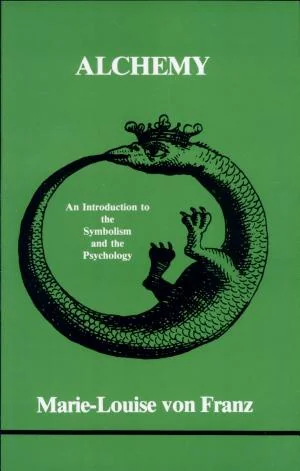
 83
83

Alchemy
Von Franz's "Alchemy" excels in its directness, acting as a much-needed primer for those intimidated by the vast and often opaque literature of the subject. Her unique position as C.G. Jung's colleague lends significant weight to her interpretations, particularly her consistent focus on the alchemical process as a metaphor for psychological individuation. The book successfully demystifies concepts that can easily become convoluted, presenting them with clarity and intellectual rigor. However, the work's brevity, while a strength for accessibility, sometimes feels like a limitation for those seeking deeper dives into specific alchemical traditions or historical nuances. The discussion on the *coniunctio* as a representation of psychic integration is particularly illuminating, offering a tangible example of how abstract alchemical goals translate to personal development. Ultimately, von Franz provides a valuable, albeit introductory, perspective that bridges the gap between historical alchemy and modern psychological exploration.
📝 Description
83
Marie-Luise von Franz published 'Alchemy' in 1980, presenting it as a guide to the psychological significance of alchemical practice.
Von Franz's book, first released in 1980, introduces the historical and psychological dimensions of alchemy. It goes beyond simple historical accounts to show alchemy as a metaphor for inner growth. The work aims to explain the symbolic language and philosophical ideas behind the Great Work for those unfamiliar with its complex terminology.
This book is particularly useful for readers interested in the psychological interpretations of alchemy developed by C.G. Jung. Von Franz, a long-time associate of Jung, connects alchemical procedures to the psychological process of individuation. Those with a background in Jungian psychology will likely see direct parallels to their studies. The book focuses on alchemy as a symbolic representation of psychic integration, detailing stages like the *prima materia* and the *coniunctio*.
It presents the alchemical goal not as producing gold, but as achieving psychological wholeness, a core idea in Jung's theory of individuation. The publication in 1980 coincided with a growing interest in esoteric traditions and their connection to modern psychology.
This book emerged during a period of increased attention to esoteric traditions, building on Carl Jung's mid-20th century work. Jung reinterpreted alchemical texts, viewing them not as literal chemistry but as symbolic expressions of psychological development. Von Franz, as Jung's collaborator, applies this framework to understand alchemical processes as a map for inner transformation. The 1980 publication reflects a scholarly effort to bridge ancient practices with contemporary psychological thought.
💡 Why Read This Book?
• Gain a clear understanding of the alchemical *prima materia* and its psychological parallel to the raw, undifferentiated aspects of the psyche, as explored in the early sections of the book. • Grasp the alchemical *coniunctio* as a symbolic representation of psychic integration and emotional balance, a core concept linking alchemical texts to Jung's individuation process. • Learn how the pursuit of the *lapis philosophorum* is reinterpreted not as material wealth, but as the attainment of psychological wholeness, offering a practical framework for personal growth.
⭐ Reader Reviews
Honest opinions from readers who have explored this book.
❓ Frequently Asked Questions
What is the primary goal of alchemy according to Marie-Luise von Franz?
Marie-Luise von Franz posits that the primary goal of alchemy, particularly as interpreted through Jungian psychology, is not the literal transmutation of base metals into gold, but the attainment of psychological wholeness and emotional balance for the individual practitioner.
How does von Franz connect alchemy to C.G. Jung's work?
Von Franz, a close associate of Jung, explains how the symbolic language and stages of the alchemical process, such as the *coniunctio*, directly parallel the psychological journey of individuation described by Jung.
What is the significance of the 'Great Work' in this book?
The 'Great Work' refers to the entire alchemical process, which von Franz interprets as a symbolic representation of the arduous but essential task of psychic integration and achieving a balanced, unified personality.
Is this book a practical guide to performing alchemical experiments?
No, this book is not a practical guide to laboratory alchemy. It focuses on understanding alchemy as a symbolic and psychological system, offering an introduction to its philosophical and spiritual dimensions rather than its material techniques.
Who was Marie-Luise von Franz and what was her relationship with C.G. Jung?
Marie-Luise von Franz was a renowned Swiss Jungian psychologist and scholar who worked closely with Carl Jung for over 30 years, becoming his friend, colleague, and a leading interpreter of his work after his death.
What does the book say about alchemical symbols like the *prima materia*?
Von Franz explains the *prima materia* as the initial, undifferentiated substance in alchemical work, correlating it to the raw, unconscious potential within the human psyche that must be worked with during individuation.
🔮 Key Themes & Symbolism
Alchemy as Psychological Process
This work fundamentally re-frames alchemy not as a proto-chemistry, but as a profound symbolic language for the human psyche's journey toward integration. Von Franz elucidates how the alchemists' pursuit of the *lapis philosophorum* mirrors the individual's quest for psychological wholeness and emotional equilibrium, a concept central to C.G. Jung's theory of individuation. The book details how stages like the *nigredo* (blackening) and *albedo* (whitening) correspond to periods of psychic dissolution and purification, offering a framework for understanding inner transformation.
The Jungian Interpretation
As a close collaborator of C.G. Jung, von Franz provides an authoritative interpretation of alchemical symbolism through the lens of analytical psychology. She highlights Jung's genius in recognizing the parallels between alchemical texts and the unconscious processes of the psyche. The book systematically unpacks how archetypal patterns and the drive for psychic integration, as described by Jung, are encoded within alchemical imagery and procedures, making complex psychological concepts accessible through ancient symbolism.
Symbolism of the Great Work
The book meticulously explores key alchemical symbols and their psychological equivalents. The *prima materia* represents the undifferentiated unconscious, while the *coniunctio* symbolizes the union of opposites within the psyche, leading to a more integrated personality. Von Franz explains how the ultimate goal, the *lapis philosophorum* (philosopher's stone), is not a material substance but a metaphor for the perfected, individuated self, achieved through the arduous but rewarding process of inner alchemy.
Explaining Esoteric Traditions
Marie-Luise von Franz's primary aim is to clarify the complex subject of alchemy for a broader audience. By stripping away the literal interpretations and focusing on the underlying psychological and spiritual dynamics, she makes this esoteric tradition understandable and relevant to modern readers. The book serves as an accessible introduction, paving the way for further exploration of Jung's more extensive studies or other works on Hermeticism and esoteric psychology.
💬 Memorable Quotes
Direct passages from the work, attributed to the author.
“the alchemists were really looking for--emotional balance and wholeness”
— This concisely captures the essence of von Franz's thesis: that the seemingly material pursuits of historical alchemy were, at their deepest level, symbolic expressions of the human desire for psychological integration and inner peace.
“It was the genius of C.G. Jung to discover in the 'holy technique' of alchemy a parallel to the psychological individuation process.”
— This highlights the foundational insight that underpins the book, positioning Jung's work as the key that unlocked the psychological meaning of alchemical symbolism for contemporary understanding.
“profusely illustrated”
— This descriptive phrase from the original blurb suggests that the book utilizes visual aids to explain complex alchemical concepts, enhancing comprehension and engagement for the reader.
“Designed as an introduction to Jung's more detailed studies”
— This indicates the book's specific pedagogical purpose: to serve as a preparatory text, making Jung's more complex analyses of alchemy and psychology more approachable for newcomers.
“completely explains the subject”
— This strong claim from the blurb promises that the book will clarify esoteric alchemical concepts, making them understandable and accessible to readers who might otherwise find the subject obscure.
🌙 Esoteric Significance
Tradition
This work sits squarely within the Western Esoteric tradition, specifically drawing heavily from Hermeticism and its later integration into Jungian psychology. Von Franz interprets alchemical symbolism not as a distinct religious or magical system in itself, but as a universal symbolic language of the psyche, a perspective heavily influenced by Jung's approach. It departs from purely historical or literal interpretations by focusing on the inner, psychological work, aligning it with modern esoteric psychology.
Symbolism
Key symbols include the *prima materia*, representing the undifferentiated unconscious or raw potential of the psyche that must be worked upon. The *coniunctio*, or sacred marriage, symbolizes the integration of psychic opposites (e.g., masculine/feminine, conscious/unconscious) leading to wholeness. The *lapis philosophorum* (philosopher's stone) is reinterpreted as the attainment of psychological perfection and individuation, the ultimate goal of the alchemist's inner labor.
Modern Relevance
Von Franz's work remains highly relevant for contemporary thinkers and practitioners in Jungian psychology, depth psychology, and the study of consciousness. It informs modern approaches to dream analysis, active imagination, and understanding the symbolic language of the unconscious. Those exploring mindfulness, transpersonal psychology, and integral theory often find her clear exposition of alchemical psychology a valuable resource for grasping the symbolic dimensions of personal transformation.
👥 Who Should Read This Book
• Students of Jungian psychology seeking to understand the symbolic roots of individuation and the unconscious mind, particularly how ancient practices relate to modern psychological concepts. • Individuals interested in comparative religion and esoteric traditions who want a clear, psychologically-oriented introduction to the historical practice and meaning of alchemy. • Personal growth seekers looking for a metaphorical framework to understand their own inner journey of integration, emotional balance, and the pursuit of psychological wholeness.
📜 Historical Context
Published in 1980, Marie-Luise von Franz's "Alchemy" emerged during a period of intense scholarly and popular interest in esoteric traditions, significantly influenced by the mid-20th-century work of Carl Jung. Jung's reinterpretation of alchemy as a symbolic representation of the individuation process, detailed in works like "Psychology and Alchemy" (1944), had opened new avenues for understanding these historical practices. Von Franz, as Jung's long-time collaborator and friend, was uniquely positioned to expand upon these ideas. Her book served as a crucial bridge, translating Jung's often dense psychological theories into a more accessible format for a wider audience interested in Hermeticism and its psychological dimensions. While other scholars might have focused on the historical chemical aspects or purely philosophical interpretations, von Franz's work firmly anchored alchemy within the framework of analytical psychology, offering a distinct perspective that resonated with the growing interest in consciousness studies and depth psychology.
📔 Journal Prompts
The initial state of the *prima materia* as described by von Franz.
Reflecting on the *coniunctio* as a symbol of integrating inner opposites.
The alchemist's pursuit of the *lapis philosophorum* as a metaphor for personal development.
How the alchemical stages mirror periods of psychological challenge and transformation.
The role of emotional balance in the alchemical process von Franz outlines.
🗂️ Glossary
Prima Materia
The fundamental, undifferentiated substance from which all alchemical operations begin. Psychologically, it represents the raw, unconscious potential or chaos within the psyche that must be worked with.
Individuation
A central concept in Jungian psychology referring to the lifelong psychological process of differentiation of the self, leading to integration of the conscious and unconscious aspects of personality.
Coniunctio
Literally 'union' or 'marriage' in alchemy, symbolizing the reconciliation and integration of dualities or opposites within the psyche, such as masculine/feminine or conscious/unconscious.
Lapis Philosophorum
The Philosopher's Stone, the legendary substance alchemists sought to create, believed to transmute base metals into gold. In psychological interpretation, it symbolizes the attainment of wholeness, spiritual perfection, and the integrated self.
Great Work
The entire alchemical process, encompassing all the stages and operations undertaken by the alchemist to achieve the Major work (Great Work), which is the creation of the Philosopher's Stone and spiritual transformation.
Nigredo
The first stage of the alchemical process, often symbolized by blackness, decay, or dissolution. Psychologically, it represents a confrontation with the shadow, the breakdown of old structures, and the initial chaotic phase of transformation.
Albedo
The second stage of alchemy, symbolized by whiteness or purification. Psychologically, it corresponds to a cleansing of the psyche, the emergence of clarity after the *nigredo*, and the initial stages of integration.
This book appears in 1 collection
🔮 Readers Also Liked
Browse all →








From the “Alchemy” Collection
View all →








More Free Occult Philosophy Books
View all →