Akupunkturwissen in Fällen und Fragen
 72
72

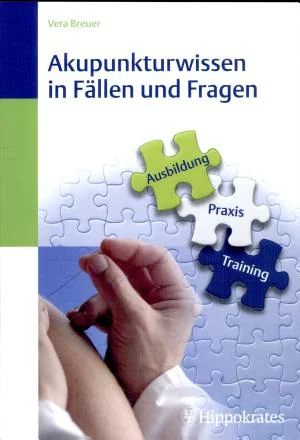
Akupunkturwissen in Fällen und Fragen
Vera Breuer’s Akupunkturwissen in Fällen und Fragen offers a welcome departure from purely theoretical acupuncture texts. By organizing knowledge around specific case scenarios and direct queries, Breuer provides a practical workbench for practitioners. The strength lies in its directness; it addresses the 'what if' and 'how to' that often arise in clinical settings. A limitation, however, is that the sheer volume of cases, while useful, can sometimes feel dense, requiring focused attention to extract the core principle from each example. The section detailing the treatment of stubborn headaches, for instance, showcases the book's utility in providing actionable, point-specific advice. It serves as a valuable, albeit sometimes demanding, reference for those seeking to deepen their applied understanding of acupuncture.
📝 Description
72
Vera Breuer's 2006 book, Akupunkturwissen in Fällen und Fragen, translates acupuncture theory into practice through case studies.
Akupunkturwissen in Fällen und Fragen, published in 2006 by Vera Breuer, approaches acupuncture knowledge through practical case studies and direct questions. The book moves beyond theory to present applied knowledge, structured to answer common inquiries and illustrate diagnostic and therapeutic principles with real-world examples. This makes it a valuable resource for practitioners seeking clarity on specific clinical scenarios.
This text is for individuals studying or practicing acupuncture, particularly those who find a question-and-answer format helpful. It serves students facing complex cases, practitioners aiming to sharpen their diagnostic skills, and educators looking for additional material. Those interested in a methodical, case-driven examination of Traditional Chinese Medicine principles as applied through acupuncture will find it useful.
Published in 2006, Akupunkturwissen in Fällen und Fragen appeared as Traditional Chinese Medicine gained more acceptance within Western healthcare. This period saw increased research and clinical use of TCM, creating a need for accessible, practical texts. Breuer's work contributed to this literature, aiming to connect ancient theory with modern practice, appealing to proponents of alternative medicine.
💡 Why Read This Book?
• Gain practical solutions for challenging acupuncture cases, directly informed by Vera Breuer's 2006 publication, offering specific point combinations for symptom resolution not readily found elsewhere. • Understand the diagnostic reasoning process through a question-and-answer format, mirroring clinical inquiry and helping you formulate your own diagnostic pathways for conditions like digestive disturbances. • Deepen your comprehension of meridian theory by seeing its direct application in case studies, illustrating how symptoms are mapped to specific channels and points for targeted treatment.
⭐ Reader Reviews
Honest opinions from readers who have explored this book.
❓ Frequently Asked Questions
What is the primary aim of Vera Breuer's Akupunkturwissen in Fällen und Fragen?
The book's primary aim is to provide practical, case-based knowledge for acupuncture practitioners and students. It addresses specific clinical questions and scenarios to illustrate the application of acupuncture principles, moving from theory to direct practice.
When was Akupunkturwissen in Fällen und Fragen first published?
Akupunkturwissen in Fällen und Fragen was first published in 2006, a period when TCM was increasingly integrated into Western medical practices.
Who would benefit most from reading this book?
Acupuncture students, practitioners seeking to refine their diagnostic skills, and educators looking for case-study material would benefit most. It's ideal for those who prefer learning through practical examples and problem-solving.
Does the book cover a wide range of conditions?
Yes, the book addresses numerous conditions through its case and question format, offering insights into the diagnosis and treatment of a variety of ailments commonly encountered in acupuncture practice.
Is this book suitable for beginners in acupuncture?
While beneficial for beginners who learn well from cases, its depth and focus on specific clinical questions suggest it is particularly valuable for those with some foundational knowledge of acupuncture theory.
What is the central approach Vera Breuer uses in this book?
Vera Breuer employs a case-study and question-and-answer approach. This method focuses on applying theoretical knowledge to resolve specific clinical puzzles and enhance practical diagnostic and treatment skills.
🔮 Key Themes & Symbolism
Case-Based Diagnosis
The book structures its content around actual patient cases and direct questions posed by practitioners. This approach moves beyond abstract theory to demonstrate how diagnostic principles are applied in real-time clinical situations. Breuer illustrates how specific symptoms and patient histories lead to particular diagnoses and subsequent treatment strategies, emphasizing the nuanced observation required in acupuncture.
Point Selection Nuances
A significant focus is placed on the rationale behind selecting specific acupuncture points. The text details how different points are chosen based on the identified diagnosis, the patient's constitution, and the nature of the ailment. It highlights that point selection is not arbitrary but a precise decision-making process guided by meridian theory and clinical experience, especially evident in sections addressing complex pain syndromes.
Syndrome Differentiation
Central to the book's methodology is the concept of syndrome differentiation (Bian Zheng Lun Zhi), a core part of Traditional Chinese Medicine. Breuer applies this principle rigorously within her case studies, showing how to analyze symptoms to arrive at a correct TCM diagnosis before proceeding to treatment. This systematic approach is crucial for effective acupuncture practice and is illustrated through numerous examples.
Applied Meridian Theory
The work elucidates how the theoretical framework of meridians and their associated pathways directly informs treatment. Each case study demonstrates the connection between a patient's complaints and the specific meridians involved. By tracing symptoms along these energetic channels, Breuer guides the reader to understand the logic of point prescription and its efficacy in restoring balance.
💬 Memorable Quotes
Direct passages from the work, attributed to the author.
“The question is not *if* a point works, but *why* and *how* it works for this specific presentation.”
— This statement underscores the book's focus on understanding the underlying TCM principles driving therapeutic outcomes. It encourages practitioners to move beyond rote memorization of point prescriptions towards a deeper, analytical comprehension of acupuncture's mechanisms.
“A correct diagnosis is the foundation for effective treatment.”
— This emphasizes the critical role of accurate syndrome differentiation in Traditional Chinese Medicine. Breuer highlights that without a precise diagnosis, even the best acupuncture techniques or point choices may fail to yield the desired results.
“The patient's unique presentation dictates the point selection.”
— This highlights the individualized nature of acupuncture treatment. Breuer stresses that standard protocols are insufficient and that practitioners must tailor their choices based on the specific signs, symptoms, and constitution of each individual.
“Understanding the energetic pathways clarifies the symptomatic manifestation.”
— This points to the interconnectedness of the body's energetic system in TCM. The quote suggests that by comprehending how qi and blood flow through the meridians, one can better understand the origin and expression of various physical and emotional complaints.
“Effective acupuncture requires both knowledge and clinical observation.”
— This highlights the dual nature of successful practice. Breuer suggests that theoretical knowledge, as presented in the book, must be combined with keen observational skills and practical experience to achieve therapeutic success.
🌙 Esoteric Significance
Tradition
While grounded in the principles of Traditional Chinese Medicine, which has its own deep philosophical and cosmological roots, Breuer's work can be seen as engaging with the broader esoteric current of seeking holistic and energetic explanations for health and illness. It fits within a lineage that views the body not merely as a physical machine but as an energetic system governed by subtle forces and interconnected pathways, aligning with Hermetic principles of correspondence and energetic flow.
Symbolism
The acupuncture points themselves can be viewed as symbolic gateways within the meridian system. Each point, often associated with specific anatomical locations and energetic qualities (e.g., Shu points, Yuan points), acts as a locus for influencing qi and blood. The meridians, visualized as pathways, symbolize the interconnectedness of the body's functions and the flow of vital energy, representing the body's internal landscape and its relationship to external influences.
Modern Relevance
Contemporary practitioners of acupuncture and Traditional Chinese Medicine continue to rely on case-based learning and clear diagnostic frameworks, making Breuer's approach highly relevant. Thinkers and schools emphasizing mind-body connection, psychosomatic influences on health, and energetic healing modalities often find resonance with the systematic yet holistic perspective offered by TCM principles, as exemplified in this book.
👥 Who Should Read This Book
• Acupuncture students seeking to bridge theoretical knowledge with practical application, benefiting from detailed case studies that illustrate diagnostic processes. • Licensed acupuncturists looking to refine their clinical reasoning and point selection strategies, particularly when encountering complex or stubborn conditions. • Educators in acupuncture programs desiring supplementary material that provides concrete examples and addresses common practitioner queries.
📜 Historical Context
Published in 2006, Vera Breuer's Akupunkturwissen in Fällen und Fragen emerged during a period of significant expansion for Traditional Chinese Medicine (TCM) in the West. The preceding decades had seen a growing interest, spurred by figures like Theodore Kaptchuk whose influential 'The Web That Has No Weaver' (1983) explained TCM for Western audiences. By the early 2000s, TCM was moving from fringe to more mainstream acceptance, yet practitioners often struggled with the gap between academic study and clinical application. Breuer's work directly addressed this need, offering a practical, case-driven approach. It stood in contrast to more purely theoretical texts or those focused solely on historical origins. While not facing widespread censorship, TCM as a whole was often met with skepticism from conventional medical establishments, leading to ongoing debates about efficacy and standardization.
📔 Journal Prompts
The diagnostic process for stubborn headaches presented in the text.
Syndrome differentiation as applied to a common ailment you treat.
The rationale behind selecting specific acupuncture points for a given case.
Connecting patient symptoms to specific meridian pathways.
How the question-and-answer format clarifies complex acupuncture concepts.
🗂️ Glossary
Syndrome Differentiation (Bian Zheng Lun Zhi)
The core diagnostic method in Traditional Chinese Medicine, involving the analysis of signs and symptoms to identify the underlying pattern of disharmony within the body's energetic system.
Meridian
An intricate network of pathways through which Qi (vital energy) and Blood circulate in the body, connecting internal organs with external parts and influencing physiological functions.
Qi
Often translated as vital energy or life force, Qi is the fundamental substance responsible for all life activities, maintaining health, and enabling bodily functions.
Blood (Xue)
In TCM, Blood is a vital substance produced from food essence, nourished by Qi, and responsible for moistening tissues and nourishing the entire body, closely related to but distinct from Western understanding.
Point Selection
The strategic choice of specific acupuncture points based on the diagnosed TCM pattern, the patient's condition, and the desired therapeutic effect.
Shu Points
A category of acupuncture points located along the Bladder meridian on the back, each corresponding to a specific Zang-Fu organ and used for diagnosis and treatment of organ-related disorders.
Yuan Points
Source points located on the meridians, often considered to be where the Yuan Qi (original Qi) congregates, used to tonify or regulate the Qi of the Zang-Fu organs.
This book appears in 1 collection
🔮 Readers Also Liked
Browse all →









From the “Acupuncture” Collection
View all →






More Free Occult Philosophy Books
View all →