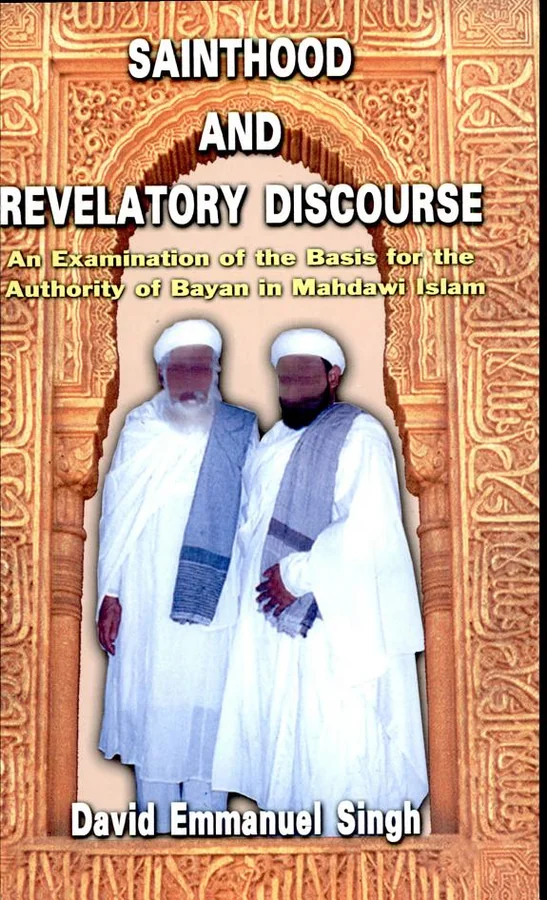
Sainthood and Revelatory Discourse
 80
80

Sainthood and Revelatory Discourse
David Emmanuel Singh’s *Sainthood and Revelatory Discourse* offers a scholarly dissection of how divine inspiration becomes codified into spiritual authority. The 2003 publication feels less like a devotional text and more like an archaeological dig into the very foundations of religious belief. Singh’s methodical approach to analyzing the 'sainthood trajectory' is particularly compelling; he traces the often-arduous path from private vision to public veneration with an incisive eye. While the book excels in its structural analysis of revelatory claims, it occasionally falters by maintaining a distance that can feel clinical, particularly when discussing figures like Teresa of Ávila, whose intensely personal mystical experiences are presented more as data points than lived realities. The strength lies in its critical framework, yet a deeper engagement with the affective dimensions of faith might have enriched its conclusions. Singh’s work is a valuable, if somewhat austere, contribution to understanding the mechanisms of spiritual canonization.
📝 Description
80
David Emmanuel Singh's 2003 book examines divine inspiration and spiritual attainment.
Published in 2003, *Sainthood and Revelatory Discourse* by David Emmanuel Singh analyzes how divine inspiration interacts with human efforts toward spiritual achievement. The book scrutinizes historical and theological accounts of holy individuals, looking closely at how their perceived communications with the divine were understood. Singh moves past simple biographies to consider the psychological and symbolic aspects of ecstatic experiences and prophetic speech. His goal is to identify patterns in how revelatory events are interpreted, documented, and incorporated into various religious traditions. The work questions the nature of these divine-human exchanges.
This study is suited for those deeply engaged with comparative religion, theology, and esoteric studies. It will interest scholars and practitioners who study the phenomenology of religious experience, especially those familiar with Christian mysticism, Sufism, or other traditions that highlight significant spiritual figures. Readers who prefer an analytical rather than a devotional perspective on sainthood will find Singh's approach useful. It also speaks to those interested in the history of religious thought and how doctrines about divine revelation and spiritual authority have developed.
Published in 2003, this work emerged during a time of renewed academic focus on religious experience and its social dimensions. It builds upon earlier scholarship concerning myth and sacredness, and the concept of the numinous. Singh engages with ongoing academic discussions about how sanctity is constructed and how mystical states are interpreted, particularly within Christian traditions. The book contributes to understanding the interpretation of divine communication and spiritual authority across different religious frameworks.
💡 Why Read This Book?
• Gain insight into the 'sainthood trajectory' as detailed by Singh, understanding the common pathways from extraordinary experience to recognized spiritual authority within religious systems. • Explore the 'hermeneutics of ecstasy,' learning how societies interpret and validate visions and divine communications, a concept crucial for understanding religious history. • Analyze the function of 'iconic embodiment' in solidifying a saint's status, appreciating how a life's narrative becomes a symbolic blueprint for devotion and emulation.
⭐ Reader Reviews
Honest opinions from readers who have explored this book.
❓ Frequently Asked Questions
What is the primary focus of David Emmanuel Singh's *Sainthood and Revelatory Discourse*?
The book's primary focus is the critical examination of how individuals achieve recognized sainthood and the nature of the 'revelatory discourse' they purportedly engage in, analyzing the processes of divine inspiration and its interpretation within religious traditions.
When was *Sainthood and Revelatory Discourse* first published?
The book was first published in 2003, placing it within a period of significant academic exploration into religious phenomenology and the sociology of belief.
Does the book analyze specific historical figures?
Yes, the work analyzes historical figures recognized for their spiritual attainment, examining their experiences and the subsequent development of their veneration within their respective religious contexts.
What does the term 'revelatory discourse' mean in the context of this book?
In Singh's work, 'revelatory discourse' refers to the perceived communication or message originating from a divine source, as experienced and interpreted by individuals later recognized as saints.
Is *Sainthood and Revelatory Discourse* a devotional text?
No, it is presented as a scholarly and critical examination of sainthood and divine communication, rather than a devotional or inspirational text.
What is the 'sainthood trajectory' explored in the book?
The 'sainthood trajectory' is the term Singh uses to describe the typical path or process by which an individual's perceived spiritual experiences and life lead to their formal or informal recognition as a saint.
🔮 Key Themes & Symbolism
The Construction of Sainthood
This theme centers on the processes by which individuals are elevated to sainthood within religious frameworks. It moves beyond the simple acceptance of divine favor to explore the social, theological, and psychological mechanisms that contribute to a person's canonization. The work examines how personal experiences of the divine are narrated, interpreted, and eventually institutionalized, transforming individual spiritual encounters into communal touchstones of faith and authority. This includes analyzing the role of miracles, ascetic practices, and theological interpretation in solidifying a saint's status over time.
Phenomenology of Divine Communication
The book critically engages with the subjective experience of receiving divine messages, be they visions, auditions, or direct inner knowledge. It dissects the 'revelatory discourse' itself, questioning its origin, nature, and human reception. Singh explores how these phenomena are understood through various interpretive lenses, or 'hermeneutics of ecstasy,' and how they are distinguished from psychological states or imaginative constructs. The focus is on the structure and perception of these experiences as reported and later analyzed by religious traditions.
Spiritual Authority and Interpretation
A core theme is the establishment and maintenance of spiritual authority derived from perceived divine contact. The work investigates how 'revelatory discourse' is used to legitimize teachings, guide communities, and shape doctrine. It considers the role of the interpreter – both the recipient of the revelation and the community that receives it – in defining its meaning and significance. This exploration touches upon how spiritual authority can be both divinely bestowed and socially constructed, influencing religious practice and belief systems for centuries.
The Saint as Symbolic Figure
This theme addresses the concept of 'iconic embodiment,' where the life and actions of a saint serve as a potent symbol and model for others. The book examines how a saint's biography, their struggles, virtues, and perceived divine interactions, are curated and presented to function as a spiritual archetype. This symbolic representation is crucial for the perpetuation of religious ideals and the inspiration of devotees, demonstrating how the lived experience of a saint becomes a powerful, enduring narrative within their tradition.
💬 Memorable Quotes
Direct passages from the work, attributed to the author.
“Revelatory discourse shapes doctrine as much as it is shaped by it.”
— This suggests a reciprocal relationship where divine messages influence religious teachings, while existing theological frameworks also dictate how those messages are understood and accepted.
“Hagiography often crystallizes the symbolic potential of a life’s divine encounters.”
— This interpretation points to the way biographies of saints (hagiographies) tend to emphasize and solidify the representative or symbolic aspects of their spiritual experiences, making them exemplary figures.
“Iconic embodiment transforms lived divinity into a communal blueprint.”
— This interpretation emphasizes how a saint's life, once recognized as divinely touched, becomes a model or pattern for the entire community to follow, embodying spiritual ideals.
💡 Key Ideas
Editorial paraphrase of the work's core concepts — not direct quotes.
The path to sainthood is often paved with interpretations of perceived divine utterance.
This paraphrased concept highlights that recognition as a saint is rarely based solely on raw experience, but on how those experiences are understood and validated by both the individual and their community over time.
The hermeneutics of ecstasy determines the perceived authenticity of mystical phenomena.
This paraphrased concept suggests that the framework used to interpret ecstatic or mystical experiences is key in deciding whether those experiences are deemed genuinely divine or otherwise.
🌙 Esoteric Significance
Tradition
While the book primarily engages with theological and historical analysis of Christian sainthood, its exploration of divine communication and spiritual attainment aligns with broader esoteric traditions that seek direct experience of the divine. It touches upon themes common in Gnostic and Hermetic thought regarding inner knowledge and direct revelation, although it approaches these through a more empirical and historical lens rather than purely experiential. Singh's work can be seen as bridging academic religious studies with an implicit acknowledgment of the perennial quest for divine connection found across various mystical paths.
Symbolism
The book implicitly engages with symbols associated with sainthood, such as the halo or aura representing divine light, or the stigmata as physical manifestations of spiritual union. It also touches upon the symbolic power of miracles, which function as divine endorsements. The saint's very life and biography become a symbolic narrative, an 'iconic embodiment' that translates abstract spiritual principles into tangible human action and exemplary living for followers.
Modern Relevance
Contemporary thinkers and practitioners in fields like comparative mysticism, the psychology of religion, and even certain branches of New Age spirituality continue to grapple with the concepts of divine inspiration and spiritual authority. Singh's analytical framework for dissecting 'revelatory discourse' offers a critical tool for understanding claims of channeled material or prophetic utterances that appear in modern esoteric movements. His examination of how experiences are interpreted provides a valuable lens for evaluating contemporary spiritual phenomena.
👥 Who Should Read This Book
• Scholars of comparative religion and theology seeking a structured analysis of sainthood and divine communication. • Students of mysticism and religious phenomenology interested in the historical and interpretive frameworks surrounding spiritual experiences. • Individuals engaged in esoteric studies who wish to understand the historical and critical perspectives on figures often revered within mystical traditions.
📜 Historical Context
Published in 2003, *Sainthood and Revelatory Discourse* engaged with a scholarly landscape that had long been examining religious experience. It followed the work of scholars like Mircea Eliade, whose explorations of the sacred and profane offered a broad phenomenological approach. Singh's analysis of divine communication and sainthood can be seen as a specific application of these broader studies, particularly within Christian traditions. While not directly engaging with the more mystical and less academic explorations of figures like Helena Blavatsky and her Theosophical Society in the late 19th century, Singh's work implicitly addresses the enduring human fascination with direct spiritual access. The early 2000s saw continued academic interest in the sociology of religion and the construction of belief systems, making this a fertile ground for Singh's critical examination of how sanctity is achieved and discourse is attributed to the divine.
📔 Journal Prompts
The 'sainthood trajectory' as a model for personal spiritual development.
Interpreting personal 'revelatory discourse' through the lens of 'hermeneutics of ecstasy'.
The symbolic weight of 'iconic embodiment' in shaping personal ideals.
Analyzing historical accounts of divine communication for underlying interpretive frameworks.
The role of communal validation in recognizing spiritual attainment.
🗂️ Glossary
Revelatory Discourse
The perceived communication or message originating from a divine source, as experienced and interpreted by individuals, particularly those recognized as saints.
Sainthood Trajectory
The developmental path or process by which an individual's perceived spiritual experiences and life lead to their formal or informal recognition as a saint within a religious community.
Hermeneutics of Ecstasy
The interpretive frameworks and methods used by individuals and societies to understand and give meaning to ecstatic, mystical, or divinely inspired experiences.
Iconic Embodiment
The concept where a saint's life, actions, and perceived divine encounters are presented and understood as a living symbol or model for followers.
Hagiography
The writing of the lives of saints, often emphasizing their spiritual virtues, miracles, and divine connections.
Phenomenology of Religion
The study of religious phenomena and experiences as they appear to the consciousness, focusing on the subjective experience of religious belief and practice.
Numina
Plural of numen, referring to divine power or spirit, often associated with a sense of awe and mystery as described by Rudolf Otto.
This book appears in 1 collection
🔮 Readers Also Liked
Browse all →









From the “Revelation” Collection
View all →![John Todd [Illuminati And Witchcraft Exposed].pdf (PDFy mirror)](/img/thumb/john-todd-illuminati-and-witchcraft-exposed-pdf-pdfy-mirror.webp)








More Free Occult Philosophy Books
View all →