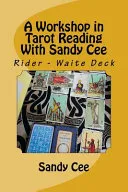
A Workshop in Tarot Reading with Sandy Cee
 75
75

A Workshop in Tarot Reading with Sandy Cee
Sandy Cee’s *A Workshop in Tarot Reading* tackles the common apprehension that tarot mastery requires inherent psychic ability. The book’s primary strength lies in its promise of rapid proficiency, a welcome approach for the time-pressed or skeptical novice. Cee makes a compelling case for a practical, almost mechanical, method of learning the cards, which could indeed demystify the process for many. However, this very speed and directness come at a cost. The section on interpreting the Celtic Cross spread, while functional, feels somewhat compressed, leaving little room for the nuances that emerge with deeper familiarity. The work advocates for learning in 'under a week,' which, while ambitious, risks oversimplifying the profound psychological and symbolic dimensions of the cards. It’s a solid primer for getting started, but seasoned practitioners might find it lacks depth. Ultimately, Cee provides an accessible entry point, sacrificing extensive exploration for immediate usability.
📝 Description
75
Sandy Cee's 2016 book offers a direct path to tarot interpretation, bypassing complex theory.
Published in 2016, A Workshop in Tarot Reading with Sandy Cee aims for practical tarot interpretation without esoteric jargon or historical complexities. Cee presents a method designed for readers to interpret spreads quickly, focusing on actionable techniques. This guide is for individuals who feel intimidated by the mystical aspects of tarot and believe they lack a natural talent. It provides a functional system for card interpretation, ideal for those wanting a fast, hands-on approach to reading tarot for personal insight or for friends and family. The book teaches a streamlined system for understanding the 78 tarot cards, emphasizing core meanings and associations. It guides readers toward an intuitive yet systematic approach to interpreting card combinations in spreads, promoting practical application and pattern recognition over rote memorization.
Sandy Cee's 2016 publication contrasts with the more academic or historically dense tarot literature that proliferated around that time. While figures like A.E. Waite and Pamela Colman Smith established iconic imagery in the early 20th century, Cee’s work focuses on accessibility and speed for a modern audience. It addresses those seeking immediate utility and practical application from esoteric practices, diverging from older traditions that might have emphasized lengthy apprenticeships or deep symbolic immersion.
💡 Why Read This Book?
• Gain a functional tarot reading skill in potentially under a week, as promised by Sandy Cee's direct method, allowing for immediate application with friends and family. • Understand the core meanings of all 78 tarot cards through a simplified system, moving beyond the perceived need for innate psychic gifts, directly addressing beginner anxieties. • Learn to interpret card spreads efficiently, focusing on practical pattern recognition rather than solely on deep historical or symbolic research, as demonstrated in the book's workshop format.
⭐ Reader Reviews
Honest opinions from readers who have explored this book.
❓ Frequently Asked Questions
How quickly can someone learn to read tarot with Sandy Cee's book?
Sandy Cee claims her method is the quickest way to understand tarot cards, suggesting readers can learn to read them for themselves and others in under a week.
Does this book require prior psychic ability to read tarot?
No, a central premise of *A Workshop in Tarot Reading* is that you do not need 'The Gift' to read tarot. The book aims to provide an easy method for anyone to learn.
What type of tarot deck does Sandy Cee's book focus on?
While not explicitly stated, the book generally addresses the standard 78-card tarot deck structure, encompassing both the Major and Minor Arcana, common in most decks.
Is this book suitable for experienced tarot readers?
The book is primarily designed for beginners who believe they lack the necessary 'gift' for tarot. Experienced readers may find its direct, rapid method less comprehensive than advanced texts.
What is the main goal of 'A Workshop in Tarot Reading'?
The primary goal is to demystify tarot reading and provide a simple, practical method for understanding the cards quickly, enabling anyone to perform readings for themselves and others.
When was 'A Workshop in Tarot Reading with Sandy Cee' first published?
The book was first published on September 9, 2016, positioning it as a contemporary guide to tarot interpretation.
🔮 Key Themes & Symbolism
Explaining Tarot Acquisition
This work directly confronts the common misconception that proficiency in tarot reading necessitates innate psychic abilities. Sandy Cee posits that the 'gift' is not a prerequisite, but rather a learnable skill. The book systematically breaks down the 78 cards into manageable components, offering a structured approach to understanding their meanings and interrelationships. This focus on accessibility aims to empower individuals who might otherwise feel excluded from tarot practices due to perceived limitations, emphasizing a practical, step-by-step learning curve.
Rapid Practical Application
The core promise of *A Workshop in Tarot Reading* is speed and immediate utility. It eschews lengthy theoretical discussions in favor of techniques designed for quick comprehension and application. Readers are encouraged to begin interpreting spreads for themselves, family, and friends within a remarkably short period, potentially under a week. This emphasis on rapid deployment highlights a modern desire for practical results from esoteric studies, prioritizing functional knowledge over exhaustive historical or philosophical exploration.
The Standard 78-Card Structure
The book operates within the widely recognized framework of the 78-card tarot deck, typically divided into the Major Arcana (22 cards) and the Minor Arcana (56 cards). While specific deck imagery might not be the primary focus, the foundational meanings and symbolic associations attributed to each card within this structure are central to Cee's teaching method. Understanding this standard structure is presented as the key to unlocking the entire system of tarot interpretation.
Accessible Interpretation Techniques
Rather than exploring complex astrological correspondences or Kabbalistic associations, Cee focuses on straightforward methods for interpreting card meanings and combinations. The emphasis is on developing a practical understanding that allows for coherent readings without requiring extensive prior esoteric knowledge. This approach prioritizes clarity and ease of use, enabling beginners to construct meaningful narratives from card spreads through a simplified, yet effective, interpretive lens.
💬 Memorable Quotes
Direct passages from the work, attributed to the author.
“You don't have to have 'The Gift' to read tarot cards.”
— This statement expresses the book's central thesis: that tarot reading is an accessible skill, not an exclusive mystical talent. It directly challenges a common barrier for aspiring readers, framing the practice as learnable for anyone willing to apply themselves to a structured method.
“The quickest method of understanding the tarot cards.”
— This phrase highlights the book's primary selling point – efficiency. It suggests a streamlined process designed to impart functional knowledge rapidly, appealing to individuals seeking immediate practical results from their study of the tarot.
“Understand the tarot cards in a very easy way.”
— This points to the book's pedagogical approach, emphasizing simplicity and clarity. It assures potential readers that the learning process will be straightforward and free of unnecessary complexity, making tarot accessible.
“Understand the 78 cards of the tarot deck.”
— This highlights the comprehensive nature of the book's instruction within the standard tarot system. It assures the reader that all components of a typical tarot deck will be covered, providing a complete foundation for reading.
💡 Key Ideas
Editorial paraphrase of the work's core concepts — not direct quotes.
Read them for yourself, family and friends in under a week!
This quote emphasizes the tangible outcome promised by the book's methodology. It sets a clear, achievable goal for the reader, focusing on the application of learned skills in a personal context shortly after beginning the study.
🌙 Esoteric Significance
Tradition
While not explicitly aligning with a specific historical esoteric lineage like Hermeticism or Kabbalah, *A Workshop in Tarot Reading* functions within the broader modern Western esoteric tradition that views tarot as a tool for divination and self-discovery. It departs from traditions that emphasize lengthy initiatory paths or deep symbolic immersion, instead offering a pragmatic entry point. The work democratizes access to tarot interpretation, making it available as a practical skill rather than solely a subject of esoteric study.
Symbolism
The book centers on the symbolism inherent in the standard 78-card tarot deck. Key motifs include the progression through the Major Arcana, representing archetypal life stages and spiritual lessons, and the suits of the Minor Arcana (Wands, Cups, Swords, Pentacles), symbolizing elemental forces and mundane activities. Cee's approach focuses on grasping the core symbolic language of each card and how these symbols interact within a spread to convey messages.
Modern Relevance
Cee's work appeals to contemporary practices emphasizing accessible self-help and intuitive development. It aligns with the rise of online tarot communities and digital divination platforms that prioritize quick, practical guidance. Thinkers and practitioners focused on applied psychology, mindfulness, and personal growth through accessible tools can draw from its straightforward methodology, demonstrating tarot's continued evolution as a versatile tool beyond its historical occult roots.
👥 Who Should Read This Book
• Absolute beginners intimidated by the perceived mystical requirements of tarot, offering a clear path to understanding and reading cards without prior experience. • Individuals seeking a rapid, functional method to learn tarot interpretation, prioritizing practical application over extensive historical or theoretical study. • Those interested in using tarot for personal insight or to offer readings to friends and family in a short timeframe, providing actionable techniques for immediate use.
📜 Historical Context
Sandy Cee's *A Workshop in Tarot Reading*, published in 2016, entered a landscape saturated with tarot guides. While the mid-20th century saw figures like Eden Gray popularizing simpler approaches and the Tarot School movement emerge, Cee's work distinguishes itself by its explicit focus on speed and accessibility. It contrasts with more academically rigorous or historically focused studies of tarot, such as those by scholars like Michael Dummett, who meticulously traced the card game's origins. Cee's publication reflects a contemporary trend in esoteric literature towards practical, immediate application, aiming to bypass the deep dives into symbolism or history that characterized earlier traditions. The book's reception likely catered to a segment of the population seeking quick self-help tools, distinct from those engaging with the more established, often slower, learning curves associated with Hermetic orders or occult societies.
📔 Journal Prompts
The core meaning of the 'Magician' card in a personal context.
How the 'Ace of Cups' symbolism relates to current emotional states.
Interpreting a three-card spread using the quick method taught in the book.
Reflecting on the journey from the 'Fool' to the 'World' card.
Identifying the elemental associations of the suit of Swords for daily challenges.
🗂️ Glossary
Tarot Cards
A deck of 78 cards, typically divided into the Major Arcana (22 cards) and Minor Arcana (56 cards), used for divination, self-reflection, and guidance.
Major Arcana
The 22 trump cards in a tarot deck, representing significant life events, spiritual lessons, and archetypal figures in the journey of the soul.
Minor Arcana
The 56 cards of a tarot deck, divided into four suits (Wands, Cups, Swords, Pentacles), which represent everyday events, challenges, and circumstances.
Spread
A specific arrangement of tarot cards laid out to address a particular question or area of inquiry, with each card's position holding specific significance.
The Gift
A colloquial term referring to an innate psychic ability or intuition believed by some to be necessary for effective tarot reading.
Divination
The practice of seeking knowledge of the future or the unknown by supernatural means, often through tools like tarot cards.
Reading
The process of interpreting the meaning of tarot cards laid out in a spread, typically in response to a specific question or situation.