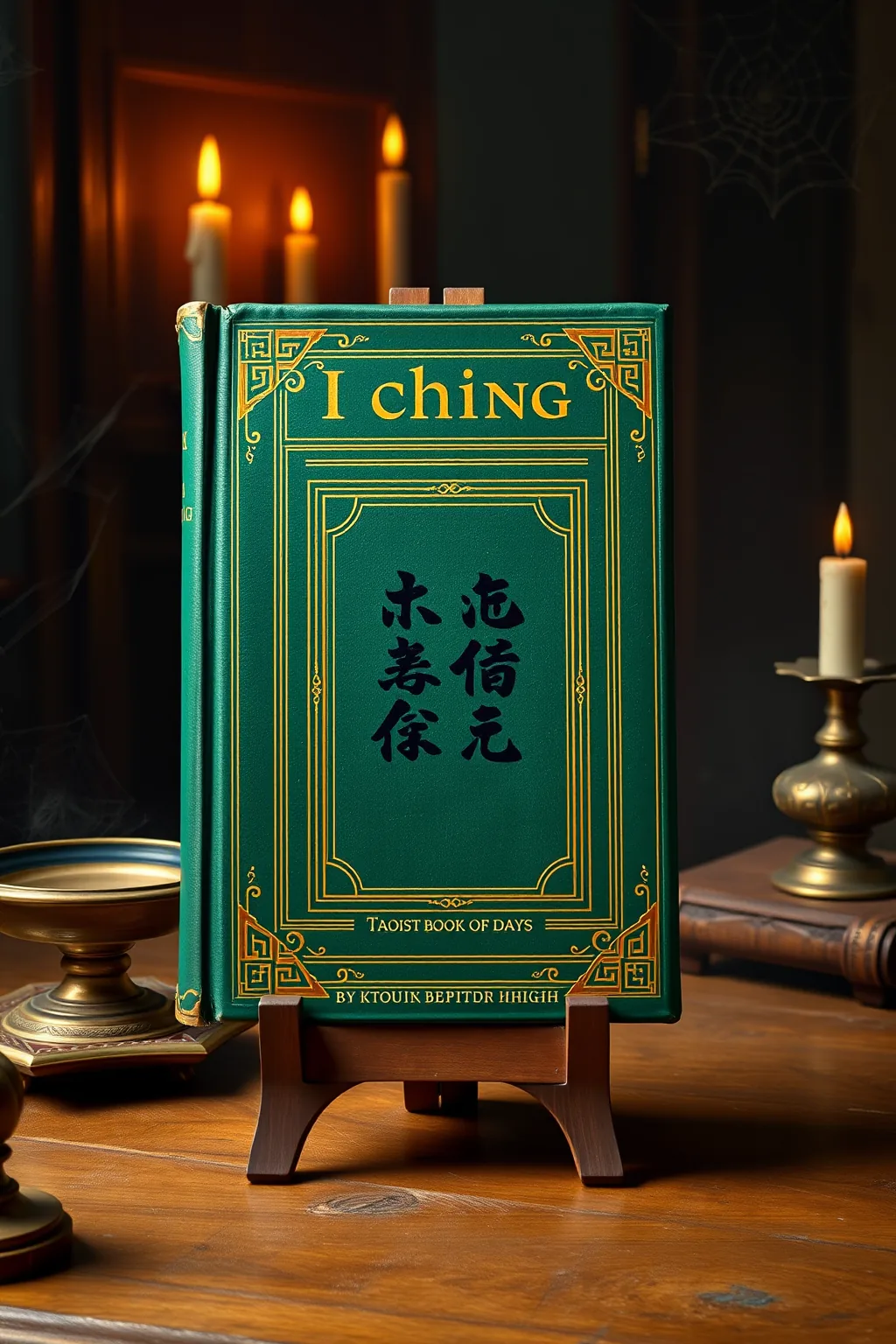
I ching: Taoist book of days
 62
62

I ching: Taoist book of days



Celeste Moreau (Divination & Symbolism Reviewer) — Khigh Dhiegh's "Taoist Book of Days" is an indispensable contribution to the Western understanding of the I Ching. Dhiegh's deep immersion in Taoist philosophy imbues this rendition with an unparalleled esoteric resonance. He illuminates the symbolic language of the hexagrams with a scholar's precision and a mystic's intuition, making the complex accessible without sacrificing its profound depth. This work is particularly potent for those seeking to move beyond superficial divination, offering insights into personal growth, ethical guidance, and the subtle interplay of cosmic forces. It is a treasure for serious students of Eastern thought and practitioners of the Yi Jing who desire a connection to its authentic spiritual lineage.
📝 Description
62
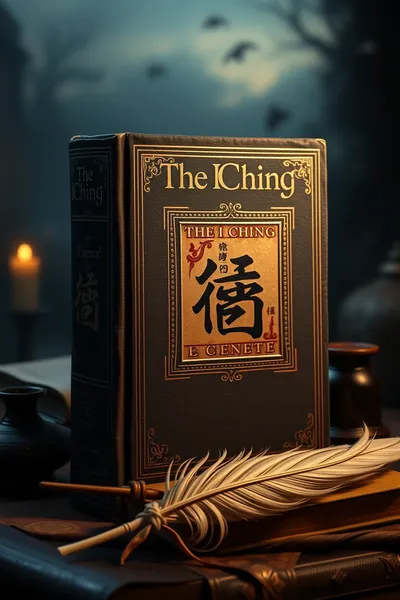
Khigh Dhiegh's "Taoist Book of Days" (1973) deciphers the I Ching's hexagrams beyond divination.
Published in 1973, Khigh Dhiegh's "Taoist Book of Days" presents the I Ching not just as a tool for fortune telling but as a philosophical guide. Dhiegh worked to explain the hexagrams, their images, and the energies they signify. The book connects the cosmos and the human spirit, encouraging contemplation of time, fate, and change. It aims to foster an intuitive grasp of universal ideas for those interested in philosophy or practice. Readers are invited to consider the Tao, discover order in confusion, and find inner peace by following natural patterns. This work offers a clear rendering of ancient Chinese thought with spiritual insight.
This work situates the I Ching within a broader Taoist framework, moving beyond its common perception as solely a divinatory text. Dhiegh's approach emphasizes the philosophical underpinnings and the symbolic language of the hexagrams as a means to understand universal principles. It connects the text to concepts of cosmic harmony and the individual's place within natural rhythms, aligning it with traditions that seek wisdom through observing natural patterns and cycles.
💡 Why Read This Book?
Uncover the profound, cyclical wisdom of the Tao. "Taoist Book of Days" offers a mystical gateway to understanding destiny, transformation, and the interconnectedness of all things. Ideal for seekers of esoteric knowledge, students of Eastern philosophy, and practitioners of divination yearning for deeper insight into the I Ching's timeless principles. Discover your path through ancient symbols.
⭐ Reader Reviews
Honest opinions from readers who have explored this book.
❓ Frequently Asked Questions
What is the I Ching?
The I Ching, or Book of Changes, is an ancient Chinese text and a foundational classic of Chinese philosophy and divination. It comprises 64 hexagrams, each composed of six lines, representing a vast spectrum of situations and their potential transformations.
Who was Khigh Dhiegh?
Khigh Dhiegh was an American actor and author known for his deep interest and scholarship in Eastern philosophies, particularly the I Ching. His work on the I Ching is highly regarded for its spiritual depth and accessibility.
How does this book differ from other I Ching translations?
This edition emphasizes the 'Taoist Book of Days' aspect, framing the hexagrams within a cyclical, philosophical understanding of time and existence, offering a more holistic and spiritually integrated approach than purely divinatory interpretations.
Is this book suitable for beginners?
Yes, while rich in esoteric depth, Dhiegh's approach is designed to guide newcomers through the foundational concepts, making the wisdom of the I Ching accessible to those new to its study.
What are hexagrams?
Hexagrams are the primary symbols of the I Ching, formed by combining eight trigrams. Each hexagram is a six-line figure representing a specific cosmic or human situation and its potential evolution.
🔮 Key Themes & Symbolism
The Cyclical Nature of Existence
This work profoundly illustrates the Taoist concept of constant change and cyclical progression. The 64 hexagrams are presented not as static pronouncements but as dynamic snapshots of universal patterns, mirroring the waxing and waning of energies, the ebb and flow of fortune, and the inevitable transformations inherent in life. Understanding these cycles allows for greater wisdom in navigating challenges and embracing opportunities, fostering a sense of harmony with the cosmic dance of existence.
Symbolism and Archetypal Resonance
The I Ching's power lies in its rich, archetypal symbolism. Dhiegh elucidates how the imagery within each hexagram—mountains, water, fire, thunder—speaks to fundamental human experiences and universal forces. These symbols act as keys, unlocking intuitive understanding and revealing deeper layers of meaning in personal situations. By engaging with these archetypes, readers can connect with a collective unconscious and gain clear insights into their own inner landscape and external circumstances.
The Path of Inner Cultivation
Beyond mere fortune-telling, the "Taoist Book of Days" emphasizes the I Ching as a guide for personal growth and ethical development. The wisdom embedded within the hexagrams offers counsel on virtuous action, self-awareness, and the cultivation of inner peace. It encourages a mindful approach to decision-making and fosters a deeper connection to the Tao, guiding the reader toward a life lived in accordance with universal principles and personal integrity.
💬 Memorable Quotes
Direct passages from the work, attributed to the author.
“Wisdom lies in observing the changes.”
— This emphasizes the practical application of I Ching study, suggesting that true insight comes from understanding and adapting to the natural shifts and patterns of life.
“The hexagrams are maps of the soul's journey.”
— This poetic interpretation positions the I Ching as a profound psychospiritual tool, offering guidance and revelation for the inner exploration of one's life path and character.
“Harmony is found in alignment with the Tao.”
— This highlights the ultimate goal of I Ching practice—to achieve inner and outer balance by understanding and flowing with the fundamental principles of the universe.
💡 Key Ideas
Editorial paraphrase of the work's core concepts — not direct quotes.
The universe is a great changing entity.
This quote captures the core Taoist principle of flux, highlighting that all phenomena are in a constant state of transformation, a central theme explored through the I Ching's hexagrams.
Every ending is a new beginning.
This quote reflects the cyclical nature of the I Ching, where each resolved situation or phase naturally gives rise to the next, underscoring renewal and potential.
🌙 Esoteric Significance
Tradition
This work is deeply rooted in Taoism, one of China's most ancient and influential philosophical and religious traditions. It explores the concept of the Tao, the ineffable 'Way' that underlies and governs the universe. The I Ching itself is considered a sacred text within this tradition, used not only for divination but as a profound guide to living in harmony with the natural order, emphasizing balance, change, and spontaneous action.
Symbolism
The I Ching's symbolism is vast, centered on the 64 hexagrams, each composed of yin (broken) and yang (solid) lines. These lines, combined into trigrams and then hexagrams, represent fundamental forces of nature, human relationships, and stages of development. Symbols like Heaven, Earth, Water, Fire, and Thunder are archetypal, carrying layers of meaning that speak to universal experiences and cosmic principles, serving as visual metaphors for the dynamic processes of existence.
Modern Relevance
In an age often characterized by rapid change, uncertainty, and a disconnect from natural rhythms, the I Ching offers profound relevance. Its emphasis on adaptability, understanding cycles, and cultivating inner wisdom provides tools for navigating modern complexities. The philosophical insights into balance, cause and effect, and the interconnectedness of all things resonate deeply, offering a counterpoint to superficiality and promoting a more mindful, integrated approach to life and personal growth.
👥 Who Should Read This Book
This edition is a rich resource for a diverse audience. **Beginners** will find a clear, spiritually infused introduction to the I Ching's core concepts. **Scholars of Eastern philosophy** will appreciate Dhiegh's nuanced interpretations and historical context. **Spiritual seekers** will discover a profound guide for self-reflection and understanding life's unfolding patterns. **Practitioners of divination** seeking a deeper, more esoteric connection to the Yi Jing will find invaluable insights into its symbolic language and philosophical depth.
📜 Historical Context
Khigh Dhiegh's "Taoist Book of Days" emerged during a period of heightened interest in Eastern philosophies and esoteric traditions in the West, particularly in the mid to late 20th century. This era saw a growing disillusionment with purely materialistic worldviews, leading many to seek deeper spiritual meaning and alternative systems of knowledge. The I Ching, with its ancient roots and profound philosophical underpinnings, offered a compelling alternative. Dhiegh's work contributed to this trend by making the complex wisdom of the Yi Jing more accessible, bridging the gap between Eastern mysticism and Western seekers. It stands as a evidence of the enduring appeal of ancient wisdom in times of cultural and intellectual transition.
📔 Journal Prompts
Reflect on a recent 'ending' in your life. How does the wisdom of a corresponding I Ching hexagram offer insight into its transition into a 'new beginning'?
Choose one hexagram that speaks to you today. What archetypal symbols within it speak to your current situation or inner state?
Consider the concept of 'balance' in your life. How can the principles illustrated by yin and yang lines guide you toward greater equilibrium?
Meditate on the phrase 'The universe is a great changing entity.' How does this perspective influence your perception of personal challenges and triumphs?
How can you apply the idea of 'wisdom lies in observing the changes' to a specific decision or relationship you are currently navigating?
🗂️ Glossary
Tao
The fundamental principle of the universe in Taoism; the 'Way' or 'Path' that is ineffable, eternal, and the source of all existence. It represents natural order and spontaneity.
Yi Jing
The Chinese name for the Book of Changes, an ancient text used for divination and as a philosophical guide, comprising 64 hexagrams.
Hexagram
A symbol composed of six stacked lines, each either solid (yang) or broken (yin). There are 64 unique hexagrams in the I Ching, representing a comprehensive set of life situations.
Trigram
A symbol composed of three stacked lines (yin or yang). Eight trigrams form the building blocks for the 64 hexagrams, each representing fundamental elements like Heaven, Earth, Water, and Fire.
Yang
In Taoist philosophy and the I Ching, represented by a solid line. Yang symbolizes active, masculine, light, and assertive energies and principles.
This book appears in 3 collections
🔮 Readers Also Liked
Browse all →









More by Khigh Dhiegh
All books →
From the “I Ching” Collection
View all →







More Free Divination & Tarot Books
View all →