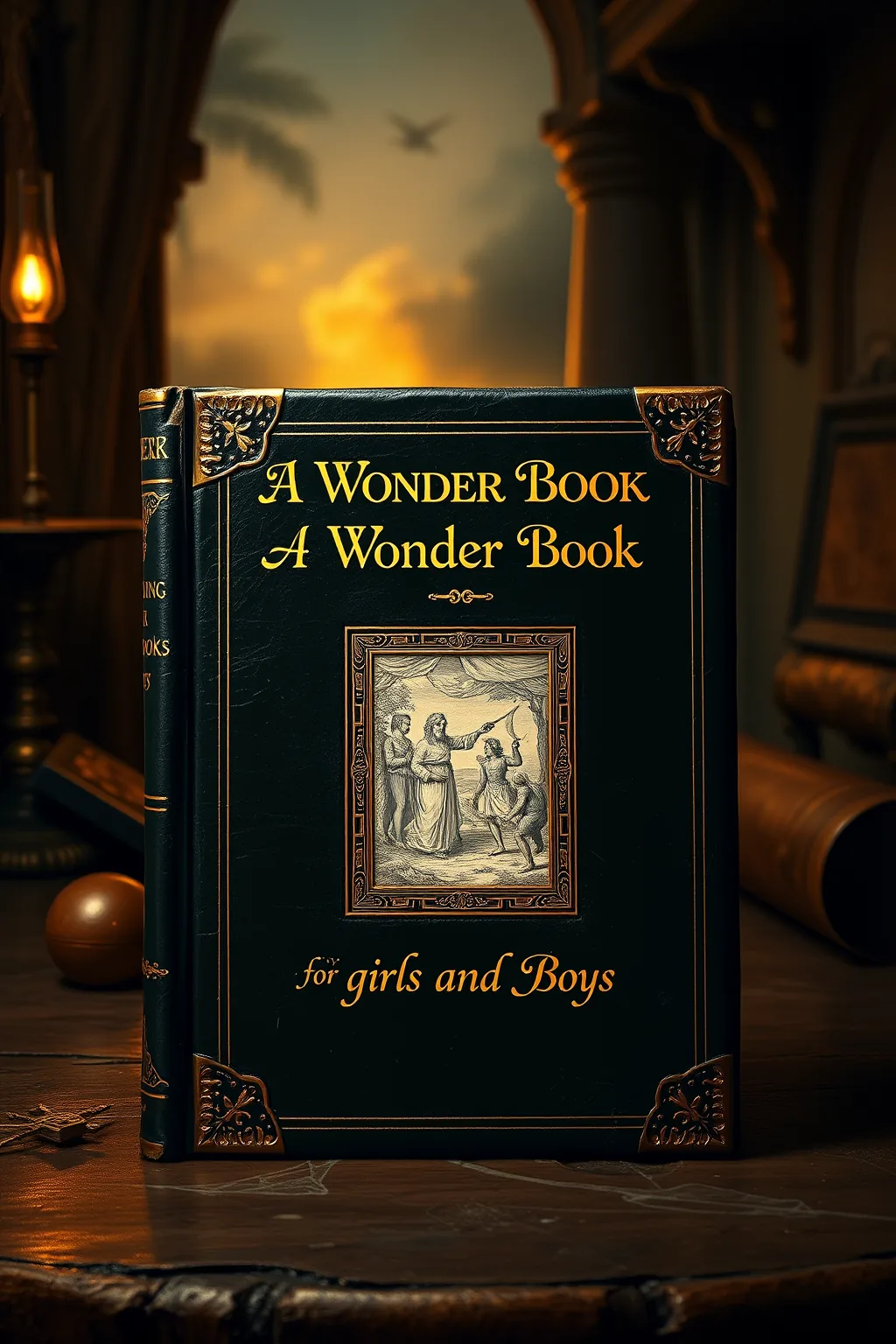
A Wonder Book for Girls and Boys
 81
81

A Wonder Book for Girls and Boys
Nathaniel Hawthorne's "A Wonder Book for Girls and Boys" offers a curious blend of classic myth and Victorian sensibility. The collection shines in its ability to distill complex mythological narratives into digestible tales for young minds, a feat Hawthorne achieves with his characteristic narrative flair. One particularly strong element is the framing of tales like "The Gorgon's Head," which makes Perseus's exploits feel immediate and consequential. However, the language, while elegant, can occasionally feel a touch archaic for contemporary young readers, requiring a bit more interpretive effort than modern adaptations. The chapter "The Paradise of Children" is a memorable example of how Hawthorne adapts the Pandora myth, emphasizing the enduring nature of hope. Ultimately, it serves as a valuable, if somewhat dated, portal into the Western mythological canon.
📝 Description
81
Nathaniel Hawthorne retold Greek myths for children in 1851, collected in 'A Wonder Book for Girls and Boys'.
Nathaniel Hawthorne's 'A Wonder Book for Girls and Boys' is a collection of fairy tales and retellings from classical mythology, first published in 1851. These stories present ancient myths in a style suited for younger readers, often imbuing them with moral lessons. The narratives focus on themes of change, courage, and the outcomes of choices, all filtered through the perspective of early 20th-century children's literature.
The book is designed for young readers who are beginning to engage with foundational myths and classic storytelling. It offers an accessible introduction to the archetypal narratives that have influenced Western culture. Adults interested in the history of children's literature or the early 20th-century adaptation of mythological themes will also find this volume of interest.
While not explicitly an esoteric text, Hawthorne's retellings of myths tap into archetypal narratives common in esoteric traditions. These stories, drawn from classical mythology, deal with recurring symbols and universal human experiences. The focus on transformation, the divine interacting with mortals, and the moral implications of actions aligns with themes explored in various mystical and philosophical systems. The book offers a simplified entry point to these enduring symbolic patterns, presenting them in a format accessible to a broad audience.
💡 Why Read This Book?
• Understand the foundational myths of Western culture through accessible retellings, beginning with the very first chapter, "The Miraculous Pitcher." • Appreciate the historical evolution of children's literature by examining Hawthorne's 1920 approach to classical storytelling. • Encounter archetypal symbols like Pandora's Box, learning how ancient narratives shaped early 20th-century moral instruction.
⭐ Reader Reviews
Honest opinions from readers who have explored this book.
❓ Frequently Asked Questions
When was "A Wonder Book for Girls and Boys" first published?
The collection "A Wonder Book for Girls and Boys" was first published in 1920, presenting classic myths adapted for younger audiences.
What kind of stories are in "A Wonder Book for Girls and Boys"?
The book contains retellings of classical Greek myths and legends, such as those concerning Hercules, Pandora, and Perseus.
Is this book suitable for very young children?
While intended for 'girls and boys,' the language and thematic depth are best suited for older children, perhaps ages 8 and up, who can engage with more complex narratives.
Who is the author, Nathaniel Hawthorne?
Nathaniel Hawthorne (1804-1864) was a prominent American novelist and short-story writer, known for works like "The Scarlet Letter." This collection was published posthumously.
Are these stories accurate retellings of Greek myths?
Hawthorne adapts the myths, often simplifying them and adding moralistic elements suitable for children, rather than providing strictly academic retellings.
Where can I find "A Wonder Book for Girls and Boys"?
As a work published in 1920, "A Wonder Book for Girls and Boys" is in the public domain and widely available online and in various print editions.
🔮 Key Themes & Symbolism
Archetypal Heroism
The collection presents figures like Hercules and Perseus not merely as characters but as embodiments of archetypal heroic journeys. Their struggles against monsters and overwhelming odds, as seen in tales like "The Gorgon's Head," explore the raw essence of courage and perseverance. These narratives illustrate the human capacity to confront the unknown and achieve extraordinary feats, often involving divine intervention or guidance, reflecting ancient concepts of fate and destiny.
Consequences of Action
Many stories, particularly "The Paradise of Children" (the Pandora myth), highlight the direct link between actions and their repercussions. Pandora's curiosity unleashes evils upon the world, yet hope remains, symbolizing the enduring spirit. This theme underscores a fundamental aspect of mythological narratives: that choices have profound and often irreversible consequences, shaping both individual destinies and the broader human condition.
Transformation and the Divine
The theme of transformation is central, seen in characters changing form or undergoing significant personal metamorphosis. The interactions between gods and mortals, as depicted in "The Miraculous Pitcher," illustrate the fluid boundaries between the human and the divine. These stories explore how divine power can influence mortal lives, leading to both blessings and curses, and how humanity grapples with forces beyond its immediate comprehension.
Moral Instruction Through Myth
Hawthorne's adaptations infuse classical myths with clear moral lessons suitable for a younger audience. The narratives serve as allegories, teaching about virtues like bravery, obedience, and the dangers of pride (hubris). By framing these ancient tales within an early 20th-century context, the book reflects a pedagogical approach that used mythology as a vehicle for ethical development and cultural transmission.
💬 Memorable Quotes
Direct passages from the work, attributed to the author.
“The Paradise of Children is not a place, but a state of the heart.”
— This interpretation of the Pandora myth suggests that true happiness and contentment reside within, not in external circumstances. It reframes the concept of a blissful state as an internal disposition, accessible even after facing hardship.
“He had the strength of twenty men.”
— This phrase, likely referring to Hercules, captures the superhuman quality of mythical heroes. It signifies a power far beyond ordinary human limits, emphasizing the extraordinary nature of their deeds and their symbolic importance.
“The pitcher was the most wonderful thing in the world.”
— This statement, likely from "The Miraculous Pitcher," emphasizes the magical or divine quality attributed to ordinary objects within the mythological context. It suggests that wonder can be found in the seemingly mundane when viewed through a particular lens.
“Fear came upon them.”
— This simple, direct phrase captures the primal human reaction to the monstrous or unknown, a recurring motif in myths. It grounds the fantastical elements in relatable emotional responses, showing the psychological impact of encountering the extraordinary.
💡 Key Ideas
Editorial paraphrase of the work's core concepts — not direct quotes.
Hope remained, the last best gift of all.
This line, from the Pandora story, highlights hope as the ultimate solace and enduring force within humanity, even amidst suffering. It presents hope not as a passive wish, but as an active, vital element for survival.
🌙 Esoteric Significance
Tradition
While not explicitly esoteric, Hawthorne's work taps into the archetypal narratives foundational to many Western esoteric traditions, including Hermeticism and Jungian psychology. The myths he retells contain symbolic language and universal human experiences that resonate with Gnostic explorations of creation, fall, and redemption. The book serves as a pre-Jungian repository of the collective unconscious, presenting motifs later analyzed by figures like Carl Jung.
Symbolism
The Gorgon's Head, particularly Medusa's visage, symbolizes the terrifying power of the unconscious or primal chaos, which can petrify the unprepared observer. Pandora's Box represents the unleashing of the world's afflictions – desire, sickness, and strife – but crucially, also the enduring presence of hope, a key concept in many mystical traditions signifying ultimate redemption or spiritual resilience. The concept of the "Paradise of Children" can be interpreted as an Edenic state of innocence, a theme often explored in creation myths and spiritual return narratives.
Modern Relevance
Contemporary thinkers and practitioners in fields like Jungian analysis and archetypal psychology frequently reference the myths presented in Hawthorne's collection. His accessible renditions provide a common vocabulary for discussing the hero's journey, the shadow archetype, and the process of individuation. Writers and artists continue to draw inspiration from these core narratives for their explorations of the human psyche and spiritual quests.
👥 Who Should Read This Book
• Young readers (ages 8+) beginning their exploration of classical mythology and foundational Western stories. • Educators and parents seeking age-appropriate introductions to Greek myths with clear moral frameworks. • Students of literature interested in the evolution of children's storytelling and the adaptation of ancient myths in the early 20th century.
📜 Historical Context
Published in 1920, "A Wonder Book for Girls and Boys" arrived during a vibrant period for children's literature, following in the wake of works like Andrew Lang's fairy tale collections. This era saw a conscious effort to adapt complex classical and folkloric material for younger readers, often imbuing them with moralistic undertones. Hawthorne’s tales, though stemming from earlier inspirations, were presented in a style that resonated with the educational and entertainment needs of the early 20th century. While not facing overt censorship, the book's reception was part of a broader trend that sought to civilize and moralize mythological content, differentiating it from more raw, ancient tellings. This period also saw the rise of comparative mythology studies, though Hawthorne's focus remained firmly on accessible narrative rather than scholarly analysis.
📔 Journal Prompts
Reflect on the consequences of Pandora's curiosity as depicted in "The Paradise of Children."
Consider the nature of Hercules's strength and the trials he faced in "The Twelve Labors."
Analyze the symbolic meaning of the Gorgon's Head from Perseus's perspective.
Explore the concept of "The Miraculous Pitcher" as a representation of divine provision.
Contrast the initial "Paradise of Children" with the world after the box was opened.
🗂️ Glossary
The Gorgon's Head
Refers to the myth of Perseus and Medusa. The Gorgon's Head, often depicted with snakes for hair, had the power to turn onlookers to stone, symbolizing terrifying, petrifying forces.
Pandora's Box
In Greek mythology, a container from which all evils escaped into the world. Only Hope remained inside, symbolizing the enduring human spirit even amidst suffering.
Hercules
A heroic figure in Greek mythology, renowned for his immense strength and for completing twelve seemingly impossible labors assigned to him as penance.
Perseus
A legendary hero in Greek mythology, famous for slaying the Gorgon Medusa and for his subsequent adventures, often aided by the gods.
The Miraculous Pitcher
A tale from the collection where two gods, disguised as old men, are rewarded for their kindness by having a pitcher miraculously fill with milk, symbolizing divine benevolence.
Archetype
A recurring symbol, character type, or motif in literature and mythology that represents universal patterns of human nature and experience.
Hubris
Excessive pride or self-confidence, often leading to a character's downfall in classical mythology and literature.
🔮 Readers Also Liked
Browse all →









More by Nathaniel Hawthorne
All books →





More Free Divination & Tarot Books
View all →