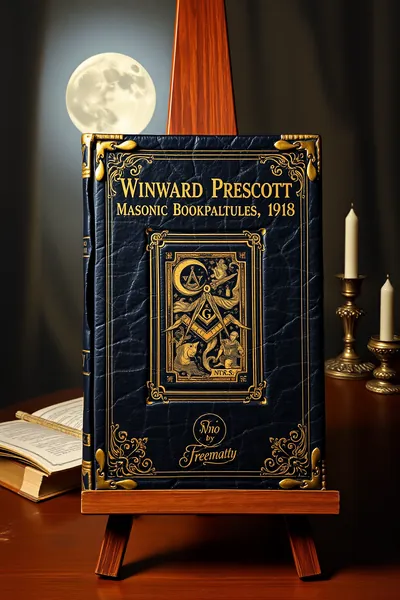
Freemasonry and Catholicism, Max Heindel (1919)

 83
83

Freemasonry and Catholicism, Max Heindel (1919)


Lorelei Sage, Contemplative Literature Editor — Max Heindel's 'Freemasonry and Catholicism' is a revelation for the discerning esoteric student. Heindel, with his characteristic Rosicrucian clarity, masterfully bridges the perceived chasm between these two monumental spiritual institutions. He reveals the shared esoteric underpinnings, the common symbolic lexicon, and the unified purpose behind their rituals and teachings. This work is indispensable for anyone seeking to understand the deeper spiritual currents shaping human history and consciousness. Its strength lies in Heindel's ability to synthesize complex metaphysical concepts into accessible, yet profound, insights. Ideal for seasoned seekers and serious scholars of comparative mysticism.
📝 Description
83
Max Heindel published 'Freemasonry and Catholicism' in 1919, examining their esoteric connections.
In his 1919 book, Max Heindel investigates the symbolic and spiritual parallels between Freemasonry and Roman Catholicism. Heindel, a Rosicrucian, examines the allegorical narratives and rituals of both traditions, suggesting they originate from ancient mystery schools and serve a common purpose in human spiritual development. The work aims to show readers the shared foundations beneath these distinct paths. Heindel focuses on the esoteric meaning within Masonic symbols and Catholic sacraments, proposing a unified view of divine revelation.
The book details specific Masonic concepts like the symbolism of the Temple of Solomon and connects them to Catholic liturgical practices. Heindel explains how these elements relate to the Western Esoteric Tradition. He argues that understanding these connections reveals a deeper cosmic order and humanity's role within it. The text is written for those interested in comparative mysticism and the hidden aspects of religious and fraternal orders.
Max Heindel's work is rooted in the Rosicrucian tradition, a key component of the Western Esoteric Movement that gained prominence in the late 19th and early 20th centuries. Rosicrucianism, as interpreted by Heindel, synthesizes elements from Hermeticism, Kabbalah, alchemy, and Christian mysticism. His writings often sought to reconcile these esoteric currents with more mainstream religious and philosophical ideas. 'Freemasonry and Catholicism' fits within this context by applying a Rosicrucian lens to analyze the spiritual underpinnings of two major Western institutions, aiming to demonstrate an underlying unity in their symbolic language and spiritual aims.
💡 Why Read This Book?
Uncover the hidden spiritual congruences between Freemasonry and Catholicism, revealing their shared esoteric origins and symbolic language. This book is essential for seekers of hidden wisdom, scholars of comparative religion and mysticism, and practitioners interested in the universal truths underlying diverse spiritual paths. Discover the deeper cosmic purpose woven through ancient rituals and allegories.
⭐ Reader Reviews
Honest opinions from readers who have explored this book.
❓ Frequently Asked Questions
What is the central thesis of Max Heindel's book?
The central thesis posits that Freemasonry and Catholicism, despite outward appearances, share deep esoteric roots and a common symbolic language derived from ancient mystery traditions, both aiming for humanity's spiritual evolution.
Who was Max Heindel and what was his background?
Max Heindel (1865-1919) was a Danish-American mystic and occultist, founder of the Rosicrucian Fellowship. He dedicated his life to expounding upon esoteric Christian teachings and the spiritual significance of human evolution.
What kind of symbolism does Heindel explore?
Heindel explores a rich tapestry of symbolism, including Masonic allegories, Catholic sacraments, alchemical processes, and astrological correspondences, all interpreted through a spiritual and evolutionary lens.
Is this book critical of either Freemasonry or Catholicism?
No, Heindel's approach is not critical but rather revelatory, seeking to demonstrate the underlying unity and shared spiritual purpose of both traditions, highlighting their esoteric connections.
What is the intended audience for this book?
The intended audience includes students of esotericism, comparative religion, comparative mysticism, Freemasons, Catholics interested in deeper spiritual meaning, and anyone seeking to understand the hidden connections in spiritual traditions.
🔮 Key Themes & Symbolism
The Esoteric Unity of Religions
Heindel masterfully illustrates how diverse spiritual paths, particularly Freemasonry and Catholicism, are not disparate entities but rather interconnected branches of a single, universal spiritual tree. He argues that the outer forms and rituals often obscure a profound, shared core of wisdom, passed down through ancient mystery schools. This theme emphasizes the underlying oneness of divine revelation and the potential for spiritual seekers to find common ground and deeper understanding by looking beyond superficial differences in dogma and practice.
Symbolism as a Universal Language
This work delves deeply into the power of symbolism as a conduit for esoteric knowledge. Heindel deciphers the allegorical language embedded within Masonic rituals and Catholic sacraments, revealing how these symbols act as keys to unlocking higher spiritual truths about human evolution, cosmic laws, and the nature of consciousness. The book posits that symbols are not merely decorative but are potent vehicles for transmitting profound metaphysical concepts across time and cultures, essential for the inner aspirant's journey.
Spiritual Evolution and the Cosmic Plan
At its heart, 'Freemasonry and Catholicism' is a treatise on human spiritual evolution within the grand cosmic plan. Heindel interprets the teachings and symbols of both traditions as guides for the soul's journey through successive stages of development. He reveals how these paths offer blueprints for overcoming material limitations, developing higher faculties, and ultimately realizing one's divine potential, aligning the individual with the purposeful unfolding of the universe and the divine will.
💬 Memorable Quotes
Direct passages from the work, attributed to the author.
“The ceremonies of the Temple are but the outer shell of a profound inner truth.”
— This highlights the esoteric principle that external religious or fraternal practices hold deeper, hidden spiritual meanings meant for inner contemplation and realization.
“The blue lodge teachings are but the ABC of Masonry.”
— This suggests that the foundational teachings of Freemasonry are introductory, implying that greater, more profound spiritual knowledge awaits the dedicated seeker in higher degrees or related esoteric studies.
“The Eucharist is a spiritual food for the soul.”
— This interprets the Catholic sacrament of the Eucharist not just as a ritual but as a potent means of spiritual nourishment and connection to divine energies.
“The square and compasses are symbols of the duality and unity of existence.”
— This points to the symbolic depth of Masonic tools, representing the reconciliation of opposites and the harmonious balance required for spiritual attainment.
💡 Key Ideas
Editorial paraphrase of the work's core concepts — not direct quotes.
All religions are but different paths to the same goal.
This quote captures the book's core message of universalism, suggesting that the ultimate spiritual truth is accessible through various traditions, each offering a unique yet valid pathway.
🌙 Esoteric Significance
Tradition
Heindel's work is deeply rooted in the Rosicrucian tradition, emphasizing esoteric Christianity, practical occultism, and the spiritual evolution of humanity. It draws heavily from Hermeticism, Neoplatonism, and Gnosticism, reinterpreting Christian dogma and Masonic symbolism through an alchemical and astrological lens to reveal universal spiritual laws.
Symbolism
The book meticulously deciphers a rich array of symbols common to both Freemasonry and Catholicism. This includes the symbolism of the Temple of Solomon, Masonic degrees, the Eucharist, the Virgin Mary, and the crucifixion, all interpreted as keys to understanding cosmic principles, human psychology, and the path of spiritual transformation and regeneration.
Modern Relevance
In an age often characterized by division and a loss of spiritual connection, Heindel's exploration of unity between seemingly disparate traditions offers enduring relevance. It encourages a deeper, more inclusive understanding of spirituality, highlighting the universal truths that transcend sectarian boundaries and fostering a holistic view of human and cosmic evolution.
👥 Who Should Read This Book
This book is a treasure for dedicated seekers of esoteric wisdom and comparative mystics. Freemasons and Catholics interested in the deeper, allegorical meanings behind their traditions will find useful insights. Scholars of occultism, comparative religion, and ancient mystery schools will benefit from Heindel's unique interpretations. Beginners in esoteric studies can use it as a foundational text for understanding the symbolic language of spiritual paths, while advanced practitioners will find it a valuable resource for deepening their comprehension of universal spiritual laws.
📜 Historical Context
Published in 1919, 'Freemasonry and Catholicism' emerged from a world on the precipice of profound change, scarred by World War I and grappling with emerging ideologies. This era saw a surge in interest in esoteric movements, spiritualism, and alternative philosophies as traditional structures were questioned. Max Heindel, a prominent figure in Rosicrucianism, sought to bridge perceived divides and reveal the underlying spiritual unity in a fractured world. His work resonated with individuals seeking meaning beyond the material and political upheavals, offering a mystical perspective on enduring human institutions and their role in spiritual development. The book reflects a continued engagement with ancient wisdom traditions during a period of intense societal transformation.
📔 Journal Prompts
Reflect on a symbol from Freemasonry or Catholicism that speaks to you. What deeper meaning might it hold?
How do the concepts of 'hidden knowledge' and 'esoteric unity' apply to your own spiritual journey?
Consider the idea of spiritual evolution. In what ways do you see this process unfolding in your life or the world?
Compare and contrast a ritual or practice from Freemasonry or Catholicism (as described by Heindel) with a personal spiritual practice.
What does it mean to you to find common ground between seemingly different belief systems?
🗂️ Glossary
Esotericism
The study and practice of hidden, inner spiritual knowledge and teachings, often transmitted through symbolic language and intended for initiates or those on a path of inner development.
Rosicrucianism
A mystical and esoteric tradition that emphasizes spiritual alchemy, the divine nature of humanity, and the practical application of spiritual principles for personal and global transformation.
Allegory
A story, poem, or picture that can be interpreted to reveal a hidden meaning, typically a moral or political one. In spiritual contexts, it refers to symbolic narratives that convey profound truths.
Sacrament
A religious rite considered to be an outward and visible sign of an inward and spiritual grace, particularly in Christianity, signifying a divine mystery or covenant.
Mystery Tradition
Ancient religious or spiritual schools that offered secret teachings and initiations to their members, focusing on profound philosophical and metaphysical truths about existence and the divine.
This book appears in 2 collections
🔮 Readers Also Liked
Browse all →





More by Max Heindel
All books →





From the “Secret Societies” Collection
View all →




More Free Freemasonry & Secret Societies Books
View all →