A Pilgrim's path
 83
83

A Pilgrim's path
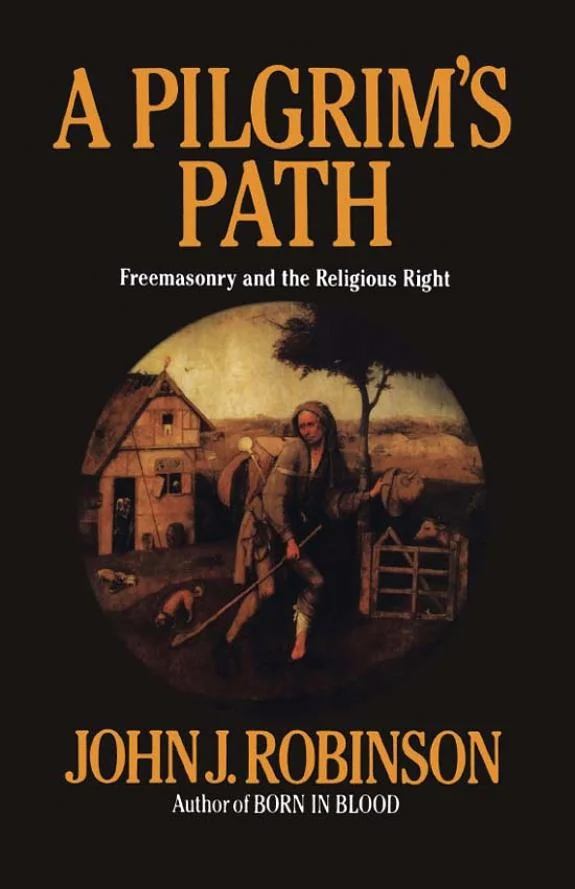
Robinson's 'A Pilgrim's Path' presents a compelling argument for the continuity of certain esoteric ideas across disparate historical periods. The strength lies in its methodical approach, connecting seemingly unrelated philosophical threads with a scholar's precision. For instance, the detailed analysis of how Masonic symbolism might echo earlier Gnostic motifs is particularly illuminating. However, the book’s academic rigor, while a virtue, can sometimes lead to a dense presentation that may challenge readers unfamiliar with the foundational texts of Western esotericism. The discussion of the 'Emerald Tablet' as a touchstone for alchemical thought, while accurate, could benefit from more explicit connections to its practical implications or interpretations by later Rosicrucians. Ultimately, Robinson offers a valuable, if demanding, cartography of the esoteric landscape.
📝 Description
83
John J. Robinson's 1993 book examines the historical roots of Western esoteric traditions.
A Pilgrim's Path, published in 1993, investigates the historical connections within esoteric thought. Robinson's work is not a guide to mystical practices but a thorough study of the ideas and groups that have influenced esoteric history. It appeals to readers interested in Western esotericism who value detailed research and logical reasoning. The book is suitable for students of religion, the history of ideas, and anyone wanting to grasp symbolic systems beyond surface-level meanings.
Robinson's study appeared at a time when academic and public interest in esoteric subjects was growing after a period of marginalization. It followed increased attention to occult revivals and groups like the Hermetic Order of the Golden Dawn, offering a more balanced viewpoint. The book connects different esoteric currents, tracing their development through centuries of philosophical and mystical thought. It shows how similar symbols and ideas, appearing in various settings, often share common origins or evolve in parallel ways, countering the idea of entirely separate traditions.
This book contributes to the study of Western esotericism, a field that gained academic traction in the late 20th century. Robinson's work emerged when esoteric topics, previously on the periphery of intellectual discussion, began to be examined more closely. It offered a scholarly approach to subjects that had often been associated with popular occult revivals. The book situates itself within this renewed scholarly interest, aiming to provide a grounded perspective on the historical evolution and shared characteristics of various mystical and philosophical traditions.
💡 Why Read This Book?
• Understand the historical evolution of esoteric concepts, specifically how ideas attributed to Hermes Trismegistus circulated and transformed from antiquity through to the Renaissance, a process detailed in the book's examination of Hermeticism. • Gain insight into the symbolic language used across different mystical traditions, as explored through Robinson's analysis of recurring motifs like the 'Great Work' in alchemy. • Appreciate the scholarly methodology applied to esoteric subjects, learning how Robinson connects Masonic symbolism to earlier Gnostic traditions, offering a critical lens for evaluating historical connections.
⭐ Reader Reviews
Honest opinions from readers who have explored this book.
❓ Frequently Asked Questions
What is the primary focus of John J. Robinson's 'A Pilgrim's Path'?
The book primarily focuses on tracing the historical lineage and interconnectedness of Western esoteric traditions, examining how core philosophical and symbolic ideas have evolved and influenced subsequent mystical movements since antiquity.
When was 'A Pilgrim's Path' first published?
'A Pilgrim's Path' by John J. Robinson was first published in 1993.
Does the book explain how to practice esoteric arts?
No, 'A Pilgrim's Path' is more of a historical and philosophical exploration than a practical guide. It focuses on the intellectual history and symbolic underpinnings of esoteric traditions.
Which historical periods or movements does the book cover?
The work explores influences and developments from ancient traditions, including Gnosticism and Hermeticism, through the medieval period, Renaissance alchemy, and into the development of Masonic symbolism.
Is 'A Pilgrim's Path' suitable for beginners in esoteric studies?
It can be challenging for absolute beginners due to its scholarly nature, but it is highly valuable for those with some foundational knowledge seeking a deeper historical context.
What is the 'Great Work' as discussed in the book?
The 'Great Work' refers to the central concept in alchemy, often interpreted as both a physical process of transmuting base metals into gold and a spiritual process of inner transformation and purification.
🔮 Key Themes & Symbolism
Hermetic Continuity
Robinson meticulously traces the enduring influence of Hermetic philosophy, stemming from the legendary figure of Hermes Trismegistus. The work demonstrates how concepts from the 'Corpus Hermeticum' and the 'Emerald Tablet' permeated subsequent esoteric thought, influencing alchemists, mystics, and philosophers across centuries. It highlights the persistent search for divine knowledge and cosmic understanding embedded within this ancient tradition, showing its adaptability and reinterpretation through different eras.
Alchemy and the Great Work
The book explores the symbolic and philosophical dimensions of alchemy, moving beyond its popular association with mere gold-making. Robinson presents the 'Great Work' as a metaphor for spiritual transformation and the quest for perfection. He examines how alchemical symbolism, such as the union of opposites and the concept of the Philosopher's Stone, served as a vehicle for profound psychological and spiritual exploration in the medieval and Renaissance periods.
Masonic Symbolism's Roots
A significant aspect of 'A Pilgrim's Path' is its exploration of how Masonic symbolism draws upon and integrates elements from earlier esoteric traditions. Robinson connects the ritualistic language and allegorical narratives within Freemasonry to streams of Gnostic and Hermetic thought. This analysis provides a framework for understanding the symbolic depth and philosophical underpinnings of Masonic degrees and teachings, suggesting a lineage of esoteric knowledge.
Gnostic Echoes
The influence of Gnostic ideas on Western esotericism is a recurring motif. Robinson identifies how Gnostic concepts of dualism, the search for hidden knowledge (gnosis), and the emanation of divine principles appear in various later mystical systems. The book illustrates how these early Christian mystical movements, often suppressed, left an indelible mark on the intellectual and spiritual landscape, providing a counterpoint to orthodox religious doctrines.
💬 Memorable Quotes
Direct passages from the work, attributed to the author.
“The path of the pilgrim is often obscured by the dust of ages.”
— This metaphor suggests that the search for spiritual truth and understanding is a long and arduous journey, where historical layers and forgotten wisdom can make the way forward difficult to discern.
“Symbolism is the language of the soul seeking its origin.”
— This highlights the idea that the use of symbols in esoteric traditions is not arbitrary but serves as a direct means for the inner self to connect with deeper, perhaps divine, realities and its own fundamental nature.
“What appears as disparate threads are often parts of a single, ancient range.”
— This concept underscores Robinson's central thesis: that various esoteric schools and philosophical systems, despite their surface differences, share a common underlying source or a continuous historical transmission of ideas.
“The Great Work is both the transmutation of lead and the elevation of the spirit.”
— This succinctly captures the dual nature of alchemical pursuit as presented in the book, encompassing both material transformation and profound personal, spiritual evolution.
“Gnosis was not merely knowledge, but a state of being.”
— This interpretation emphasizes that for Gnostics, true spiritual insight was not just intellectual understanding but a transformative inner realization or direct experience of the divine.
🌙 Esoteric Significance
Tradition
Robinson's work is firmly rooted in the study of Western Esotericism, particularly drawing from Hermeticism, Gnosticism, and Renaissance alchemy. It positions itself within the lineage of scholars who seek to trace the historical transmission and evolution of these mystical and philosophical currents. The book departs from purely devotional or practical occult texts by focusing on the intellectual history and symbolic coherence, acting as a bridge between historical scholarship and esoteric interpretation.
Symbolism
Central symbols explored include the 'Emerald Tablet,' representing the foundational wisdom of Hermeticism and the principles of the 'as above, so below.' The 'Great Work' of alchemy symbolizes not just material transmutation but spiritual perfection and the integration of the self. The book also examines the serpent as a symbol of wisdom and cyclic renewal, a motif found across Gnostic and Hermetic traditions, often linked to esoteric knowledge and liberation.
Modern Relevance
Contemporary practitioners and scholars of Hermeticism, Gnosticism, and esoteric Freemasonry find value in Robinson's work for its historical synthesis. Thinkers exploring comparative mysticism and the history of consciousness often cite his ability to connect disparate traditions. Modern Rosicrucian and alchemical study groups frequently reference 'A Pilgrim's Path' as a foundational text for understanding the historical context of their pursuits and the enduring power of ancient symbolic language.
👥 Who Should Read This Book
• Students of Western Esotericism seeking to understand the historical connections between Hermeticism, Gnosticism, and alchemy, particularly those interested in how these traditions influenced later philosophical and symbolic systems. • Researchers in comparative religion and the history of ideas who need a scholarly yet accessible overview of how mystical concepts have been transmitted and reinterpreted across centuries. • Individuals curious about the philosophical underpinnings of Freemasonry, looking for a text that explores the potential esoteric roots and symbolic language embedded within Masonic teachings.
📜 Historical Context
Published in 1993, John J. Robinson's 'A Pilgrim's Path' emerged during a period of significant academic and popular re-engagement with Western esoteric traditions. The late 20th century saw scholars like Frances Yates and Antoine Faivre laying groundwork for the serious study of Hermeticism, the Renaissance magical worldview, and Rosicrucianism. Robinson's work contributed to this scholarly milieu, offering a synthesis that connected these threads to earlier Gnostic movements and later Masonic symbolism. This period also saw a burgeoning market for books on mysticism and occultism, yet Robinson distinguished himself through a more historically grounded, less speculative approach. While figures like Aleister Crowley had been extensively studied, Robinson focused on the underlying philosophical currents that shaped these later figures, often drawing parallels with contemporaries like Manly P. Hall, though with a more critical historical lens.
📔 Journal Prompts
Reflect on the concept of the 'Great Work' as both a material and spiritual endeavor.
Consider how the symbolism of the 'Emerald Tablet' might apply to contemporary understanding of cosmic principles.
Trace the potential influence of Gnostic ideas on modern spiritual seeking.
Analyze the connections Robinson draws between Masonic symbolism and earlier esoteric streams.
Explore the idea of 'gnosis' as a state of being versus mere intellectual knowledge.
🗂️ Glossary
Hermeticism
A philosophical and religious tradition based on writings attributed to Hermes Trismegistus, a syncretic Greco-Egyptian deity. It emphasizes divine wisdom, cosmic unity, and the principle of 'as above, so below.'
Gnosticism
A diverse set of religious ideas and systems, prominent in the first few centuries CE, characterized by the belief that salvation is achieved through secret knowledge (gnosis) revealed by a divine messenger.
Alchemy
An ancient tradition focused on the purification and transformation of matter, often interpreted as both a proto-scientific pursuit and a symbolic path to spiritual enlightenment and the 'Great Work'.
Emerald Tablet
A legendary alchemical text, central to Hermetic philosophy, said to contain the secret of the 'prima materia' and the principle of universal correspondence. Its authorship is attributed to Hermes Trismegistus.
Great Work (Main work)
In alchemy, the process of creating the Philosopher's Stone, which was believed to transmute base metals into gold. Symbolically, it represents the spiritual purification and perfection of the alchemist.
Masonic Symbolism
The system of allegorical signs, rituals, and teachings used within Freemasonry, often drawing upon tools, architectural concepts, and esoteric traditions to convey moral and philosophical lessons.
Gnosis
A Greek term meaning 'knowledge,' particularly a special, intuitive, or revealed knowledge of divine mysteries, central to Gnostic belief systems for achieving salvation.
🔮 Readers Also Liked
Browse all →






![The Freemasons' quarterly (magazine and) review [afterw.] The Freemasons' monthly magazine](/img/thumb/the-freemasons-quarterly-magazine-and-review-afterw-the-freemasons-monthly-magazine-freemasons-magazine.webp)
More by John J. Robinson
All books →


More Free Freemasonry & Secret Societies Books
View all →