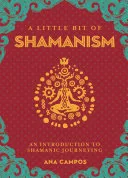
A Little Bit of Shamanism
 78
78

A Little Bit of Shamanism
Ana Campos’s *A Little Bit of Shamanism* distinguishes itself by grounding ancient practices in relatable, everyday experiences. Its strength lies in its accessible tone and global perspective, eschewing the overly romanticized or esoteric jargon that often encumbers introductions to shamanism. Campos’s personal journey, spanning Brazil and the US, lends an authentic voice to her explanations. A particularly effective section details the process of establishing a relationship with helping spirits, offering concrete steps rather than abstract spiritual pronouncements. However, the book’s brevity, while an asset for accessibility, occasionally leaves one wishing for deeper exploration of certain complex concepts, such as the nuanced differences between various global shamanic traditions. The work could benefit from more extensive case studies or specific examples of healing modalities. Nevertheless, Campos successfully demystifies shamanism, presenting it as a viable path for modern seekers.
📝 Description
78
Ana Campos's 2019 book demystifies shamanism for modern practitioners.
A Little Bit of Shamanism, published in 2019, offers a practical introduction to shamanic traditions. Ana Campos, drawing from her training in Brazil and the United States, presents shamanism not as an ancient, distant practice but as a living system applicable to contemporary life. The book aims to make core shamanic concepts understandable to a wide audience interested in spiritual growth and personal healing.
This guide is for individuals exploring alternative spiritualities or seeking more meaning in their everyday existence. It serves both those new to shamanic ideas and those familiar with the field who want a brief look at global shamanic customs. Readers interested in healing, nature, and the role of spirit allies will find value here. It is also for anyone questioning common views and open to animistic perspectives.
The book covers fundamental shamanic elements. This includes grasping the shamanic worldview, where spirits are seen as present in the natural world. Campos discusses the shaman's role in interacting with these spirits for the benefit of the community.
Shamanism, a practice with roots stretching back to prehistory, gained academic attention in the 20th century with scholars like Mircea Eliade defining its core elements. Campos's work appears in a period of renewed interest, influenced by neo-shamanic movements and cross-cultural studies. It acknowledges this history while focusing on contemporary, practical applications, setting it apart from purely academic or strictly ritualistic interpretations.
💡 Why Read This Book?
• You will learn how to identify and connect with your own helping spirits, a core practice in shamanism, by following Campos's method derived from her Brazilian training. • You will gain a global perspective on shamanic traditions, moving beyond Western interpretations, by understanding the historical context provided up to 2019. • You will discover practical ways to integrate shamanic wisdom into daily life, fostering personal healing and community connection, as outlined in the book's methodology.
⭐ Reader Reviews
Honest opinions from readers who have explored this book.
❓ Frequently Asked Questions
What is shamanism according to Ana Campos?
Ana Campos defines shamanism as a spiritual practice focused on connecting with the spirit world to gain wisdom and facilitate healing. It emphasizes a global perspective, drawing from traditions worldwide, and aims to integrate these ancient practices into modern daily life for personal and community well-being.
Is shamanism dangerous for beginners?
Campos presents shamanism in *A Little Bit of Shamanism* as an accessible and safe practice when approached with respect and proper guidance. The book focuses on building relationships with helping spirits and integrating wisdom, rather than solely on intense ecstatic states, making it suitable for newcomers.
What is the role of helping spirits in shamanism?
Helping spirits are central to shamanism as described by Campos. They are seen as allies and guides in the spirit world, assisting the practitioner in healing, gaining knowledge, and navigating spiritual journeys. Establishing a respectful relationship with these spirits is crucial for effective shamanic work.
How does shamanism differ from other spiritual practices?
Shamanism, as presented by Campos, often involves direct communication with the spirit world through altered states of consciousness and focuses on animistic beliefs (spirits in nature). It differs from many organized religions by its emphasis on personal experience, spirit alliances, and a more fluid cosmology.
Can shamanic practices be adapted for a modern lifestyle?
Absolutely. Campos's book is specifically designed to show how shamanic wisdom can be integrated into contemporary life. It offers methodologies for daily practice, emphasizing how to apply insights from spirit connections to address modern challenges and foster personal growth.
What does Ana Campos mean by a 'global view' of shamanism?
Campos's 'global view' means she draws from shamanic traditions found across various cultures and continents, not just focusing on one specific region or a Westernized interpretation. This broad perspective highlights commonalities and diverse expressions of shamanic practice worldwide.
🔮 Key Themes & Symbolism
Spirit Allies and Relationships
The book strongly emphasizes the importance of cultivating direct relationships with 'helping spirits.' These entities, residing in the spirit world, are portrayed not as abstract concepts but as tangible allies offering guidance, healing, and support. Campos details how to approach these spirits with respect and reciprocity, fostering a connection that becomes a vital resource for personal growth and navigating life's challenges. This theme moves beyond mere intellectual understanding to practical engagement with the unseen world.
Shamanism as Daily Practice
A central tenet of Campos's work is clarifying shamanism and presenting it as a relevant, applicable system for contemporary living. The book provides a methodology for integrating shamanic wisdom into everyday routines, suggesting that spiritual connection and healing are not confined to ceremonial settings. This practical approach encourages readers to see shamanism as a source of grounded insight and personal empowerment, accessible even amidst the demands of modern life.
Global and Personal Shamanic Traditions
Campos offers a mix of personal narrative and global perspective. Drawing from her decades of training in Brazil and the United States, she connects specific cultural expressions of shamanism with universal principles. This approach highlights the diverse manifestations of shamanic practices worldwide while grounding them in her own lived experience, making the subject matter both broad and intimate. It challenges narrow definitions and encourages a more inclusive understanding.
Healing and Community Well-being
The book posits shamanism as a powerful tool for healing, not only on an individual level but also for the collective. By establishing a connection with the spirit world and integrating its wisdom, individuals can foster personal well-being, which in turn positively impacts their communities. Campos explores how shamanic practices can address imbalances and promote harmony, suggesting a holistic approach to health that encompasses the spiritual, personal, and communal dimensions.
💬 Memorable Quotes
Direct passages from the work, attributed to the author.
“Establishing a relationship with our helping spirits is crucial for healing ourselves and our communities.”
— This statement expresses the core practical philosophy of the book, highlighting that shamanism is not just about individual spiritual journeys but also about collective well-being, facilitated by direct connection with spirit allies.
“A global view of shamanism reveals diverse yet interconnected traditions.”
— This interpretation highlights the book's commitment to a broad, inclusive understanding of shamanism, moving beyond single cultural or regional perspectives to acknowledge its worldwide presence and varied expressions.
“The spirit world is accessible and offers vital support for human endeavors.”
— This interpretation reflects the book's view of the spirit world as an active, supportive dimension, accessible through shamanic techniques for practical benefit in the physical realm.
💡 Key Ideas
Editorial paraphrase of the work's core concepts — not direct quotes.
Shamanism offers a methodology for bringing wisdom into our daily practices.
This paraphrase emphasizes the actionable nature of shamanism as presented by Campos, positioning it as a practical system for everyday life rather than an esoteric, detached philosophy.
Personal experience fuels the understanding and application of shamanic principles.
This paraphrased concept underscores the author's approach, suggesting that genuine learning in shamanism comes from direct engagement and personal journeying, informed by a synthesis of global knowledge and individual practice.
🌙 Esoteric Significance
Tradition
While shamanism predates many formalized esoteric traditions, Campos's work aligns with animistic and nature-based spiritual lineages. It shares common ground with Hermeticism's focus on correspondence between worlds ('as above, so below') and Gnosticism's emphasis on direct experiential knowledge. However, it departs from the more structured, often text-based systems of Western esotericism by prioritizing direct relationship with nature spirits and the non-dualistic perception of a living, conscious cosmos.
Symbolism
Key symbols in shamanism, as explored in the book, include the 'spirit world' itself—often visualized as parallel realms accessible through altered states—and 'helping spirits,' which can manifest as animals (power animals), ancestors, or nature elementals. The 'shaman' acts as a symbolic bridge, a psychopomp traversing these symbolic landscapes. The book emphasizes the personal interpretation and relationship-building with these symbols, seeing them as dynamic forces rather than fixed representations.
Modern Relevance
Campos's approach appeals to contemporary movements focused on ecological spirituality, deep ecology, and ecopsychology, which seek to restore humanity's perceived connection to the natural world. Her emphasis on direct experience and spirit allies finds echoes in modern animism revivalism and certain therapeutic modalities that incorporate transpersonal and nature-based elements. Thinkers and practitioners exploring non-anthropocentric worldviews and alternative healing methodologies frequently draw upon the principles outlined in accessible works like this.
👥 Who Should Read This Book
['• Individuals new to shamanism: Those seeking an unintimidating introduction to core concepts, global perspectives, and practical applications without complex jargon.', '• Nature-based spiritual seekers: People interested in deepening their connection with the natural world and understanding animistic perspectives on life and consciousness.', '• Those seeking personal healing and empowerment: Readers looking for accessible methods to foster self-understanding, resilience, and a stronger sense of purpose through spiritual connection.']
📜 Historical Context
Ana Campos's *A Little Bit of Shamanism* (2019) enters a landscape significantly shaped by early 20th-century anthropology and later New Age interpretations. Mircea Eliade's seminal 1951 work, *Shamanism: Archaic Techniques of Ecstasy*, largely defined the academic study of the phenomenon, emphasizing ecstatic trance and spirit journeys. By the late 20th century, figures like Michael Harner developed Neo-shamanic practices, making shamanic techniques accessible to Westerners. Campos's book emerges in this context, offering a synthesis that respects the global diversity of shamanism while focusing on practical application for modern life. It implicitly engages with the ongoing discourse between academic anthropology, indigenous traditions, and contemporary spiritual movements, aiming for a grounded, accessible approach distinct from purely theoretical or highly ritualized forms.
📔 Journal Prompts
Reflect on the concept of 'helping spirits' and potential forms they might take in your experience.
Describe your current relationship with the natural world and how it could be deepened.
Consider how shamanic wisdom could inform a specific daily challenge you face.
What does 'healing ourselves and our communities' mean to you in a shamanic context?
Explore the idea of the spirit world as presented in the book and your personal resonance with it.
🗂️ Glossary
Shaman
An individual who acts as an intermediary between the physical and spirit worlds, typically using altered states of consciousness to access spiritual guidance and perform healing.
Spirit World
The non-physical realm(s) perceived by shamans as inhabited by spirits, energies, and consciousnesses, accessible through specific practices like journeying.
Helping Spirits
Entities in the spirit world that offer assistance, guidance, and healing to the shamanic practitioner. These can manifest in various forms, such as animal spirits, nature spirits, or ancestral spirits.
Shamanic Journey
A technique used by shamans to enter altered states of consciousness, typically to travel into the spirit world to seek information, healing, or guidance.
Power Animal
A specific type of helping spirit, often in animal form, that provides strength, protection, and guidance to an individual. It is a common concept in many shamanic traditions.
Methodology
A system of methods and principles used in a particular field. In this context, it refers to Ana Campos's structured approach to understanding and practicing shamanism.
Global View
An approach that considers shamanic practices across diverse cultures and geographical locations, recognizing both commonalities and variations in traditions worldwide.