Jim Morrison's Adventures in the Afterlife
 77
77

Jim Morrison's Adventures in the Afterlife
Mick Farren’s 1999 novel, "Jim Morrison's Adventures in the Afterlife," offers a peculiar, often stark, vision of the Lizard King’s posthumous journey. Farren, no stranger to the fringe, charts Morrison’s passage through a purgatorial landscape, a realm populated by his own spectral baggage and the echoes of his rock god persona. The strength of the book lies in its unflinching portrayal of Morrison's internal struggles projected onto an external, metaphysical stage. Farren avoids hagiography, instead presenting a flawed consciousness seeking a peculiar form of peace. A limitation, however, is the narrative's occasional density; the esoteric concepts sometimes overshadow the character's emotional arc, making certain passages feel more like philosophical treatises than narrative progression. The depiction of Morrison wrestling with spectral manifestations of his past performances, particularly his shamanistic stage presence, is a potent, if challenging, image. Ultimately, Farren’s work is a bold, if uneven, attempt to map the soul's final, or perhaps ongoing, concert.
📝 Description
77
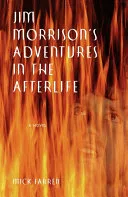
Mick Farren imagined Jim Morrison's afterlife in his 1999 novel, "Jim Morrison's Adventures in the Afterlife."
Published in 1999, Mick Farren's "Jim Morrison's Adventures in the Afterlife" is a fictional account of the Doors frontman's existence after death. It portrays Morrison in a transitional space, similar to purgatory, where he seeks spiritual peace and release from earthly ties. This is not a biography but a metaphysical story.
The book is for those interested in the connection between counterculture, mythology, and spiritual ideas. It will appeal to fans of Jim Morrison and The Doors who want a speculative view of his life and influence beyond music. Readers who enjoy fictional explorations of the afterlife and spiritual quests, or literary takes on famous figures, will also find it engaging.
Farren wrote this novel in 1999, a time when fascination with Jim Morrison and the 1960s psychedelic era persisted. As a figure in counterculture media and music, Farren brought an informed perspective to this speculative fiction. The late 1990s saw renewed interest in spiritual and occult subjects in literature, influenced by New Age thought and a reconsideration of 1960s ideals. The book reflects this wider cultural tendency to mythologize figures from that period.
This novel fits within traditions that speculate on post-mortem existence, drawing from concepts found in Gnosticism and Neoplatonism, which often describe spiritual journeys and the soul's path after physical death. It engages with ideas of spiritual realms and the purification of the soul, concepts common in various mystical traditions. The book also touches on the occult fascination prevalent in the late 20th century, particularly how celebrity figures are mythologized in spiritual contexts.
💡 Why Read This Book?
• Understand the spiritual implications of celebrity after death, as the book explores Jim Morrison's post-mortem journey through a unique purgatorial landscape, challenging notions of fame beyond the grave. • Engage with Mick Farren's specific interpretation of the Lizard King persona, examining how this mythical identity is confronted and processed in a spiritual, rather than earthly, context. • Contemplate the nature of personal peace and absolution through Morrison's quest in the afterlife, offering a speculative narrative that moves beyond biographical accounts of the musician's life.
⭐ Reader Reviews
Honest opinions from readers who have explored this book.
❓ Frequently Asked Questions
Is Jim Morrison's Adventures in the Afterlife a biography?
No, Mick Farren's "Jim Morrison's Adventures in the Afterlife" is a work of speculative fiction. It imagines the Doors frontman's journey through a metaphorical afterlife, focusing on spiritual resolution rather than factual biographical events.
What is the 'Lizard King' in this book?
The 'Lizard King' refers to Jim Morrison's iconic rock and roll persona. In the book, this persona is explored as a potent symbol of primal energy and ego that Morrison confronts in the afterlife as he seeks spiritual peace.
What kind of afterlife does the book describe?
The book describes a purgatory-like afterlife, a liminal space that is less a physical location and more a psychological landscape. It is a realm where Jim Morrison grapples with his past and seeks to reconcile his soul.
Who is Mick Farren and why did he write this book?
Mick Farren was a writer, journalist, and musician deeply embedded in the counterculture scene. He wrote "Jim Morrison's Adventures in the Afterlife" from a perspective informed by that era's ethos, exploring the spiritual and mythological dimensions of its icons.
When was Jim Morrison's Adventures in the Afterlife first published?
The book was first published in 1999, reflecting a continued cultural fascination with Jim Morrison and the psychedelic era decades after his death in 1971.
What esoteric traditions influence the book?
While not strictly adhering to one tradition, the book draws on general concepts of spiritual journeys, purgation, and the soul's quest for peace, common in various esoteric and Gnostic thought, applied to a modern mythic figure.
🔮 Key Themes & Symbolism
Posthumous Consciousness
The work examines the concept of consciousness persisting after death, specifically focusing on Jim Morrison's spectral existence. It portrays an afterlife not as a judgment but as a continuation of internal struggles and a quest for resolution. The narrative explores how the ego and persona, particularly the 'Lizard King' identity, are confronted and potentially transmuted in this non-physical state, offering a unique perspective on the survival of the self beyond the corporeal form.
The Myth of the Rock Star
This theme examines the deification and mythologizing of rock icons. Jim Morrison, as the 'Lizard King,' is presented as a figure whose earthly fame and persona create a complex spiritual legacy. The book uses his afterlife journey to deconstruct the myth, showing the man behind the icon confronting the consequences of his amplified existence and seeking a more authentic form of peace beyond the adulation and spectacle.
Spiritual Purgation
The narrative frames Morrison's afterlife experience as a form of spiritual purgation. He navigates a liminal realm, confronting unresolved aspects of his life and psyche. This journey is depicted as a necessary process of purification, where the soul is purged of earthly attachments and egoic distortions to achieve a state of inner peace. The book suggests that such spiritual work is essential for all souls, regardless of their earthly achievements.
Afterlife as Psychological Landscape
Farren conceptualizes the afterlife as a fluid, subjective realm directly influenced by the individual's consciousness and unresolved issues. Morrison's journey is not through a predetermined heaven or hell but through a landscape shaped by his own memories, desires, and psychological states. This approach aligns with certain esoteric traditions that view the afterlife as a manifestation of inner reality, where external experiences are reflections of internal conditions.
💬 Memorable Quotes
Direct passages from the work, attributed to the author.
“Morrison's spectral existence involves confronting the elements of his shamanistic stage presence.”
— This highlights how the book uses Morrison's famous persona, the 'Lizard King,' as a vehicle to explore his spiritual and psychological struggles. The 'shamanistic stage presence' represents a powerful, perhaps ego-driven, aspect of his identity that must be reconciled in the afterlife.
“The afterlife is a fluid, psychological landscape reflecting the individual's unresolved issues.”
— This captures the book's conceptualization of the spiritual realm as a subjective space. It suggests that the challenges and experiences encountered after death are manifestations of one's own inner state, aligning with certain esoteric philosophies.
“Beyond the fame and the myth, the soul yearns for quiet understanding.”
— This interpretation of a concept within the book speaks to the fundamental human desire for peace and self-knowledge that transcends external validation or persona. It suggests that even a legendary figure like Morrison ultimately seeks a simpler, more profound form of existence.
💡 Key Ideas
Editorial paraphrase of the work's core concepts — not direct quotes.
The Lizard King hurtles through a purgatory-like afterlife in search of some way to bring his soul to peace.
This quote captures the core premise of the book: Jim Morrison's post-mortem journey as a spiritual quest. It highlights the liminal nature of his existence and his ultimate goal of achieving inner serenity beyond the earthly realm.
He seeks absolution not from a divine judge, but from the accumulated weight of his own earthly existence.
This paraphrased concept emphasizes the book's focus on internal reconciliation rather than external judgment. Morrison's quest for peace is an act of self-purification, addressing the karmic or psychological burdens he carried from his life.
🌙 Esoteric Significance
Tradition
The work draws loosely from Gnostic and Hermetic concepts of spiritual journeys and the soul's path through various planes of existence. It departs from strict adherence to any single tradition, instead using these ideas as a framework to explore the consciousness of a modern mythic figure. The concept of a purgatorial or liminal space where the soul works through unresolved issues aligns with certain interpretations of post-mortem processes found across various esoteric philosophies, emphasizing personal responsibility and internal transformation.
Symbolism
The 'Lizard King' persona serves as a potent symbol of primal energy, ego, and the shamanistic impulse that Morrison embodied. His journey through the afterlife involves confronting this persona, representing the struggle to integrate or transcend the self-created myth. The 'purgatory-like afterlife' itself symbolizes a state of transition and purification, a liminal space where the soul confronts its attachments and illusions before finding peace, reflecting broader esoteric ideas of spiritual evolution.
Modern Relevance
This book remains relevant for contemporary discussions on the spiritual legacy of counterculture icons and the nature of fame. It speaks to modern interests in consciousness studies, speculative fiction about the afterlife, and the deconstruction of celebrity myths. Thinkers and practitioners interested in how mythology intersects with individual spiritual journeys, or those exploring fictional portrayals of post-mortem consciousness beyond traditional religious dogma, may find value in Farren's unique approach.
👥 Who Should Read This Book
• Fans of Jim Morrison and The Doors seeking a speculative, philosophical exploration of his legacy beyond biographical accounts. • Readers interested in counterculture literature and fictional narratives that engage with spiritual and esoteric themes concerning death and the afterlife. • Students of comparative mythology and literary studies who examine the mythologizing of public figures and the concept of the rock star as a modern archetype.
📜 Historical Context
Mick Farren's "Jim Morrison's Adventures in the Afterlife," published in 1999, emerged during a period of continued fascination with the counterculture figures of the 1960s and 70s. Jim Morrison, who died in 1971, had long since transcended his status as a rock star to become a mythic figure. Farren, a prominent journalist and musician himself within that milieu, brought an insider's perspective to this fictional exploration. The late 1990s saw a notable interest in spiritual and esoteric themes in popular culture, influenced by New Age thought and a broader cultural re-evaluation of the psychedelic era. While not directly engaging with academic esoteric traditions like Theosophy or Kabbalah in a scholarly manner, the book taps into a popular appetite for exploring the spiritual dimensions of iconic figures. It can be seen as a literary response to the enduring mythos surrounding Morrison, offering a speculative narrative that engages with themes of consciousness, celebrity, and the afterlife, resonating with a readership that sought deeper meanings beyond the surface of rock music history.
📔 Journal Prompts
The Lizard King's persona and its confrontation in the afterlife.
Morrison's quest for peace beyond earthly fame.
The symbolic meaning of the purgatory-like afterlife.
Reflecting on the deconstruction of a modern mythic figure.
The soul's journey through a psychological landscape.
🗂️ Glossary
Lizard King
The mythical persona adopted by Jim Morrison, representing primal energy, shamanism, and a powerful stage presence that became synonymous with his identity and the Doors' mystique.
Purgatory-like afterlife
A liminal or transitional state after death, depicted in the book as a space for spiritual purification and reconciliation, distinct from conventional notions of heaven or hell.
Spectral existence
The state of being in the afterlife, characterized by a non-physical presence where consciousness persists and interacts with spiritual or psychological realities.
Spiritual Purgation
The process of cleansing the soul or consciousness of earthly attachments, egoic distortions, and unresolved issues as a necessary step toward achieving inner peace.
Psychological Landscape
The concept that the afterlife is not a fixed location but a fluid environment shaped by an individual's consciousness, memories, and inner state.
Absolution
In this context, not divine forgiveness, but a personal state of release and peace achieved through confronting and resolving one's own past actions and psychological burdens.
Counterculture
A broad social movement of the 1960s and 70s characterized by a rejection of mainstream societal norms, embracing alternative lifestyles, music, and spiritual exploration.


















![Story of Dreams, Fate and Destiny [Zurich Lecture Series Edition]](/img/thumb/story-of-dreams-fate-and-destiny-zurich-lecture-series-edition-erel-shalit-518400.webp)