A beginner's guide to the I ching
 61
61

A beginner's guide to the I ching



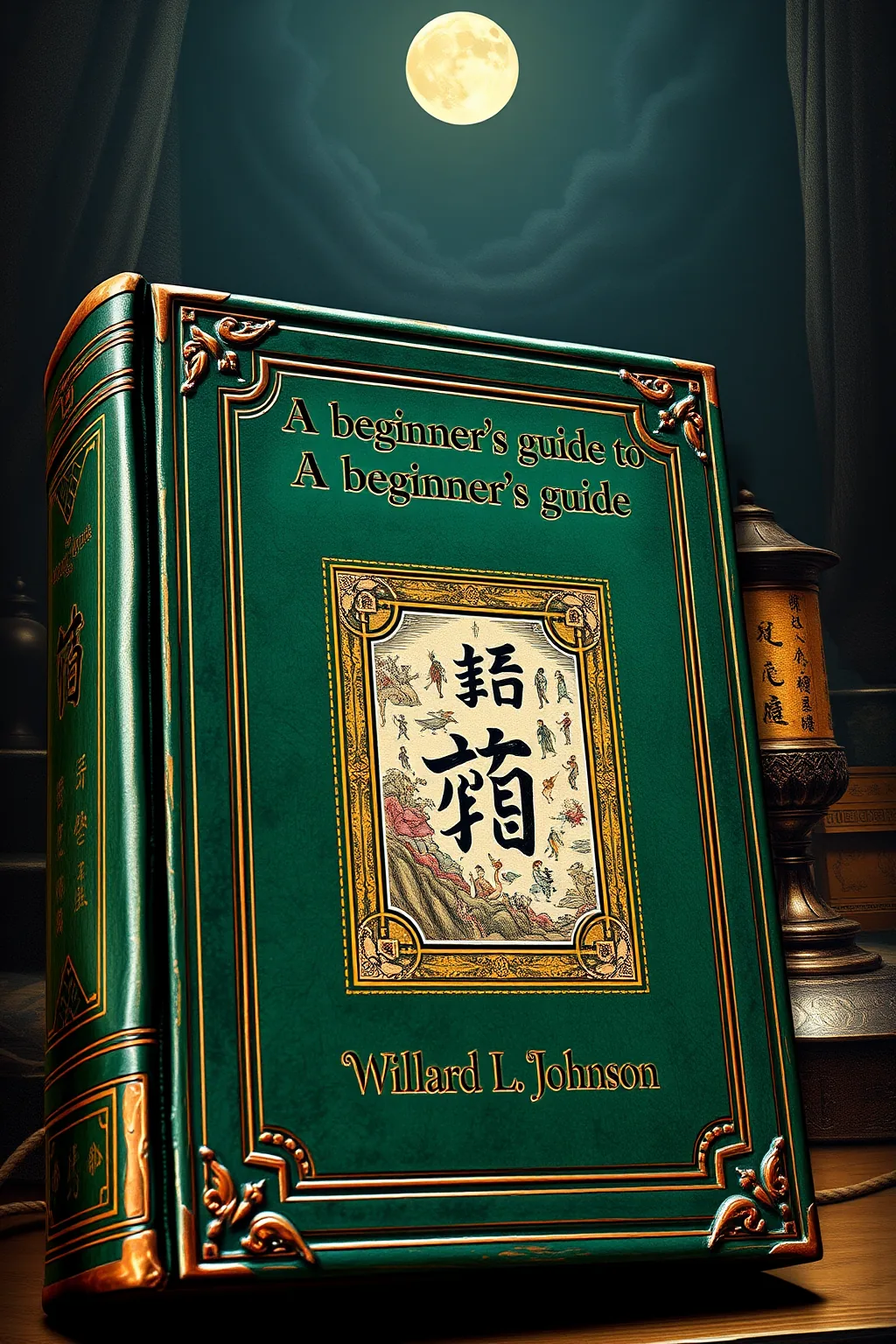
Willard L. Johnson's "A Beginner's Guide to the I Ching" stands as a beacon for neophytes venturing into the profound depths of this ancient Chinese oracle. Johnson navigates the intricate symbolism with clarity and grace, demystifying the hexagrams and their profound philosophical underpinnings. His approach fosters an intuitive understanding, moving beyond mere rote memorization to a genuine connection with the text's living wisdom. This guide is an invaluable companion for anyone seeking to harness the I Ching's power for introspection, guidance, and a deeper attunement to the subtle energies of existence. A truly illuminating entry point into one of the world's most revered divinatory systems.
📝 Description
61
Willard L. Johnson's 1994 guide demystifies the I Ching for newcomers.
Willard L. Johnson's "A Beginner's Guide to the I Ching" offers a clear introduction to the ancient Chinese text. Johnson breaks down the sixty-four hexagrams and the principles of yin and yang, making them understandable for those new to this system.
The book aims to show that the I Ching is more than a tool for predicting the future. It functions as a way to understand the self and one's connection to the wider world. Johnson explains how to use the I Ching for personal growth and finding balance.
Readers will learn about the basic philosophy behind the I Ching, including concepts related to the Tao and the changing nature of existence. The goal is to help the reader perceive patterns in their lives and the universe.
The I Ching, or Book of Changes, is a foundational text in Chinese philosophy and divination, dating back thousands of years. It is a system that uses hexagrams, formed from combinations of yin and yang lines, to provide insight into situations and potential outcomes. Within esoteric traditions, it is seen not just as a predictive tool but as a map of cosmic principles and a guide for aligning oneself with the natural order of the universe.
💡 Why Read This Book?
This guide offers a clear, accessible entry point into the profound wisdom of the I Ching. It transforms a complex, ancient oracle into a practical tool for self-reflection and understanding life's currents. Ideal for spiritual seekers, students of Eastern philosophy, and anyone yearning for deeper insight into the patterns of change and destiny.
⭐ Reader Reviews
Honest opinions from readers who have explored this book.
❓ Frequently Asked Questions
What is the I Ching?
The I Ching, or Book of Changes, is an ancient Chinese divination text and philosophical classic. It uses a system of 64 hexagrams to represent fundamental archetypes and situations, offering insights into the dynamics of change and guidance for decision-making.
How does the I Ching work?
Divination with the I Ching typically involves casting yarrow stalks or coins to generate a hexagram. This hexagram is then interpreted using the text's commentary and line statements to provide guidance relevant to the querent's question or situation.
Is the I Ching only for divination?
While renowned for its divinatory capabilities, the I Ching is also a profound philosophical text exploring the Tao, the nature of change, and the interconnectedness of all things. It serves as a guide for ethical living and harmonious action.
Who is Willard L. Johnson?
Willard L. Johnson is an author dedicated to making complex esoteric and philosophical traditions accessible to a wider audience. His work is known for its clarity, depth, and respectful engagement with ancient wisdom.
What hexagrams are most important?
All 64 hexagrams hold significance within the I Ching. However, understanding the basic principles of yin and yang, and the trigrams (eight symbolic figures composed of three lines), is crucial for interpreting the hexagrams and their changing lines.
🔮 Key Themes & Symbolism
The Philosophy of Change
Fundamentally, the I Ching is a profound exploration of the ceaseless nature of change. It teaches that the universe is in constant flux, and understanding these shifts is key to navigating life harmoniously. This theme explores the dynamic interplay of opposing forces, the cyclical patterns of growth and decay, and how to adapt with wisdom and resilience to life's inevitable transformations.
Symbolic Language of Hexagrams
The 64 hexagrams are the visual and symbolic language of the I Ching, each representing a fundamental archetype or situation. This theme unpacks the rich layers of meaning within these sixty-four six-line figures, exploring the elemental trigrams that compose them, the inherent symbolism of their structure, and how their configurations offer clear insights into the present moment and potential future pathways.
Divination as Self-Reflection
Beyond mere fortune-telling, the I Ching serves as a powerful tool for introspection and conscious decision-making. This theme highlights how consulting the oracle encourages a deep dive into one's own motivations, intentions, and the underlying dynamics of a situation. It emphasizes the interactive nature of the process, where the I Ching acts as a mirror, reflecting hidden truths and offering guidance for mindful action.
💬 Memorable Quotes
Direct passages from the work, attributed to the author.
“The wise man listens to the whispers of the hexagrams.”
— This suggests that the I Ching is not just an object of study but a living oracle whose subtle messages can be perceived by those who cultivate inner receptivity and wisdom.
💡 Key Ideas
Editorial paraphrase of the work's core concepts — not direct quotes.
The universe is a river, and we are but leaves upon its surface.
This quote speaks to the I Ching's understanding of impermanence and our interconnectedness with the cosmic flow. It suggests surrendering to the natural currents of life rather than resisting them.
Stillness births clarity, and clarity guides the way.
Emphasizing the importance of inner peace and contemplation, this quote suggests that true understanding and effective action arise from a calm and centered mind.
Every ending is a new beginning in disguise.
This quote expresses the I Ching's core message of cyclical change, highlighting that apparent conclusions are merely transitions to new phases of existence and opportunity.
Embrace the shadow to understand the light.
This quote points to the I Ching's holistic approach, acknowledging the necessity of understanding both positive and negative aspects of any situation or oneself to achieve true balance and insight.
🌙 Esoteric Significance
Tradition
The I Ching is deeply rooted in the ancient Chinese esoteric tradition, drawing heavily from Taoist principles of balance, flow, and the interconnectedness of all things. It represents a sophisticated system of cosmology and divination that seeks to map the underlying patterns of the universe and human experience, offering a path to harmony with the Tao.
Symbolism
The primary symbolism of the I Ching lies in its 64 hexagrams, each composed of six lines representing yin (broken) and yang (solid). These lines and their arrangements form archetypal images and situations, conveying profound meanings about cosmic forces, human relationships, and the dynamics of change. The trigrams (eight basic three-line figures) are fundamental building blocks, representing elements like Heaven, Earth, Water, and Fire.
Modern Relevance
In the modern era, the I Ching continues to offer profound relevance as a tool for personal growth, ethical guidance, and understanding complex life situations. Its emphasis on adaptation, balance, and the interconnectedness of all things provides a framework for reading through the uncertainties of contemporary life. It serves as a powerful aid for introspection, fostering mindfulness and promoting a deeper connection to universal principles.
👥 Who Should Read This Book
This guide is an invaluable resource for anyone drawn to the ancient wisdom of the East. Beginners to divination and Eastern philosophy will find its explanations clear and encouraging, providing a solid foundation for understanding the I Ching. Scholars of comparative religion and philosophy will appreciate its insightful interpretations. Spiritual seekers looking for a profound tool for self-discovery and guidance will find it immensely rewarding. Practitioners of various esoteric arts may also find it a valuable addition to their repertoire for deepening their understanding of symbolic systems.
📜 Historical Context
The I Ching's origins are shrouded in the mists of ancient China, with its earliest components dating back over three millennia. It emerged during a period of profound philosophical and spiritual development, alongside the foundational ideas of Taoism and Confucianism. Initially, it served as a divinatory tool for rulers and shamans, seeking guidance from the cosmos in matters of state and destiny. Over centuries, its interpretations evolved, becoming a central text for scholars, mystics, and emperors alike. The compilation of the Ten Wings, attributed to Confucius and his disciples, elevated the I Ching from a mere oracle to a profound philosophical treatise on the nature of reality, ethics, and the human condition, solidifying its status as one of the world's most enduring and influential classics.
📔 Journal Prompts
Reflect on a recent situation where you felt a strong sense of change or transition. How might an I Ching hexagram describe this?
Consider the concept of balance in your life. Where do you find harmony, and where is there discord?
What does the symbol of 'yin' and 'yang' mean to you personally? How do these forces manifest in your daily life?
If you were to ask the I Ching a question about your current path, what would it be and why?
How can understanding the cyclical nature of life help you approach challenges with greater resilience and wisdom?
🗂️ Glossary
Hexagram
A figure composed of six stacked horizontal lines, representing one of the 64 fundamental archetypes or situations in the I Ching. Each hexagram is formed by combining two trigrams.
Trigram
A basic symbolic figure composed of three stacked horizontal lines, representing eight fundamental elements or concepts such as Heaven, Earth, Water, Fire, Wind, Thunder, Mountain, and Lake.
Yin
In the I Ching, represented by a broken line (-- --). It symbolizes passive, receptive, dark, feminine, and yielding qualities, often associated with the moon and the earth.
Yang
In the I Ching, represented by a solid line (------). It symbolizes active, creative, light, masculine, and assertive qualities, often associated with the sun and the heavens.
Tao
The fundamental principle of the universe in Chinese philosophy, often translated as 'the Way.' It represents the natural order, the underlying force, and the ultimate reality that governs existence.
This book appears in 3 collections
🔮 Readers Also Liked
Browse all →







From the “Tarot” Collection
View all →








More Free Divination & Tarot Books
View all →