Frank Podmore
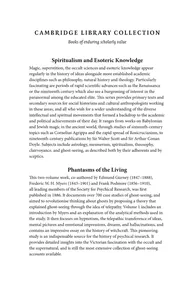
Frank Podmore was an English writer and co-founder of the Fabian Society, known for his critical yet open-minded investigations into spiritualism and psychical phenomena, including telepathy and apparitions. He approached the supernatural with intellectual rigor, seeking rational explanations while acknowledging the persistence of certain unexplained experiences.
Where the word comes from
The name "Podmore" is of Old English origin, likely derived from "pōd," meaning "puddle" or "marsh," and "mōr," meaning "moor" or "fen." It denotes a dwelling place near a marshy area. The surname first appeared in medieval England, reflecting geographical settlement patterns.
In depth
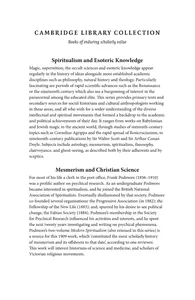
Frank Podmore (5 February 1856 – 14 August 1910) was an English author and founding member of the Fabian Society as well as an influential member of the Society for Psychical Research. He is known for his interest in spiritualism, which he eventually developed a sceptical attitude towards, specifically the claims of mediumship which he attacked in his history of mediumship, The New Spiritualism (1910). However, he defended other experiences such as telepathy and ghosts, which he regarded as telepathic...
How different paths see it
What it means today
Frank Podmore, a figure who straddled the worlds of social reform and the spectral, offers a compelling case study in the modern intellectual's wrestling with the uncanny. His involvement with the Society for Psychical Research, a body dedicated to the scientific investigation of phenomena then deemed supernatural, places him in a lineage of thinkers like William James, who similarly sought to bridge the gap between empirical science and the persistent human intuition of realities beyond the immediately perceptible. Podmore’s eventual skepticism towards overt spiritualist claims, particularly those of mediumship, reflects a growing post-Victorian demand for evidence, a sentiment echoed in later philosophical movements emphasizing verifiable experience.
Yet, his continued defense of concepts like telepathy and apparitions, which he posited as potentially explainable through "telepathic" means, reveals a mind unwilling to close the door entirely. This nuanced stance, refusing to dismiss the anomalous outright but seeking to reframe it within a more expansive, albeit still rational, framework, resonates with the hermetic impulse to find hidden correspondences and underlying principles. Mircea Eliade, in his explorations of shamanism and the archaic, noted how societies often develop sophisticated cosmologies to account for experiences that transcend the ordinary, and Podmore, in his own way, was attempting a similar act of intellectual cartography for his era. His work, therefore, is not merely a historical footnote in the study of spiritualism but a testament to the enduring human need to comprehend the edges of our known reality, a quest that, as Carl Jung might suggest, points toward the deep archetypal structures of the psyche that seek meaning and connection. His legacy is one of intellectual honesty, a willingness to look into the shadows without succumbing to superstition, and to acknowledge that the universe may hold more mysteries than our current instruments of measurement can fully encompass.
RELATED_TERMS: Spiritualism, Psychical Research, Telepathy, Apparitions, Skepticism, Empirical Investigation, Anomalous Phenomena
Related esoteric terms
Books on this concept






No reflections yet. Be the first.
Share your interpretation, experience, or question.
