The Wetaskiwin times (1931-03-19)
 83
83

The Wetaskiwin times (1931-03-19)


Cassian Rothmann (Senior Critic, Ancient Wisdom) — This edition of 'The Wetaskiwin Times' offers an unexpected, yet compelling, glimpse into the occult currents of 1931. The brief mention of an 'Edmonton Witchcraft Hearing' is a potent hook, suggesting a rich tapestry of societal engagement with esoteric lore. While the majority of the content appears mundane, its juxtaposition with the hint of the forbidden lends it a peculiar weight. For scholars of folklore and practitioners of modern paganism, this document serves as a valuable primary source, illuminating the historical context of witchcraft accusations and beliefs. It’s a testament to the enduring presence of the mystical, even in seemingly conventional settings.
📝 Description
83
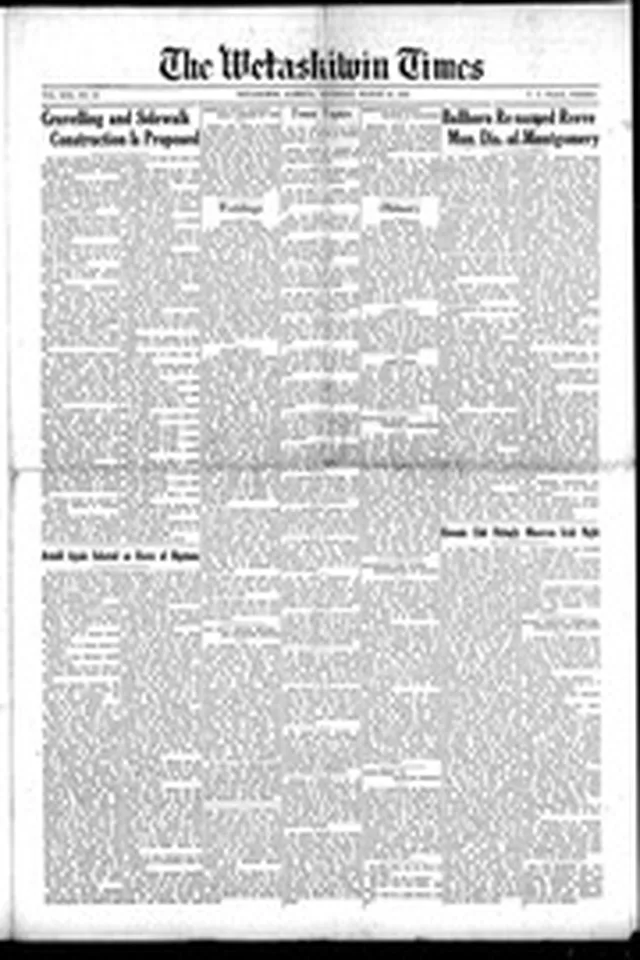
The Wetaskiwin Times, dated March 19, 1931, details an Edmonton witchcraft hearing.
This newspaper clipping from March 19, 1931, goes beyond typical local news. Alongside reports of civic construction and community events, it features an 'Edmonton Witchcraft Hearing.' This detail transforms the ordinary paper into a window onto the occult beliefs and societal fears regarding witchcraft in Alberta during the early 20th century.
For those interested in hidden histories, this is not merely news but a partial record. It suggests a time when the boundary between the understood and the mystical felt less defined. The article prompts reflection on the unseen stories influencing communities, the persistence of older practices, and humanity's lasting interest in the mysterious. The aged pages offer a chance to interpret the symbolic language of that period and grasp the metaphysical views it held.
This piece touches on the historical manifestations of folk magic and superstition that often exist at the fringes of documented history. Such accounts reflect a period where belief in witchcraft, even if officially dismissed or investigated by authorities, still resonated within the cultural consciousness. It connects to broader traditions of examining historical records for evidence of non-mainstream spiritual beliefs and practices, often found in local archives rather than formal occult texts.
💡 Why Read This Book?
Uncover the hidden history of witchcraft beliefs in early 20th-century Alberta. This edition of 'The Wetaskiwin Times' offers a rare, tangible link to societal perceptions and the occult undercurrents of the era. Ideal for seekers of forgotten lore, history enthusiasts, and practitioners interested in the evolution of paganism.
⭐ Reader Reviews
Honest opinions from readers who have explored this book.
❓ Frequently Asked Questions
What is the primary esoteric theme in this newspaper edition?
The primary esoteric theme revolves around the 'Edmonton Witchcraft Hearing,' hinting at societal engagement with and anxieties surrounding witchcraft and occult practices in 1931 Alberta.
Who is the author of this newspaper edition?
The author is officially listed as 'Unknown,' which adds to the mystique and allows for broader interpretation of the content as a collective historical voice.
What category does this book fall under?
This artifact is categorized under 'Witchcraft & Paganism' due to the explicit mention of a witchcraft hearing and its potential to reveal underlying beliefs.
Are there any other hidden meanings beyond the news reports?
Yes, the true value lies in interpreting the mundane news through an esoteric lens, seeking symbolism and societal attitudes towards the mystical, as suggested by the witchcraft hearing.
What makes this newspaper edition unique for the Esoteric Library?
Its uniqueness stems from being an incidental artifact that unexpectedly touches upon occult themes, offering a raw, historical snapshot of witchcraft's presence in mainstream society.
🔮 Key Themes & Symbolism
Traces of the Arcane in the Everyday
This theme explores how seemingly ordinary historical documents, like local newspapers, can serve as conduits for forgotten esoteric knowledge. The mention of a 'Witchcraft Hearing' juxtaposed with mundane civic news suggests that the mystical was not entirely confined to secluded circles but permeated societal consciousness, often in veiled or sensationalized forms. It invites readers to reconsider the historical record and seek the hidden narratives that lie beneath the surface of everyday life, revealing how societal anxieties and beliefs about the occult were woven into the fabric of community.
The Social Fabric of Belief and Fear
This theme examines the societal implications of witchcraft accusations and hearings in early 20th-century Alberta. It examines how such events reflect broader cultural attitudes towards the 'other,' the unknown, and potentially subversive practices. The inclusion of a 'Witchcraft Hearing' in a local newspaper signals a public engagement with these topics, whether driven by genuine fear, moral panic, or a desire to uphold societal norms. Understanding this context allows for a deeper appreciation of the historical range of paganism and witchcraft, highlighting the challenges faced by those who deviated from prevailing religious or social doctrines.
Symbolism in the Mundane: Deciphering the Past
This theme focuses on the art of esoteric interpretation, urging readers to view historical texts not just for their literal content but for their symbolic resonance. The 'Wetaskiwin Times' edition, by its very nature, presents a fragmented narrative. The task for the modern reader is to engage in symbolic archaeology, extracting potential meanings from the context, the omissions, and the very act of reporting such an event. It emphasizes that even in factual reporting, there can be layers of meaning that speak to the enduring human quest for understanding the spiritual and metaphysical realms.
💬 Memorable Quotes
Direct passages from the work, attributed to the author.
“Edmonton Witchcraft Hearing is Adjourned”
— This brief report hints at a significant societal engagement with the occult, marking a point of interest for those studying historical perceptions of witchcraft.
“Gravelling and Sidewalk Construction is Proposed”
— A stark contrast to the occult mention, this highlights the mundane realities of community life, serving as a backdrop against which esoteric events unfolded.
“Arnold Again Selected as Reeve of Bigstone”
— Represents the established order and civic continuity, implicitly contrasting with any perceived disruption or 'otherness' associated with witchcraft.
“The C. G. I. T. Annual Mother and Daughter Service”
— Illustrates the prevailing social and religious structures, offering context for the societal norms that might have been challenged or feared in relation to witchcraft.
“Town Topics”
— This section serves as a catch-all for community happenings, suggesting that even unusual events like witchcraft hearings could become subjects of local discourse.
🌙 Esoteric Significance
Tradition
This artifact speaks to the enduring presence of folk magic and belief systems often associated with pre-Christian or animistic traditions, which have historically been labeled as 'witchcraft.' It connects to the broader European and North American lineage of pagan survival and the societal responses to such practices, particularly in a context where dominant religious and social structures sought to suppress or demonize them.
Symbolism
The 'Witchcraft Hearing' serves as a potent symbol of societal fear, judgment, and the persecution of those perceived to hold 'other' knowledge or power. It symbolizes the tension between the rational and the irrational, the known and the unknown, and the attempts by a community to maintain order by identifying and marginalizing perceived threats, whether real or imagined.
Modern Relevance
In contemporary times, this artifact is relevant for understanding the historical roots of modern pagan and witchcraft movements. It highlights the persistent societal fascination with and fear of these paths, offering insight into the challenges faced by practitioners throughout history. It also serves as a reminder of the importance of reclaiming and reinterpreting historical narratives, moving beyond sensationalism to understand the deeper cultural and spiritual significance of these traditions.
👥 Who Should Read This Book
This specific newspaper edition is essential for historians of Western Canadian occultism, folklore enthusiasts, and scholars of religious studies interested in the prevalence of witchcraft beliefs in the early 20th century. Practitioners of modern witchcraft and paganism will find value in understanding the historical context and societal pressures their predecessors faced. For general readers with a curiosity for the unusual and a desire to uncover hidden narratives within everyday historical records, this offers a unique and intriguing perspective on a bygone era.
📜 Historical Context
Published on March 19, 1931, this edition of 'The Wetaskiwin Times' emerges from a period of significant global and regional change. The Great Depression was in full swing, impacting economies and fostering social anxieties that could amplify fear of the unknown or 'other.' In Alberta, rural communities were grappling with modernization, agricultural challenges, and evolving social dynamics. The mention of a 'Witchcraft Hearing' in Edmonton, while seemingly sensational, reflects a complex societal landscape where traditional beliefs, fears, and emerging modern thought coexisted. Such hearings, though often rooted in folklore and superstition, also served to reinforce social norms and cast out perceived deviants. This era saw a tension between burgeoning scientific understanding and enduring mystical or spiritual beliefs, making artifacts like this newspaper useful for understanding the nuanced metaphysical climate of the time.
📔 Journal Prompts
Reflect on the societal context of 1931 Alberta. How might economic hardship and social change have influenced perceptions of witchcraft?
Consider the act of 'adjourning' a witchcraft hearing. What does this suggest about the legal, social, or spiritual dimensions of such events?
If you were a resident of Wetaskiwin in 1931, how might the mention of an 'Edmonton Witchcraft Hearing' have impacted your view of your community and its beliefs?
Explore the symbolism of 'town topics' versus specific events like a witchcraft hearing. What does this contrast reveal about the prioritization of information?
How does the existence of such historical records challenge or confirm your understanding of the evolution of witchcraft and paganism in North America?
🗂️ Glossary
Reeve
The elected head of a rural municipality in some Canadian provinces, similar to a mayor in a town or city.
Witchcraft Hearing
A formal or informal proceeding where accusations or discussions related to witchcraft were addressed, often reflecting societal anxieties and beliefs about magic and malevolent practices.
C. G. I. T.
Likely refers to the Canadian Girls in Training, a youth organization associated with the United Church of Canada, focused on spiritual and personal development.
Mun. Dis.
Abbreviation for Municipal District, a type of local government administrative division.
Esoteric
Intended for or likely to be understood by only a small number of people with a specialized knowledge or interest; relating to or concerned with the occult.
This book appears in 2 collections
🔮 Readers Also Liked
Browse all →






From the “Witchcraft” Collection
View all →






More Free Witchcraft & Paganism Books
View all →