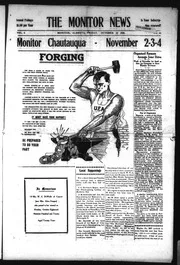
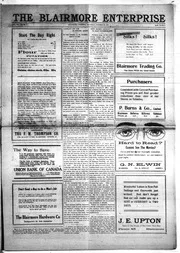
The Monitor news (1920-10-22)
 83
83

The Monitor news (1920-10-22)



Celeste Moreau (Divination & Symbolism Reviewer) — This unearthed fragment, 'The Monitor News (1920-10-22)', is a fascinating primary source for understanding the cultural milieu from which esoteric practices emerged. The inclusion of 'Indian Witchcraft' and 'Love of the Wild' hints at a societal fascination with alternative spiritualities and primal connections, often present in folk traditions. While not overtly instructional, the publication's mundane reports create a compelling counterpoint to these subtler themes, suggesting an underlying current of the mystical within everyday life. Its strength lies in its authenticity as a snapshot, offering researchers and practitioners a tangible link to the period's nascent engagement with non-Western and nature-based spiritualities. An invaluable, if brief, window for those studying the historical diffusion of occult ideas.
📝 Description
83
The October 22, 1920 issue of 'The Monitor News' contains veiled references to esoteric practices.
This newspaper clipping from October 22, 1920, presents more than just local news about farmers and shipping. For readers attuned to subtler currents, the mundane reports act as a surface for hidden meanings. Within its columns, one can find references to older traditions and the persistent appeal of the wild. The text suggests a society where everyday communication might carry echoes of folk magic and ancient beliefs.
It functions as a layered document, where common discourse conceals the ambient mysticism of the early 20th century. The paper invites a look at humanity's enduring interest in the unknown, the cycles of life, and the hidden knowledge of different cultures. This artifact is for those who study societal undercurrents, folk magic, or simply the extraordinary within the ordinary.
This 1920 newspaper issue touches on themes common in folk magic traditions and esoteric thought. The mention of 'Indian witchcraft' and 'ancient practices' suggests an awareness of or interest in non-mainstream spiritual or magical systems prevalent at the time. Such publications, even in their conventional format, sometimes reflected or absorbed elements of the occult beliefs circulating within society, acting as unintentional repositories of popular spiritual undercurrents.
💡 Why Read This Book?
Unlock hidden perspectives on early 20th-century societal beliefs and esoteric undercurrents. This artifact reveals how 'witchcraft' and 'the wild' were perceived and potentially integrated alongside mundane news. Ideal for historians of occultism, folklorists, and anyone seeking to understand the subtle presence of mysticism in historical public discourse. A unique opportunity to practice discerning veiled meanings in archival material.
⭐ Reader Reviews
Honest opinions from readers who have explored this book.
❓ Frequently Asked Questions
What is the primary esoteric theme present?
The primary esoteric theme is the subtle presence of 'Indian Witchcraft' and 'Love of the Wild,' suggesting an undercurrent of fascination with indigenous spiritualities and primal connections within the broader societal narrative.
Who is the intended audience for this document?
The intended audience includes scholars of esoteric history, folklorists, cultural anthropologists, and individuals interested in the historical intersection of the mundane and the mystical.
Is this a direct guide to practicing witchcraft?
No, this is not a direct guide. It is a historical document that offers insights into the societal perception and mention of witchcraft and related themes during the era.
What historical period does this newspaper clipping represent?
This clipping represents the period of October 22, 1920, offering a snapshot of local and broader news, as well as cultural sentiments, from that specific time.
What makes this document valuable for an esoteric library?
Its value lies in its authentic portrayal of how occult and nature-based themes were present, even if indirectly, in mainstream discourse, providing context for the evolution of esoteric thought.
🔮 Key Themes & Symbolism
Traces of Indigenous Spirituality
The mention of 'Indian Witchcraft' serves as a potent, albeit brief, indicator of the cultural fascination and perhaps apprehension surrounding indigenous spiritual practices during the early 20th century. For the esoteric scholar, this fragment offers a point of departure to explore the diffusion of such knowledge, the romanticization or demonization of non-Western traditions, and the ways these external spiritual systems were perceived and integrated, or rejected, by the dominant culture. It represents a subtle acknowledgment of alternative cosmologies existing beyond the mainstream, hinting at a world rich with forgotten lore and untamed power.
The Primal Call of the Wild
'Love of the Wild' speaks to a deep-seated human yearning for connection with nature's untamed essence, a theme resonant within many esoteric traditions. This phrase suggests an acknowledgment of forces beyond human control and a spiritual magnetism towards the natural world, often seen as a source of ancient wisdom and elemental power. It taps into the pagan ideal of communion with the earth, the cycles of life and death, and the inherent magic found in untamed landscapes. For practitioners and seekers, this highlights the enduring appeal of nature as a spiritual teacher and a repository of forgotten truths.
The Palimpsest of the Mundane
The true esoteric value of this document lies in its construction as a palimpsest, where ordinary news reports—'Organized Farmers Arrange Joint Drive,' 'Germay's Merchant Fleet'—act as a veil for the subtler, more mystical content. This juxtaposition reveals how esoteric ideas could coexist, or be subtly interwoven, with the everyday fabric of society. The reader is invited to look beyond the surface, to deconstruct the commonplace and find the extraordinary hidden within. It underscores the principle that magic and the sacred are not confined to special rituals but can be found in the very structure of daily life and public discourse.
💬 Memorable Quotes
Direct passages from the work, attributed to the author.
“Indian Witchcraft”
— A stark and evocative phrase that immediately signals a departure from the mundane, pointing towards indigenous spiritual practices and their perceived power.
“Love of the Wild”
— Suggests a primal, perhaps spiritual, attraction to untamed nature, a common theme in paganism and nature-based spiritualities.
“A Menagerie for the E. P. Ranch”
— While seemingly ordinary, 'menagerie' can evoke a sense of containment and study of the wild, hinting at a human desire to understand or control natural forces.
“The Super-Ad. Appears”
— Suggests a new, perhaps potent, force or influence entering the public sphere, potentially symbolic of burgeoning ideologies or societal shifts.
“Carrying Dan”
— A cryptic phrase that could allude to burdens, journeys, or perhaps even spiritual or physical carrying of energies or individuals.
🌙 Esoteric Significance
Tradition
This document touches upon elements that resonate with indigenous spiritual traditions (particularly North American, given the 'Indian' reference), folk magic, and nature-based paganism. While not explicitly tied to a single codified tradition, it reflects a broader cultural engagement with animistic beliefs, the power of the natural world, and the perceived efficacy of non-Western spiritual practices.
Symbolism
The 'witchcraft' mentioned is symbolic of alternative spiritual power and knowledge, often viewed with a mixture of fear and fascination. 'The Wild' symbolizes primal energy, intuition, and the untamed forces of nature, a frequent source of spiritual renewal and hidden wisdom in esoteric thought. The juxtaposition of these with mundane news highlights the symbolic potential of everyday life as a stage for deeper, unseen currents.
Modern Relevance
In an age increasingly disconnected from nature and often overwhelmed by technological mediation, the 'Love of the Wild' remains a potent call for re-connection. The exploration of indigenous spiritualities, albeit from a historical perspective, is crucial for understanding cross-cultural spiritual exchange and challenging colonial biases. The document's ability to hint at the esoteric within the mundane continues to be relevant for modern practitioners seeking to integrate spiritual awareness into daily life.
👥 Who Should Read This Book
Scholars of occult history and cultural studies will find this a valuable primary source for understanding the public discourse surrounding esoteric themes in the early 20th century. Folklorists can analyze the societal perception of indigenous practices and nature-based beliefs. Spiritual seekers interested in historical spiritual currents will appreciate the glimpse into how such ideas were present in everyday life. Practitioners of witchcraft and paganism may find it offers context for the historical reception of their traditions. Beginners interested in the intersection of history and mysticism will find it an accessible entry point.
📜 Historical Context
Published on October 22, 1920, this newspaper clipping emerges from a period of significant societal transition in the post-World War I era. The world was grappling with rapid industrialization, shifting social norms, and a burgeoning interest in psychology and the subconscious. This era also saw a rise in spiritualism, theosophy, and various occult movements as people sought solace and meaning beyond traditional religious frameworks. The mention of 'Indian Witchcraft' reflects a complex colonial gaze, often romanticizing or exoticizing non-Western cultures while simultaneously fearing their perceived power. The 'Love of the Wild' echoes a Romantic sensibility that persisted, advocating for a return to nature as a counterpoint to urban alienation. This clipping, therefore, is not just a record of news but a window into the collective psyche, where the mundane coexisted with a persistent fascination for the mystical, the ancient, and the untamed.
📔 Journal Prompts
How might the 'Indian Witchcraft' mentioned have been perceived by the readers of 1920, and how does that perception differ from modern understandings?
Reflect on the concept of 'Love of the Wild.' What does the wild represent to you personally, and how do you cultivate that connection in your life?
Consider the idea of a 'palimpsest of the mundane.' Where can you identify subtle mystical or symbolic meanings hidden within your own daily routines or news consumption?
If you were to imagine the 'Super-Ad.' that appeared, what kind of influence or message do you think it represented in the context of 1920?
The mention of 'Carrying Dan' is enigmatic. What personal 'burdens' or 'energies' do you feel you are carrying, and how do you navigate them?
🗂️ Glossary
Palimpsest
A manuscript or piece of material on which older writing has been erased and replaced by new writing, but the older writing is still visible. In this context, it refers to the layering of esoteric meaning beneath mundane news.
Esoteric
Intended for or likely to be understood by only a small number of people with a specialized knowledge or interest. Pertaining to hidden meanings or inner significance.
Indigenous Spiritualities
The diverse range of religious beliefs and practices originating from the indigenous peoples of a particular region, often characterized by deep connection to the land and ancestral traditions.
Folk Magic
Magical practices and beliefs passed down through oral tradition within a community or culture, often incorporating local customs, herbalism, and simple ritualistic actions.
Paganism
A broad term encompassing various polytheistic, animistic, and nature-based religious traditions, often emphasizing reverence for the earth, cycles of nature, and polytheistic deities.
This book appears in 2 collections
🔮 Readers Also Liked
Browse all →






From the “Witchcraft” Collection
View all →





More Free Witchcraft & Paganism Books
View all →