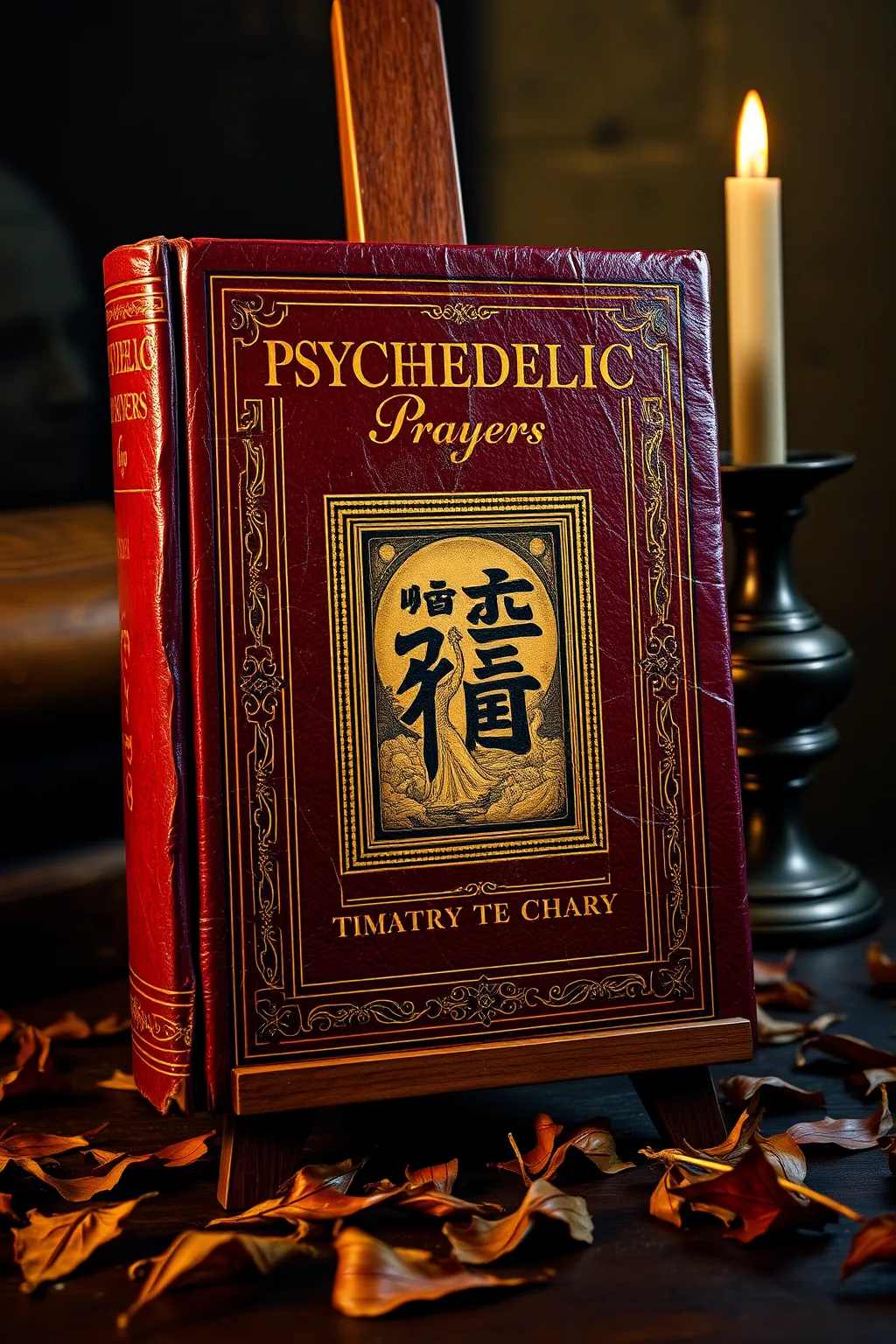
Psychedelic Prayers after the Tao Te Ching by Timothy Leary
 95
95

Psychedelic Prayers after the Tao Te Ching by Timothy Leary


Evander Ashcroft (Alchemy & Hermeticism Editor) — Timothy Leary's 'Psychedelic Prayers after the Tao Te Ching' is a masterful synthesis of ancient Taoist philosophy and pioneering psychedelic mysticism. These prayers serve as powerful talismans, offering a framework for grounding and insight during journeys into the psyche. Leary’s genius lies in his ability to distill complex spiritual concepts into accessible, resonant invocations. The work is particularly potent for practitioners of ecstatic ritual and those exploring the intersection of consciousness and the divine. It’s a vital addition for anyone seeking to understand the alchemical transformation of the self through expanded awareness, providing essential guidance for the profound moments of revelation.
📝 Description
95
Timothy Leary's 1971 work, 'Psychedelic Prayers after the Tao Te Ching,' connects LSD experiences with Taoist principles.
This book compiles prayers written by Timothy Leary, intended for use during psychedelic states. Leary structured these prayers in relation to the chapters of the Tao Te Ching, aiming to integrate Taoist philosophy with the experience of altered consciousness. The prayers address themes of protection, guidance, and the invocation of cosmic energy. Leary, a prominent figure in counterculture research, sought to bridge ancient Eastern thought with contemporary explorations of consciousness. The text is for those interested in the intersection of spirituality, psychedelic experience, and Eastern philosophy. It calls for a surrender of the ego and an embrace of subjective reality.
Leary's work here is not a scholarly treatise but a personal devotional text. It reflects his belief that psychedelic states could unlock deeper spiritual insights, aligning with Taoist concepts of natural flow and harmony. The prayers are designed to be recited or meditated upon, facilitating a connection to what Leary termed 'cosmic consciousness.' The book stands as a unique artifact of the psychedelic era's attempt to find spiritual meaning through altered states.
Timothy Leary's 'Psychedelic Prayers' emerges from the confluence of Western psychedelic research and Eastern spiritual traditions, particularly Taoism. Published in 1971, it reflects a period where figures like Leary sought to map the terrain of altered consciousness using frameworks derived from ancient philosophies. The book applies Taoist concepts, such as the Tao itself, wu wei (non-action), and the balance of yin and yang, to the subjective experiences induced by psychedelics. This approach situates the work within the broader esoteric interest in finding universal spiritual truths through diverse cultural and experiential lenses, attempting to synthesize the mystical insights of the East with the experimental spirit of the West.
✍️ Author
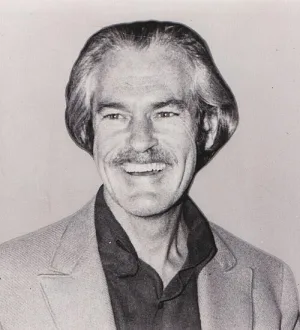
Timothy Leary is a collection of prayers
Timothy Francis Leary (October 22, 1920 – May 31, 1996) was an American psychologist and author known for his strong advocacy of psychedelic drugs. Evaluations of Leary are polarized, ranging from "bold oracle" to "publicity hound".
💡 Why Read This Book?
Embark on a journey of profound self-discovery and cosmic connection. 'Psychedelic Prayers' offers a unique blend of ancient wisdom and modern consciousness exploration, providing vital guidance for navigating altered states. Ideal for spiritual seekers, philosophers of mind, and those interested in the intersection of mysticism and psychedelic experience. Discover tools for protection, insight, and transcendence, unlocking deeper layers of awareness and connection to the universal flow.
⭐ Reader Reviews
Honest opinions from readers who have explored this book.
❓ Frequently Asked Questions
What is the core purpose of these prayers?
The core purpose is to provide spiritual guidance, protection, and a framework for experiencing and integrating profound altered states of consciousness, bridging ancient Taoist wisdom with psychedelic exploration.
Who is Timothy Leary in the context of this book?
Timothy Leary, though presented as 'a collection of prayers' in the metadata, was a pivotal figure in psychedelic research and counter-culture, known for exploring consciousness expansion and spiritual liberation.
How does this book relate to the Tao Te Ching?
It draws inspiration from the Tao Te Ching's principles of natural flow, balance, and non-action, reinterpreting them through the lens of psychedelic experience and personal spiritual evolution.
Are these prayers meant for a specific type of psychedelic experience?
While beneficial for any profound experiential journey, they are particularly suited for deep, transformative explorations where guidance and a sense of sacredness are paramount.
Can this book be read by those unfamiliar with psychedelics?
Yes, the philosophical and spiritual insights are valuable for anyone interested in consciousness, mysticism, and finding inner guidance, even without direct psychedelic experience.
🔮 Key Themes & Symbolism
The Sacredness of Altered States
This theme explores the profound spiritual and transformative potential inherent in non-ordinary states of consciousness. Leary posits these experiences not as mere escapism, but as vital opportunities for ego dissolution, useful insights, and direct communion with universal energies. The prayers are designed to sanctify these moments, transforming potential chaos into a sacred journey, emphasizing reverence and conscious participation in the unfolding of the psyche. It's about approaching these internal landscapes with the same awe and respect one would accord a sacred temple or a divine presence.
Bridging Ancient Wisdom and Modern Exploration
Here, the focus is on the alchemical fusion of the ancient Taoist philosophy, with its emphasis on natural flow and the Way, and the emergent understanding of psychedelic consciousness. Leary masterfully reinterprets the timeless principles of the Tao Te Ching, applying them to the uncharted territories of the mind. This theme highlights how ancient spiritual practices can offer profound guidance and resonance for contemporary explorations of consciousness, suggesting that the fundamental truths of existence transcend time and modality, offering a timeless framework for navigating new frontiers.
The Transcendent Power of Prayer and Invocation
This theme explores the nature of prayer not as supplication, but as a powerful act of conscious intention and energetic invocation. Leary presents prayers as tools for self-transcendence, enabling the individual to move beyond the limitations of the ego and connect with a vaster, more potent energy. The 'ecstatic cry' is a call to embrace the profound and to actively engage with the divine, transforming the user into a conduit for higher consciousness. It underscores the idea that by reaching beyond oneself, one finds true connection and liberation.
💬 Memorable Quotes
Direct passages from the work, attributed to the author.
“The ecstatic cry is called for.”
— This signifies a moment of profound spiritual or emotional breakthrough, demanding an outward expression of transcendence and surrender to higher energies.
“At that time, you must be ready to pray.”
— Emphasizes preparedness for peak experiences, highlighting prayer as a crucial tool for navigation and connection during moments of intense consciousness expansion.
“To go beyond yourself.”
— Encourages ego dissolution and the transcendence of personal limitations to connect with a larger, universal consciousness.
“To contact energy beyond your game.”
— Points to the existence of forces and wisdom that transcend our ordinary perceptions and control, urging engagement with these higher energies.
“When you have lost the need to pray… You are a dead man.”
— A stark warning that the cessation of spiritual seeking or connection indicates a loss of vital life force and engagement with the divine.
🌙 Esoteric Significance
Tradition
This work is deeply rooted in the esoteric tradition of consciousness exploration, drawing explicit parallels with Taoism and implicitly with Gnosticism and Hermeticism through its emphasis on inner gnosis and the transformative power of experience. It represents a modern, psychonautic interpretation of ancient spiritual pathways, seeking to unlock direct experience of the divine and the fundamental nature of reality, moving beyond dogma to experiential truth.
Symbolism
Key symbolism includes the 'Tao' itself representing the ineffable, fundamental principle of the universe; the 'prayer' as a conduit for conscious intention and energy; and the 'psychedelic experience' as a gateway to expanded perception and ego dissolution. The 'ecstatic cry' symbolizes the release and surrender necessary for spiritual breakthrough, while the 'game' refers to the limited, ego-driven reality of ordinary consciousness.
Modern Relevance
In an era increasingly interested in mindfulness, altered states, and the potential of psychedelics for therapeutic and spiritual growth, Leary's prayers offer a timely and potent resource. They provide a framework for conscious engagement with these experiences, emphasizing reverence and integration. The book speaks to the enduring human quest for meaning, transcendence, and a deeper connection to the cosmos, making its blend of ancient wisdom and modern exploration highly relevant for contemporary seekers.
👥 Who Should Read This Book
This esoteric text is a treasure for the seasoned psychonaut and the curious spiritual seeker alike. Scholars of consciousness studies, comparative religion, and counter-cultural history will find it an invaluable primary source. Practitioners of meditation, ritual, and ecstatic trance will discover potent invocations to deepen their practice. Beginners to mysticism or the exploration of consciousness can approach it as a philosophical and spiritual guide, offering useful insights into self-transcendence and the nature of reality, even without direct experience of psychedelics.
📜 Historical Context
Emerging from the cultural ferment of the 1960s and 70s, 'Psychedelic Prayers after the Tao Te Ching' reflects a period of intense societal questioning, spiritual seeking, and burgeoning interest in consciousness expansion. Timothy Leary, a central figure in the psychedelic movement, sought to integrate his experiences with ancient philosophical traditions. This era saw a departure from rigid dogma, with a widespread exploration of Eastern philosophies, mysticism, and alternative forms of spirituality. Leary’s work sits at the nexus of this counter-cultural revolution, attempting to provide a spiritual lexicon for the profound psychological shifts facilitated by psychedelic substances, aiming to guide individuals through these transformative journeys with a blend of ancient wisdom and radical new perspectives.
📔 Journal Prompts
Reflect on a moment when you felt an 'ecstatic cry' was called for. What was the experience, and how did you respond?
How can the principles of the Tao (flow, balance, non-action) be applied to your own spiritual or personal 'game'?
In what ways have you experienced 'energy beyond your game,' and how did it shape your understanding of yourself and the universe?
When has the need to 'pray' felt most profound, and what did that prayer enable you to achieve or understand?
Consider the concept of transcending the self. What are the biggest barriers to this for you, and what steps could you take to move beyond them?
🗂️ Glossary
Tao
The fundamental principle of the universe in Taoism, often translated as 'the Way.' It represents the natural, ineffable order and flow of all existence, embodying balance, harmony, and the interconnectedness of all things.
Psychedelic Experience
A state of consciousness characterized by altered perceptions, thoughts, and emotions, typically induced by psychedelic substances. It is often associated with profound introspection, spiritual insights, and ego dissolution.
Ecstatic Cry
A powerful, often spontaneous vocalization or expression of intense spiritual, emotional, or visionary experience, signifying a moment of profound breakthrough, ecstasy, or connection to higher energies.
Gnosis
From the Greek word for knowledge, gnosis refers to intuitive, experiential, and often spiritual knowledge, particularly the direct understanding of divine truths, as opposed to propositional or intellectual knowledge.
Ego Dissolution
The temporary or profound loss of one's sense of self or personal identity, often experienced during intense spiritual or psychedelic states. It involves a blurring of the boundaries between self and the external world.
This book appears in 2 collections
🔮 Readers Also Liked
Browse all →





From the “Witchcraft” Collection
View all →






More Free Witchcraft & Paganism Books
View all →