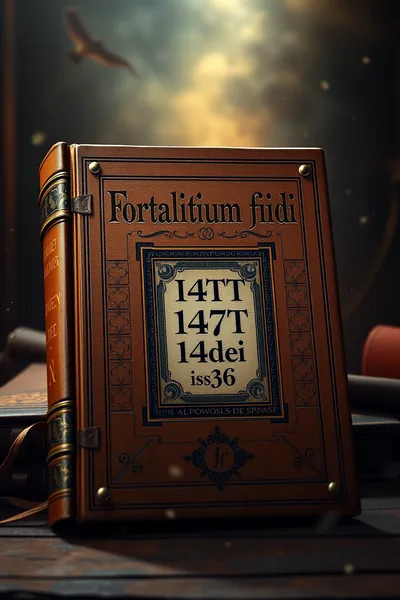
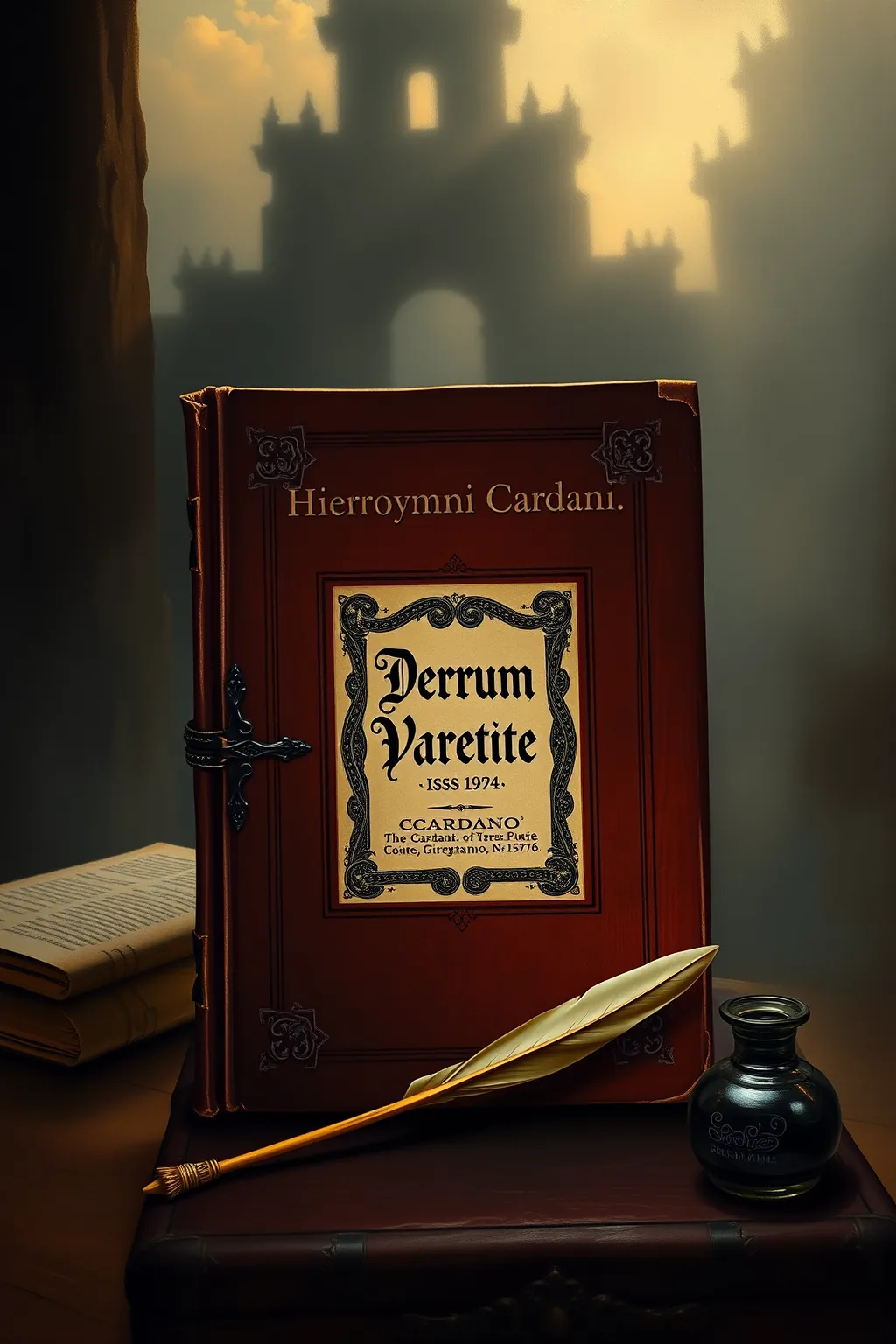
Hieronymi Cardani ... De rerum varetate. ... 1557: Iss 194
 80
80

Hieronymi Cardani ... De rerum varetate. ... 1557: Iss 194



Alaric Kestrel, Metaphysical Studies Reviewer — 'De Rerum Varietate' stands as a monumental testament to Girolamo Cardano's prodigious intellect and his profound engagement with the esoteric currents of the 16th century. This work is a rich tapestry, intricately weaving together threads of natural philosophy, occult sciences, and speculative theology. Cardano’s fearless exploration of hidden causes and the subtle energies that govern the cosmos will resonate deeply with serious students of metaphysics and ancient wisdom. Its strength lies in its comprehensive scope and the author’s unique ability to synthesize diverse fields of knowledge. Highly recommended for scholars and practitioners seeking to understand the roots of Western esotericism and the philosophical underpinnings of a world viewed through a lens of hidden interconnectedness.
📝 Description
80
Girolamo Cardano published 'De Rerum Varietate' in 1557, a work that examines the hidden order of the universe.
Published in 1557, Girolamo Cardano's 'De Rerum Varietate' is a significant Renaissance text. Cardano, a noted physician and mathematician, addresses a wide array of subjects. He discusses natural philosophy, the influence of stars, and alchemical principles. The book attempts to reconcile empirical observation with more hidden or mystical interpretations of reality. Cardano’s approach reflects the intellectual climate of his time, where distinctions between natural science and esoteric knowledge were not always clear. He sought to understand the underlying causes of natural phenomena, often through symbolic or allegorical means. This volume offers a view into the mind of a scholar grappling with the limits of contemporary knowledge. It shows a desire to find connections between disparate fields of study.
The work is notable for its author's broad learning and his attempt to synthesize diverse intellectual traditions. Cardano moves between detailed observations of the natural world and speculative ideas about its secret workings. His discussions touch on topics like magnetism, the properties of metals, and the effects of celestial bodies on earthly events. The book's structure itself mirrors its attempt to find order and unity within the diversity of creation. It is a product of an era that valued comprehensive understanding, where astrology and medicine, for example, were closely allied. Readers will find in it an example of Renaissance humanism engaging with questions of cosmology and the hidden forces of nature.
Girolamo Cardano wrote 'De Rerum Varietate' during a period when Neoplatonism and Hermeticism continued to influence intellectual life. While Cardano was also a prominent physician and mathematician who engaged with empirical observation, his work reflects a broader Renaissance interest in correspondences between the macrocosm (universe) and the microcosm (human being). The book participates in the tradition of seeking hidden knowledge and understanding the divine order through nature's secrets. It stands alongside other Renaissance works that sought to integrate Christian theology with ancient philosophical and magical traditions.
💡 Why Read This Book?
Uncover the intellectual foundations of Western esotericism and Renaissance occultism. 'De Rerum Varietate' offers a direct portal into the mind of a true Renaissance polymath, exploring themes of hidden knowledge, cosmic order, and the subtle forces shaping reality. Ideal for seekers, scholars of history and philosophy, and practitioners interested in the historical roots of magical and mystical traditions.
⭐ Reader Reviews
Honest opinions from readers who have explored this book.
❓ Frequently Asked Questions
What is the primary subject matter of 'De Rerum Varietate'?
The book delves into a wide array of subjects, including natural philosophy, astrology, alchemy, medicine, and the philosophical underpinnings of various belief systems, often with an esoteric and occult slant.
Who was Girolamo Cardano?
Girolamo Cardano (1501-1576) was an Italian polymath, renowned as a physician, mathematician, astrologer, and philosopher. He was one of the most influential intellectuals of the Renaissance.
What does 'De Rerum Varietate' mean?
The Latin title translates to 'On the Variety of Things' or 'On the Diversity of Things,' reflecting the book's broad and multifaceted exploration of the natural world and its hidden aspects.
Is this book suitable for beginners in esotericism?
While rich in content, the language and philosophical depth may be challenging for absolute beginners. It is best approached by those with some background in philosophical inquiry or historical texts.
What is the historical significance of this 1557 edition?
This 1557 edition is a primary source from the height of the Renaissance, offering direct insight into the intellectual and spiritual currents of the era, particularly the intersection of science and the occult.
🔮 Key Themes & Symbolism
The Unity of Creation and Hidden Correspondences
Cardano posits a profound interconnectedness within the cosmos, where seemingly disparate elements share hidden sympathies and correspondences. This theme explores how the macrocosm (universe) is reflected in the microcosm (individual), suggesting that understanding the patterns in nature can unlock secrets of existence. It explores the symbolic language of the universe, encouraging readers to perceive the divine order woven through all things, from celestial movements to earthly phenomena. This perspective was foundational for many esoteric traditions, emphasizing the search for underlying unity amidst apparent diversity.
The Art of Divination and Astrological Influence
A significant portion of Cardano's work grapples with the principles of astrology and other forms of divination, not merely as superstitious practices, but as systems for understanding the subtle influences that govern human affairs and natural events. He explores the complex relationship between celestial bodies and earthly occurrences, examining how planetary alignments might correlate with human destiny and the character of individuals. This theme highlights the Renaissance fascination with uncovering patterns and predicting future events through the study of cosmic cycles, a practice deeply embedded in esoteric thought.
The Nature of Natural Magic and Alchemical Processes
Cardano engages with the concepts of natural magic and alchemy, viewing them as legitimate avenues of inquiry into the hidden properties of matter and the transformative potential of natural forces. He discusses the manipulation of subtle energies and the search for essences within substances, reflecting the era's belief that the physical world held secrets that could be unlocked through carefully orchestrated processes. This exploration bridges the gap between empirical observation and metaphysical speculation, suggesting that the universe is amenable to manipulation for those who understand its underlying principles and forces.
💬 Memorable Quotes
Direct passages from the work, attributed to the author.
“Nature is the best teacher, and experience the surest guide.”
— Cardano highlights the empirical and experiential foundations of knowledge, suggesting that direct observation and lived experience are paramount for true understanding.
“There is no secret that time does not reveal.”
— This proverb speaks to the gradual unfolding of truth and knowledge, implying that patience and perseverance will eventually lead to the revelation of hidden mysteries.
“The stars incline, they do not compel.”
— A classic statement on astrological influence, suggesting that celestial bodies exert a tendency rather than an absolute determinism over human fate, leaving room for free will.
“Knowledge is the treasure that will not be stolen.”
— This aphorism underscores the intrinsic and enduring value of wisdom, contrasting it with material possessions that are vulnerable to loss or theft.
💡 Key Ideas
Editorial paraphrase of the work's core concepts — not direct quotes.
The world is a book, and those who do not travel read only one page.
This quote emphasizes the importance of experience and exploration, not just geographically, but intellectually and spiritually, to gain a comprehensive understanding of life's myriad facets.
🌙 Esoteric Significance
Tradition
Cardano's work is deeply rooted in the Neoplatonic and Hermetic traditions, which permeated Renaissance esotericism. He draws upon the concept of a divinely ordered cosmos, the belief in hidden correspondences between the terrestrial and celestial realms, and the idea of a universal animating spirit. His explorations of astrology, alchemy, and natural magic align with the Hermetic principle of 'As Above, So Below,' seeking to understand and harness the subtle energies that govern existence. This tradition emphasizes the pursuit of gnosis—direct, intuitive knowledge of the divine and the universe.
Symbolism
The text is rich with symbolic language inherent in Renaissance esoteric thought. Celestial bodies (planets, stars) represent not just astronomical bodies but archetypal forces and influences. Alchemical symbols for transformation and purification are woven into discussions of natural processes. The concept of 'sympathy' and 'antipathy' between elements and creatures acts as a symbolic language for interconnectedness. Cardano uses numbers, geometric forms, and natural phenomena as symbolic keys to unlock deeper meanings within the fabric of reality, reflecting a universe where everything holds a deeper, often hidden, significance.
Modern Relevance
In an age often characterized by fragmentation and hyper-specialization, Cardano's holistic approach to knowledge remains remarkably relevant. His emphasis on the interconnectedness of all things speaks to contemporary ecological and systems thinking. The enduring human fascination with astrology, consciousness, and the search for meaning reflects the questions Cardano grappled with. His intellectual courage in bridging empirical observation with metaphysical inquiry serves as an inspiration for those seeking a more integrated understanding of science, spirituality, and the human condition in the 21st century.
👥 Who Should Read This Book
This important work is essential for serious students of Renaissance intellectual history, the philosophy of science, and Western esotericism. Scholars of ancient wisdom traditions, including Hermeticism, Neoplatonism, and occult philosophy, will find invaluable insights into the formative period of these disciplines. Practitioners of magical and astrological arts seeking to understand the historical underpinnings and foundational texts of their craft will discover a rich source of knowledge. For general readers with a deep curiosity about the evolution of human thought and the enduring quest for hidden knowledge, 'De Rerum Varietate' offers a challenging yet profoundly rewarding intellectual journey.
📜 Historical Context
Published in 1557, 'De Rerum Varietate' emerged during the vibrant and tumultuous High Renaissance, a period characterized by a fervent revival of classical learning, groundbreaking scientific discoveries, and intense religious and philosophical debates. This era witnessed the dawn of the Scientific Revolution, with figures like Copernicus challenging geocentric models, yet it also retained a deep-seated belief in the interconnectedness of the cosmos, the influence of celestial bodies, and the existence of hidden forces. Cardano himself embodied this duality, being both a pioneering mathematician and a practitioner of astrology and other esoteric arts. The printing press had democratized knowledge, but the interpretation of that knowledge, especially concerning the divine and the natural world, remained a complex and often controversial endeavor. This work reflects the intellectual milieu where scholasticism began to yield to empirical inquiry, yet where ancient mystical traditions continued to exert a powerful influence on the understanding of reality.
📔 Journal Prompts
How does Cardano's concept of 'variety' in nature reflect the interconnectedness he perceives?
In what ways does Cardano's approach to astrology differ from purely deterministic views?
Reflect on a time when you felt a 'sympathy' or 'antipathy' with a place, object, or person, and explore potential underlying connections.
How might the Renaissance fascination with hidden knowledge inform our modern pursuit of understanding the universe?
Consider the balance Cardano strikes between empirical observation and metaphysical speculation; how can this inform your own learning process?
🗂️ Glossary
Esotericism
A broad category of mystical, spiritual, or magical traditions that claim to have access to secret knowledge or wisdom, often reserved for initiates or those with specific training and understanding.
Hermeticism
A philosophical and religious tradition based on writings attributed to Hermes Trismegistus, emphasizing divine wisdom, the interconnectedness of all things, and the pursuit of spiritual enlightenment through knowledge.
Neoplatonism
A philosophical system derived from Plato's teachings, which emphasizes the One as the ultimate source of all reality, and a hierarchical structure of existence flowing from the One, often incorporating mystical and spiritual elements.
Alchemy
An ancient tradition that sought to purify, mature, and perfect certain materials, often involving the transmutation of base metals into gold, but also encompassing spiritual and philosophical dimensions of transformation and enlightenment.
Divination
The practice of seeking knowledge of the future or the unknown by supernatural means, such as interpreting omens, casting lots, or studying celestial patterns (astrology).
This book appears in 2 collections
🔮 Readers Also Liked
Browse all →








From the “Witchcraft” Collection
View all →





More Free Witchcraft & Paganism Books
View all →