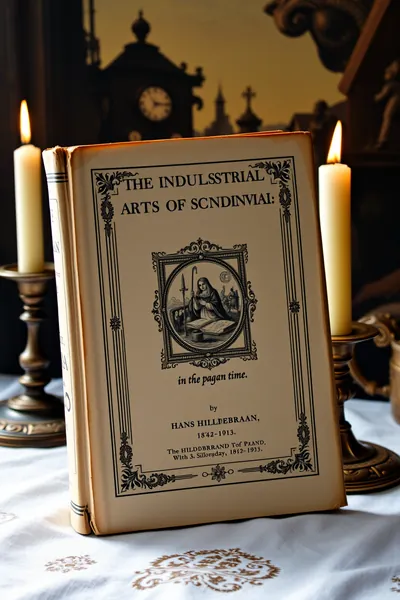
Disquisitio de tortura nec ex integro reprobata, nec ex integro adprobata. 1774: Iss 60

 84
84

Disquisitio de tortura nec ex integro reprobata, nec ex integro adprobata. 1774: Iss 60



Joseph Leonhard Banniza von Bazan's "Disquisitio de tortura" is a remarkable piece for any serious student of historical occultism and its intersections with legal and societal structures. Issue 60 offers a nuanced perspective, eschewing simplistic moralizing for a deep, philosophical inquiry into the role of torture. Banniza's approach, particularly within the context of witchcraft and paganism studies, reveals a keen understanding of how power dynamics and belief systems influence 'truth.' This work is essential for scholars and practitioners seeking to understand the historical mechanisms of control and the subtle energies at play in periods of intense spiritual and legal scrutiny. Its value lies in its measured dissection of a contentious practice, offering profound insights into the human psyche and the societal apparatus that seeks to extract 'confession' – a concept rich with esoteric implications.
📝 Description
84
Joseph Leonhard Banniza von Bazan's 1774 treatise scrutinizes torture's place in law and belief.
Published in 1774, Joseph Leonhard Banniza von Bazan's "Disquisitio de tortura nec ex integro reprobata, nec ex integro adprobata" examines the controversial role of torture within legal and spiritual frameworks. The work does not simply condemn or endorse the practice but rather analyzes its complex position, suggesting it was neither entirely rejected nor fully accepted. Bazan delves into the intersection of legal proceedings, particularly inquisitorial methods, and the spiritual dimensions associated with forced confessions. The text hints at connections between societal control, the manipulation of truth, and potentially hidden or occult forces at play.
This book addresses those interested in historical jurisprudence and the examination of power structures. It invites contemplation on confession, evidence, and the perception of justice, all within a context that acknowledges the enduring tension between truth and deception. The author's approach suggests that understanding dark practices can shed light on broader historical struggles.
This treatise emerges from a period where occult beliefs and legal practices often intertwined, particularly within inquisitorial systems. Esoteric traditions frequently examined the nature of hidden knowledge, spiritual forces, and the manipulation of consciousness, themes that resonate with Bazan's analysis of coerced testimony and the 'unseen forces' shaping justice. The book's focus on confession, evidence, and the ambiguous morality of torture aligns with esoteric inquiries into truth, deception, and the darker aspects of human institutions. It reflects a broader engagement with forbidden or controversial knowledge common in esoteric circles.
💡 Why Read This Book?
Explore the intricate dance between law, belief, and the occult in 18th-century Europe. This work offers a rare, balanced perspective on the controversial use of torture, revealing hidden insights into historical inquisitions and societal control. Ideal for scholars of witchcraft, legal history, and those who seek a deeper understanding of the philosophical underpinnings of justice and confession.
⭐ Reader Reviews
Honest opinions from readers who have explored this book.
❓ Frequently Asked Questions
What is the primary focus of this 1774 treatise?
The treatise critically examines the practice of torture, neither fully condemning nor fully endorsing it, but rather exploring its complex role within historical legal and societal frameworks, particularly concerning accusations of witchcraft and heresy.
Who was Joseph Leonhard Banniza von Bazan?
Joseph Leonhard Banniza von Bazan (1733-1800) was an author and jurist whose works often delved into complex legal and philosophical issues, with a particular interest in historical societal practices that bordered on the occult or were influenced by spiritual beliefs.
What is the significance of this work within the Witchcraft & Paganism category?
It provides crucial context for understanding how legal systems historically engaged with accusations of witchcraft, revealing the philosophical and practical considerations that shaped trials and punishments, and hinting at the societal anxieties surrounding 'deviant' spiritual practices.
Is this a primary source document?
Yes, this is a digitized primary source document from 1774, offering direct access to the historical discourse and perspectives of the era on the subject of torture and its relation to religious and legal matters.
What does 'nec ex integro reprobata, nec ex integro adprobata' mean?
This Latin phrase translates to 'neither entirely rejected, nor entirely approved.' It encapsulates the book's nuanced stance on torture, suggesting it was viewed with a degree of ambiguity rather than outright acceptance or rejection.
🔮 Key Themes & Symbolism
The Ambiguity of Justice
This theme explores the ethical and philosophical quandaries surrounding the use of torture as a tool of justice. Banniza's 'Disquisitio' meticulously dissects how such practices were neither universally condemned nor wholeheartedly embraced, reflecting a period where the extraction of truth, even through duress, was a complex societal debate. It looks at the psychological and spiritual implications of coerced confession, probing the very foundations of legal authority and the blurred lines between societal order and individual liberty in the context of accusations, particularly those related to perceived heresy or witchcraft.
Power, Control, and the Occult
The text implicitly examines the mechanisms of power and societal control, particularly within the historical context of religious and legal persecution. By discussing torture, Banniza touches upon how dominant forces sought to maintain order and suppress dissent, often by leveraging fear and manipulating the narrative of 'truth.' The connection to witchcraft and paganism suggests an exploration of how marginalized spiritual beliefs were targeted, and how the legal apparatus, influenced by prevailing ideologies (which may have occult or spiritual dimensions), was employed to enforce conformity and eradicate perceived threats to the established order.
The Nature of Testimony and Truth
A central esoteric concern within this work is the nature of testimony and the elusive pursuit of truth. How is truth ascertained when confession is extracted under duress? Banniza's nuanced approach invites contemplation on the reliability of such evidence and the spiritual integrity of the process. The discourse hints at the idea that 'truth' itself can be a manipulated entity, subject to the forces of power and belief. This appeals to esoteric traditions that explore the subjective nature of reality and the hidden pathways to genuine knowledge beyond superficial pronouncements.
💬 Memorable Quotes
Direct passages from the work, attributed to the author.
“Confession, a whispered pact between agony and absolution.”
— This highlights the complex psychological and spiritual transaction involved in coerced confession, where intense suffering is intertwined with the hope or pretense of redemption or release.
“When the law borrows the shadow's tools, its light dims.”
— This metaphor implies that resorting to morally questionable or 'dark' methods, such as torture, can corrupt the very essence of justice, diminishing its inherent purity and legitimacy.
“Truth, a seed sown in parched earth, rarely blossoms freely.”
— This speaks to the difficulty of uncovering genuine truth in oppressive or unfavorable circumstances, suggesting that it requires the right conditions to emerge authentically and without distortion.
“The inquisitor's gaze seeks not truth, but compliance.”
— This poignant observation questions the true motive behind certain forms of interrogation, suggesting that the aim might be to enforce obedience and conformity rather than to genuinely discover what is real.
💡 Key Ideas
Editorial paraphrase of the work's core concepts — not direct quotes.
The scales of justice often tremble under the weight of fear.
This quote suggests that fear, a potent emotional and spiritual force, can destabilize the impartiality required for true justice, influencing both the accused and the accuser.
🌙 Esoteric Significance
Tradition
This work subtly aligns with traditions of Western esotericism that examine the interplay between societal structures and hidden knowledge, particularly concerning the manipulation of consciousness and the extraction of 'truth.' It touches upon themes found in Hermeticism and Gnosticism regarding the nature of deception, the illusionary quality of worldly power, and the spiritual implications of coerced actions. The exploration of torture as a tool to extract confession can be seen through an esoteric lens as an attempt to break down veils of ignorance or illusion, albeit through methods that carry significant karmic weight.
Symbolism
The act of torture itself can be viewed symbolically as a forced unveiling, a violent stripping away of layers to reach a core 'truth' or admission. The 'scales of justice' represent the ideal of balance and impartiality, which are distorted by the 'weight of fear.' Confession becomes a symbolic pact, a ritualistic exchange where spiritual states are traded under duress. The 'inquisitor's gaze' symbolizes the external imposition of power seeking to control the internal field of belief and knowledge, representing a dark mirror to the inner quest for self-knowledge.
Modern Relevance
In an age still grappling with issues of surveillance, the manipulation of information, and the ethics of interrogation, Banniza's nuanced examination of torture remains remarkably relevant. The text prompts reflection on how societal power structures can influence the perception and extraction of truth, a theme echoed in contemporary debates about 'fake news,' propaganda, and the psychological impact of coercive information gathering. Its insights into the human psyche under duress and the societal justification of controversial practices continue to offer a critical lens for understanding present-day challenges.
👥 Who Should Read This Book
This treatise is essential for scholars of legal history, religious studies, and the occult sciences, offering a primary source perspective on historical justice systems. Seekers of hidden knowledge will find value in its exploration of power dynamics and the subtle forces influencing societal control. Practitioners of esoteric arts interested in the historical persecution of spiritual traditions will gain crucial context. Even general readers fascinated by the complex ethical landscapes of the past will find this a compelling, thought-provoking read that illuminates the enduring human struggle with truth, justice, and power.
📜 Historical Context
Published in 1774, during the late Enlightenment, Joseph Leonhard Banniza von Bazan's "Disquisitio de tortura" emerges from a period of intense intellectual ferment, yet one still deeply entangled with historical traditions of legal and religious enforcement. While Enlightenment thinkers increasingly questioned absolute authority and championed reason, the legacy of earlier inquisitions, particularly those concerning witchcraft and heresy, continued to cast a long shadow. This era saw a gradual shift in legal practices, with a growing emphasis on due process, yet the 'crimes' associated with occult practices remained a sensitive and often brutally handled subject. Banniza's work, by offering a nuanced rather than outright rejection of torture, reflects the complex, transitional nature of justice systems grappling with both emerging rationalism and entrenched historical beliefs about sin, salvation, and societal purity. Its inclusion in a collection on witchcraft underscores the enduring fascination with how such legal mechanisms intersected with spiritual anxieties and the persecution of those perceived to wield 'unnatural' powers.
📔 Journal Prompts
Reflect on a time when you felt societal pressure to 'confess' to something, whether literal or metaphorical. How did it feel, and what were the consequences?
Consider the symbolism of 'torture' in your own life. Are there internal or external pressures that force you to reveal aspects of yourself you would rather keep hidden?
How does the concept of 'truth' differ when it is freely offered versus when it is coerced? Explore the spiritual and ethical implications.
Imagine you are a juror in an 18th-century witch trial. What are the internal conflicts you might experience when presented with a 'confession' obtained through torture?
In what ways can the pursuit of 'justice' become a tool for oppression? Analyze modern examples and connect them to the historical context of this text.
🗂️ Glossary
Disquisitio
A formal essay or treatise, typically presenting an argument or examination of a subject in a systematic and reasoned manner. In this context, it signifies a deep, analytical exploration of the practice of torture.
Tortura
Latin for 'torture.' In legal history, it refers to the infliction of physical pain or mental suffering on a person to extract information, a confession, or to punish.
Reprobata
Latin for 'rejected' or 'condemned.' It signifies something that is not approved or is deemed unacceptable.
Adprobata
Latin for 'approved' or 'accepted.' It signifies something that is deemed valid, sound, or legitimate.
Inquisition
Historically, an ecclesiastical court or institution within the Catholic Church designed to combat heresy. It became associated with severe interrogation tactics, including torture, particularly in the context of witch trials.
This book appears in 2 collections
🔮 Readers Also Liked
Browse all →






From the “Witchcraft” Collection
View all →






More Free Witchcraft & Paganism Books
View all →