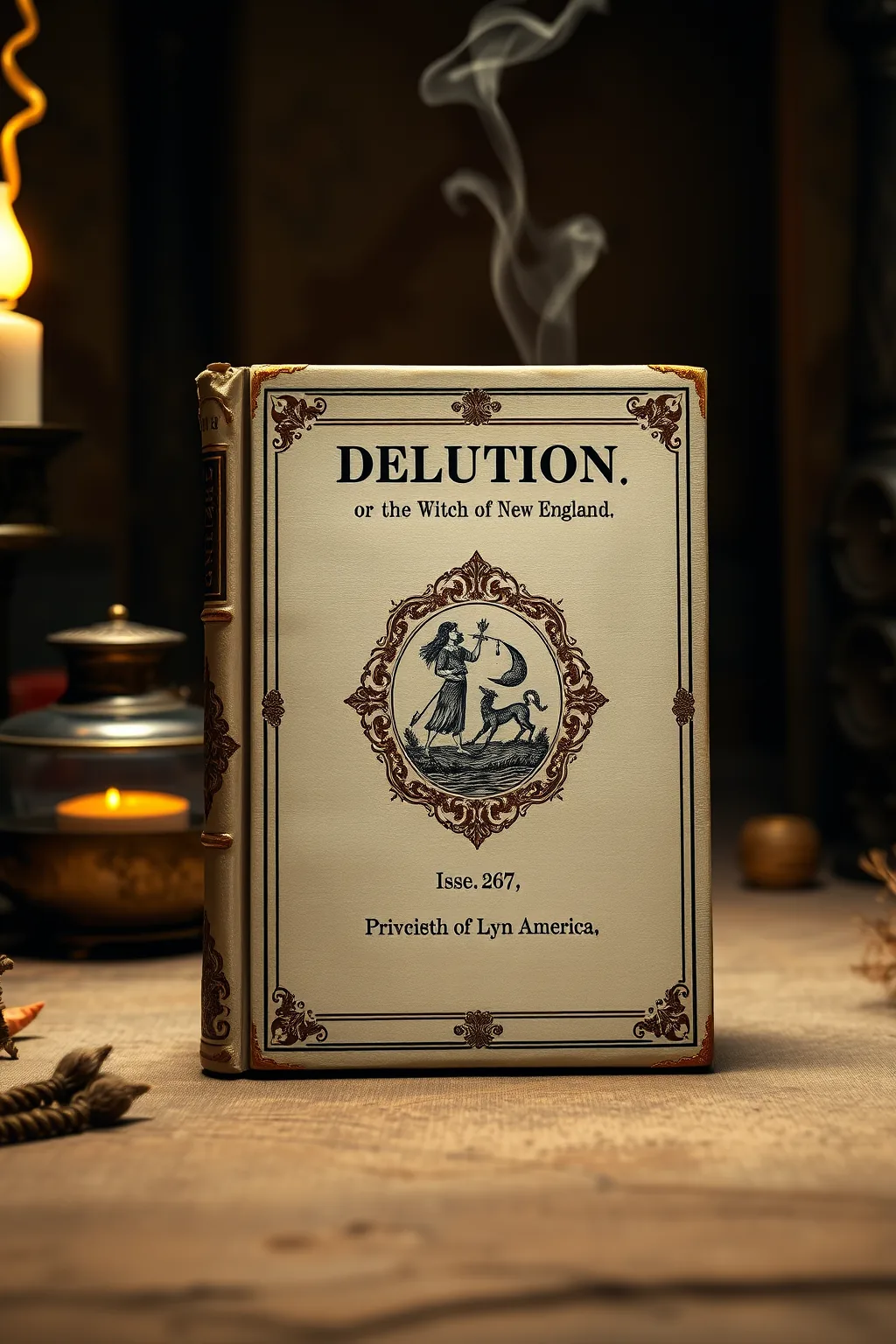
Delusion, or the witch of New England. 1840: Iss 267
 84
84

Delusion, or the witch of New England. 1840: Iss 267



Silas Hawthorne (Hermetic Studies Editor) — This digitized gem from 1840 offers a compelling, if veiled, exploration of the socio-spiritual dynamics underlying New England's witch hysteria. While cloaked in the vernacular of its time, "Delusion" hints at deeper currents of collective psychopathology and the manipulation of fear, resonant with alchemical principles of transformation and shadow. Its strength lies in its raw, unvarnished portrayal of a society grappling with the unknown, providing fertile ground for those studying the interplay of belief systems and mass psychology. Recommended for scholars of American occult history and practitioners interested in the roots of Western esotericism.
📝 Description
84
Published in 1840, 'Delusion, or the Witch of New England' examines early American spectral controversies.
This 1840 periodical tackles the spectral controversies that affected the early American colonies. It looks at the mix of faith, fear, and unseen forces that influenced colonial existence. The text goes beyond mere history to show the collective mindset, where perceived evil and divine will were connected.
It questions the nature of belief itself, considering the divisions between the real world and the imaginary spaces of accusation and superstition. The writing points to the symbolic use of fear, the basic human fight against perceived darkness, and the lasting interest in the occult. Readers will find discussions on spiritual conflict and the mental states that led to the witch trials, viewed through a perspective that prompts thought on the blurred lines between the physical and the metaphysical.
This work engages with themes common in 19th-century esoteric thought, particularly the exploration of the subconscious, spiritual warfare, and the occult. It reflects a period when societal anxieties were often interpreted through a lens of hidden forces and unseen influences, bridging folk beliefs with emerging psychological theories. The text’s focus on delusion and the perception of witchcraft aligns with broader esoteric interests in the nature of reality, altered states of consciousness, and the manifestation of internal states onto the external world.
💡 Why Read This Book?
Uncover the psychological and spiritual underpinnings of the New England witch trials. Explore early American beliefs about the supernatural, societal anxieties, and the construction of 'evil.' This text is essential for seekers of hidden historical narratives, scholars of witchcraft history, and practitioners interested in the archetypal forces at play in human belief.
⭐ Reader Reviews
Honest opinions from readers who have explored this book.
❓ Frequently Asked Questions
What is the historical context of this publication?
Published in 1840, this issue reflects a period of renewed interest in early American history and its more sensational episodes, including the witch trials. It offers a mid-19th-century perspective on these events.
Is 'Delusion' a primary source document from the witch trials era?
No, it is a publication from 1840, interpreting or recounting events that occurred much earlier. It serves as a historical retrospective rather than a contemporary account.
What kind of 'witchcraft' is discussed in this text?
The text likely discusses the accusations and societal perceptions of witchcraft prevalent in colonial New England, focusing on the legal and religious interpretations of the time.
What makes this relevant to esoteric studies?
Its relevance lies in exploring the collective psyche, the power of belief, societal fear as a manifested force, and the historical roots of occult beliefs in Western culture.
Can I read this book for free?
Yes, as a digitized archival item, this fascinating historical document is available for free online reading through the Esoteric Library.
🔮 Key Themes & Symbolism
The Psychology of Accusation
This theme studies the societal anxieties, religious fervor, and psychological mechanisms that fueled the witch trials. It examines how fear, paranoia, and the need to explain misfortune could lead to the scapegoating of individuals, revealing the collective subconscious at play. The text probes the nature of delusion itself, exploring how widespread belief in malevolent supernatural forces could manifest in tangible persecution and societal upheaval, offering a powerful case study in mass hysteria.
Perceptions of the Unseen
The publication grapples with the colonial worldview, where the spiritual and material realms were deeply intertwined. It explores the prevalent belief in demonic influence, spectral evidence, and the tangible presence of witchcraft as a force actively seeking to undermine Puritan society. This theme investigates how the unknown and the feared were personified, becoming the locus of societal ills, and how religious doctrine was used to interpret and combat these perceived supernatural threats.
The Archetype of the Witch
Beyond historical events, this theme touches upon the enduring archetype of the witch – a figure often embodying societal anxieties about female power, transgression, and the forbidden. The text, through its narrative, implicitly explores the construction of this figure within the Puritan context, examining how accusations transformed individuals into symbols of evil. It offers insight into how cultural narratives shape perceptions and contribute to enduring myths about magic and the marginalized.
💬 Memorable Quotes
Direct passages from the work, attributed to the author.
“The spectral realm whispers tales of dread.”
— This evocative phrase points to the belief in a parallel spiritual dimension that influences the material world, often through insidious whispers or premonitions.
“Belief, once sown, often bears bitter fruit.”
— This highlights the potent and often destructive power of conviction, suggesting that deeply held beliefs, especially those rooted in fear or prejudice, can lead to terrible consequences.
“In the crucible of piety, suspicion burns.”
— This implies that environments characterized by intense religious devotion can, paradoxically, foster an atmosphere where doubt and accusation flourish.
“The line between truth and phantom blurs.”
— This speaks to the subjective nature of reality when influenced by strong emotions or societal pressures, where distinguishing genuine phenomena from imagined ones becomes challenging.
💡 Key Ideas
Editorial paraphrase of the work's core concepts — not direct quotes.
Fear is a shadow cast by the unseen.
This quote suggests that our anxieties are often born from a lack of understanding or an inability to perceive the true nature of things, much like shadows are mere distortions of light.
🌙 Esoteric Significance
Tradition
This text speaks to the Hermetic tradition's emphasis on understanding the hidden workings of the universe and the human psyche. It aligns with the alchemical principle of 'as above, so below,' exploring how societal 'distillations' of fear and belief manifest in the physical realm. Furthermore, it touches upon the Gnostic concern with ignorance (delusion) as a primary obstacle to true knowledge and liberation, portraying the witch trials as a societal manifestation of spiritual blindness.
Symbolism
The 'witch' in this context becomes a potent symbol of the shadow self, the untamed feminine, and the societal outcast. Accusations of witchcraft represent the projection of collective fears and unresolved societal conflicts onto an individual or group. The 'delusion' itself symbolizes the veil of ignorance that obscures deeper truths, a recurring theme in esoteric philosophy, where true sight requires transcending the mundane perception.
Modern Relevance
In an age still rife with misinformation and the manipulation of fear through media, "Delusion" offers timeless insights into the dynamics of mass psychology and the dangers of unchecked dogma. Its exploration of how belief systems shape reality remains profoundly relevant. For practitioners, understanding these historical manifestations of spiritual warfare and societal delusion provides context for contemporary challenges and the ongoing work of discernment and inner illumination.
👥 Who Should Read This Book
This work is essential for the dedicated seeker of hidden histories, particularly those drawn to the occult roots of American culture. Scholars of witchcraft, folklore, and early American religious history will find it an invaluable resource for understanding historical perspectives and societal anxieties. Practitioners of pagan and witchcraft traditions can gain deeper insight into the historical persecution and archetypal representations of their path. For the general reader with an interest in the psychology of belief and the enduring power of superstition, 'Delusion' offers a compelling, albeit cautionary, narrative.
📜 Historical Context
Published in 1840, "Delusion, or the Witch of New England" emerges from a period of burgeoning historical consciousness in the United States. The 19th century saw a significant interest in re-examining the nation's colonial past, often through a romanticized or sensationalized lens. This era was marked by evolving philosophical thought, with Romanticism and Transcendentalism influencing how the past was perceived and interpreted. For the esoteric student, this context is vital; it reveals a society grappling with its foundational myths, re-evaluating religious dogma, and exploring the darker, more mysterious aspects of its heritage. The publication reflects a mid-Victorian fascination with the macabre and the supernatural, situating the witch trials not just as historical events, but as enduring narratives of human frailty, faith, and the persistent allure of the occult.
📔 Journal Prompts
Reflect on a time when collective fear or belief influenced your perception of reality. How did you navigate this 'delusion'?
Consider the symbolism of the 'witch' in historical and modern contexts. What archetypal energies does this figure represent to you?
How does the text's portrayal of 'spectral evidence' relate to contemporary forms of unverified information or 'fake news'?
Explore the relationship between perceived divine will and human action in the context of the witch trials. Where do you see similar dynamics today?
Write about the concept of 'delusion' as a spiritual or psychological barrier. What are the steps toward breaking free from such illusions?
🗂️ Glossary
Spectral Evidence
Testimony concerning visions of the accused person's spirit or apparition, believed to be tormenting the accuser. This form of 'evidence' was highly controversial and central to many witch trial proceedings.
Puritanism
A radical religious reform movement within the Church of England that sought to 'purify' it of Catholic practices. Puritan settlers in New England were known for their strict religious beliefs and social order.
Demonic Influence
The belief that Satan and his demons could actively intervene in the human world, causing misfortune, illness, or tempting individuals to commit evil acts, including witchcraft.
Archetype
In Jungian psychology, a universal, inherited pattern of thought or imagery derived from the experiences of the human race, present in the collective unconscious.
Esotericism
Belief systems and practices that are concerned with the divine or with spiritual enlightenment, often involving hidden knowledge or secret teachings accessible only to initiates.
This book appears in 2 collections
🔮 Readers Also Liked
Browse all →



![ERIC ED085284: World History. Volumes I and II. [Sahuarita High School Career Curriculum Project].](/img/thumb/eric-ed085284-world-history-volumes-i-and-ii-sahuarita-high-school-career-curriculum-project-eric.webp)



From the “Witchcraft” Collection
View all →




More Free Witchcraft & Paganism Books
View all →
![D. [i. e., Doktor] Balthasar Bekkers reformierten Predigers in Amsterdam bezauberte Welt. ... 1781: Vol 1 Iss 81](/img/thumb/d-i-e-doktor-balthasar-bekkers-reformierten-predigers-in-amsterdam-bezauberte-welt-1781-vol-1-iss-81-bekker-balthasar-1634-1698.webp)