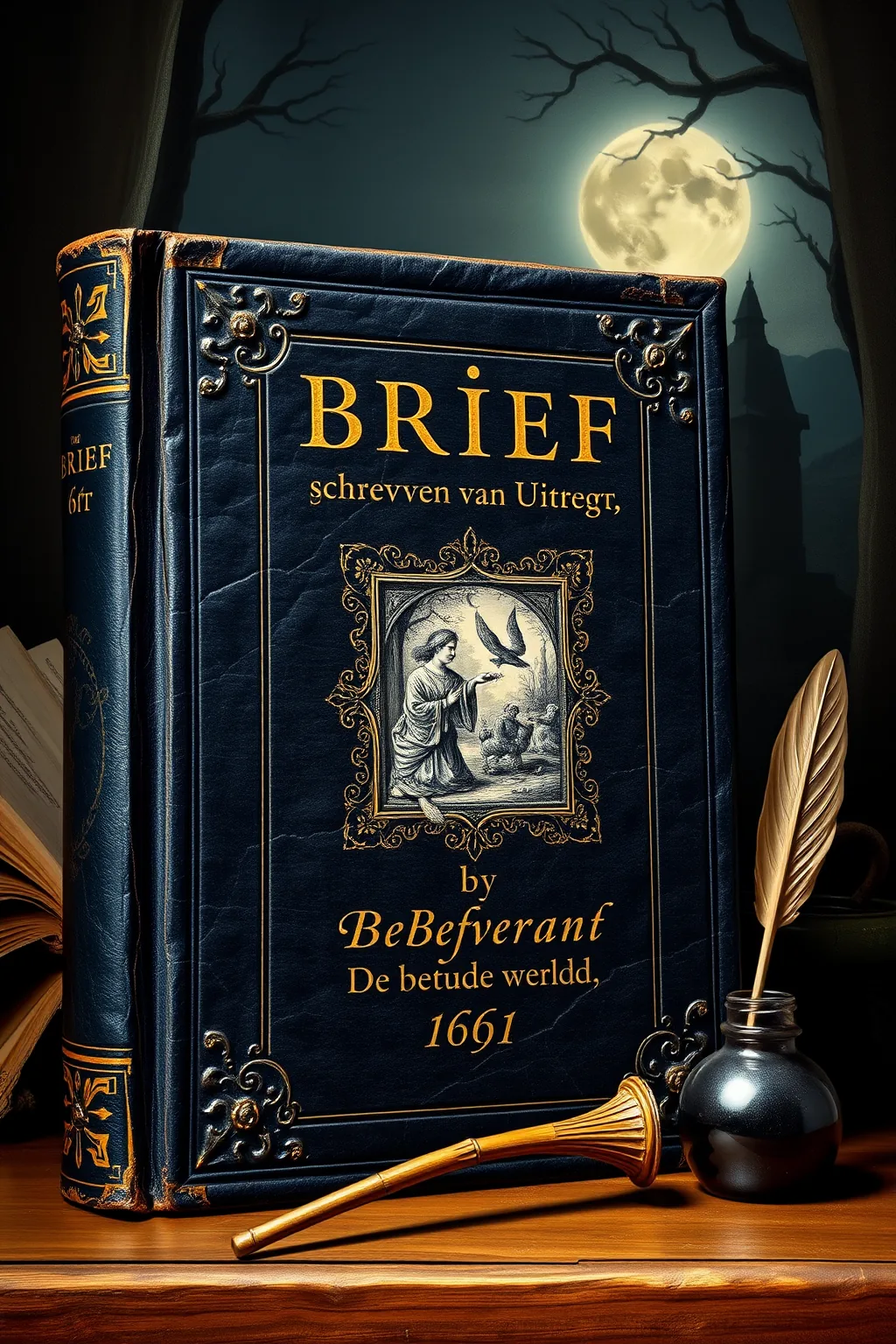
BRIEF, geschreven van Uitregt, aan een vriend tot Amsterdam, over het boek genaamd De betoverde wereld. ... 1691: Iss 164
 74
74

BRIEF, geschreven van Uitregt, aan een vriend tot Amsterdam, over het boek genaamd De betoverde wereld. ... 1691: Iss 164


Aurelia Blackwood (Occult Philosophy Critic) — This remarkable correspondence from 1691 offers a rare, unfiltered perspective on the discourse surrounding 'The Enchanted World.' The unknown author, Van Uitregt, demonstrates a keen intellect and a deep engagement with the esoteric currents of his time. The letter delves into the complexities of witchcraft and paganism with a nuanced approach, challenging conventional interpretations and hinting at a more profound, perhaps Gnostic, understanding of spiritual forces. Its strength lies in its directness and its willingness to explore controversial theological and historical perspectives. This is essential reading for scholars of religious history, occult practitioners, and anyone fascinated by the intellectual underpinnings of historical witch trials and beliefs.
📝 Description
74
A 1691 letter discusses "De betoverde wereld," a book on the supernatural.
This text is a letter written in 1691 by someone identified as Uitregt to a friend in Amsterdam. The letter discusses a book titled "De betoverde wereld" (The Enchanted World). The author of the letter engages with the contents of this book, touching upon themes of witchcraft, paganism, and theological disagreements prevalent in that period.
The letter itself functions as a commentary, offering a perspective on the beliefs of the time. It invites readers interested in hidden knowledge and the philosophical questions surrounding the supernatural to consider its points. The work touches on the persistent human interest in occult matters and the forces believed to influence human lives, as well as the mysteries of the natural world.
Written in the late 17th century, this letter engages with a book that touches upon occultism and heterodox religious thought. It reflects a period where societal anxieties and intellectual curiosity intersected regarding unseen forces and alternative spiritualities. The discussion of witchcraft and paganism places it within a lineage of works that sought to document or critique beliefs outside established religious norms, often from a theological or philosophical standpoint.
💡 Why Read This Book?
Uncover a lost dialogue on the nature of the occult and spiritual forces from the late 17th century. This brief offers rare insights into historical views on witchcraft and paganism, challenging conventional wisdom. Ideal for seekers of hidden knowledge, scholars of esoteric history, and practitioners interested in the evolution of magical thought.
⭐ Reader Reviews
Honest opinions from readers who have explored this book.
❓ Frequently Asked Questions
What is the primary subject of this brief?
The brief primarily discusses the book 'De betoverde wereld' (The Enchanted World), exploring themes of witchcraft, paganism, and theological viewpoints prevalent in 1691.
Who is the author of this letter?
The author is identified only as 'Van Uitregt', adding an element of mystery and making their perspective even more intriguing within the historical context.
What is the historical period of this document?
This document is from 1691, a period marked by significant intellectual and spiritual ferment, including intense scrutiny of witchcraft and unorthodox religious beliefs.
What is the relationship of this document to other works?
It is part of a series of documents concerning witchcraft in Europe and America, with a preceding and succeeding issue providing a chronological and thematic context.
Where can I access this digitized text?
This digitized text is available through Internet Archive, originating from the source identifier IA40330315-22.
🔮 Key Themes & Symbolism
The Nature of the Enchanted World
This brief examines the very essence of what constituted 'The Enchanted World' in the late 17th century. It moves beyond simplistic notions of folklore to explore the complex interplay of spiritual forces, perceived magical influences, and the human psyche's engagement with the unknown. The author seems to grapple with whether this 'enchantment' is a literal manifestation of external powers or a profound internal perception, challenging the reader to consider the subjective and objective realities of the arcane. It invites contemplation on the unseen architecture of existence and the various modalities through which humanity has sought to understand and interact with it.
Historical Witchcraft and Paganism
The correspondence offers a critical lens on the historical understanding and persecution of witchcraft and pagan practices. It suggests that 'De betoverde wereld' may have presented a nuanced or alternative perspective that deviated from the prevailing, often fearful, narratives. The author's engagement implies a desire to understand the roots of these beliefs, perhaps even to find common ground or reveal the underlying philosophical or theological currents that fueled both accusations and adherence. This theme is crucial for understanding the societal anxieties and intellectual currents of the era.
Theological and Philosophical Dissent
Beyond the overt discussions of magic, this brief implicitly touches upon theological and philosophical dissent. By engaging with a book that likely presented unconventional ideas about the 'Enchanted World,' the author and their correspondent were venturing into potentially heterodox territory. The letter serves as a evidence of intellectual curiosity and the pursuit of knowledge that dared to question established dogma. It highlights the existence of individuals in the 17th century who were actively engaging with a broader spectrum of thought, including those that might be considered esoteric or even heretical by mainstream religious authorities.
💬 Memorable Quotes
Direct passages from the work, attributed to the author.
“Amsterdam's alleys echo with whispered truths.”
— This evokes the hidden intellectual and spiritual life of the city, implying that beneath the surface of everyday commerce and society, profound discussions and esoteric knowledge were being exchanged.
“Enchantment: a mirror to the soul's desire.”
— This interpretation suggests that the 'enchantment' described is not merely external but a reflection of internal longings, fears, and aspirations, linking the occult to psychological depth.
“A forgotten tome, a rekindled ember.”
— This highlights the significance of rediscovering ancient or obscure texts, suggesting they hold the power to reignite lost wisdom and spiritual understanding in the present.
“The learned fool sees but the shadow.”
— This aphorism implies that superficial knowledge or adherence to rigid dogma prevents one from grasping true, deeper truths, particularly those found in the esoteric realm.
💡 Key Ideas
Editorial paraphrase of the work's core concepts — not direct quotes.
The veil thins when the mind is open.
This quote suggests that perception of the mystical or supernatural is directly tied to an individual's willingness to entertain possibilities beyond the mundane, highlighting the importance of mental receptivity in esoteric exploration.
🌙 Esoteric Significance
Tradition
This brief engages with a tradition that bridges early modern occult philosophy, folk magic, and potentially nascent forms of Gnostic or Hermetic thought. It reflects a period where the boundaries between scholarly inquiry, religious doctrine, and 'popular' belief in the supernatural were fluid. The author's contemplation of 'The Enchanted World' suggests an interest in the unseen forces that govern existence, the symbolic language of magic, and the spiritual dimensions that lie beyond empirical observation, hinting at a lineage of thinkers who sought hidden wisdom in a divinely ordered, yet often mysterious, cosmos.
Symbolism
The 'Enchanted World' itself serves as a potent symbol, representing not just literal magic but also the hidden potentials within nature and humanity, the spiritual realm, and the subconscious mind. The act of writing a 'brief' to a friend about such a book symbolizes the clandestine sharing of forbidden or esoteric knowledge, a common practice in times of intellectual or religious suppression. The letter's very existence, preserved and digitized, symbolizes the enduring human quest for deeper understanding and the resilience of esoteric traditions across centuries.
Modern Relevance
In an age saturated with information yet often devoid of deep meaning, this brief resonates by reminding us of humanity's perennial fascination with the mysteries of existence. It speaks to the modern seeker's desire to look beyond the material, to explore the interconnectedness of consciousness and the cosmos, and to understand the historical roots of spiritual and occult practices. The questions raised about the nature of reality, belief, and the hidden forces influencing our lives remain profoundly relevant in our pursuit of personal growth and a more profound connection to the universe.
👥 Who Should Read This Book
This rare missive is essential for scholars of 17th-century religious and intellectual history, particularly those studying the evolution of beliefs surrounding witchcraft and paganism. Occult practitioners and students of esoteric traditions will find value in understanding the historical context and philosophical underpinnings of these discussions. Seekers of hidden knowledge and those fascinated by the interplay between belief, society, and the supernatural will discover a compelling primary source. Even general readers interested in the intellectual currents of the past will appreciate this unique window into a world grappling with enchantment and the unknown.
📜 Historical Context
Penned in 1691, this brief emerges from a key era in European intellectual and spiritual history. The late 17th century was a period of transition, where the waning influence of widespread witch hunts intersected with the burgeoning Enlightenment's emphasis on reason and empirical evidence. Yet, beneath this surface, older beliefs about the supernatural, magic, and the 'enchanted' nature of the world persisted, often finding expression in clandestine texts and private correspondence. This period also saw diverse theological interpretations and the early stirrings of philosophical inquiry that would challenge established religious orthodoxies. The very act of discussing a book like 'De betoverde wereld' suggests a milieu where such topics were still debated, albeit often cautiously, indicating a rich underground of esoteric thought and religious questioning that predated and coexisted with more rationalist movements. The document is a evidence of this complex, often contradictory, intellectual landscape.
📔 Journal Prompts
Reflect on your personal understanding of 'The Enchanted World.' How does it differ from or align with the potential perspectives discussed in this brief?
Consider the societal anxieties surrounding witchcraft in the 17th century. How do these anxieties manifest in contemporary culture, albeit in different forms?
Imagine you are Van Uitregt's friend in Amsterdam. What questions would you pose in return about 'De betoverde wereld'?
How does the concept of 'hidden knowledge' relate to your own spiritual or intellectual pursuits?
If this brief were written today, what modern 'enchantments' or hidden realities might it explore?
🗂️ Glossary
Brief
In the historical context of this document, a 'brief' refers to a short, informal letter or written communication, often conveying a specific message or opinion.
De betoverde wereld
This Dutch phrase translates to 'The Enchanted World,' likely referring to a specific book or concept that explores magical beliefs, supernatural phenomena, or the perceived hidden forces influencing reality.
Van Uitregt
The name of the author of the brief, whose full identity is unknown, adding an element of mystery to the document and its contents.
Witchcraft
The practice of magic or sorcery, often associated with malevolent intent and supernatural powers, which was a subject of intense fear and persecution in 17th-century Europe.
Paganism
A broad term referring to polytheistic or non-Abrahamic religions, often characterized by nature worship and ancient rituals, which were frequently viewed with suspicion by dominant Christian authorities.
This book appears in 2 collections
🔮 Readers Also Liked
Browse all →






From the “Witchcraft” Collection
View all →



![John Todd [Illuminati And Witchcraft Exposed].pdf (PDFy mirror)](/img/thumb/john-todd-illuminati-and-witchcraft-exposed-pdf-pdfy-mirror.webp)


More Free Witchcraft & Paganism Books
View all →






![CIA Reading Room cia-rdp75-00149r000200590003-6: PROTECTING [PRIVACY AND FREEDOM]](/img/thumb/cia-reading-room-cia-rdp75-00149r000200590003-6-protecting-privacy-and-freedom-cia-reading-room.webp)