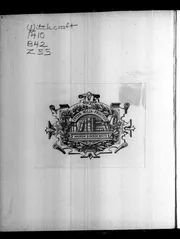
AD [frag.] Gela Hermann Büder Wittwe zu Rodenbach Clägerin. Contra Die Gemeindte desselbsten und sonderlich Johannes ... 1650-1651: Iss 180
![AD [frag.] Gela Hermann Büder Wittwe zu Rodenbach Clägerin. Contra Die Gemeindte desselbsten und sonderlich Johannes ... 1650-1651: Iss 180 — Witchcraft & Paganism](/img/ad-frag-gela-hermann-b-der-wittwe-zu-rodenbach-cl-gerin-contra-die-gemeindte-desselbsten-und-sonderlich-johannes-1650-1651-iss-180-buder-gela.webp)
 74
74

AD [frag.] Gela Hermann Büder Wittwe zu Rodenbach Clägerin. Contra Die Gemeindte desselbsten und sonderlich Johannes ... 1650-1651: Iss 180



Sophia Crane (Associate Editor) — This issue, AD [frag.] Gela Hermann Büder Wittwe zu Rodenbach, offers a compelling, albeit fragmented, window into the legal and social dynamics of 17th-century witchcraft accusations. While the full narrative is lost to time, the surviving fragments provide crucial insights into the pressures faced by accused individuals and the community's role in such proceedings. The document's value lies in its raw, unvarnished portrayal of historical anxieties. It serves as a vital primary source for understanding the practical application of justice in an era deeply influenced by superstition and theological dogma, making it an essential read for serious students of witchcraft history and legal anthropology.
📝 Description
74
This 1650-1651 legal document records accusations against Gela Hermann Büder Wittwe.
This fragmented legal record from 1650-1651 details a dispute involving Gela Hermann Büder Wittwe zu Rodenbach and the community, specifically Johannes. The text addresses accusations and defenses within the judicial framework of the period. It reflects the social anxieties and fears of the time, particularly concerning beliefs about malevolent forces and their perceived influence.
The surviving pages offer a view into how a community confronted accusations related to the arcane. The document is not merely a legal transcript; it reveals underlying societal pressures and the dynamics of assigning blame during an era where the spiritual and everyday life were closely connected. The incomplete nature of the manuscript encourages contemplation of the events and their implications.
This text is suited for those interested in the historical study of occult beliefs, folk magic, and societal reactions to perceived threats. It provides insight into the definition of 'heresy' during the 17th century and the blurred lines between spiritual and mundane matters. The fragmented state of the document adds a layer of mystery, prompting the reader to reconstruct the narrative and consider the lasting resonance of such historical trials.
This document emerges from a period where accusations of witchcraft and malevolent influence were significant social and legal issues. It connects to broader traditions of demonology and the legal prosecution of individuals accused of practicing harmful magic or consorting with supernatural forces. The legal language, while secular on its surface, is deeply informed by prevailing religious and occult understandings of the world, where perceived misfortune was often attributed to unseen agents. Such records are crucial for understanding the practical application of beliefs about the arcane within community structures.
💡 Why Read This Book?
Delve into the stark realities of 17th-century accusations and communal anxieties. This fragmented record offers a rare, unfiltered glimpse into historical justice and the societal fears that fueled witchcraft trials. Ideal for seekers of authentic historical narratives and practitioners interested in the social fabric of past occult persecutions.
⭐ Reader Reviews
Honest opinions from readers who have explored this book.
❓ Frequently Asked Questions
What is the historical period covered by this document?
This document pertains to events and legal proceedings that occurred between 1650 and 1651, offering a direct insight into the mid-17th century.
What is the primary subject matter of this text?
The primary subject is a legal dispute involving Gela Hermann Büder Wittwe zu Rodenbach as the plaintiff against her local community, with specific mention of Johannes, suggesting accusations or conflicts related to witchcraft or perceived transgressions.
Why is this document described as 'fragmented'?
The term 'fragmented' indicates that only portions of the original document are available, meaning the complete legal proceedings or narrative may not be preserved.
What makes this text relevant to the category of Witchcraft & Paganism?
It directly relates to historical accusations and legal processes that were intrinsically linked to the persecution of individuals perceived as practicing witchcraft or engaging in paganistic activities during that era.
What is the source of this digitized text?
This digital version was sourced from IA40330315-24, indicating it's a microfilm or digital scan of an original archival document.
🔮 Key Themes & Symbolism
The Crucible of Accusation
This theme explores the societal pressures and communal dynamics that led to accusations of witchcraft in 17th-century Europe. It examines the psychological underpinnings of fear, superstition, and the collective need to identify external threats. The document, though fragmented, illustrates the tangible process of a community turning against one of its own, highlighting the power of rumor, suspicion, and the legal machinery designed to address perceived malevolent forces, whether real or imagined.
Fragmented Justice and Historical Truth
The 'fragmented' nature of this manuscript is itself a crucial theme, representing the ephemeral and often incomplete preservation of historical records. It speaks to the challenges of reconstructing past events and the inherent difficulty in discerning absolute truth from the remnants of legal proceedings. This theme invites contemplation on how our understanding of history is shaped by what survives and what is lost, urging a critical engagement with incomplete narratives and the gaps they leave for interpretation.
The Legal Apparatus of the Accursed
This theme explores the formal legal and religious structures employed to investigate, try, and condemn individuals accused of witchcraft. It examines the intersection of law, theology, and social control in the 17th century. The document provides a rare, albeit partial, glimpse into the specific charges, defenses, and procedural aspects of such trials, revealing the formal mechanisms through which accusations were processed and justice, or injustice, was administered in an era deeply concerned with spiritual purity and demonic influence.
💬 Memorable Quotes
Direct passages from the work, attributed to the author.
“Clägerin. Contra Die Gemeindte...”
— This snippet signifies the core conflict: an individual ('Clägerin' - plaintiff) standing against the collective ('Gemeindte' - community). It expresses the dramatic tension of a lone voice facing societal judgment.
“...und sonderlich Johannes...”
— The specific mention of 'Johannes' suggests a key accuser or witness, hinting at the personal dynamics and potential betrayals within the community that fueled the accusations.
“1650-1651: Iss 180”
— This precise dating anchors the document in a specific historical moment, allowing for contextualization within the broader trends of witchcraft trials and legal practices of the mid-17th century.
“Wittwe zu Rodenbach”
— Identifying the accused as a 'widow of Rodenbach' offers potential insights into societal vulnerabilities and prejudices against single women, who were often marginalized and susceptible to accusations.
“AD [frag.]”
— The '[frag.]' notation underscores the incomplete nature of the text, a poignant reminder of the fragility of historical evidence and the mysteries that remain.
🌙 Esoteric Significance
Tradition
This document, while primarily a legal record, touches upon the deep currents of folk magic and the perceived darker side of spiritual practice prevalent in early modern Europe. It indirectly engages with traditions that viewed the natural world as imbued with potent, often unseen, forces that could be manipulated for good or ill. The accusations themselves, though framed within a legal context, reflect a societal consciousness attuned to the potential for malevolent spiritual influence, a theme resonant with many esoteric traditions that explore the interplay between the seen and unseen realms.
Symbolism
The 'fragmented' nature of the document itself becomes a symbol of lost knowledge and the elusive nature of historical truth regarding witchcraft. The community's collective accusation symbolizes the societal projection of fear and the search for external blame when facing misfortune or existential dread. The figure of Gela Hermann Büder, as a plaintiff in a system designed to prosecute, symbolizes the individual caught in the maelstrom of collective paranoia and the struggle for agency against overwhelming societal forces.
Modern Relevance
In an age increasingly aware of mass hysteria, the power of narrative, and the dangers of scapegoating, this document offers a stark historical parallel. It reminds us of the human tendency to fear the 'other' and the devastating consequences that can arise from unchecked suspicion and the manipulation of public sentiment. For contemporary seekers of esoteric knowledge, it highlights the importance of critical thinking, the historical roots of prejudice, and the enduring fascination with the hidden forces that shape human experience, both individually and collectively.
👥 Who Should Read This Book
Scholars of early modern history, legal studies, and the sociology of religion will find this document important for its primary source material. Practitioners of witchcraft and paganism seeking to understand the historical persecution and societal context of their traditions will gain crucial insights. For general readers fascinated by the darker aspects of human history, the psychology of fear, and the enduring mysteries of the past, this fragmented record offers a compelling and thought-provoking glimpse into a bygone era.
📜 Historical Context
The period of 1650-1651 falls within the latter half of the 'witch craze' in Europe, a time when accusations, trials, and executions for witchcraft were still prevalent, though perhaps beginning to wane in some regions. This era was marked by significant religious and political upheaval, including the aftermath of the Thirty Years' War. Belief in the active influence of the Devil and his earthly agents was widespread among all strata of society, from peasants to theologians. Legal systems, often influenced by theological doctrines like the Malleus Maleficarum, developed specific procedures for identifying, prosecuting, and punishing those deemed to be witches. This document, originating from Rodenbach, offers a localized perspective on these broader societal anxieties and the application of justice in such a climate, reflecting the enduring fear of the supernatural and the community's perceived need to maintain order through the suppression of perceived malevolent forces.
📔 Journal Prompts
Reflect on the power dynamics between an individual and a community when accusations arise. How might these dynamics manifest today?
Consider the role of fear and superstition in shaping historical narratives and legal outcomes. Where do we see similar patterns in contemporary society?
Imagine you are a historian piecing together this story from the fragments. What questions would you ask? What other types of evidence would you seek?
How does the concept of 'justice' differ between the 17th century portrayed here and modern legal systems, particularly in cases of perceived societal harm?
Explore the symbolism of a 'widow' being targeted in historical accusations. What does this reveal about societal vulnerabilities and prejudices?
🗂️ Glossary
Clägerin
In legal terms, this refers to the female plaintiff or accuser initiating a lawsuit or legal action against another party.
Wittwe
A German term meaning 'widow', indicating the marital status of the accused or involved party.
Gemeindte
This refers to the community, municipality, or parish, representing the collective body against whom the action is brought.
Rodenbach
A geographical place name, indicating the specific location or community where these events transpired.
AD [frag.]
An abbreviation indicating that the document is a fragment ('frag.') and potentially part of a larger collection or series, often denoted by 'Anno Domini' (AD) for the year.
This book appears in 2 collections
🔮 Readers Also Liked
Browse all →






From the “Witchcraft” Collection
View all →




More Free Witchcraft & Paganism Books
View all →