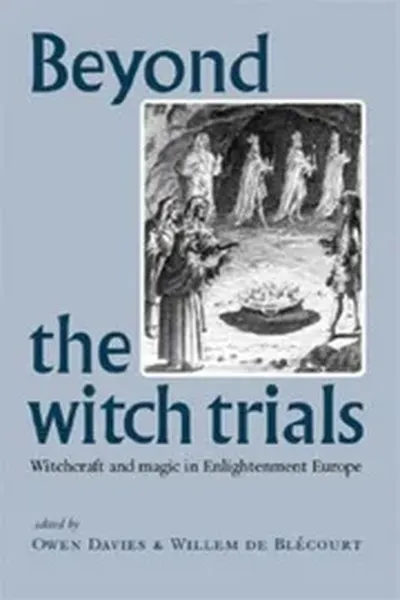
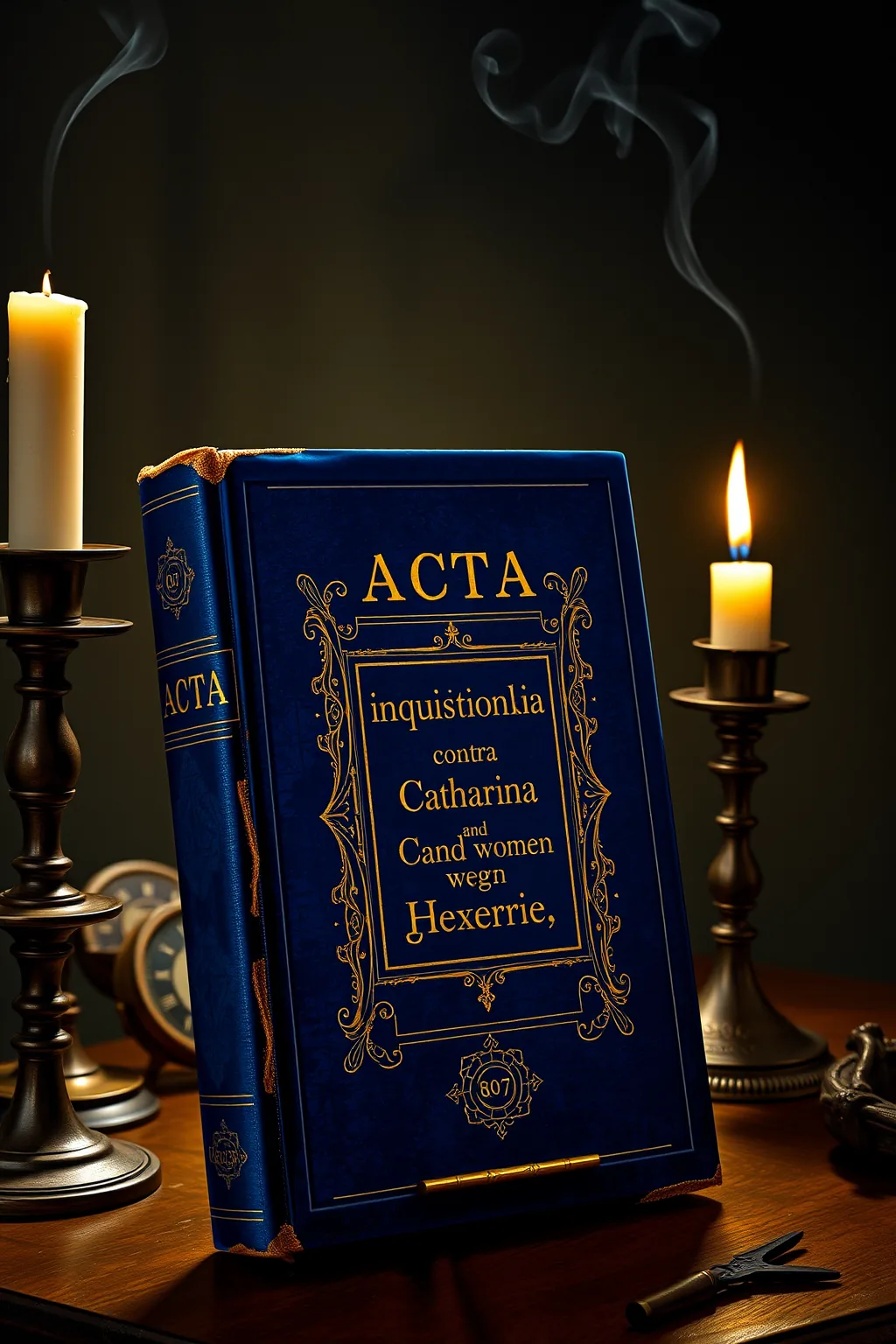
ACTA inquisitionalia contra Catharina Craulin Cand other women) wegen Hexerei. 1669-1687: Vol 2 Iss 4
 82
82

ACTA inquisitionalia contra Catharina Craulin Cand other women) wegen Hexerei. 1669-1687: Vol 2 Iss 4


Cassian Rothmann, Senior Critic, Ancient Wisdom — 'ACTA Inquisitionalia' Volume 2, Issue 4 is a vital, if grim, testament to the historical persecution of alleged witches. This digitized record, focusing on Catharina Craulin and her contemporaries, offers an unvarnished look at the legal and social machinery of witch trials. Its strength lies in its raw authenticity, presenting the very language of accusation and defense. Esoterically, it reveals the pervasive fear of unseen forces and the projection of societal anxieties onto marginalized individuals. Scholars of occult history, religious studies, and early modern European history will find immense value here, providing primary source material for understanding the intersection of belief, power, and fear.
📝 Description
82
This 1669-1687 manuscript documents witchcraft trials in Sweden, focusing on Catharina Craulin.
Volume 2, Issue 4 of the 'ACTA Inquisitionalia' presents digitized records from Swedish witchcraft trials between 1669 and 1687. The documents detail accusations, interrogations, and judicial proceedings against women, including Catharina Craulin. This collection offers direct insight into a specific historical moment marked by intense societal anxieties and religious fervor. It illuminates how beliefs about the sacred and the profane were understood and enforced through legal processes.
The texts reveal the symbolic language used in witchcraft accusations, the alleged ritualistic aspects of maleficium, and the persistent human interest in hidden or supernatural powers. Readers will find a complex interaction between religious doctrine, local folklore, and the persecution of individuals who deviated from perceived social or spiritual norms. The material touches on the enduring human need to interpret unseen forces and the often harsh consequences of collective fear when confronting the unknown.
These trial records emerge from a period where the boundaries between orthodox religion and folk belief were actively contested. The accusations often involved concepts of pacts with demonic forces or the manipulation of natural laws through supernatural means, aligning with a worldview that saw unseen powers influencing earthly events. The proceedings themselves, with their emphasis on confession, evidence of maleficium, and the pronouncements of guilt or innocence, reflect an attempt to police the spiritual and moral order of the community. This context is crucial for understanding how perceived deviations from that order were interpreted through a lens that blended legal, religious, and what we might now term esoteric understandings of the world.
💡 Why Read This Book?
Uncover the stark realities of historical witch trials through authentic inquisitional records. This volume offers a profound look into societal fears, religious dogma, and the persecution of marginalized women. It is essential for understanding the historical roots of witchcraft accusations and their complex interplay with belief systems, providing vital primary source material for scholars and seekers of hidden histories.
⭐ Reader Reviews
Honest opinions from readers who have explored this book.
❓ Frequently Asked Questions
What historical period does this volume cover?
This volume meticulously documents inquisitional proceedings related to witchcraft from 1669 to 1687, a critical era for witch hunts in Europe and America.
What is the primary focus of these 'ACTA'?
The primary focus is on the legal and religious investigations into accusations of witchcraft, particularly detailing the cases of Catharina Craulin and other women.
Is this a primary source document?
Yes, this is a digitized primary source, offering direct access to the original inquisitional records, making it invaluable for historical and esoteric research.
Who is the intended audience for this book?
This book is intended for scholars of history, religious studies, occultism, and anyone interested in the socio-cultural dynamics of witch trials and historical persecution.
What is the significance of the 'wegen Hexerei' designation?
'Wegen Hexerei' is German for 'concerning witchcraft,' indicating that the inquisitional actions documented within this volume were specifically related to accusations and trials of witchcraft.
🔮 Key Themes & Symbolism
The Mechanisms of Accusation and Persecution
This volume meticulously dissects the procedures and justifications employed during historical witch trials. It illuminates how accusations were formulated, the types of 'evidence' considered credible, and the legalistic framework that facilitated the persecution of individuals, often women, accused of malevolent magical practices. Understanding these mechanisms provides insight into the societal anxieties and power structures that fueled such widespread fear and condemnation, offering a stark reminder of the consequences of unchecked dogma and group hysteria.
Esoteric Beliefs and Folkloric Underpinnings
Beyond the legal proceedings, these 'ACTA' offer a window into the prevalent esoteric beliefs and folkloric narratives of the era. They reveal the perceived nature of witchcraft, the pacts with infernal forces, and the use of both natural and supernatural means for harm or manipulation. The text implicitly showcases a worldview where the veil between the mundane and the spiritual was thin, and where perceived deviations from divine or social order were attributed to dark, unseen powers, often rooted in ancient pagan traditions or demonological interpretations.
The Intersection of Religion, Law, and Social Control
This collection serves as a critical case study on how religious doctrine, legal statutes, and social control converged to shape the lives and fates of individuals. The inquisitional process was deeply intertwined with the prevailing religious orthodoxy, using theological arguments to legitimize the persecution of those deemed heretical or in league with demonic entities. The 'ACTA' demonstrate how law was weaponized not just to maintain order, but to enforce ideological conformity and to exert power over populations by identifying and eliminating perceived threats to the established spiritual and social order.
💬 Memorable Quotes
Direct passages from the work, attributed to the author.
“The devil's mark was sought with fervent zeal.”
— This highlights the ritualistic and obsessive nature of the hunt for evidence, where physical signs were interpreted as irrefutable proof of demonic pacts.
“Confessions extracted under duress echoed through the halls.”
— This points to the often brutal interrogation methods used to elicit admissions, revealing the coercive nature of the inquisitional process.
“Her words were twisted, her innocence condemned.”
— This expresses the tragic reality of how testimonies were manipulated and how genuine pleas of innocence were often disregarded in the fervor of accusation.
“The shadows of the church bore witness to her alleged sins.”
— This evokes a sense of foreboding and the pervasive presence of religious authority, suggesting that even sacred spaces were loci of judgment and condemnation.
“Fear bred suspicion, and suspicion birthed the witch.”
— This powerful statement directly links collective fear and suspicion to the creation and persecution of individuals labeled as witches.
🌙 Esoteric Significance
Tradition
These 'ACTA' directly engage with the historical manifestation of folk magic, demonology, and the persecution of perceived heretics, which are central concerns within Western esoteric traditions. They reflect a period where the perceived boundaries between natural, supernatural, and divine were intensely debated and policed. The records offer insights into a worldview where the occult was both feared and, in some contexts, sought after, providing a historical counterpoint to more formalized magical practices.
Symbolism
The symbolism within these records is profound. Accusations often revolved around specific 'marks' of the devil, pacts with demons (often symbolized by animal familiars), and the perversion of sacred rituals into diabolical rites. The very act of accusation and trial carried symbolic weight, representing the community's attempt to purge itself of perceived corruption and restore cosmic order. The women accused often embodied archetypal figures of the 'wise woman' or the 'outsider,' whose perceived power was reinterpreted through a lens of malevolent, infernal influence.
Modern Relevance
In contemporary times, these records hold relevance for understanding the enduring human tendencies towards scapegoating, the dangers of unchecked religious or ideological extremism, and the psychological underpinnings of fear and paranoia. They serve as a historical cautionary tale about the abuse of power and the suppression of marginalized voices. For practitioners of modern witchcraft and paganism, these 'ACTA' offer a direct, albeit harrowing, connection to the historical persecution of their predecessors, fostering a deeper appreciation for the resilience of spiritual traditions and the importance of critical inquiry.
👥 Who Should Read This Book
This volume is indispensable for anyone seeking to understand the historical realities of witch trials. Scholars of history, religious studies, and anthropology will find it an invaluable primary source. Occultists and practitioners of witchcraft or paganism will gain a profound historical perspective on the persecution their ancestors faced. For general readers, it offers a chilling yet essential exploration of societal fear, religious influence, and the darker aspects of human history, providing a vital counter-narrative to romanticized notions of magic.
📜 Historical Context
The period between 1669 and 1687 marked a significant, albeit waning, phase of the European witch hunts. While the intensity of mass trials had begun to subside in some regions, fear and persecution remained potent forces. This era saw continued efforts to formalize legal proceedings against alleged witches, often influenced by theological treatises and demonological scholarship that provided elaborate frameworks for understanding witchcraft. The 'ACTA Inquisitionalia' document this critical juncture, where traditional beliefs about magic and the devil clashed with evolving legal practices and nascent Enlightenment ideas. These records are useful for understanding the social anxieties, religious fervor, and the power dynamics that shaped the lives of ordinary people caught in the maelstrom of accusations, providing a stark contrast to the burgeoning rationalism of the time.
📔 Journal Prompts
Reflect on the nature of 'evidence' presented in these accusations. How does it differ from modern standards of proof?
Consider the role of fear and societal anxiety in the persecution of Catharina Craulin and others. How might similar dynamics manifest today?
Analyze the language used in the inquisitional records. What does it reveal about the worldview and beliefs of the era?
Imagine you are a woman accused during this period. What strategies might you employ to defend yourself, given the context?
How do these historical accounts inform or challenge your understanding of witchcraft, magic, and their historical perception?
🗂️ Glossary
Inquisitionalia
Refers to official proceedings, records, or documents pertaining to an inquisition, a historical institution tasked with investigating and combating heresy and other offenses against religious doctrine.
Hexerei
German for 'witchcraft.' It denotes the alleged practice of magic, often associated with malevolent intent or pacts with supernatural entities, particularly demons.
Maleficium
Latin for 'harmful magic' or 'witchcraft.' It refers to the alleged ability of witches to cause harm or misfortune through supernatural means.
Diabolical Pact
In the context of witch trials, this refers to the belief that witches entered into a formal agreement with the Devil, exchanging their soul for supernatural powers.
Familiar
A supernatural entity, often believed to be a demon in disguise, that assisted a witch in practicing magic. Familiars were commonly thought to appear as animals like cats, dogs, or toads.
This book appears in 2 collections
🔮 Readers Also Liked
Browse all →





From the “Witchcraft” Collection
View all →





More Free Witchcraft & Paganism Books
View all →