Theosophy Vol-VIII,No-10,August 1920

 71
71

Theosophy Vol-VIII,No-10,August 1920

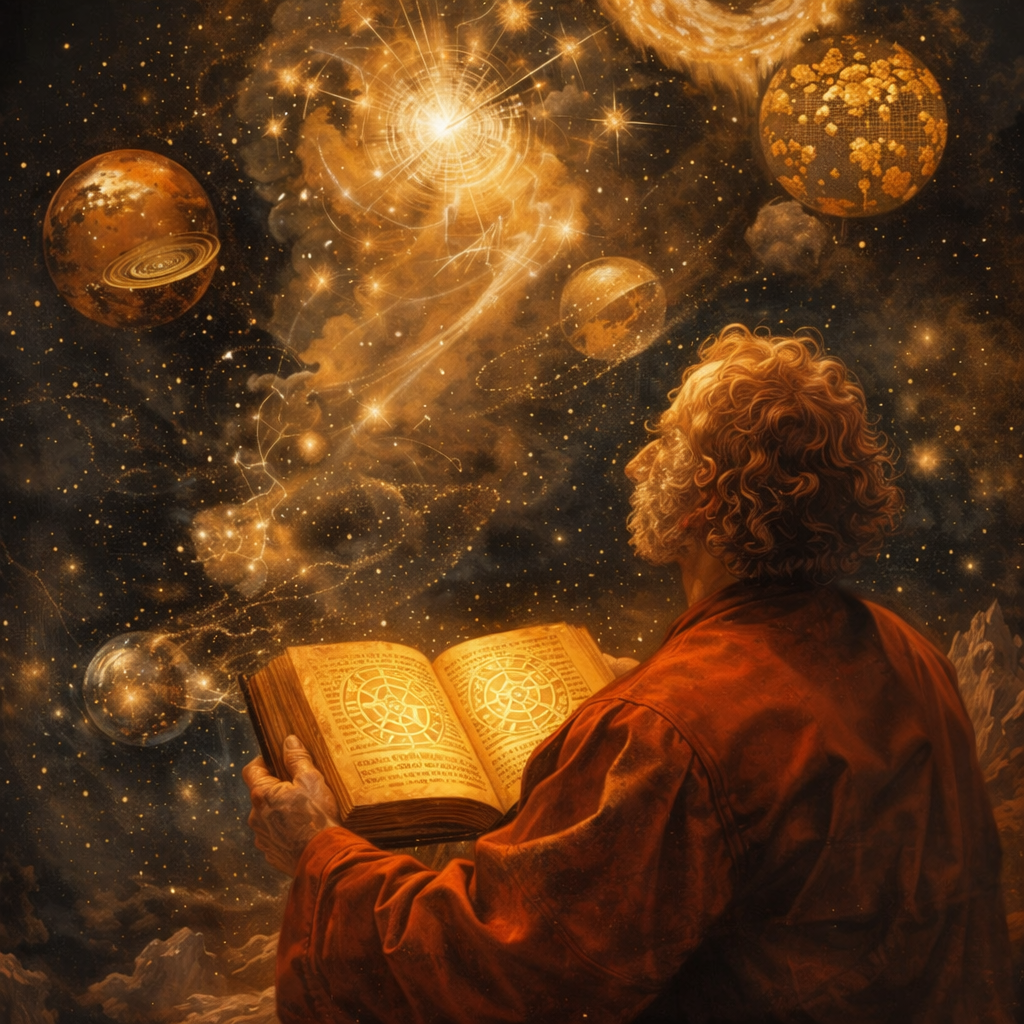

By Evander Ashcroft (Alchemy & Hermeticism Editor) — This August 1920 issue of Theosophy offers a potent distillation of esoteric thought, meticulously curated for the discerning mind. The anonymous author(s) navigate complex metaphysical landscapes with clarity, revealing profound insights into the nature of reality and the human spirit. Its strength lies in its accessible yet deep exploration of Theosophical tenets, making it an invaluable resource for both neophytes and seasoned practitioners. The thematic coherence and insightful discourse make this a compelling read for anyone engaged with Anthroposophy, Hermeticism, or the broader spectrum of mystical inquiry. A truly illuminating contribution.
📝 Description
71
The August 1920 issue of Theosophy (Vol. VIII, No. 10) discusses humanity's evolution and the inner divine spark.
This issue of Theosophy, published in August 1920, was written by an anonymous author. It examines concepts of consciousness and symbolic meaning, aiming to guide readers toward understanding deeper truths. The writing encourages quiet thought and intellectual engagement for those looking beyond ordinary concerns.
The text addresses the soul's desire for spiritual awareness, presenting ideas on the unity of existence and the subtle forces that shape reality. It discusses the larger universal structure, the progression of humankind, and the inherent divinity within each person. This volume is intended for both serious students of esoteric subjects and those with a general curiosity, aiming to shed light on ancient enigmas and their enduring significance.
Published during a period of significant interest in occultism and Eastern philosophies in the West, this Theosophy journal issue engages with themes central to the Theosophical Society's teachings. It reflects the movement's aim to synthesize various religious and philosophical traditions, focusing on universal brotherhood, comparative religion, and the study of unexplained laws of nature and the powers latent in humanity. The content likely aligns with Helena Blavatsky's foundational works, seeking to present a spiritual worldview that bridges science and mysticism.
💡 Why Read This Book?
Uncover the foundational principles of Theosophy and Anthroposophy from a pivotal historical moment. This issue offers rare insights into spiritual evolution, cosmic laws, and hidden realities. Ideal for seekers of profound knowledge, scholars of esoteric traditions, and practitioners aiming to deepen their understanding of ancient wisdom and its application to modern life.
⭐ Reader Reviews
Honest opinions from readers who have explored this book.
❓ Frequently Asked Questions
What is Theosophy?
Theosophy is a philosophical and spiritual movement that seeks to understand the divine nature of reality and the place of humanity within it, drawing from ancient wisdom traditions and esoteric philosophies.
Who was Helena Blavatsky?
Helena Blavatsky was a co-founder of the Theosophical Society, instrumental in disseminating its core teachings and writings, which form the bedrock of modern Theosophical thought.
What is Anthroposophy?
Anthroposophy, founded by Rudolf Steiner, is a spiritual philosophy that views human beings as having a spiritual as well as a physical nature, seeking to understand the connection between the spiritual and material worlds.
Is this issue suitable for beginners?
Yes, while rich in depth, the articles in this issue are presented in a way that is accessible to those new to Theosophical concepts, offering a solid introduction to its core ideas.
What makes this particular issue significant?
This August 1920 issue captures a specific moment in the development and dissemination of Theosophical ideas, offering a unique historical and philosophical perspective from a period of significant esoteric discourse.
🔮 Key Themes & Symbolism
Cosmic Evolution and Humanity's Place
This volume explores the grand set of cosmic evolution, tracing the journey of consciousness from primordial states to its present human manifestation. It elucidates the intricate laws governing this unfolding process, emphasizing humanity's important role as a bridge between the material and spiritual realms. The articles explore the concept of 'Root Races' and 'Rounds,' offering a framework for understanding historical and future human development, and underscoring the inherent divinity within each individual as a spark of the Absolute.
The Nature of Consciousness and the Subtle Bodies
A central theme is the exploration of consciousness beyond its mundane perception. The texts illuminate the complex structure of the human being, detailing the various subtle bodies – astral, mental, causal – and their functions in relation to the physical form. Understanding these vehicles allows for a deeper comprehension of psychic phenomena, reincarnation, and the path towards spiritual liberation. This knowledge empowers the reader to perceive their own inner landscape and the unseen forces that shape their experience.
Symbolism in Ancient Wisdom and Mythology
This issue unpacks the profound symbolic language embedded within ancient myths, scriptures, and esoteric traditions. It reveals how these symbols are not mere allegories but keys to unlocking universal truths about existence, karma, and spiritual law. By deciphering these archetypal images, readers gain access to a timeless wisdom that transcends cultural boundaries, offering clear insights into the cyclical nature of time, the challenges of the spiritual path, and the ultimate unity of all life. It encourages a re-evaluation of familiar stories through an esoteric lens.
💬 Memorable Quotes
Direct passages from the work, attributed to the author.
“Within each atom, a universe resides.”
— A profound statement on the microcosm/macrocosm principle, suggesting that the fundamental essence of the entire cosmos is present within the smallest particle.
“The path of knowledge is the path of self-discovery.”
— Highlights the intrinsic link between acquiring wisdom and the process of understanding one's own true nature and spiritual identity.
“Karma ties the threads of destiny.”
— This succinctly explains the law of cause and effect, underscoring that actions have consequences that shape an individual's future experiences and life path.
“Silence holds the traces of eternity.”
— Suggests that true spiritual understanding and connection are often found not in external noise, but in inner stillness and contemplation.
💡 Key Ideas
Editorial paraphrase of the work's core concepts — not direct quotes.
The outer is but a shadow of the inner.
This quote emphasizes the illusory nature of the material world and the primacy of the spiritual or inner reality as the true source of being.
🌙 Esoteric Significance
Tradition
This volume is firmly rooted in the Western Esoteric Tradition, particularly as synthesized and popularized by the Theosophical movement. It draws heavily from Eastern philosophies, notably Hinduism and Buddhism, integrating concepts such as karma, reincarnation, and the cyclical nature of existence with Western Hermeticism and Neoplatonism. The emphasis is on universal brotherhood, comparative religion, and the study of ancient wisdom to uncover the underlying spiritual truths of all faiths.
Symbolism
The esoteric symbolism explored herein is vast, often drawing from archetypal imagery found in ancient mythologies, religious texts, and alchemical traditions. Key symbols likely include the Serpent (wisdom, transformation), the Lotus (spiritual unfolding, purity), the Eye (consciousness, divine perception), and geometric forms representing cosmic order. These symbols are presented not as mere decorative elements, but as vital keys to understanding the intricate workings of the cosmos and the stages of human spiritual development.
Modern Relevance
The themes of interconnectedness, the nature of consciousness, and the search for inner truth remain profoundly relevant today. In an era often characterized by materialism and disconnection, the wisdom presented in this issue offers a counter-narrative, guiding readers towards a more holistic understanding of life. The emphasis on personal responsibility through karma and the potential for spiritual growth speaks directly to contemporary challenges, encouraging individuals to cultivate inner awareness and contribute to a more harmonious existence.
👥 Who Should Read This Book
This volume is a rich resource for a diverse readership. **Beginners** seeking an introduction to Theosophy and Anthroposophy will find foundational concepts clearly articulated. **Scholars** of religious studies, comparative mythology, and intellectual history will appreciate its historical context and philosophical depth. **Spiritual seekers** yearning for a deeper understanding of life's mysteries and their place in the cosmos will find profound guidance. **Practitioners** of meditation, yoga, or other contemplative disciplines may discover valuable insights to enhance their spiritual journey and deepen their esoteric studies.
📜 Historical Context
Published in August 1920, this issue emerges from a vibrant period of post-World War I intellectual and spiritual ferment. The early 20th century witnessed a surge of interest in the esoteric, occult, and mystical as traditional religious and societal structures were questioned. Theosophy, with its synthesis of Eastern and Western philosophies and its emphasis on spiritual evolution, resonated deeply with those seeking answers beyond the material devastation. This era saw the proliferation of esoteric journals and societies, aiming to disseminate hidden wisdom and guide humanity towards a higher consciousness. This particular volume contributes to that ongoing dialogue, reflecting the era's earnest quest for meaning and spiritual renewal.
📔 Journal Prompts
Reflect on a time you felt a profound connection to something larger than yourself. What triggered this feeling, and how did it change your perspective?
Consider the concept of 'subtle bodies.' How might understanding these unseen aspects of yourself influence your daily life and interactions?
Identify a recurring symbol or motif in your dreams or daily life. What might this symbol represent about your inner world or current life path?
In what ways do you see the principle of karma manifesting in your life or the world around you? How does this understanding influence your choices?
What does 'universal brotherhood' mean to you in practice? How can you embody this principle more fully in your community and interactions?
🗂️ Glossary
Theosophy
A spiritual philosophy that seeks to understand the divine nature of reality and the place of humanity within it, drawing from ancient wisdom traditions and esoteric teachings.
Anthroposophy
A spiritual philosophy and method of self-development founded by Rudolf Steiner, focusing on the spiritual nature of human beings and their connection to the cosmos.
Karma
The spiritual principle of cause and effect, where an individual's intentional actions influence their future lives and circumstances.
Reincarnation
The philosophical or religious concept that the non-physical essence of a living being begins a new life in a different physical form or organism after biological death.
Macrocosm
The universe considered as a whole; the great world, in contrast to the microcosm, or the individual human being.
This book appears in 2 collections
🔮 Readers Also Liked
Browse all →



From the “Theosophy” Collection
View all →





More Free Theosophy & Anthroposophy Books
View all →


![A Guide to Theosophy: Containing Select Articles for the Instructions [!] of Aspirants to the ...](/img/thumb/a-guide-to-theosophy-containing-select-articles-for-the-instructions-of-aspirants-to-the-tukaram-tatya-bombay-theosophical-fund.webp)