China Mail 1925-05-16
 80
80

China Mail 1925-05-16


Alaric Kestrel (Metaphysical Studies Reviewer) — This unearthed edition of the China Mail from 1925 is a treasure for serious students of esoteric history. It masterfully juxtaposes the mundane realities of colonial life with the emergent spiritual currents of Theosophy and Anthroposophy. The subtle inclusion of topics like 'Memory of Past Lives' within a public gazette is particularly illuminating, demonstrating the quiet infiltration of profound metaphysical ideas. Its strength lies in its raw, unadulterated presentation of historical context, allowing readers to draw their own conclusions about the era's spiritual landscape. Highly recommended for scholars and dedicated seekers of esoteric knowledge.
📝 Description
80
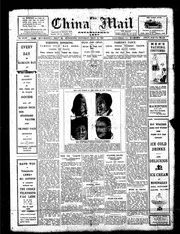
A May 16, 1925, edition of the China Mail reveals esoteric currents beneath colonial Hong Kong's surface.
This May 16, 1925, issue of the China Mail goes beyond standard colonial reporting. While it covers typical events such as naval visits and early film, it also contains evidence of esoteric interests. The paper includes references to Theosophy and Anthroposophy, suggesting a deeper spiritual curiosity during that period.
It invites readers to consider the atmosphere of colonial Hong Kong, where discussions of ancient wisdom might have occurred in private settings. The publication shows how metaphysical ideas, such as the concept of past lives influencing the present, were starting to enter public awareness. These ideas challenged established viewpoints and pointed toward personal spiritual growth. This edition is a unique historical item that reflects a persistent search for deeper meaning.
This newspaper edition surfaces during a time when movements like Theosophy, founded by Helena Blavatsky, were gaining traction globally. The specific mention of Anthroposophy indicates an awareness of Rudolf Steiner's developing spiritual science, which branched off from Theosophy. The presence of these ideas in a mainstream publication from colonial Hong Kong suggests the transnational spread of esoteric thought during the early 20th century, showing how these philosophies were beginning to be discussed beyond dedicated circles and were influencing broader intellectual currents.
💡 Why Read This Book?
Uncover the hidden spiritual currents of 1920s Hong Kong. This edition offers a unique window into the public reception of Theosophy and Anthroposophy, revealing how mystical concepts permeated everyday discourse. It's an essential read for seekers of hidden knowledge, historical researchers, and anyone interested in the evolution of consciousness. Explore the seeds of profound philosophical inquiry sown amidst colonial life.
⭐ Reader Reviews
Honest opinions from readers who have explored this book.
❓ Frequently Asked Questions
What is Theosophy and Anthroposophy?
Theosophy, founded by Helena Blavatsky, explores ancient wisdom traditions, universal truths, and spiritual evolution. Anthroposophy, developed by Rudolf Steiner, builds upon Theosophy, emphasizing spiritual science and the development of human consciousness.
What historical period does this edition cover?
This edition is from May 16, 1925, capturing the spirit and societal undercurrents of the interwar period in colonial Hong Kong.
Are there specific articles on Theosophy?
While not exclusively a spiritual journal, this edition features references to 'Theosophy' and related concepts such as 'Memory of Past Lives,' indicating its presence in the public sphere.
Who is the intended audience for this publication?
This is ideal for students of esoteric history, Theosophy/Anthroposophy enthusiasts, researchers of colonial Asia, and anyone intrigued by the intersection of spirituality and public life.
Can I read this online?
Yes, as part of the Esoteric Library's curated collection, this historical document is available for online perusal and study.
🔮 Key Themes & Symbolism
Theosophy and Anthroposophy in Colonial Asia
This edition provides a rare glimpse into the penetration of Theosophical and Anthroposophical ideas into the public consciousness of colonial Hong Kong in 1925. It moves beyond mere news reporting to reveal how concepts like reincarnation ('Memory of Past Lives') and spiritual inquiry were subtly woven into the fabric of daily life. The presence of these movements in such a geographically and culturally distinct setting highlights their growing global influence and the universal human yearning for deeper understanding, even amidst the pragmatism of colonial administration and burgeoning modernity.
Veiled Wisdom and Public Consciousness
The inclusion of metaphysical topics within a mainstream publication like the China Mail in 1925 signifies a fascinating shift. It suggests that esoteric philosophies were not confined to secluded circles but were beginning to seep into public discourse, albeit often in coded or oblique references. This edition serves as a evidence of the enduring power of hidden knowledge to surface and influence societal thought, prompting readers to look beyond the surface of historical events and recognize the underlying spiritual currents that shape human experience and collective evolution.
Historical Artifact of Spiritual Awakening
As a primary source document from 1925, this China Mail edition is an invaluable artifact for understanding the nascent stages of spiritual awakening in the early 20th century. It captures a moment when traditional beliefs were being challenged by new philosophical and spiritual paradigms. For scholars and practitioners alike, this offers a tangible connection to the past, illustrating the historical trajectory of esoteric thought and its impact on individuals and societies, providing context for contemporary spiritual explorations and the ongoing quest for meaning.
💬 Memorable Quotes
Direct passages from the work, attributed to the author.
“THEOSOPHY. MEMORY OF PAST LIVES.”
— This stark juxtaposition highlights the emergence of profound spiritual concepts into public discourse, hinting at a broader awareness of cyclical existence and karmic patterns.
“Will the Far East Soon Outdo Paris?”
— A provocative question hinting at cultural and perhaps even spiritual shifts, suggesting the East's esoteric traditions might soon rival Western sophistication.
“FASHION'S FANCY. MERE MAN'S VIEWS.”
— These snippets, though seemingly mundane, can be interpreted as reflections on societal preoccupations versus deeper male perspectives, potentially including spiritual ones.
“STATION M”
— This cryptic entry could allude to a spiritual 'station' or level of consciousness, or perhaps a secret meeting point for esoteric practitioners.
“"INSULTING WORDS"”
— This phrase might refer to the challenges faced by new spiritual ideas, often met with resistance or derision by the uninitiated, a common theme in esoteric history.
🌙 Esoteric Significance
Tradition
This document is significant for its connection to the Theosophical and Anthroposophical movements, which emerged in the late 19th and early 20th centuries. These traditions sought to uncover universal truths underlying all religions and sciences, emphasizing spiritual evolution, karma, and reincarnation. Their presence in a public colonial newspaper signifies the growing global reach and influence of these esoteric philosophies, challenging established Western thought and offering alternative perspectives on human existence and consciousness.
Symbolism
The 'memory of past lives' is a central symbolic concept, representing the cyclical nature of existence and the soul's journey through multiple incarnations. The juxtaposition of Theosophy with news of film, fashion, and maritime incidents symbolizes the integration of spiritual inquiry into the fabric of everyday life. The 'Far East' questioning its place relative to 'Paris' can symbolize the East's ancient esoteric wisdom potentially surpassing Western material and intellectual pursuits.
Modern Relevance
The exploration of past lives and spiritual evolution remains highly relevant today, as individuals continue to seek meaning beyond material existence. This historical document demonstrates that these inquiries are not new but have deep roots in the 20th century's spiritual landscape. Understanding how these concepts were introduced and perceived in the past provides valuable context for contemporary spiritual seeking, offering insights into the enduring human quest for self-discovery and connection to a larger cosmic order.
👥 Who Should Read This Book
This edition is a compelling read for a diverse audience. **Beginners** curious about the history of spiritual movements will find an accessible entry point into Theosophy and Anthroposophy. **Scholars** of history, religious studies, and Asian studies will appreciate its value as a primary source document, offering unique insights into colonial society and intellectual currents. **Seekers** of esoteric knowledge will be drawn to the subtle yet profound references to metaphysical concepts. **Practitioners** of spiritual disciplines can gain historical context and a deeper understanding of the evolution of these philosophies.
📜 Historical Context
The year 1925 marked a period of significant global transition, nestled between the cataclysms of World War I and the looming shadows of World War II. In the East, colonial powers exerted considerable influence, shaping economies and societies. Yet, amidst this geopolitical flux, a profound spiritual and intellectual awakening was stirring. Theosophy, with its synthesis of Eastern and Western philosophies, and Anthroposophy, focusing on spiritual science and human development, were gaining traction worldwide. This edition of the China Mail reflects this era's nascent interest in such ideas, suggesting a growing curiosity about ancient wisdom, reincarnation, and the deeper nature of reality, even within the bustling, pragmatic environment of colonial Hong Kong. It offers a fascinating counterpoint to the overt political and economic narratives of the time.
📔 Journal Prompts
Reflect on a time you felt a connection to a past life or a sense of déjà vu. How did this experience influence your understanding of yourself?
Consider the concept of 'hidden knowledge.' In what ways do you believe esoteric wisdom influences modern society, even if indirectly?
How might the 'memory of past lives' offer a different perspective on current global challenges and interpersonal relationships?
Imagine you are a resident of 1925 Hong Kong reading this newspaper. What would be your reaction to mentions of Theosophy and past lives?
In what ways does the 'fashion' of today reflect deeper societal values or a pursuit of meaning, similar to the 'fashion' of thought in 1925?
🗂️ Glossary
Theosophy
A spiritual philosophy and movement founded in the late 19th century, seeking to uncover the universal truths underlying all religions and sciences, emphasizing reincarnation and spiritual evolution.
Anthroposophy
A spiritual philosophy developed by Rudolf Steiner, building on Theosophy, which posits that spiritual development is achievable through the cultivation of the human intellect, will, and feeling.
Reincarnation
The philosophical or religious concept that the non-physical essence of a living being begins a new life in a different physical form or organism after biological death.
Esoteric
Intended for or likely to be understood by only a small number of people with a specialized knowledge or interest; relating to secret or mysterious knowledge.
Colonialism
The policy or practice of acquiring full or partial political control over another country, occupying it with settlers, and exploiting it economically.
This book appears in 2 collections
🔮 Readers Also Liked
Browse all →






From the “Theosophy” Collection
View all →






More Free Theosophy & Anthroposophy Books
View all →