Ghosts and Spirits Are Real and What Is the Difference?
 78
78

Ghosts and Spirits Are Real and What Is the Difference?
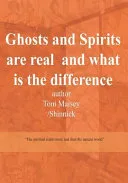
Toni Maisey/Shinnick’s "Ghosts and Spirits Are Real and What Is the Difference?" offers a direct, if brief, confrontation with the persistent question of the afterlife. The assertion that "the spiritual realm is more real than the natural world" is a bold opening, immediately establishing the book’s non-materialist stance. Its strength lies in its unpretentious approach to complex subjects, particularly the idea of emotional imprints lingering in places. The blurb’s reference to 2 Corinthians 11:14-15, while biblically rooted, feels somewhat tangential to the core thesis about residual hauntings. A limitation is the brevity; the exploration of the difference between ghosts and spirits, a key promise, remains underdeveloped. The concept of memory imprinted "on the wall to haunt all for ever more" is striking, evoking a visceral sense of trapped energy.
This work serves as a short, declarative statement on the reality of spectral phenomena for those already inclined to believe.
📝 Description
78
Toni Maisey/Shinnick's 2019 book asserts the greater reality of spiritual and spectral realms over the physical.
This work examines the nature of ghosts and spirits, proposing that strong emotional imprints, especially sadness tied to a location, can create residual hauntings. It invites readers to consider how spiritual residue persists. The book is written for those curious about paranormal phenomena who seek explanations beyond typical scientific views. It will interest students of the occult, ghost lore enthusiasts, and anyone questioning the divide between the material and immaterial. Individuals open to spiritual interpretations of daily life will find it relevant.
The author suggests the spiritual realm is not empty but an active dimension. A central inquiry is the distinction between "ghosts" and "spirits," implying different origins or natures for spectral manifestations. These differences may relate to their time on Earth or how they passed.
Published in 2019, this book taps into enduring traditions of ghost stories and spiritualist beliefs. It reflects a continuous human fascination with the afterlife and unseen forces, aligning with modern spiritual and paranormal interests. The work engages with concepts like spiritual imprints and the nature of spectral entities, placing it within contemporary discussions on the occult and the broader spiritualist movement.
💡 Why Read This Book?
• Understand the concept of "imprinted" memories in locations, a unique explanation for hauntings, as explored in the book's discussion of sadness marking a place forever. • Gain a framework for differentiating between various spectral entities, moving beyond generic "ghost" terminology, as suggested by the book's title inquiry. • Confront the assertion that the spiritual realm possesses a greater reality than the physical, challenging your perception of existence as detailed in the work.
⭐ Reader Reviews
Honest opinions from readers who have explored this book.
❓ Frequently Asked Questions
What specific biblical passage is referenced in the book's initial presentation?
The book initially references 2 Corinthians 11:14-15 (ESV), which discusses how Satan can disguise himself and his servants as righteous figures, suggesting a parallel to deceptive spiritual manifestations.
What does the book suggest causes hauntings?
The book proposes that strong emotions, particularly sadness, can be "imprinted" on a place, creating residual hauntings that persist indefinitely.
When was 'Ghosts and Spirits Are Real and What Is the Difference?' first published?
The book was first published on March 8, 2019.
What is the author's view on the reality of the spiritual realm?
The author firmly believes that the spiritual realm is more real and tangible than the physical, natural world we typically perceive.
Does the book provide clear definitions for ghosts versus spirits?
While the title poses this question, the book focuses more on the nature of spectral imprints rather than providing exhaustive definitions for the difference between ghosts and spirits.
Who is the author of 'Ghosts and Spirits Are Real and What Is the Difference?'
The author is Toni Maisey/Shinnick.
🔮 Key Themes & Symbolism
Spiritual Imprints
This theme centers on the idea that powerful emotional experiences, especially negative ones like profound sadness, can leave a tangible imprint on physical locations. The book posits that these imprints are not mere memories but active energies that can cause hauntings, affecting subsequent occupants. This concept suggests that spaces can hold the psychic residue of past events and emotions, making the spiritual realm an enduring presence within the material world.
The Greater Reality of Spirit
The work fundamentally argues for the primacy of the spiritual realm over the physical. It challenges the common perception of the material world as the sole or primary reality. By asserting that "the spiritual realm is more real than the natural world," the author invites readers to consider a metaphysical perspective where unseen forces and dimensions hold greater substance and influence than tangible objects or phenomena.
Distinguishing Spectral Entities
A core inquiry revolves around the distinctions between various forms of spiritual manifestation, specifically ghosts and spirits. While the book doesn't fully elaborate on definitive categories, it raises the question of whether these entities have different origins, natures, or levels of consciousness. This encourages a nuanced understanding of the paranormal, moving beyond a monolithic view of spectral phenomena.
Memory and Haunting
This theme connects memory directly to the phenomenon of haunting. The book suggests that memories, particularly those tied to intense emotional states, can become imprinted on walls or locations, perpetuating themselves. This perspective frames hauntings not necessarily as conscious entities seeking attention, but as elements of past experiences, essentially memories made manifest and persistent.
💬 Memorable Quotes
Direct passages from the work, attributed to the author.
“The spiritual realm is more real than the natural world.”
— This statement forms the foundational premise of the book, challenging materialistic viewpoints and asserting the primacy and greater tangibility of non-physical existence.
“When we leave a place of darkness our memory of sadness is imprinted on the wall to haunt all for ever more.”
— This vivid interpretation explains how negative emotional experiences can create lasting energetic signatures in physical locations, leading to phenomena perceived as hauntings.
“And no wonder, for even Satan disguises himself as an angel of light.”
— This biblical quote suggests that deception is inherent in the spiritual landscape, implying that not all manifestations are what they initially appear to be, a caution relevant to discerning spectral phenomena.
“So it is no surprise if his servants, also, disguise themselves as servants of righteousness.”
— Continuing the theme from 2 Corinthians, this suggests a potential for spiritual deception, cautioning readers to be discerning about the nature and origin of spiritual encounters.
“Their end will correspond to their deeds.”
— This concluding phrase from the biblical passage implies a cosmic justice or karmic principle, suggesting accountability for actions, even in a spiritual context.
🌙 Esoteric Significance
Tradition
This work touches upon themes prevalent in animistic traditions and various branches of Western esotericism that posit the world is imbued with spirit or consciousness. It shares ground with concepts found in certain interpretations of Gnosticism regarding the primacy of the unseen over the material, and echoes modern spiritualist beliefs about residual energy. It departs from more structured Hermetic or Kabbalistic systems by focusing on the direct experience of energetic imprints rather than codified symbolic or magical frameworks.
Symbolism
The "wall" serves as a potent symbol, representing the boundary between the tangible and intangible, the present and the past. It becomes a canvas onto which emotional "memory of sadness" is imprinted. Darkness symbolizes ignorance or a negative spiritual state associated with the imprint. The "angel of light" mentioned in the biblical quote serves as a symbol of deceptive spiritual appearances, warning against superficial judgments of phenomena.
Modern Relevance
Contemporary practitioners of energy healing, ghost investigators, and those exploring concepts like psychometry or geomancy might find resonance with Maisey/Shinnick's ideas. The notion of places holding energetic memory is a recurring theme in paranormal investigation shows and independent research today. Thinkers exploring consciousness and its potential to interact with or influence physical space, such as proponents of subtle energy fields, could see this book as a foundational text for personal understanding.
👥 Who Should Read This Book
• Individuals new to paranormal studies seeking a direct explanation of how locations can retain emotional energy. • Skeptics interested in alternative interpretations of hauntings beyond conventional explanations. • Those interested in the intersection of psychology, memory, and spiritual phenomena.
📜 Historical Context
Published in 2019, Toni Maisey/Shinnick's work arrives amidst a contemporary resurgence of interest in the paranormal, fueled by digital media and a growing openness to non-materialist worldviews. While not aligning with a specific historical movement like Spiritualism of the 19th century, it taps into the enduring human fascination with ghosts and the afterlife. This period saw continued engagement with mediums and psychics, a trend popularized by figures like Theresa Caputo, and a proliferation of online forums dedicated to ghost hunting and paranormal investigation. The book’s assertion of the spiritual realm’s greater reality echoes themes found in Theosophy and certain New Age philosophies that gained traction in the late 20th century. Its straightforward presentation likely found an audience among those seeking accessible explanations for unexplained phenomena, differentiating it from more academic or ritualistic approaches to esotericism prevalent in other circles.
📔 Journal Prompts
The imprinted memory of sadness on a wall.
The assertion that the spiritual realm is more real than the natural world.
Distinguishing between different types of spectral manifestations.
Reflecting on the nature of "darkness" in a spiritual context.
Analyzing the concept of "servants of righteousness" as disguised entities.
🗂️ Glossary
Spiritual Realm
The non-physical dimension of existence, believed to be more fundamental and real than the material world, encompassing consciousness, energy, and non-corporeal beings.
Natural World
The physical universe perceived through the senses, governed by material laws, contrasted with the more fundamental spiritual realm.
Imprint
An energetic or psychic residue left behind in a location due to intense emotional experiences or significant events.
Haunt
The phenomenon of spectral activity or residual energy within a location, often attributed to imprints of past events or beings.
Darkness
In a spiritual context, this can refer to ignorance, negative emotional states, or the presence of malevolent or deceptive spiritual energies.
Ghosts
Spectral entities, often understood as the disembodied spirits of the deceased, whose nature and origin are explored in the book.
Spirits
A broader term for non-corporeal beings or consciousness, potentially encompassing ghosts but also other forms of spiritual manifestation.












![Secret Enemies of True Republicanism: Most important developments regarding the inner life of man and the spirit world, in order to abolish revolutions and wars and to establish permanent peace on earth, also: the plan for redemption of nations from monarchical and other oppresive [sic] speculations and for the introduction of the promised new era of harmony, truth and righteousness on the whole globe](/img/thumb/secret-enemies-of-true-republicanism-most-important-developments-regarding-the-inner-life-of-man-and-the-spirit-world-in-order-to-abolish-revolutions-and-wars-and-to-establish-permanent-peace-on-earth.webp)