The Next Christendom

 72
72

The Next Christendom
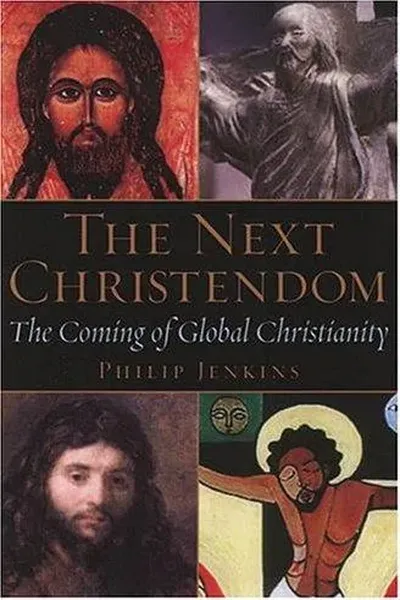
Philip Jenkins' 2016 analysis, The Next Christendom, offers a compelling, if at times stark, projection of Christianity's future. He moves the conversation away from Western decline to an assertive demographic expansion in the Global South, a point he drives home with relentless statistical evidence. A particular strength lies in his meticulous cataloging of growth rates in regions like sub-Saharan Africa and parts of Asia, demonstrating how these areas are becoming the new heartlands of the faith. However, the book's focus on numbers occasionally overshadows the nuanced theological or cultural adaptations occurring within these burgeoning Christian communities. Jenkins' discussion on the potential for increased religious conflict or syncretism, while important, feels less developed than his demographic forecasts. The work's ultimate value is in its clear, data-backed argument that the future of Christianity is not in its historical European centers but in its rapidly expanding global peripheries.
📝 Description
72
Philip Jenkins' 2016 book forecasts a dramatic shift in Christianity's global center of gravity.
Published in 2016, Philip Jenkins' The Next Christendom analyzes the changing demographics of global Christianity. It moves past theological discussions to present a data-driven view of religious trends, specifically noting Christianity's growth in the Global South. The book examines statistics, migration patterns, and cultural adjustments to predict the future of Christian populations and their impact.
Jenkins' work counters narratives of widespread religious decline by highlighting the significant growth occurring in Africa, Asia, and Latin America. His research builds on extensive demographic studies and engages with earlier analyses of this southward shift. The book is aimed at scholars in religion, sociology, and demography, as well as policymakers and general readers interested in global religious changes and their geopolitical consequences.
While not overtly mystical, The Next Christendom engages with the esoteric by analyzing shifts in belief systems and their societal impact on a global scale. It examines how religious practices adapt and transform in new cultural contexts, mirroring an esoteric interest in the evolution of spiritual expression beyond traditional Western frameworks. The book's focus on the "Southernization" of Christianity can be seen as an exploration of how core tenets are reinterpreted and manifest in diverse, non-Western settings, a process akin to the unfolding of hidden or less apparent spiritual currents.
💡 Why Read This Book?
• Understand the specific demographic drivers, such as birth rates and conversion patterns in sub-Saharan Africa during the late 20th and early 21st centuries, that are reshaping global Christianity. • Grasp the concept of "Southernization" as presented by Jenkins, learning how Christian practices and institutions are adapting to new cultural contexts beyond their Western origins. • Gain insight into the geopolitical implications of Christianity's shifting centers, as detailed in the book's analysis of how religious demographics might influence international relations in the coming decades.
⭐ Reader Reviews
Honest opinions from readers who have explored this book.
❓ Frequently Asked Questions
What year was Philip Jenkins' The Next Christendom first published?
The Next Christendom by Philip Jenkins was first published in 2016. This publication date is significant as it captures a period of increasing awareness regarding global religious demographic shifts.
Which regions does Jenkins identify as the future centers of Christianity?
Jenkins identifies the Global South, particularly Africa, Asia, and Latin America, as the future demographic centers of Christianity. He highlights rapid growth in these regions throughout the late 20th and early 21st centuries.
What is the 'Southernization' of Christianity as discussed in the book?
'Southernization' refers to the shift of Christianity's demographic and cultural center from the Global North (Europe and North America) to the Global South. This involves new expressions and adaptations of the faith.
Does The Next Christendom predict the end of Christianity in the West?
No, the book does not predict the end of Christianity in the West but rather emphasizes its relative decline in influence and numbers compared to the explosive growth occurring in the Global South. It focuses on demographic shifts.
What kind of data does Jenkins use to support his arguments?
Jenkins relies heavily on demographic data, statistical projections, and analyses of birth rates, migration patterns, and conversion trends from various research centers and governmental bodies.
Who is the intended audience for The Next Christendom?
The book is aimed at academics, policymakers, and general readers interested in the sociology of religion, global demographics, and the future of religious influence worldwide.
🔮 Key Themes & Symbolism
Global Demographic Shift
The central theme is the profound demographic relocation of Christianity's active centers. Jenkins meticulously details how, from the late 20th century onward, the faith's growth has dramatically shifted from its traditional European and North American strongholds to the Global South. This isn't merely about numbers; it signifies a reshaping of Christian identity, practice, and influence on a global scale. The book uses statistical data to illustrate this transition, moving beyond anecdotal evidence to present a data-driven forecast of where Christianity's vitality will reside in the coming decades.
The 'Southernization' of Faith
Jenkins coins or popularizes the term 'Southernization' to describe the process by which Christianity is becoming increasingly concentrated in Africa, Asia, and Latin America. This theme explores not just where Christians live, but how the faith is being reinterpreted and expressed in these new cultural contexts. It examines how local traditions, indigenous beliefs, and socio-political conditions interact with Christian doctrines, leading to diverse and often syncretic forms of worship and community that diverge significantly from Western expressions.
Christianity and Geopolitics
The book posits that the demographic shift in Christianity has significant geopolitical ramifications. As Christianity becomes more dominant in regions with different political and economic trajectories than the West, its global influence will inevitably change. Jenkins explores how this growing Christian population in the Global South might impact international relations, interfaith dialogues, and the very definition of "Christian" foreign policy. The work suggests that future global religious dynamics will be shaped by these emergent Christian majorities.
Adaptation and Resilience
A crucial aspect of The Next Christendom is its examination of Christianity's capacity for adaptation and resilience. The book illustrates how the faith survives and thrives by shedding its Western cultural baggage and embracing local customs and languages. This theme highlights the dynamic nature of religious traditions, demonstrating that growth often stems from flexibility and the ability to resonate with diverse populations facing unique challenges, from poverty to political instability.
💬 Memorable Quotes
Direct passages from the work, attributed to the author.
“The center of gravity of Christianity is shifting southwards.”
— This concise statement captures the book's core thesis: that the historical dominance of Christianity in Europe and North America is waning, replaced by rapid expansion and increasing influence in Africa, Asia, and Latin America.
“Christianity is becoming a majority religion in many parts of the world where it was once a minority.”
— This observation highlights the dramatic demographic success of Christian evangelism and growth in regions previously considered largely non-Christian, underscoring the scale of the 'Southernization' phenomenon.
“Future conflicts may well be shaped by the expanding Christian populations of the Global South.”
— This suggests that the growing demographic weight of Christianity in non-Western regions could lead to new geopolitical alignments and potential religious tensions on a global scale, moving beyond historical Western-centric conflicts.
“The Christianity of the future will look very different from the Christianity of the past.”
— This points to the evolving nature of the faith, emphasizing that the burgeoning Christian communities in the Global South are developing unique cultural expressions, theological interpretations, and social practices that distinguish them from older Western traditions.
“Demographic trends are a powerful, often underestimated, force in shaping religious landscapes.”
— This statement underscores Jenkins' methodology, emphasizing that understanding the future of religion requires a rigorous examination of population statistics, birth rates, and migration patterns, rather than solely focusing on theological or ideological shifts.
🌙 Esoteric Significance
Tradition
While not strictly an esoteric text in the vein of Hermeticism or Kabbalah, The Next Christendom engages with the 'esoteric' implications of religious demographics. It operates within the tradition of sociological and historical analysis of religion, but its focus on the 'hidden' growth and future dominance of Christianity in the Global South offers a profound shift in understanding religious power structures. It implicitly challenges the Western esoteric traditions' often self-contained narratives by demonstrating how global, mass religious movements can eclipse niche spiritual pursuits in terms of societal impact.
Symbolism
The book's primary 'symbol' is the demographic chart itself, representing the unseen forces of population growth and migration shaping the future of a major world religion. The "South" as a geographical entity becomes a potent symbol of emergent spiritual power, moving away from historical centers of Christian authority. The concept of "born-again" Christianity, particularly its spread in Africa, can be seen as a symbol of spiritual renewal and adaptation, representing a re-energization of faith divorced from Western cultural accretions.
Modern Relevance
Contemporary thinkers and practitioners in fields like global studies, comparative religion, and even political theology frequently draw upon Jenkins' demographic projections. His work is foundational for understanding the rise of Pentecostalism and other charismatic movements in Africa and Latin America, which have significant social and political implications. Scholars examining religious conflict and cooperation in the 21st century often cite his work to contextualize the growing influence of non-Western Christian populations in global affairs and interfaith dialogues.
👥 Who Should Read This Book
• Students of global religion and sociology: To understand the empirical evidence and analytical framework behind the dramatic demographic shifts in Christianity over the past century. • Policymakers and international relations analysts: To grasp how changing religious demographics in the Global South may reshape geopolitical landscapes and inter-state relations. • Inquisitive individuals concerned with the future of faith: To gain a data-informed perspective on the evolution of Christianity beyond traditional Western narratives and explore new centers of religious vitality.
📜 Historical Context
Philip Jenkins' The Next Christendom, published in 2016, arrived at a crucial juncture in the study of global religion. The early 21st century saw a growing awareness of secularization trends in the West, contrasted with the vibrant growth of Christianity in Africa, Asia, and Latin America. Jenkins' work built upon earlier demographic studies, such as those by the Pew Research Center, which had begun charting this southward shift. His analysis engaged with the ongoing debate about whether globalization was leading to a more secular world or merely a redistribution of religious adherence. While some scholars focused on religious decline in Europe, Jenkins foregrounded the exponential growth in the Global South, presenting a compelling counter-narrative. His research provided a data-driven framework that challenged Western-centric assumptions about the future of Christianity, influencing discussions among sociologists of religion and policymakers alike.
📔 Journal Prompts
The "Southernization" of Christianity's demographic center: how might this shift alter global spiritual discourse?
Reflect on the adaptation of Christian practices in regions like sub-Saharan Africa, as explored in the book's analysis.
Consider the geopolitical implications of Christianity's growing influence in the Global South, a key concept in the work.
Analyze the role of birth rates and migration in shaping religious landscapes, as detailed by Jenkins.
How might the "Christianity of the future" differ in expression from its historical Western forms?
🗂️ Glossary
Southernization of Christianity
The process by which the demographic and cultural center of global Christianity is shifting from the Global North (Europe, North America) to the Global South (Africa, Asia, Latin America).
Global South
A term used to refer to regions of Africa, Asia, and Latin America, often characterized by developing economies and historical ties to colonialism, now experiencing significant population growth and religious dynamism.
Demographic Shift
A significant change in the statistical characteristics of a population, such as birth rates, death rates, age distribution, and migration patterns, which influences societal structures and trends.
Secularization
The process by which religion loses social and cultural significance, or the decline in the influence of religious institutions and beliefs in public life.
Pentecostalism
A Protestant Christian movement emphasizing direct personal experience of God through baptism with the Holy Spirit, often characterized by ecstatic worship, divine healing, and prophecy. It has seen rapid growth in the Global South.
Syncretism
The combining of different beliefs, cultures, or schools of thought; in religion, it refers to the merging of distinct religious traditions or the incorporation of elements from one religion into another.
Born-again Christianity
A movement within Protestant Christianity emphasizing a personal conversion experience and commitment to Jesus Christ as savior. It is a significant factor in the growth of Christianity in many parts of the Global South.
🔮 Readers Also Liked
Browse all →









More by Philip Jenkins
All books →
More Free Spiritual Development Books
View all →