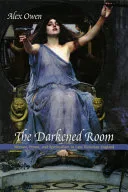
The Darkened Room
 75
75

The Darkened Room
Alex Owen's *The Darkened Room* offers a sharp, analytical lens on the Victorian Spiritualist movement, moving beyond hagiography to dissect the socio-cultural forces at play. Owen meticulously details how the movement, by positioning women as uniquely capable of communing with spirits, granted them a public platform and a form of authority previously inaccessible. The strength lies in its nuanced portrayal of how Spiritualism, while ostensibly empowering, also operated within and sometimes reinforced existing gendered expectations. A point of contention might be the relative underemphasis on the purely theological or philosophical underpinnings of Spiritualism in favor of its social ramifications. Owen’s exploration of the medium Florence Cook and her controversial association with the spirit 'Katie King' serves as a potent example of the era's complex blend of genuine belief, performative spirituality, and societal scrutiny. The work stands as a vital contribution to understanding Spiritualism not merely as a belief system, but as a significant social phenomenon.
📝 Description
75
Alex Owen's 2004 book examines the Victorian Spiritualist movement's golden age.
Published in 2004, Alex Owen's *The Darkened Room* critically examines the Victorian Spiritualist movement during its peak, roughly from the 1850s to the early 1900s. The book pays close attention to the significant part women played within Spiritualism, acting as mediums, healers, and active participants. Owen moves beyond simply listing prominent female spiritualists to analyze the wider social effects of their involvement. This work is relevant for students of Victorian social history, gender studies, and the history of occultism.
Readers interested in how religion, gender, and social shifts interacted in 19th-century Britain will find value here. The book also provides insight into the historical origins of modern spiritualism and its influence on women's autonomy. During the late Victorian era, Spiritualism, which claimed communication with the deceased was possible, saw a surge in popularity. This period coincided with industrialization, scientific progress, and a questioning of established religious beliefs. Spiritualism offered an alternative worldview, often suggesting women possessed a greater sensitivity to the spirit world.
The book situates itself within the study of Spiritualism, a movement that gained traction in the 19th century as a response to scientific materialism and traditional religious doubt. Spiritualism proposed that the living could communicate with spirits of the dead, often through mediums. This practice offered a spiritual framework that challenged established norms and provided a space for individuals, particularly women, to engage in public spiritual discourse and practice, distinct from conventional religious institutions.
💡 Why Read This Book?
• Understand the unique societal pressures and opportunities faced by women in Victorian Spiritualism, particularly regarding their perceived connection to the spirit world, as detailed in the chapter on Florence Cook. • Grasp how the Spiritualist movement of the 1860s provided a radical, albeit often circumscribed, avenue for female autonomy and public speaking roles. • Analyze the complex interplay between genuine spiritual experiences and the social performances of mediumship within the specific context of late 19th-century Britain.
⭐ Reader Reviews
Honest opinions from readers who have explored this book.
❓ Frequently Asked Questions
When was Alex Owen's *The Darkened Room* first published?
Alex Owen's *The Darkened Room* was first published on April 15, 2004, offering a modern scholarly perspective on the Victorian Spiritualist era.
What is the primary focus of *The Darkened Room*?
The book primarily examines the central role of women as mediums, healers, and believers during the golden age of Victorian Spiritualism, exploring its impact on gender relations.
Which historical period does *The Darkened Room* cover?
It covers the late Victorian era, a period of significant growth and public interest in Spiritualism, particularly from the 1850s through the early 1900s.
Who were some key figures or concepts discussed in *The Darkened Room*?
The work discusses the concept of female spiritual authority and examines figures like Florence Cook, highlighting their complex positions within the Spiritualist movement.
How does *The Darkened Room* contribute to the study of Spiritualism?
It provides an original study that analyzes Spiritualism not just as a belief system, but as a social phenomenon that offered women new forms of independence and agency.
What is the significance of the 'darkened room' in the context of the book?
The 'darkened room' symbolizes the liminal space where conventional societal boundaries were temporarily suspended, allowing for spiritual communion and challenging Victorian norms.
🔮 Key Themes & Symbolism
Female Spiritual Authority
Owen's work meticulously unpacks how the Victorian Spiritualist movement, particularly in the late 19th century, provided a unique platform for women to claim a form of spiritual authority. By positing women as inherently more sensitive to the spirit world, the movement allowed female mediums to occupy public roles, gain influence, and challenge patriarchal structures. The 'darkened room' became a symbolic stage where these women could exercise newfound agency, though often within the confines of prescribed feminine roles. This theme scrutinizes the dual nature of this empowerment, which both subverted and, at times, reinforced societal expectations of women.
Gender Relations in Spiritualism
Beyond simply cataloging female participants, *The Darkened Room* offers a profound analysis of the era's gender dynamics as reflected and shaped by Spiritualism. The popular belief that women were uniquely qualified to commune with the dead fundamentally altered the social landscape for many. Owen demonstrates how Spiritualist circles offered women opportunities for independence, intellectual engagement, and public expression largely unavailable elsewhere. This exploration examines how the movement negotiated the tensions between traditional Victorian domesticity and the emergent public roles adopted by mediums and believers.
Mediumship as Social Performance
The book examines the practice of mediumship not merely as a conduit for spirit communication but as a complex social performance within the late Victorian context. Owen investigates how the rituals and environments of Spiritualist séances, often conducted in 'darkened rooms,' served to heighten the perceived reality of the spiritual encounter. This theme probes the ways in which believers and mediums navigated the boundary between genuine spiritual experience and the theatrical elements inherent in demonstrating contact with the unseen, particularly concerning figures like Florence Cook.
Victorian Belief and Skepticism
Within the broader cultural milieu of the late 19th century, marked by both scientific progress and spiritual seeking, *The Darkened Room* highlights the pervasive nature of Spiritualist belief. Owen illustrates how the movement offered solace, answers, and a sense of connection in an era of profound social and intellectual change. Simultaneously, the work implicitly addresses the currents of skepticism and rational inquiry that coexisted, examining how Spiritualism was both embraced and contested by various factions of Victorian society, influencing its reception and practice.
💬 Memorable Quotes
Direct passages from the work, attributed to the author.
“Women were uniquely qualified to commune with spirits.”
— This statement captures the foundational belief within the Victorian Spiritualist movement that underpinned the empowerment of female mediums. It posits a spiritual superiority inherent in femininity, enabling women to access realms beyond ordinary human perception.
“The hugely popular spiritualist movement offered female mediums a new independence.”
— Owen highlights how the widespread appeal of Spiritualism created unprecedented opportunities for women. This independence stemmed from their recognized role as conduits to the spirit world, granting them public visibility and a degree of autonomy previously denied.
“Spiritualism offered potential to undermine conventional gender roles.”
— This points to the radical undercurrent within the Spiritualist movement. By placing women in positions of spiritual authority, it implicitly challenged the patriarchal norms that confined them to domestic spheres, suggesting a potential shift in societal power structures.
“The 'darkened room' facilitated spiritual communion.”
— This phrase refers to the specific setting of séances, where reduced light was believed to enhance the presence of spirits and the medium's abilities. It symbolizes a liminal space where the veil between the material and spiritual worlds thinned.
“The era's gender relations were significantly impacted by Spiritualism.”
— Owen emphasizes that the influence of Spiritualism extended beyond religious or spiritual spheres, fundamentally reshaping the social and interpersonal dynamics between men and women in Victorian society.
🌙 Esoteric Significance
Tradition
While not strictly adhering to a single established esoteric lineage like Hermeticism or Kabbalah, *The Darkened Room* engages with the broader currents of Western Esotericism, particularly its manifestation in 19th-century Spiritualism. Spiritualism itself emerged as a distinct spiritual path, often incorporating elements that resonated with Theosophical ideas about spiritual planes and communication with non-corporeal entities. Owen's work situates Spiritualism within this wider range of alternative spiritualities that flourished when traditional religious structures were being questioned.
Symbolism
The titular 'darkened room' functions as a potent symbol, representing a liminal space where the ordinary laws of reality are suspended, allowing for communication with the spirit world. It signifies a transition zone, a sacred or charged environment conducive to altered states of consciousness. Additionally, the concept of 'mediumship' itself symbolizes a bridge or a conduit, embodying the human capacity to transcend physical limitations and connect with unseen forces or intelligences, acting as an intermediary between distinct domains of existence.
Modern Relevance
Contemporary thinkers and practitioners in fields ranging from parapsychology to feminist spirituality continue to draw upon the historical analysis presented in *The Darkened Room*. The work remains relevant for understanding the roots of modern mediumistic practices and the ongoing discourse surrounding altered states of consciousness and non-material realities. It informs discussions on the historical agency of women in spiritual movements and provides a critical framework for examining the interplay between belief, performance, and social power in esoteric traditions.
👥 Who Should Read This Book
• Students of Victorian social history seeking to understand the impact of Spiritualism on gender roles and female autonomy in the 19th century. • Researchers of Western Esotericism and alternative spiritual movements interested in the historical development and social dynamics of Spiritualism. • Individuals exploring the intersection of religion, gender, and psychology, particularly concerning phenomena like mediumship and altered states of consciousness.
📜 Historical Context
The late Victorian era, spanning roughly from the 1850s to the early 1900s, was a fertile ground for movements like Spiritualism. This period was marked by rapid industrialization, scientific advancements challenging traditional religious dogma, and a widespread fascination with the unseen and the afterlife. Competing schools of thought included established Christianity, scientific materialism, and nascent Theosophy, all grappling with similar questions of existence and consciousness. Spiritualism, with its emphasis on empirical (albeit unconventional) evidence of spirit communication, offered a compelling alternative. Alex Owen's work, first published in 2004, revisits this phenomenon, focusing on the crucial role of women. While figures like Helena Blavatsky were gaining prominence in Theosophy, Owen centers on the more domestic yet publicly impactful sphere of female mediumship. The reception of Spiritualism was varied, often oscillating between fervent belief and intense skepticism, leading to public debates and exposures of fraudulent mediums, but its sheer popularity ensured its significance.
📔 Journal Prompts
The societal position of female mediums in the 1860s.
The symbolic meaning of the 'darkened room' for Victorian spiritualists.
How Spiritualism offered agency to women during the late 19th century.
The performance aspects of mediumship as explored by Alex Owen.
The influence of Spiritualism on Victorian gender relations.
🗂️ Glossary
Spiritualism
A religious movement originating in the mid-19th century, characterized by the belief that the spirits of the dead can communicate with the living, often through a medium.
Medium
An individual believed to be able to communicate with spirits, acting as an intermediary between the physical world and the spiritual realm, particularly during séances.
Séance
A meeting or gathering where spiritualists attempt to make contact with the spirits of the dead, typically conducted in a darkened room with a medium present.
Victorian Era
The period of Queen Victoria's reign in the United Kingdom, from 1837 to 1901, known for significant social, industrial, and cultural changes.
Female Spiritual Authority
The influence and power derived by women through their roles as mediums and spiritual leaders within the Spiritualist movement, challenging traditional patriarchal structures.
Gender Relations
The social and cultural interactions, power dynamics, and expectations between men and women within a specific historical context, as examined through the lens of Spiritualism.
Liminal Space
A transitional or in-between state or place, such as the 'darkened room,' where conventional boundaries and norms are suspended, facilitating altered experiences.