Chakras and their archetypes

 78
78

Chakras and their archetypes
Ambika Wauters' "Chakras and their Archetypes" attempts a commendable synthesis, linking the Indian chakra system to Western psychological archetypes. The strength lies in its systematic approach, attempting to provide a coherent mythology for each energy center. However, the execution sometimes feels more like an academic cataloging than a living exploration. For instance, the discussion of the "Throat Archetype" is thorough but lacks a certain visceral connection one might expect from the topic. While the book offers a solid framework, it occasionally struggles to breathe life into the archetypal descriptions, leaving the reader with a detailed map but not always the intuitive understanding that the subject demands. It is a valuable reference for those building a comparative model of esoteric psychology.
📝 Description
78
Ambika Wauters' 1997 book maps the seven primary chakras to specific archetypes and mythologies.
Published in 1997, Ambika Wauters' "Chakras and their Archetypes" examines the human energy centers within esoteric traditions. The book moves past simple explanations to investigate the archetypal forces and mythological narratives tied to each chakra. Wauters presents these centers not just as points of light, but as complex psycho-spiritual matrices that influence consciousness and behavior.
This work is for serious students of esoteric psychology, comparative mythology, and alternative healing. Readers wanting to grasp the archetypal dimensions of the chakra system, beyond basic descriptions, will find substantial content. It is especially useful for those interested in how ancient symbolic systems inform modern psychological frameworks.
Emerging in the late 20th century, a time of increased interest in integrating Eastern philosophies with Western thought, "Chakras and their Archetypes" follows a tradition of chakra literature that gained traction in the West. This lineage includes figures like Helena Blavatsky and C.W. Leadbeater. Wauters' contribution emphasizes a more psychological and archetypal interpretation, differing from earlier, more physiologically or occult-focused texts.
💡 Why Read This Book?
• Understand the specific archetypal forces, such as the "Root Archetype" or "Crown Archetype," that Wauters links to each of the seven primary chakras, providing a richer psychological dimension. • Gain insight into the mythological narratives and deities associated with each chakra, as explored in the book's detailed mapping of these energy centers. • Discover how the interconnectedness of these archetypes, a core concept in Wauters' work, influences personal development and consciousness, offering a unique perspective on esoteric psychology.
⭐ Reader Reviews
Honest opinions from readers who have explored this book.
❓ Frequently Asked Questions
When was Ambika Wauters' 'Chakras and their Archetypes' first published?
Ambika Wauters' 'Chakras and their Archetypes' was first published in 1997, contributing to the growing body of literature that integrated Eastern esoteric concepts with Western psychological frameworks during that era.
What is the primary focus of 'Chakras and their Archetypes'?
The book's primary focus is on exploring the seven primary chakras not just as energy points, but as complex archetypal matrices that influence consciousness, behavior, and are linked to specific mythological narratives.
Does the book discuss specific deities in relation to chakras?
Yes, the book connects specific archetypal forces and mythological figures to each chakra, offering a deeper, culturally informed understanding of their symbolic significance.
Is this book suitable for beginners in chakra studies?
While informative, the book's depth in archetypal psychology and comparative mythology might be more suited for those with some foundational knowledge of the chakra system.
What distinguishes Wauters' approach to chakras?
Wauters distinguishes her approach by emphasizing the archetypal and psychological dimensions, moving beyond simpler physiological or purely energetic interpretations prevalent in earlier literature.
What are some key archetypes discussed in the book?
Key archetypes explored include those associated with survival (Root Chakra), creativity (Sacral Chakra), power (Solar Plexus Chakra), love (Heart Chakra), expression (Throat Chakra), intuition (Third Eye Chakra), and spiritual connection (Crown Chakra).
🔮 Key Themes & Symbolism
Archetypal Psychology of Chakras
Wauters presents the chakras as profound psychological and mythological constructs. Each energy center is mapped to specific archetypal patterns, drawing parallels with universal human experiences and symbolic narratives. This framework moves beyond a purely energetic or physiological model, suggesting that understanding these archetypes—such as the Root Archetype of grounding or the Crown Archetype of transcendence—offers a path to self-awareness and integration.
Mythological Correspondences
A significant aspect of the book is its exploration of mythological correspondences for each chakra. Wauters links the energy centers to deities, symbols, and stories from various traditions, illustrating how these archetypal themes are expressed across different cultures. This approach provides a rich symbolic language for understanding the functions and challenges associated with each chakra, enriching the reader's comprehension of their energetic and psychological significance.
Integration and Personal Development
The work emphasizes the potential for personal growth and integration through understanding the chakra system and its associated archetypes. By recognizing how these energy centers and their patterns manifest in one's life, individuals can work towards balance and wholeness. The book suggests that conscious engagement with these archetypal forces is key to reading through the complexities of human consciousness and spiritual evolution.
Comparative Esoteric Framework
Wauters positions her work within a comparative esoteric framework, seeking to bridge Eastern chakra traditions with Western psychological and mythological concepts. This offers a unique perspective for practitioners and scholars interested in the cross-pollination of ideas in esoteric studies. The book provides a structured way to view these interconnected systems, fostering a more holistic understanding of human potential.
💬 Memorable Quotes
Direct passages from the work, attributed to the author.
“Each chakra represents a distinct developmental stage and a unique set of archetypal forces.”
— This interpretation highlights Wauters' core thesis: that chakras are not static points but dynamic stages of psycho-spiritual development, each governed by specific, universal archetypal energies.
“Mythology provides a symbolic language to understand the complex functions of the chakras.”
— This statement underscores the book's methodology, suggesting that ancient stories and deities offer a framework for comprehending the deeper psychological and spiritual roles of each energy center.
“The Crown Archetype is associated with spiritual awakening and universal consciousness.”
— This concept illustrates the pinnacle of the chakra system's energetic potential, linking the Crown Chakra to the ultimate aims of spiritual seeking and expanded awareness.
“Understanding the interplay between chakras fosters greater self-awareness and integration.”
— This reflects the practical application of Wauters' work, proposing that a holistic view of the chakra system leads to deeper personal insight and a more unified sense of self.
💡 Key Ideas
Editorial paraphrase of the work's core concepts — not direct quotes.
The Root Archetype governs our sense of security and connection to the material world.
This paraphrased concept emphasizes the foundational role of the Root Chakra, linking it directly to fundamental needs for safety, belonging, and grounding in physical reality.
🌙 Esoteric Significance
Tradition
Wauters' work fits within the broad tradition of esoteric psychology and comparative mythology, which seeks to find universal patterns in spiritual and psychological systems across cultures. While rooted in the Indian chakra system, its emphasis on archetypes aligns it with Western esoteric thought influenced by Jungian psychology. It departs from purely devotional or purely physical interpretations by framing chakras as psycho-spiritual matrices, offering a bridge between Eastern yogic philosophy and Western depth psychology.
Symbolism
The book prominently features the symbolism of the seven primary chakras, each representing distinct stages of human development and consciousness. For example, the Root Chakra (Muladhara) symbolizes grounding, survival, and material security, often depicted with the color red and associated with elemental earth. Conversely, the Crown Chakra (Sahasrara) symbolizes spiritual connection, enlightenment, and unity, frequently represented by the color violet or white and the thousand-petaled lotus, signifying transcendence and universal consciousness.
Modern Relevance
Contemporary thinkers and practitioners in fields like transpersonal psychology, somatic experiencing, and modern occultism continue to draw upon Wauters' archetypal framework. Her systematic approach to mapping mythological narratives onto the chakra system provides a valuable reference for those seeking to understand the energetic and psychological underpinnings of human experience in a cross-cultural context. The book remains a key text for those exploring the intersection of ancient wisdom traditions and contemporary psychological theory.
👥 Who Should Read This Book
• Students of comparative mythology and esoteric psychology seeking to understand the archetypal forces behind the chakra system. • Practitioners of yoga and energy work who wish to deepen their theoretical understanding beyond basic energetic principles. • Researchers in spiritual traditions interested in the integration of Eastern concepts with Western psychological models like Jungian archetypes.
📜 Historical Context
Published in 1997, Ambika Wauters' "Chakras and their Archetypes" arrived during a resurgence of interest in holistic health and esoteric studies, a period influenced by the New Age movement and a growing desire to synthesize Eastern spiritual concepts with Western psychological understanding. The late 20th century saw numerous authors exploring the chakra system, often building upon foundational texts from figures like C.W. Leadbeater or expanding on yogic traditions. Wauters' work distinguished itself by focusing on the archetypal dimensions, drawing parallels with Carl Jung's analytical psychology. While many contemporaries focused on therapeutic applications or energetic healing, Wauters aimed for a more structured, comparative mythological and psychological interpretation. The book contributed to a scholarly yet accessible approach to these ancient concepts, positioning itself as a significant contribution to the comparative esoteric literature of its time, distinct from the more purely devotional or purely physiological texts that preceded it.
📔 Journal Prompts
The Root Archetype's influence on your sense of security.
Mythological narratives associated with the Sacral Chakra's creative forces.
The interplay between the Heart Archetype and your relationships.
Archetypal challenges of the Throat Chakra in self-expression.
Your personal connection to the Crown Archetype's symbolism.
🗂️ Glossary
Chakra
From Sanskrit, meaning 'wheel' or 'disc'. In esoteric traditions, chakras are understood as energy centers within the subtle body, influencing physical, emotional, and spiritual well-being.
Archetype
A universal, inherited pattern of thought or imagery derived from the experience of the species, as proposed by Carl Jung. In this context, archetypes are fundamental patterns associated with each chakra.
Root Archetype
The archetypal pattern associated with the Root Chakra (Muladhara), governing fundamental needs for security, grounding, survival, and connection to the material world.
Crown Archetype
The archetypal pattern associated with the Crown Chakra (Sahasrara), representing spiritual transcendence, universal consciousness, and connection to the divine.
Subtle Body
An esoteric concept referring to a non-physical dimension of the body, composed of energy centers (chakras), channels (nadis), and vital force (prana).
Mythological Correspondences
The association of specific deities, symbols, or narratives from various mythologies with the functions and energies of the chakra system.
Psycho-spiritual Matrix
A concept suggesting that each chakra functions as a complex interplay of psychological patterns and spiritual energies influencing consciousness and behavior.
🔮 Readers Also Liked
Browse all →









More by Ambika Wauters
All books →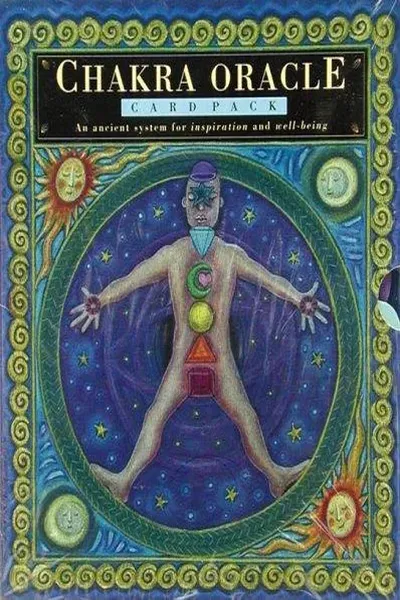





More Free Spiritual Development Books
View all →