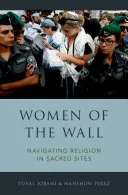
Women of the Wall
 80
80

Women of the Wall
Yuval Jobani and Nahshon Perez's "Women of the Wall" offers a rigorously researched account of a critical religious and feminist struggle. The authors succeed in contextualizing the movement's fight at the Western Wall within broader global patterns of religion-state conflict and evolving gender norms. One particularly illuminating section details the legal arguments and counter-arguments presented before Israeli courts, highlighting the intricate interplay of halakha (Jewish law) and secular jurisprudence. A limitation, however, is the occasional density of theoretical frameworks, which at times may obscure the lived experiences of the activists themselves. Despite this, the book provides essential background for understanding the ongoing tensions surrounding religious expression at this globally significant site. It stands as a vital academic contribution to the study of contemporary Judaism and religious activism.
📝 Description
80
### What It Is Women of the Wall are not merely a contemporary religious movement; they represent a pivotal moment in the ongoing discourse between tradition and modernity within Judaism. This academic study meticulously chronicles their persistent advocacy for egalitarian prayer practices at the Western Wall, Judaism's most sacred site. The book examines the legal, social, and theological dimensions of this struggle, tracing its evolution and impact on Israeli society and religious law. It provides a comprehensive historical and analytical framework for understanding the group's objectives and the challenges they face.
### Who It's For This work is essential for scholars of religion, sociology, and Jewish studies, offering a detailed case study of religious activism and gender politics. It will also interest legal professionals and policymakers examining religion-state relations and the interpretation of religious freedom. Readers concerned with social justice movements, particularly those involving religious minorities or challenging established patriarchal structures, will find significant relevance. The text assumes a familiarity with academic discourse but remains accessible to dedicated lay readers interested in the complexities of religious reform.
### Historical Context The narrative unfolds against the backdrop of the Israeli-Palestinian conflict and the internal religious politics of Israel, where Orthodox interpretations of Jewish law often hold sway. The establishment of the Women of the Wall in 1988 by Rabbi Bradley Shavit and others marked a direct challenge to the status quo at the Western Wall. The book situates this activism within broader global trends of feminist theology and the re-examination of gender roles in monotheistic religions, drawing parallels with similar struggles in other faith traditions.
### Key Concepts The study dissects concepts such as religious pluralism, the separation of church and state (or its absence in Israel), and the politics of sacred space. It explores the differing interpretations of Jewish law concerning women's prayer and public ritual, and the legal battles waged by Women of the Wall to secure their right to pray with tallit, tefillin, and Torah scrolls. The work also engages with theoretical frameworks of social movements and the dynamics of institutional resistance to change.
💡 Why Read This Book?
• Gain a nuanced understanding of the legal battles and theological debates surrounding women's prayer at the Western Wall, as detailed in the analysis of court proceedings. • Explore the socio-political landscape of Israel since 1988, understanding how the Women of the Wall movement interacts with and challenges established religious authorities. • Analyze the theoretical underpinnings of religious pluralism and social movements, drawing connections between the Women of the Wall and similar global struggles for religious rights.
⭐ Reader Reviews
Honest opinions from readers who have explored this book.
❓ Frequently Asked Questions
When was the Women of the Wall movement founded?
The Women of the Wall movement was founded in 1988 by a group of women seeking to pray aloud and wear religious garments at the Western Wall.
What is the primary goal of the Women of the Wall?
Their primary goal is to achieve the right for women to pray at the Western Wall according to their customs, including wearing a tallit and tefillin, and reading from the Torah.
What is the significance of the Western Wall?
The Western Wall, or Kotel, is the holiest prayer site in Judaism, a remnant of the ancient Temple Mount in Jerusalem.
Does this book discuss the Israeli legal system's response to the Women of the Wall?
Yes, the book provides a comprehensive academic study that places the struggle in a comparative and theoretical context, including the legal challenges and responses from Israeli authorities.
Who are the authors of "Women of the Wall"?
The book is authored by Yuval Jobani and Nahshon Perez.
What academic disciplines does this book engage with?
The book engages with religious studies, sociology, gender studies, and law, offering an interdisciplinary perspective on the movement.
🔮 Key Themes & Symbolism
Gender and Jewish Law
The work meticulously examines the tension between traditional interpretations of Halakha, which often restrict women's public religious roles, and the feminist imperative for equality. It details how Women of the Wall challenge these interpretations by asserting their right to perform rituals traditionally reserved for men, such as wearing tefillin and leading prayer services at the Western Wall. The book explores the theological arguments used to justify and contest these practices, highlighting the evolving nature of religious observance in the face of social change.
Religion-State Relations in Israel
This theme focuses on the complex legal and political landscape of Israel, where religious authorities wield significant power. The book analyzes how the Women of the Wall's activism intersects with state institutions, including the courts and the Ministry of Religious Services. It investigates the legal frameworks governing prayer at the Western Wall and the political obstacles faced by the movement, illustrating the challenges of navigating a society where religious pluralism is often contested and state-sanctioned religious practice is predominantly Orthodox.
Social Movements and Activism
The study frames the Women of the Wall as a significant social movement, analyzing its strategies, organizational structure, and impact on public discourse. It draws on theories of social movement formation and dynamics to understand how the group mobilizes support, confronts opposition, and seeks to effect change within religious and political spheres. The book highlights the role of public protest, legal advocacy, and media engagement in advancing the movement's agenda for religious equality.
Sacred Space and Contested Territories
This theme explores the symbolic and practical significance of the Western Wall as a contested sacred space. The book examines how different groups perceive and interact with this site, and how the struggle over prayer practices reflects broader debates about identity, belonging, and control. It delves into the historical and religious narratives associated with the Wall, and how these narratives are invoked in contemporary conflicts over its use and accessibility.
💬 Memorable Quotes
“The Western Wall is a site of prayer, not a museum of tradition.”
— This statement, reflecting the core of the movement's argument, suggests that the sacred space should accommodate contemporary expressions of faith, rather than being rigidly bound by past interpretations that exclude certain groups.
“Our prayer is not meant to desecrate, but to sanctify.”
— This highlights the activists' intention to enhance, rather than diminish, the spiritual significance of the Western Wall through inclusive prayer practices, countering accusations of heresy.
“The struggle for prayer rights is inseparable from the struggle for women's full personhood within Judaism.”
— This interpretation underscores that the fight for religious expression is intrinsically linked to the broader quest for gender equality and recognition within the Jewish community.
“Halakha must adapt to the lived realities of Jewish women today.”
— This concept suggests that religious law should not be static but should evolve to reflect contemporary societal understanding and the experiences of its adherents, particularly women.
“The state's role in religious affairs at the Wall is a primary point of contention.”
— This points to the central conflict involving governmental authority and religious law, and how state intervention shapes the possibilities for egalitarian prayer at the sacred site.
🌙 Esoteric Significance
Tradition
While not strictly an esoteric text in the Hermetic or Kabbalistic sense, "Women of the Wall" engages with the esoteric dimensions of religious practice through its focus on ritual, sacred space, and the interpretation of ancient texts. It touches upon the Kabbalistic concept of the Shekhinah (Divine Presence) and its relationship to feminine divinity, often invoked in discussions of women's spiritual authority. The work can be seen as exploring the 'practical Kabbalah' of social and religious change, seeking to rebalance established power structures within a sacred tradition.
Symbolism
The primary symbol is the Western Wall itself, representing a tangible link to the ancient past and a focal point for national and religious identity. The tallit (prayer shawl) and tefillin (phylacteries) are potent symbols of traditional male religious observance that the women seek to adopt, thereby challenging the gendered exclusivity of these symbols. The act of women praying aloud and reading from the Torah at the Wall symbolizes a reclaiming of spiritual voice and communal leadership.
Modern Relevance
Contemporary thinkers and movements focused on gender equality within religious frameworks, particularly within Judaism, draw heavily on the precedents set by the Women of the Wall. Scholars examining post-Orthodox Judaism, feminist theology, and the politics of religious sites find this case study invaluable. Activists in other faith traditions facing similar challenges in reinterpreting religious law for modern adherents also reference the strategies and outcomes discussed in this work.
👥 Who Should Read This Book
• Scholars of Religion and Sociology: Those studying religious movements, gender studies, and the sociology of religion will find a detailed case study of institutional challenge and religious reform. • Jewish Studies Enthusiasts: Individuals interested in contemporary Jewish life, Israeli society, and the evolving landscape of Jewish law and practice will gain critical insights. • Activists and Policy Makers: Readers involved in social justice, religious freedom advocacy, or those working on religion-state relations will benefit from the analysis of legal and political strategies.
📜 Historical Context
Published in 2017, "Women of the Wall" emerged during a period of heightened tension regarding religious pluralism in Israel. The movement itself began in 1988, challenging decades of Orthodox control over prayer at the Western Wall. The intellectual currents of the time were marked by increasing global feminist theological engagement and a critical re-examination of patriarchal structures within monotheistic religions. This book arrived as scholars like Rabbi Bradley Shavit were actively debating the interpretation of Jewish law (Halakha) concerning women's public ritual. The reception of the movement has been polarized, with strong opposition from established religious bodies and support from secular and liberal Jewish organizations. Unlike exclusive focus on legal minutiae, this work situates the struggle within broader religion-state conflicts, engaging with comparative religious sociology.
📔 Journal Prompts
The concept of "contested sacred space" as applied to the Western Wall.
The symbolic significance of the tallit and tefillin for the Women of the Wall.
The tension between Halakha and women's lived experiences in contemporary Judaism.
Comparing the Women of the Wall movement to other religious-secular conflicts in Israel.
The role of legal battles in enacting religious change.
🗂️ Glossary
Western Wall (Kotel)
The retaining wall of the Temple Mount in Jerusalem, considered the holiest accessible site for Jewish prayer.
Halakha
The collective body of religious laws derived from the Written and Oral Torah, interpreted by rabbinic authorities, governing Jewish life.
Tallit
A Jewish prayer shawl, traditionally worn by men during morning prayers, often adorned with fringes (tzitzit).
Tefillin
Small leather boxes containing parchment scrolls of biblical verses, worn by observant Jewish men on the head and arm during weekday morning prayers.
Religious Pluralism
The acceptance and coexistence of diverse religious beliefs and practices within a society, often involving state recognition and rights for minority faiths.
Religion-State Relations
The interaction and often tension between religious institutions and governmental bodies, particularly concerning law, policy, and public life.
Feminist Theology
A movement within theology that re-examines traditional religious doctrines, texts, and practices from a feminist perspective, often seeking to challenge patriarchal interpretations and elevate the status of women.








![The Byrhtferth's Manuscript (MS 17) † Saint John’s College † Oxford † [1111]](/img/thumb/the-byrhtferth-s-manuscript-ms-17-saint-john-s-college-oxford-1111-the-monk-byrhtferth.webp)