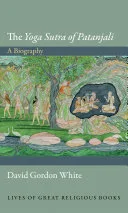
The Yoga Sutra of Patanjali
 71
71

The Yoga Sutra of Patanjali
David Gordon White's examination of the Yoga Sutra of Patanjali offers a much-needed corrective to the often uncritical veneration of this ancient text. White astutely points out that the Sutra was not continuously revered or widely practiced for centuries in India, a stark contrast to its modern standing. His argument is compelling, particularly his assertion that the text's current status as a perennial guide to yoga practice is a relatively recent development, largely influenced by Western appropriations. A notable strength is White's detailed tracing of the Sutra's textual history and its reception across different eras. However, the dense academic prose might prove challenging for readers unfamiliar with Sanskrit philosophical terminology. The discussion around the concept of *citta vritti nirodhah* (the cessation of the fluctuations of the mind) effectively illustrates the gap between ancient intent and modern interpretation. Ultimately, White's work serves as an essential scholarly counterpoint for anyone deeply invested in the origins and evolution of yoga philosophy.
📝 Description
71
### What It Is David Gordon White's 2014 study re-examines Patanjali's Yoga Sutra, a text often misunderstood in its historical and philosophical context. Contrary to popular belief, the Sutra was not a continuous guide for yogic practice but rather a compilation that experienced periods of obscurity in India. White challenges the notion of its immediate and widespread acceptance, presenting evidence that its veneration as a foundational yoga text is a more recent phenomenon.
### Who It's For This work is for serious students of yoga, comparative religion, and ancient Indian philosophy who are interested in textual criticism and historical accuracy. It appeals to those who question established narratives and seek a deeper understanding of how texts acquire authority over time. Readers will find value in White's rigorous scholarship, which aims to strip away layers of interpretation to reveal the Sutra's complex textual history.
### Historical Context The Yoga Sutra, attributed to Patanjali, likely coalesced around the 4th or 5th century CE. Its rediscovery and reinterpretation in the modern era, particularly through Western engagement, often divorces it from its original Indic philosophical milieu. White situates the text within the broader landscape of Indian ascetic traditions and debates, noting its relative neglect in certain periods and regions. The work highlights how modern yoga enthusiasts often overlook its original philosophical underpinnings and the centuries of varied reception.
### Key Concepts White's analysis scrutinizes the concept of 'yoga' as presented in the Sutra, distinguishing it from contemporary interpretations. He explores the textual evolution of the work, the various commentaries (like Vyasa's), and the ways in which the Sutra was understood and utilized by different schools of thought in ancient and medieval India. The study emphasizes the Sutra's initial role as a philosophical treatise rather than a direct manual for physical postures or meditation.
💡 Why Read This Book?
• Gain a critical perspective on the Yoga Sutra's historical trajectory, understanding its reception in India and the West since its likely compilation around the 4th-5th century CE. • Learn how the modern yoga establishment's interpretation of Patanjali differs from its original philosophical context, challenging assumptions about its continuous use. • Discover the complex textual history and the varying influence of the Yoga Sutra across different Indian philosophical schools and ascetic traditions.
⭐ Reader Reviews
Honest opinions from readers who have explored this book.
❓ Frequently Asked Questions
When was the Yoga Sutra of Patanjali likely compiled?
Scholarly consensus places the compilation of Patanjali's Yoga Sutra around the 4th or 5th century CE, although its exact origin remains debated.
Was the Yoga Sutra always a central text for yoga practice in India?
No, David Gordon White's research indicates the Yoga Sutra experienced periods of relative obscurity and was not consistently a central text for yoga practice throughout Indian history.
What is the main argument of David Gordon White's study?
White argues that the Yoga Sutra's current status as a revered classic and guide to yoga practice is a modern construct, challenging assumptions about its historical ubiquity and continuous veneration.
What does 'citta vritti nirodhah' refer to in the Yoga Sutra?
This Sanskrit phrase, central to the Sutra, translates to the cessation of the fluctuations of the mind, a key concept in Patanjali's philosophical system.
How does White's book differ from typical yoga philosophy texts?
Unlike many popular interpretations, White's work is a critical academic study focusing on textual history, reception, and the philosophical context, rather than a direct guide to practice.
Who was Vyasa in relation to the Yoga Sutra?
Vyasa is credited with writing the earliest known commentary on the Yoga Sutra, providing significant early interpretation and context for Patanjali's verses.
🔮 Key Themes & Symbolism
Textual Obscurity and Resurgence
White meticulously traces the Yoga Sutra's journey from a text that experienced centuries of relative neglect in India to its modern status as a universally recognized yoga classic. This theme explores how a work can fall into disuse and then be resurrected, reinterpreted, and elevated to canonical status, often due to external influences and shifting cultural needs, particularly the Western engagement starting in the late 19th century.
Philosophical vs. Practical Yoga
A central argument posits that the Yoga Sutra was primarily a philosophical and metaphysical treatise, not a practical manual for physical postures or meditation as commonly understood today. White emphasizes its roots in classical Indian philosophy, distinguishing its original intent from the widespread, often superficial, application seen in contemporary yoga studios and wellness movements.
The Construction of Authority
This theme examines how texts acquire and maintain authority over time. White illustrates how the Yoga Sutra's current eminence is a product of historical reception, scholarly interpretation (including the commentary by Vyasa), and deliberate promotion, particularly in the 20th century. It questions the notion of inherent, unchanging authority versus historically constructed influence.
Comparative Indian Traditions
White situates the Yoga Sutra within the diverse landscape of Indian asceticism and philosophical systems, such as Samkhya. He highlights competing schools of thought and the Sutra's variable reception among them. Understanding its place in relation to other traditions offers a more nuanced view of its historical significance and intellectual context.
💬 Memorable Quotes
“Patanjali's Yoga Sutra is today extolled by the yoga establishment as a perennial classic and guide to yoga practice.”
— This statement sets up White's central thesis: the modern veneration of the Sutra is a recent phenomenon, challenging its long-held status and the assumptions surrounding its historical importance.
“Virtually forgotten in India for hundreds of years and maligned...”
— This highlights the stark contrast between the Sutra's historical reception in its homeland and its contemporary global renown, suggesting its current popularity is not indicative of continuous historical significance.
“As David Gordon White demonstrates in this groundbreaking study, both of these assumptions are incorrect.”
— This directly addresses the common beliefs about the Yoga Sutra's historical ubiquity and its role as a direct guide, signaling the critical and revisionist nature of White's scholarship.
“The work explores the concept of 'yoga' as presented in the Sutra, distinguishing it from contemporary interpretations.”
— This paraphrased concept underscores White's focus on textual accuracy and historical context, differentiating Patanjali's philosophical yoga from the diverse physical and spiritual practices often labeled 'yoga' today.
“The Sutra's initial role as a philosophical treatise rather than a direct manual for physical postures or meditation.”
— This interpretation emphasizes the core argument that the Yoga Sutra's primary function was intellectual and metaphysical, challenging the widespread modern view that it serves as a practical guide for asana and meditation.
🌙 Esoteric Significance
Tradition
While not strictly fitting into a single Western esoteric lineage like Hermeticism or Kabbalah, the Yoga Sutra is foundational to the Indic philosophical tradition of Yoga, which has profound metaphysical and contemplative dimensions. It offers a systematic framework for understanding consciousness, the nature of reality, and the path to liberation (*kaivalya*). Its influence extends to various contemplative and mystical practices that seek altered states of awareness and direct experiential knowledge of the divine or absolute.
Symbolism
Key symbols within the Yoga Sutra's philosophical framework include *Purusha* (pure consciousness, the Self) and *Prakriti* (primordial matter, nature). The concept of *citta vritti nirodhah* (cessation of mental fluctuations) represents the taming of the mind's inherent dynamism. The eight limbs of yoga (*ashtanga yoga*), culminating in *samadhi* (profound meditative absorption), symbolize a progressive path of purification and self-realization, moving from external discipline to internal transcendence.
Modern Relevance
Contemporary thinkers and practitioners in fields ranging from mindfulness-based stress reduction to integral psychology draw upon concepts from the Yoga Sutra. Modern Yoga scholars and serious practitioners seeking to understand the historical and philosophical underpinnings of their practice consult White's work to contextualize the Sutra. Its principles of mental discipline and self-awareness continue to inform various therapeutic and self-development modalities, bridging ancient Indic philosophy with contemporary concerns.
👥 Who Should Read This Book
• Students of comparative religion and ancient Indian philosophy: Gain a critical, historically informed perspective on a pivotal text often presented ahistorically. • Serious practitioners of yoga: Understand the philosophical origins and historical reception of the Yoga Sutra, moving beyond contemporary interpretations. • Academics and researchers in South Asian studies: Access a scholarly re-evaluation of the Sutra's textual history and its varying influence across different Indian schools of thought.
📜 Historical Context
The Yoga Sutra of Patanjali likely emerged around the 4th or 5th century CE, a period marked by vigorous philosophical debate and the codification of various ascetic traditions in India. It was influenced by, and in turn influenced, the Samkhya school of philosophy. However, its historical reception was far from monolithic. White highlights that for centuries, the Sutra was not a universally central or continuously studied text across India; it experienced periods of neglect and was often overshadowed by other philosophical works. Its modern resurgence and elevated status as a foundational text for yoga practice is largely a 20th-century phenomenon, significantly shaped by Western scholars and practitioners engaging with Indic traditions, often reinterpreting it through lenses distinct from its original context. For instance, figures like Swami Vivekananda played a crucial role in introducing yoga philosophy, including the Sutra, to the West.
📔 Journal Prompts
The historical reception of the Yoga Sutra, contrasting its periods of neglect with its modern prominence.
Patanjali's concept of *citta vritti nirodhah* and its distinction from modern mindfulness practices.
The role of commentaries, such as Vyasa's, in shaping the understanding and authority of the Yoga Sutra.
The relationship between the Yoga Sutra and the Samkhya philosophical system.
The impact of Western engagement on the Yoga Sutra's global status and interpretation.
🗂️ Glossary
Yoga Sutra
A foundational text of classical Indian Yoga philosophy, attributed to Patanjali, consisting of aphorisms (*sutras*) on the nature of mind and the path to liberation.
Patanjali
The sage traditionally credited with compiling the Yoga Sutra, likely around the 4th-5th century CE, though his historical existence is debated.
Citta Vritti Nirodhah
The core principle of Patanjali's Yoga, translating to 'the cessation of the modifications of the mind' or 'the restraint of the mental fluctuations'.
Vyasa
Author of the Yoga Bhashya, the earliest surviving commentary on the Yoga Sutra, providing essential context and interpretation.
Samkhya
An ancient Indian philosophical system that posits a dualistic reality of consciousness (*Purusha*) and matter (*Prakriti*), heavily influencing the Yoga Sutra.
Kaivalya
In Yoga philosophy, the ultimate state of liberation, independence, or absolute freedom, achieved through self-knowledge and detachment.
Ashtanga Yoga
The 'eight-limbed path' outlined in the Yoga Sutra, comprising Yama, Niyama, Asana, Pranayama, Pratyahara, Dharana, Dhyana, and Samadhi.