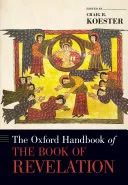
The Oxford Handbook of the Book of Revelation
 75
75

The Oxford Handbook of the Book of Revelation
Craig R. Koester’s *The Oxford Handbook of the Book of Revelation* arrives as a much-needed scholarly compilation. Its strength lies in the breadth of perspectives offered; thirty leading voices tackle Revelation from literary, historical, and theological angles, moving beyond singular, often sensationalist, readings. For instance, the discussions surrounding the Beast and its mark in Section IV offer nuanced historical context that debunks facile identifications with contemporary political figures. However, the sheer volume of essays, while comprehensive, can feel somewhat fragmented. While the work excels at surveying existing scholarship, it occasionally lacks a cohesive argumentative thread that might guide a reader through the intricate debates. The section on reception history is particularly illuminating, tracing the book's influence from early Christianity through to modern interpretations. Ultimately, this handbook functions as an indispensable, if dense, reference for serious academic engagement with Revelation.
📝 Description
75
### What It Is
The Oxford Handbook of the Book of Revelation, published in 2020 and edited by Craig R. Koester, presents a comprehensive academic survey of the final book of the Christian New Testament. It comprises thirty distinct essays contributed by an international assembly of scholars. These essays are organized into five thematic sections, aiming to provide readers with a structured understanding of the book's diverse scholarly interpretations and its historical significance. The volume serves as a reference point for understanding the major academic conversations surrounding this complex text.
### Who It's For
This handbook is designed for individuals engaged in serious study of biblical texts, theology, and religious history. Its audience includes graduate students, academics, clergy, and dedicated laypersons interested in the scholarly discourse on Revelation. Readers seeking a single-volume compendium that synthesizes current academic understanding, rather than devotional or prophetic interpretations, will find it particularly valuable. It is suited for those who appreciate rigorous textual analysis and historical contextualization.
### Historical Context
While this handbook focuses on contemporary scholarship, the Book of Revelation itself emerged from a specific historical milieu in the late first century CE, likely during the reign of Emperor Domitian. Its apocalyptic genre and symbolic language reflect the pressures and anxieties of early Christian communities facing persecution and seeking divine vindication. The book has since generated a vast interpretive history, ranging from early Christian exegesis to medieval mysticism, the Reformation, and modern dispensationalism, illustrating the enduring, often contentious, engagement with its prophecies.
### Key Concepts
The handbook addresses numerous core concepts within Revelation studies. These include the various literary features of the text, such as its epistolary framework and visionary sequences. It also explores the historical-critical approaches to understanding the book's origins and message, alongside theological interpretations that focus on its Christology and eschatology. The book examines the complex interplay of symbolism, prophecy, and the historical context of its intended audience, offering a multifaceted view of its meaning and impact.
💡 Why Read This Book?
• Gain detailed insight into the historical context of Revelation's composition, understanding its message within the Roman Empire of the late first century CE, a perspective highlighted in the section on Historical Context. • Explore the diverse symbolic language employed, such as the significance of the number 666 and the imagery of the New Jerusalem, as presented in the Key Concepts section. • Grasp the methodologies of contemporary biblical scholarship through the thirty essays, learning how academic disciplines approach apocalyptic literature, as demonstrated throughout the handbook.
⭐ Reader Reviews
Honest opinions from readers who have explored this book.
❓ Frequently Asked Questions
When was The Oxford Handbook of the Book of Revelation first published?
The Oxford Handbook of the Book of Revelation was first published in 2020, representing a significant collection of contemporary scholarly work on the subject.
Who is the primary editor of this handbook?
Craig R. Koester, a notable scholar in biblical studies, served as the primary editor for The Oxford Handbook of the Book of Revelation.
How many essays are included in the handbook?
The handbook features thirty essays, each contributed by a different leading scholar in the field of Revelation studies.
What academic disciplines are represented in the handbook's essays?
The essays draw from various disciplines including biblical studies, theology, literary criticism, and history, offering a multidisciplinary approach to the Book of Revelation.
Does the handbook offer a single interpretation of the Book of Revelation?
No, the handbook presents a wide array of scholarly interpretations, reflecting the diverse and often conflicting academic conversations surrounding the book.
Is this handbook suitable for devotional reading?
While informative, the handbook is primarily aimed at academic study and scholarly discourse rather than devotional or personal spiritual application.
🔮 Key Themes & Symbolism
Apocalyptic Genre Studies
This handbook meticulously examines the apocalyptic genre as exemplified by Revelation. It moves beyond simplistic readings by contextualizing its visionary elements within first-century Jewish and early Christian apocalyptic literature. Scholars discuss the function of symbolic language, divine mediation through angels, and the critique of imperial power, offering a framework for understanding Revelation not as literal prophecy but as a literary and theological response to historical circumstances. The work explores how this genre served to convey messages of hope and judgment to its original audience.
Christology and Ecclesiology
A significant focus is placed on the portrayal of Christ within Revelation and its implications for early Christian self-understanding (ecclesiology). The handbook analyzes titles such as 'Lamb,' 'Word of God,' and 'King of Kings,' and explores how these elevate Jesus to a divine status that rivals imperial claims. Discussions delve into the concept of the Church as the New Israel and the community of the redeemed, examining the tension between the earthly community and its heavenly destiny, and how this shapes the book's theological message.
Reception and Interpretation History
The volume dedicates substantial attention to the historical reception of Revelation, tracing its often controversial journey through Christian history. Essays cover early patristic interpretations, medieval mystical readings, Reformation-era polemics, and the development of modern eschatological systems like dispensationalism. This theme underscores how interpretations are shaped by the historical and cultural contexts of the interpreters themselves, highlighting the book's persistent power to provoke varied and sometimes conflicting responses across centuries.
Symbolism and Iconography
Central to the handbook is the detailed exploration of Revelation's rich symbolic language and recurring motifs. This includes analyses of the four living creatures, the seven seals, trumpets, and bowls, the figure of the Antichrist, and the New Jerusalem. The essays interpret these symbols not as direct predictions but as elements conveying theological truths about God's sovereignty, the nature of evil, the suffering of the faithful, and the ultimate triumph of divine justice. This approach emphasizes the book's literary artistry and its complex theological vision.
💬 Memorable Quotes
“The Book of Revelation has generated widely differing interpretations.”
— This straightforward observation highlights the core challenge and fascination of Revelation. It acknowledges the historical reality that no single reading has ever achieved universal consensus, setting the stage for an academic exploration of these divergent paths.
“Revelation has surprisingly not been the focus of many single-volume reference works.”
— This statement from the original blurb points to a scholarly gap that the handbook aims to fill. It suggests that despite the book's popular appeal and theological weight, comprehensive academic reference tools were lacking prior to its publication.
“Thirty essays by leading scholars from around the world orient readers to the major currents in the study of Revelation.”
— This emphasizes the handbook's structure and its authoritative contributors. It promises a broad overview guided by recognized experts, positioning the work as a key resource for understanding the academic landscape of Revelation studies.
“Divided into five sections—Literary Features, Historical Context, Theological Themes, Reception History, and Thematic Studies.”
— This outlines the organizational principle of the handbook. It signals a systematic approach, covering the book's construction, origins, meaning, influence, and specific topics, providing readers with a roadmap to the comprehensive coverage within.
“The work explores the major currents in the study of Revelation.”
— This paraphrase captures the essence of the handbook's purpose: to survey the dominant academic methodologies and interpretive trends. It suggests that the book is less about presenting new theories and more about synthesizing and assessing existing scholarship.
🌙 Esoteric Significance
Tradition
While not strictly aligned with a single esoteric lineage like Hermeticism or Kabbalah, the Book of Revelation has been a perennial source text for esoteric traditions due to its rich symbolism and visionary nature. Esotericists often interpret its prophecies not as literal future events but as allegories for spiritual transformation, the cosmic battle between light and darkness, and the unfolding of divine consciousness. Its apocalyptic framework lends itself to Gnostic-style readings concerning hidden knowledge and liberation from material bondage, and its numerological and symbolic elements have been explored through lens akin to Qabbalistic or Rosicrucian methods.
Symbolism
Key symbols within Revelation hold significant esoteric weight. The 'New Jerusalem' often symbolizes the perfected spiritual state or the enlightened consciousness attainable by the adept. The 'Dragon' and the 'Beast' are frequently interpreted as representations of material illusion, egoic forces, or oppressive societal structures that obscure spiritual truth. The 'Seven Seals' and 'Seven Trumpets' can be seen as stages in a cosmic or personal unfolding, or as keys to unlocking hidden spiritual knowledge and understanding the divine plan.
Modern Relevance
Contemporary esoteric thinkers and practitioners continue to draw upon Revelation's symbolic lexicon. Movements focused on consciousness expansion, spiritual warfare (understood internally), and the concept of a 'Great Awakening' often reference its imagery of cosmic struggle and ultimate redemption. Certain branches of Western esotericism, particularly those interested in archetypal psychology and the collective unconscious, find in Revelation a powerful symbolic map of humanity's spiritual journey and the challenges inherent in achieving a higher state of being.
👥 Who Should Read This Book
• Advanced students of biblical studies and comparative religion seeking to understand the scholarly consensus and debates surrounding the Book of Revelation's interpretation and historical context. • Practitioners of Western esoteric traditions interested in exploring the symbolic and allegorical dimensions of Revelation, examining its potential for spiritual insight beyond literal readings. • Theologians and historians of Christianity who need a comprehensive overview of current academic scholarship on one of the New Testament's most complex and influential books.
📜 Historical Context
The Book of Revelation emerged in the turbulent closing decades of the first century CE, likely around 95 CE during the reign of Emperor Domitian. This period was marked by increasing Roman imperial cult demands, which presented a direct challenge to the exclusive loyalty early Christians owed to Jesus Christ. The text's apocalyptic genre, characterized by symbolic visions and divine revelation, was a common mode of expression for dissident groups seeking to articulate hope and resistance under oppressive political conditions. Competing with this milieu were other forms of Jewish apocalyptic literature and nascent Christian writings. Reception of Revelation was immediate, though varied; figures like Irenaeus in the late second century engaged with its prophetic claims, while others, such as Dionysius of Alexandria, questioned its authorship and literal interpretation. Its influence has waxed and waned, often becoming a focal point during periods of social upheaval or intense eschatological expectation.
📔 Journal Prompts
The imagery of the New Jerusalem as a perfected spiritual state.
The symbolic meaning of the Dragon and the Beast in contemporary consciousness.
The function of apocalyptic literature in conveying hope under duress.
The Christological claims made for Jesus within Revelation's visionary framework.
The historical reception of Revelation's prophecies across different eras.
🗂️ Glossary
Apocalyptic Literature
A genre of revelatory literature characterized by symbolic visions, divine mediation, and eschatological themes, often conveying messages of hope or judgment to a persecuted community.
Eschatology
The theological study of end times, dealing with concepts such as death, judgment, salvation, and the ultimate destiny of humanity and the cosmos.
Christology
The branch of Christian theology concerned with the nature, person, and work of Jesus Christ.
Ecclesiology
The theological study of the nature, mission, and structure of the Christian Church.
Imperial Cult
The state-sponsored worship of Roman emperors, often deified, which posed a challenge to monotheistic religions like Judaism and early Christianity.
Genre
A category of artistic composition, characterized by similarities in form, style, or subject matter; in this context, referring to the specific literary type of Revelation.
Symbolism
The use of symbols to represent ideas and qualities, by giving them symbolic meanings that are different from their literal sense.