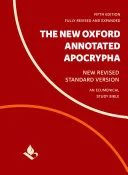
The New Oxford Annotated Apocrypha
 79
79

The New Oxford Annotated Apocrypha
The New Oxford Annotated Apocrypha’s fifth edition arrives as a meticulously assembled guide, particularly useful for its detailed historical and textual exegesis. Its strength lies in the scholarship, which grounds the often-difficult texts within their original Hellenistic and Roman contexts. The introductions to each book offer a concise yet thorough overview of authorship, date, and interpretive challenges. However, the sheer density of scholarly detail, while commendable, can occasionally obscure the more mystical or devotional aspects that some readers might seek in apocryphal writings. A specific passage, such as the commentary on the portrayal of cosmic order in the Wisdom of Solomon, exemplifies the edition's rigorous approach, dissecting philosophical influences with precision. While it excels as a critical academic tool, its dense annotation style might deter those looking for a more intuitive spiritual exploration. This edition is an authoritative, if sometimes demanding, scholarly companion to a vital body of ancient literature.
📝 Description
79
### What It Is The New Oxford Annotated Apocrypha, fifth edition, offers a comprehensive scholarly edition of the biblical books not included in the Hebrew Bible or New Testament. This volume presents these texts with extensive introductions and detailed verse-by-verse annotations. It aims to provide readers with the most current academic understanding of these often-misunderstood writings, incorporating recent archaeological findings and critical scholarship. The work is designed to be accessible to both academic audiences and general readers seeking a deeper engagement with this scriptural tradition.
### Who It's For This annotated edition is an essential resource for students of religious studies, theology, and ancient history, as well as clergy and pastors seeking authoritative commentary for sermon preparation and theological reflection. Lay readers interested in the historical and literary context of canonical texts, or those exploring the broader landscape of ancient Judean literature, will find its scholarly apparatus invaluable. It serves as a crucial tool for understanding the textual and historical background that shaped both Jewish and early Christian thought.
### Historical Context Published initially in 2018, this fifth edition reflects decades of scholarly evolution concerning the Apocrypha. The Apocrypha, a collection of texts originating between the 3rd century BCE and the 1st century CE, occupies a critical space between the Old and New Testaments. These books were part of the Septuagint, the ancient Greek translation of the Hebrew Bible, and were historically included in many Christian canons, though later separated by the Protestant Reformation. This edition builds upon the foundational work of earlier scholars like R. H. Charles and engages with contemporary debates surrounding the formation of the biblical canon and the diverse literary and theological currents of the Second Temple period.
### Key Concepts The Apocrypha encompasses a range of genres, including historical narratives (e.g., 1 Maccabees), wisdom literature (e.g., Wisdom of Solomon), and apocalyptic visions (e.g., 2 Esdras). Key concepts explored within these texts include divine providence, the nature of wisdom, the afterlife, messianic expectations, and the struggle for religious and political identity in Hellenistic and Roman Judea. The annotations illuminate the linguistic nuances, historical allusions, and theological implications of each book, situating them within their original socio-historical milieu and tracing their influence on later religious thought.
💡 Why Read This Book?
• Gain insight into the Hellenistic Jewish worldview by examining texts like the Wisdom of Solomon, understanding its philosophical underpinnings and its engagement with Greek thought, a context unavailable in canonical Old Testament texts. • Understand the historical circumstances surrounding the Maccabean Revolt through detailed commentary on books like 1 Maccabees, providing specific details on figures like Antiochus IV Epiphanes and the political landscape of 2nd-century BCE Judea. • Explore early concepts of afterlife and divine judgment as presented in texts like 2 Esdras, contrasting them with later developments and gaining a nuanced view of evolving eschatological ideas within ancient Judaism.
⭐ Reader Reviews
Honest opinions from readers who have explored this book.
❓ Frequently Asked Questions
What is the historical period covered by the Apocrypha in this edition?
This edition covers texts generally dated between the 3rd century BCE and the 1st century CE, a critical period known as the Second Temple period, encompassing the influence of Hellenistic culture and Roman rule on Judean society and religious thought.
How does The New Oxford Annotated Apocrypha differ from a standard Bible?
Unlike standard Bibles that typically exclude these books, this edition focuses exclusively on the Apocrypha, providing in-depth scholarly introductions and annotations for each text, offering historical, linguistic, and theological context often absent in Bibles that list them in an appendix.
What kind of scholarly discoveries are mentioned in the revised edition?
The revised edition incorporates insights from recent archaeological finds and advancements in textual criticism, which help to clarify the historical settings and literary influences of the apocryphal books, providing a more informed understanding than previous editions.
Are these books part of the Catholic or Orthodox biblical canons?
Yes, many of these books are considered deuterocanonical by the Roman Catholic Church and canonical by Orthodox Churches, though they are generally not part of the Protestant canon. This edition treats them as historical and theological documents from the Second Temple period.
Who are the primary editors of the fifth edition?
The fifth edition is edited by Michael Coogan, Marc Brettler, and Carol Newsom, leading scholars in biblical studies who bring extensive expertise to the annotation and contextualization of these ancient texts.
🔮 Key Themes & Symbolism
Wisdom and Divine Order
The texts explore concepts of divine wisdom, often personified, and its role in creation and human understanding. Books like the Wisdom of Solomon engage with philosophical ideas, discussing wisdom as a divine attribute that guides creation and offers ethical instruction. The annotations clarify the blend of Greek philosophical concepts with Jewish theological traditions, illuminating how ancient thinkers grappled with questions of cosmic order, justice, and the nature of the divine in a world influenced by Hellenistic thought.
Historical Identity and Resistance
Several books, notably the Maccabean accounts (1 & 2 Maccabees), document the struggles of Judean identity against foreign domination, particularly during the Hellenistic period under Antiochus IV Epiphanes. The annotations detail the historical events, the development of Jewish law (Torah), and the emergence of resistance movements. This theme highlights the tension between assimilation and adherence to tradition, offering critical insights into the formation of Jewish identity and the precursors to later messianic movements.
Eschatology and the Afterlife
The Apocrypha presents evolving views on death, resurrection, and divine judgment. Texts like 2 Esdras offer apocalyptic visions and speculations about the end times, the fate of the righteous and the wicked, and the coming of a messianic age. The scholarly commentary unpacks these complex theological ideas, tracing their development from earlier biblical concepts and showing their influence on subsequent Jewish and Christian eschatological beliefs, providing a window into the diverse expectations of the era.
Canon Formation
The inclusion and exclusion of these texts from various biblical canons is a significant contextual element. The annotations implicitly address this by situating the Apocrypha within the broader literary landscape of ancient Judaism and early Christianity. Understanding these texts helps clarify why certain books were accepted into later Christian Bibles while others, like those found in this volume, were relegated to apocryphal status by some traditions, shedding light on the dynamic process of canonization.
💬 Memorable Quotes
“The wisdom of God is eternal.”
— This paraphrased concept highlights the concept of wisdom as an enduring, divine attribute, central to texts like the Wisdom of Solomon. It underscores the belief in an inherent, unchanging divine order that underpins reality, a key theme explored within the annotations.
“The nation will not remain silent.”
— This interpretation relates to the themes of resistance and national identity found in books like 1 Maccabees. It reflects the spirit of defiance against oppressive regimes and the determination to preserve religious and cultural heritage, as detailed in the historical context.
“The end is nearer than you think.”
— This captures the eschatological urgency present in apocalyptic texts within the Apocrypha, such as 2 Esdras. It points to the focus on divine judgment, the end times, and the imminent unfolding of God's plan, a subject elaborated upon in the scholarly discussions.
“Understanding the hidden meanings.”
— This phrase encapsulates the role of the annotations in deciphering the symbolic language and layered meanings within the Apocrypha. It speaks to the scholarly effort to reveal the theological and historical significance of these ancient writings.
“A bridge between testaments.”
— This describes the Apocrypha's position chronologically and theologically between the Old and New Testaments. The book's scholarship illuminates how these texts reflect the transition and development of religious thought during the Second Temple period.
🌙 Esoteric Significance
Tradition
While not strictly an esoteric text in the vein of Hermeticism or Kabbalah, the Apocrypha contains elements that resonate with esoteric traditions seeking deeper, hidden meanings within scripture. Its exploration of divine wisdom, cosmic order, and apocalyptic visions offers material that can be interpreted through mystical lenses. Esoteric practitioners often look to these 'intertestamental' texts for insights into Gnostic precursors, angelology, and early mystical experiences that bridge the gap between Old Testament prophecy and New Testament revelation.
Symbolism
The Apocrypha is rich with symbolism ripe for esoteric interpretation. The figure of Wisdom, often depicted as a divine emanation or mediator, serves as a potent symbol of gnosis and divine intelligence. Apocalyptic imagery, such as the visions of beasts and celestial journeys in books like 2 Esdras, functions as symbolic language for spiritual transformation and the unveiling of divine mysteries. The struggle for religious purity and adherence to Law can also be seen symbolically as an inner battle for spiritual integrity against corrupting external forces.
Modern Relevance
Contemporary esoteric thinkers and practitioners often turn to the Apocrypha for its unique theological perspectives that lie outside the mainstream Abrahamic traditions. Schools exploring Western esotericism, comparative religion, and early Christian mysticism find value in these texts for understanding the broader spiritual currents of antiquity. The detailed scholarship in this edition allows modern readers to engage with the historical context of these writings, providing a foundation for personal reflection on themes of divine guidance, hidden knowledge, and the nature of ultimate reality.
👥 Who Should Read This Book
['• Students of Second Temple Judaism: Gain a comprehensive understanding of the religious, historical, and cultural milieu that shaped early Judaism and the context for both canonical texts and nascent Christian thought.', '• Comparative Religion Scholars: Utilize this edition to analyze the development of theological concepts such as wisdom, afterlife, and messianism across different ancient traditions and within evolving Jewish thought.', '• Seekers of Ancient Mystical Thought: Explore texts that offer insights into early ideas about divine wisdom, cosmic order, and apocalyptic revelations, providing a bridge between the Old and New Testaments.']
📜 Historical Context
The New Oxford Annotated Apocrypha, fifth edition, situates its subject matter firmly within the turbulent landscape of the Second Temple period, roughly from the 3rd century BCE to the 1st century CE. This era witnessed the pervasive influence of Hellenistic culture following Alexander the Great's conquests and the subsequent Roman domination. The Apocrypha reflects the diverse responses of Judean society to these external pressures, ranging from assimilationist tendencies to fierce resistance, exemplified by the Maccabean Revolt against Antiochus IV Epiphanes in the 2nd century BCE. This edition builds upon scholarly traditions that date back to early 20th-century figures like R. H. Charles, who first championed critical study of these texts. The work engages with contemporary scholarship that analyzes the literary forms, theological developments, and historical contexts of these books, often found within the Septuagint, the Greek translation of the Hebrew Bible. Unlike the Protestant reformers who later excluded these texts from their canons, scholars today recognize their profound importance for understanding the religious and intellectual milieu that gave rise to both Rabbinic Judaism and early Christianity. The reception of these texts has varied widely, with Catholic and Orthodox traditions maintaining their canonicity, while Protestantism generally regards them as historically valuable but non-authoritative.
📔 Journal Prompts
The personification of Wisdom in texts like Wisdom of Solomon.
The historical resistance depicted in 1 Maccabees.
Visions of the afterlife presented in 2 Esdras.
The role of divine providence in narratives.
Connections between apocryphal wisdom and Hellenistic philosophy.
🗂️ Glossary
Apocrypha
A collection of ancient Jewish religious writings not included in the Hebrew Bible but considered canonical by some Christian traditions (e.g., Catholic, Orthodox). They were composed between the 3rd century BCE and the 1st century CE.
Septuagint
The ancient Greek translation of the Hebrew Bible, dating primarily from the 3rd to 1st centuries BCE. Many apocryphal books were included in the Septuagint.
Second Temple Period
The era of Jewish history from the rebuilding of the Second Temple in Jerusalem (c. 516 BCE) until its destruction by the Romans in 70 CE. This period saw significant cultural and religious developments.
Hellenistic Period
The historical period following the conquests of Alexander the Great (c. 323 BCE), characterized by the spread of Greek culture, language, and influence throughout the ancient Mediterranean and Near East.
Deuterocanonical
A term used by Roman Catholic and Eastern Orthodox Churches to refer to books or passages of the Old Testament that appear in the Septuagint but not in the Hebrew Bible. These are often synonymous with the Apocrypha.
Eschatology
The theological study of end times, including beliefs about the final events of history, divine judgment, the afterlife, and the consummation of the world.
Maccabean Revolt
A Jewish uprising against the Seleucid Empire in the 2nd century BCE, led by the Maccabee family, in response to religious persecution and forced Hellenization under Antiochus IV Epiphanes.