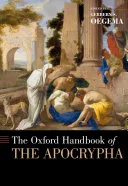
The ^AOxford Handbook of the Apocrypha
 81
81

The ^AOxford Handbook of the Apocrypha
Gerbern S. Oegema’s compilation, *The Oxford Handbook of the Apocrypha*, offers a much-needed scholarly consolidation of a complex field. The work excels in its systematic approach, dedicating significant attention to the historical positioning of each apocryphal text, from the Maccabean period onward. A particular strength lies in the analysis of the Apocrypha's relationship to the emerging biblical canon, detailing how certain texts gained or lost favor. While the handbook provides robust historical context, its esoteric significance, a key interest for readers of Esoteric Library, feels somewhat understated in the broader scholarly tone. The discussion on the role of women, though present, could have been further amplified as a distinct esoteric theme. Nevertheless, the collective scholarship provides an indispensable resource for understanding these foundational texts.
Verdict: An authoritative scholarly resource that illuminates the historical and textual landscape of the Apocrypha.
📝 Description
81
### What It Is
The Oxford Handbook of the Apocrypha provides a comprehensive survey of texts traditionally excluded from the biblical canon, offering updated scholarly research on each document. It situates these writings within their historical settings, spanning the late Persian and early Hellenistic periods through the early Roman era. The collection addresses the formation and context of these diverse works, moving beyond simple classification to explore their intellectual and religious environments.
### Who It's For
This handbook is designed for scholars, graduate students, and advanced undergraduates engaged in the study of Second Temple Judaism, early Christian origins, and the broader landscape of ancient Mediterranean religious thought. It will also appeal to individuals with a specific interest in apocryphal literature, biblical studies, and the development of religious traditions that influenced or ran parallel to the canonical scriptures.
### Historical Context
The Apocrypha emerged from a dynamic period of Jewish history, roughly from the 4th century BCE to the 1st century CE. This era saw significant interaction with Hellenistic culture, the rise of various Jewish sects, and the eventual Roman domination. The texts reflect a spectrum of theological ideas, literary genres, and social concerns prevalent among Jewish communities during this formative time. Their relationship with texts that would later become canonized is a central point of inquiry.
### Key Concepts
The book examines concepts such as the fluidity of "scripture" in antiquity, the theological diversity within Judaism, the representation of female figures and their roles, and the transmission history of these often-marginalized texts. It highlights how these writings functioned within their original communities and how their reception evolved over centuries, influencing later religious and philosophical movements.
💡 Why Read This Book?
• Gain a nuanced understanding of the historical development of Jewish literature between the Old and New Testaments, specifically examining texts from the late Persian to early Roman eras (circa 4th century BCE – 1st century CE) that informed later esoteric traditions. • Explore the complex relationship between the Apocrypha and the development of the biblical canon, understanding how texts like Tobit or Judith were received and debated by early religious scholars. • Discover the diverse portrayals of women and female characters within these ancient writings, offering insights into gender roles and theological interpretations that challenge simplistic narratives.
⭐ Reader Reviews
Honest opinions from readers who have explored this book.
❓ Frequently Asked Questions
What is the historical period covered by the Apocrypha discussed in this handbook?
The handbook focuses on the Apocrypha from the late Persian and early Hellenistic periods up to the early Roman era, generally spanning from the 4th century BCE to the 1st century CE.
How does this handbook address the relationship between the Apocrypha and canonical texts?
It provides updated research on how apocryphal texts interacted with, influenced, or were distinguished from texts that eventually formed the biblical canon, exploring their comparative standing.
Are there discussions on the role of women in the Apocrypha within this book?
Yes, the handbook gives special attention to the role of women and female characters within the apocryphal texts, examining their representation and significance.
What is the main scholarly approach of The Oxford Handbook of the Apocrypha?
The primary approach is historical and textual, offering updated research on individual apocryphal texts within their specific historical and cultural contexts.
Who is the editor of this comprehensive collection on the Apocrypha?
The handbook is edited by Gerbern S. Oegema, a scholar specializing in biblical and ancient religious studies.
When was The Oxford Handbook of the Apocrypha first published?
The handbook was first published on May 11, 2021, presenting contemporary scholarship on the subject.
🔮 Key Themes & Symbolism
Canonical Boundaries
This theme examines the fluid nature of scriptural authority in antiquity, a critical concept for understanding the Apocrypha's position. The work details how texts were considered authoritative by some communities while excluded by others, particularly in relation to the canonization process of Jewish and later Christian scriptures. It highlights the debates and criteria used to distinguish between canonical and non-canonical writings during the early centuries CE.
Hellenistic Influence
The handbook extensively explores the impact of Hellenistic culture on Jewish thought and literature during the period from the 4th century BCE to the 1st century CE. This includes analyzing how Greek philosophical concepts, literary styles, and social structures were integrated into or reacted against within the apocryphal texts. Understanding this syncretism is vital for grasping the diverse intellectual currents of the era.
Representation of Women
A significant focus is placed on the portrayal of women and female characters within the apocryphal writings. This theme delves into how these figures, such as Judith or Susanna, function within their narratives, challenging or reinforcing societal norms, and contributing to the theological messages of their respective texts. Their agency and symbolic weight offer crucial insights into ancient gender dynamics.
Early Jewish Sectarianism
The work situates the Apocrypha within the context of burgeoning Jewish sectarianism during the Second Temple period. It illustrates the diversity of beliefs and practices among different Jewish groups, showing how these texts reflect varied theological perspectives on prophecy, eschatology, and divine law. This thematic exploration underscores the pluralism of ancient Judaism.
💬 Memorable Quotes
“The Apocrypha offers a window into the broader spectrum of Jewish thought and practice in antiquity.”
— This statement emphasizes that these texts, often sidelined, are crucial for a comprehensive understanding of the ancient Jewish religious landscape, revealing a diversity often obscured by focus on canonical works alone.
“The relationship between the Apocrypha and texts that came to be canonized is complex and debated.”
— This highlights the intricate historical process by which certain texts gained scriptural status while others did not, acknowledging that this distinction was not always clear-cut in ancient times.
“Female characters in the Apocrypha often exhibit significant agency and theological importance.”
— This interpretation points to the notable roles played by women in these narratives, suggesting they were not merely passive figures but integral to the stories' meanings and theological arguments.
“Understanding the historical context is key to interpreting the Apocrypha's message.”
— This underscores the necessity of situating these texts within their specific late Persian to early Roman period environments to grasp their original intent and significance.
“The Apocrypha reflects the intellectual ferment of the Hellenistic era.”
— This suggests that these writings absorbed and responded to the philosophical and cultural influences of the Greek world, demonstrating a dynamic interaction between traditions.
🌙 Esoteric Significance
Tradition
While not strictly belonging to a single esoteric lineage like Hermeticism or Gnosticism, the Apocrypha serves as a foundational corpus for many later esoteric traditions. Its exploration of divine wisdom, angelic hierarchies, eschatological visions, and unique interpretations of biblical narratives provides fertile ground for mystical and occult exegesis. These texts are often seen as preserving esoteric knowledge or alternative theological streams that were later suppressed or marginalized by dominant religious authorities, making them valuable for traditions seeking hidden or forgotten wisdom.
Symbolism
Key symbols within the Apocrypha that resonate esoterically include angelic mediators (like Raphael in Tobit) who guide and protect, divine wisdom personified as a feminine figure offering enlightenment, and apocalyptic imagery of cosmic upheaval and heavenly revelation. The motif of sacred texts or hidden knowledge being revealed to worthy individuals also functions symbolically, representing the transmission of esoteric truths. Furthermore, the presence of powerful female figures like Judith can be interpreted through archetypal lenses in esoteric psychology and mythology.
Modern Relevance
Contemporary esoteric practitioners and scholars often turn to the Apocrypha for its rich theological and cosmological ideas that diverge from standard biblical interpretations. Groups interested in Kabbalistic concepts might find parallels in the angelic lore, while Gnostic studies benefit from the alternative creation and salvation narratives. Theosophical and New Age movements frequently draw upon the Apocrypha for its perceived mystical insights and its role in the historical development of Western esotericism, viewing it as a source of ancient, pre-canonical spiritual understanding.
👥 Who Should Read This Book
• Scholars of Second Temple Judaism and early Christian origins seeking detailed textual analysis and historical context for non-canonical Jewish writings. • Advanced students of comparative religion and biblical studies interested in the formation of religious canons and the diversity of ancient Mediterranean beliefs. • Esoteric practitioners and researchers looking for primary source material that informs mystical traditions, angelic lore, and alternative theological interpretations of biblical history.
📜 Historical Context
The Apocrypha emerged during a period of intense cultural and political flux for Judea, roughly from the 4th century BCE through the 1st century CE. This era witnessed the aftermath of the Babylonian Exile, the subsequent Persian rule, the vast expansion of Hellenistic influence under Alexander the Great and his successors, and ultimately, the consolidation of Roman power. Intellectual currents were dominated by interactions between traditional Jewish thought and prevailing Greek philosophy, a dynamic evident in texts like Tobit or the Wisdom of Solomon. Competing schools of thought within Judaism itself contributed to the diversity of these writings. While specific reception events like outright bans are less documented for this period compared to later Christian eras, the evolving criteria for scriptural authority meant these texts occupied a shifting space relative to the emerging canon. Scholars like Josephus, writing in the late 1st century CE, provide crucial context for understanding what constituted authoritative scripture for different Jewish groups at that time.
📔 Journal Prompts
The portrayal of female characters like Susanna and Judith.
The concept of divine wisdom as presented in texts like the Wisdom of Solomon.
The historical transition from Persian to Hellenistic rule and its impact on Jewish texts.
The distinction between apocryphal and canonical texts in the 1st century CE.
The role of angelic beings in guiding human affairs within the Apocrypha.
🗂️ Glossary
Apocrypha
A collection of ancient Jewish texts written during the Second Temple period that were not included in the Hebrew Bible (Tanakh) but were included in some Christian canons (e.g., the Septuagint) as deuterocanonical.
Second Temple Period
The era of Jewish history from the rebuilding of the Second Temple in Jerusalem around 516 BCE to its destruction by the Romans in 70 CE.
Hellenistic Period
The period of Mediterranean history between the death of Alexander the Great in 323 BCE and the emergence of the Roman Empire, characterized by the spread of Greek culture and language.
Canonization
The process by which a set of texts is officially recognized as authoritative or sacred scripture within a religious tradition.
Deuterocanonical
Books or passages considered canonical by some Christian traditions (e.g., Catholic, Orthodox) but not by others (e.g., Protestant, Jewish), often referring to books found in the Septuagint but not the Hebrew Bible.
Septuagint
An ancient Greek translation of the Hebrew scriptures (Old Testament), traditionally dated to the 3rd century BCE, which included texts later known as the Apocrypha.
Persian Period
The historical era during which Judea was under the rule of the Achaemenid Persian Empire, following the Babylonian Exile (roughly 539–332 BCE).