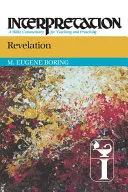
Revelation
 72
72

Revelation
M. Eugene Boring’s *Revelation* offers a much-needed bridge for those who find the final book of the Christian canon both compelling and confounding. Boring’s strength lies in his commitment to situating the text for the modern, thinking Christian, framing it as a source of divine communication rather than solely a prophetic timetable. He wisely avoids sensationalism, opting instead for careful exegesis. A notable limitation, however, is the book’s primary focus on a Christian audience; its potential to engage broader esoteric or comparative religious scholarship is only implicitly explored. The exploration of how figures like John of Patmos communicated spiritual realities to their contemporaries, and how that communication functions for us now, is particularly well-handled. Ultimately, Boring provides a valuable, reasoned approach to understanding Revelation's message for contemporary believers.
📝 Description
72
M. Eugene Boring's Revelation, published in 2011, offers a scholarly guide to the biblical text.
Published in 2011, M. Eugene Boring's Revelation is not a standard devotional work. It serves as a scholarly yet accessible guide for contemporary Christians aiming to grasp the eschatological visions within the biblical Book of Revelation. Boring interprets these ancient prophecies through a framework that allows for faithful and responsible engagement with modern life, moving past solely literal or allegorical readings. This work is specifically designed for thoughtful Christians who grapple with the theological and symbolic language of Revelation. It seeks to help those who wish to hear God's Word in this often misunderstood text, offering tools for critical engagement rather than passive reception. Readers will include individuals interested in connecting historical Christian doctrine with current ethical and existential questions. The early 21st century, when Boring's book was published, saw varied Christian theological discussions. While some focused on literal end-times views, others pursued critical historical-Jesus scholarship or social justice theology. Boring's contribution offers a distinct approach to interpreting apocalyptic literature, acknowledging its historical origins while seeking its lasting significance.
This book engages with the tradition of biblical interpretation, particularly within Christian eschatology. It addresses the complex symbolism and prophetic language found in the Book of Revelation. While not overtly Gnostic, it situates itself within broader discussions of how to understand scripture's enduring message for contemporary life, moving beyond purely historical or allegorical frameworks. It acknowledges the historical context of apocalyptic literature while seeking its theological relevance.
💡 Why Read This Book?
• Gain a framework for understanding Revelation’s symbolic language, moving beyond literal interpretations to grasp its spiritual message as intended for early Christian communities, similar to how Gnostic texts presented hidden knowledge. • Learn to identify how the author, M. Eugene Boring, helps contemporary Christians "hear the Word of God" in Revelation, fostering a direct, personal connection to divine communication. • Explore the historical context of Revelation's creation around 95 CE, understanding its original audience and purpose, which offers a parallel to how ancient wisdom traditions were communicated.
⭐ Reader Reviews
Honest opinions from readers who have explored this book.
❓ Frequently Asked Questions
What is the primary goal of M. Eugene Boring's book 'Revelation'?
The book aims to help thinking Christians understand how to hear God's Word in the Book of Revelation, interpreting its visions and prophecies for faithful living in today's world.
Is 'Revelation' by M. Eugene Boring a literal interpretation of end times?
No, Boring's work focuses on making the text accessible and meaningful for contemporary believers by exploring its theological message, rather than solely focusing on literal predictions of future events.
Who is the intended audience for this book?
The book is designed for Christians who are intellectually engaged and seek a responsible way to understand and apply the messages found in the biblical Book of Revelation.
When was M. Eugene Boring's 'Revelation' first published?
The book was first published on July 1, 2011, placing its commentary within the early 21st-century landscape of theological scholarship.
Does the book discuss the author of Revelation, John of Patmos?
While the book focuses on the message of Revelation, it likely engages with the historical context and the figure of John of Patmos to illuminate the text's original meaning and audience.
How does this book approach the complex symbolism in Revelation?
Boring's approach involves interpreting the symbolic language and apocalyptic genre of Revelation to reveal its enduring spiritual truths and relevance for believers today.
🔮 Key Themes & Symbolism
Hearing the Divine Word
This theme centers on the book's core objective: enabling readers to perceive the divine message within the Book of Revelation. Boring likely guides readers past surface-level interpretations to uncover the spiritual communication intended for both its original audience and contemporary believers. This concept echoes esoteric traditions that emphasize direct spiritual apprehension over dogma, seeking to unlock the text's inherent power to inform and transform.
Symbolic Language and Apocalyptic Genre
The work addresses the unique literary features of Revelation, particularly its rich symbolism and apocalyptic style. Understanding these elements is presented as crucial for unlocking the text's deeper meanings. This connects to broader esoteric studies where symbols are seen as keys to hidden realities, and apocalyptic literature often contains coded messages or veiled truths about cosmic order and transformation.
Faithful and Responsible Living
A significant thread is how the message of Revelation can inform and guide ethical and spiritual conduct in the modern world. Boring likely argues that understanding the text’s theological underpinnings leads to a more grounded and responsible approach to life. This aligns with esoteric philosophies that seek to integrate spiritual understanding with practical application, fostering personal integrity and conscious living.
Bridging Historical Context and Present Relevance
The book emphasizes the importance of understanding Revelation within its 1st-century CE historical context, particularly the circumstances of John of Patmos, while simultaneously demonstrating its ongoing spiritual significance. This dual focus allows the text to transcend its origins, offering timeless wisdom. This approach is common in esoteric scholarship, which often seeks to extract universal principles from ancient texts.
💬 Memorable Quotes
“How thinking Christians can hear the Word of God in Revelation.”
— This encapsulates the book's central aim: to provide a methodology for discerning spiritual truth within the complex and often challenging text of Revelation, making it relevant for contemporary faith.
“Living faithfully and responsibly in today's world.”
— This highlights the practical, ethical dimension Boring seeks to impart. The book intends to show that understanding Revelation can lead to a more grounded and conscious approach to modern life and its challenges.
“Understanding the visions presented in Revelation.”
— This points to the book's focus on interpreting the symbolic and prophetic imagery of Revelation, treating it not just as narrative but as a source of profound spiritual insight and guidance.
“Eugene Boring addresses the issue...”
— This frames the book as a direct engagement with a specific theological and interpretive problem, positioning Boring as a guide offering solutions and perspectives for the reader.
“The Word of God in Revelation.”
— This suggests that the book aims to uncover the divine communication embedded within Revelation, treating it as a living text with messages applicable to believers across different eras.
🌙 Esoteric Significance
Tradition
While rooted in Christian theology, Boring's work can be seen as engaging with the broader esoteric interest in apocalyptic literature and divine revelation. It touches upon the Gnostic and Hermetic traditions' emphasis on uncovering hidden knowledge and understanding cosmic truths through symbolic texts. By seeking to make Revelation speak directly to the individual believer's spiritual journey, it aligns with the esoteric pursuit of direct spiritual apprehension and inner transformation.
Symbolism
The Book of Revelation itself is a nexus of potent symbols. Within Boring's framework, symbols like the Lamb, the Dragon, and the New Jerusalem are likely interpreted not merely as literal entities or future events but as archetypal representations of divine power, spiritual struggle, and ultimate redemption. These symbols function as keys, unlocking deeper spiritual realities and offering guidance for the soul's journey toward the divine.
Modern Relevance
Contemporary thinkers interested in comparative eschatology, or those seeking to understand the spiritual underpinnings of Western culture, find value in Boring's approach. His work offers a model for engaging with ancient prophetic texts in a way that respects their historical origins while extracting universal spiritual and ethical principles applicable to modern consciousness and spiritual seeking.
👥 Who Should Read This Book
['• Thinking Christians seeking a scholarly yet accessible interpretation of Revelation beyond literalistic or purely allegorical readings.', '• Students of comparative religion interested in how Christian apocalyptic texts have been understood and applied across different eras.', '• Individuals exploring esoteric interpretations of biblical prophecy and seeking to understand the divine message within challenging scriptural works.']
📜 Historical Context
M. Eugene Boring’s *Revelation*, published in 2011, emerged during a period of intense theological and philosophical discourse. The early 21st century saw a resurgence of interest in eschatology, often fueled by global events, but also a parallel rise in critical historical scholarship applied to biblical texts. While movements like Christian Zionism focused heavily on literal end-times prophecy, and existential theology grappled with meaning in a secularizing world, Boring's work carved a niche by attempting to synthesize faithful interpretation with intellectual rigor. His approach acknowledges the historical context of Revelation's writing, likely around 95 CE by John of Patmos, and seeks to make its message accessible to a modern audience grappling with complex ethical and spiritual questions. This era also saw scholars like N.T. Wright advocating for a more historically grounded understanding of Pauline and Johannine literature, influencing how many approached biblical interpretation.
📔 Journal Prompts
The concept of "hearing the Word of God" in Revelation.
Interpreting the symbolic language used by John of Patmos.
Connecting Revelation's message to responsible living today.
The historical context of Revelation's original audience.
The role of divine communication in contemporary faith.
🗂️ Glossary
Apocalyptic Literature
A genre of literature, common in ancient Judaism and Christianity, that claims to reveal divine mysteries about the end times, cosmic battles, and future judgment through symbolic visions and prophecy.
Eschatology
The branch of theology concerned with the final events of history, or the ultimate destiny of humanity and the world, often focusing on concepts of judgment, salvation, and the afterlife.
Symbolic Interpretation
An approach to understanding texts, particularly religious or mystical ones, that focuses on the deeper, non-literal meanings of symbols and imagery to convey spiritual truths.
John of Patmos
The traditional author of the Book of Revelation, believed to be an exiled Christian leader to whom the visions recorded in the text were revealed.
Divine Communication
The act or process by which a deity conveys messages, guidance, or revelations to individuals or humanity, often through scripture, prophecy, or spiritual intuition.
Faithful Living
Conduct and practice that adheres to religious beliefs and commitments, often involving ethical behavior, spiritual devotion, and obedience to divine principles.
Responsible Engagement
An approach to understanding complex texts or issues that involves critical thinking, ethical consideration, and a conscious effort to apply insights in a thoughtful and constructive manner.