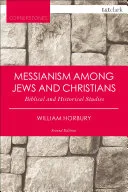
Messianism Among Jews and Christians
 78
78

Messianism Among Jews and Christians
Horbury's meticulous scholarship on messianism offers a dense but rewarding exploration of a concept central to both Judaism and Christianity. The work’s strength lies in its detailed engagement with primary sources, particularly the Apocrypha and pseudepigrapha, providing a nuanced view of the period's diverse expectations. While the primary focus on the Herodian period and New Testament is clear, the broader historical trajectory can sometimes feel less integrated than the core analysis. A particularly compelling section examines the 'Son of Man' tradition and its varied interpretations, showcasing Horbury's command of the material. However, the sheer academic rigor might present a barrier for casual readers. For those committed to understanding the historical Jesus and the origins of Christianity through a critical lens, this book is an indispensable, albeit challenging, resource.
📝 Description
78
### What It Is William Horbury's "Messianism Among Jews and Christians" examines the concept of the messiah across ancient Jewish and early Christian thought. Originally published in 2016, the work traces this crucial theological thread from the Apocrypha and pseudepigrapha through the Herodian period and into the Roman Empire.
### Who It's For This book is intended for scholars of religious studies, ancient history, and comparative theology, as well as serious students of Jewish and Christian origins. Readers seeking a rigorous, historically grounded analysis of messianic expectations in antiquity will find it particularly valuable.
### Historical Context Horbury situates his study within the late Second Temple period, a time of intense expectation and diverse interpretations of future redemption among Judean groups. His analysis engages with texts like the Apocrypha and pseudepigrapha, reflecting scholarly debates from the late 20th and early 21st centuries concerning the development of messianic imagery.
### Key Concepts The book dissects core ideas such as the 'Son of Man' concept, the eschatological hopes for a 'new Jerusalem', and the various ways messianic figures were understood in pre-Christian and early Christian contexts. It explores how these concepts evolved and were adapted by different communities.
💡 Why Read This Book?
• Gain a precise understanding of the historical development of messianic ideas from the Apocrypha and pseudepigrapha, tracing specific conceptual shifts. • Analyze the varied interpretations of the 'Son of Man' concept as it appears in early Jewish and Christian texts, moving beyond simplistic definitions. • Grasp the socio-historical context of the Herodian period and its impact on messianic hopes for a new Jerusalem, as detailed in the book's examination of Roman Empire-era Judaism.
⭐ Reader Reviews
Honest opinions from readers who have explored this book.
❓ Frequently Asked Questions
What is the primary historical period covered by "Messianism Among Jews and Christians"?
The book's primary focus is the Herodian period and the New Testament era, but it also examines a broader historical trajectory back to the Apocrypha and pseudepigrapha and forward to Judaism in the Roman Empire.
Which key theological concepts does William Horbury discuss?
Horbury addresses central themes such as messianism in the Apocrypha and pseudepigrapha, the 'Son of Man' concept, Pauline hopes for a new Jerusalem, and Jewish perspectives in the Roman Empire.
When was "Messianism Among Jews and Christians" first published?
The book was first published on March 10, 2016.
What ancient texts are central to Horbury's analysis?
The analysis draws significantly on texts from the Apocrypha and pseudepigrapha, alongside the New Testament and other Jewish writings from the Roman period.
What is the main argument regarding the evolution of messianism?
The work presents a historical trajectory of messianic ideas, showing how they were interpreted and reinterpreted across different Jewish and early Christian communities in antiquity.
Is this book suitable for introductory readers on the topic of messianism?
While comprehensive, the book's academic rigor and detailed analysis make it more suited for scholars and advanced students rather than absolute beginners in the field.
🔮 Key Themes & Symbolism
The Son of Man Tradition
This theme investigates the multifaceted interpretations of the 'Son of Man' figure, a crucial designation appearing in both Jewish apocalyptic literature and early Christian texts. Horbury traces its origins and development, exploring how this enigmatic title signified divine authority, eschatological judgment, and future vindication for different communities. The analysis highlights the conceptual fluidity and theological weight this figure carried in antiquity.
New Jerusalem Hopes
The book examines the persistent Jewish and early Christian expectation of a 'new Jerusalem,' a divinely restored or recreated city symbolizing ultimate salvation and God's reign. Horbury explores the various visions of this eschatological ideal, considering its theological significance and its role in shaping communal identity and future aspirations within the context of Roman imperial rule.
Apocrypha and Pseudepigrapha
Horbury gives significant attention to the Apocrypha and pseudepigrapha as vital sources for understanding pre-Christian and contemporary messianic thought. These texts, often outside the later canonical Jewish scriptures, reveal a rich diversity of expectations regarding future deliverers, divine intervention, and the establishment of a renewed covenant community. Their inclusion provides crucial context for New Testament studies.
Jewish Messianism in the Roman Empire
The work situates messianic expectations within the broader landscape of Judaism under Roman rule. It explores how political pressures, social conditions, and theological discourse shaped diverse Jewish understandings of messiahship, redemption, and divine justice. This perspective illuminates the varied responses within Judaism to Roman hegemony and the hope for eventual liberation.
💬 Memorable Quotes
“Messianism in the Apocrypha and pseudepigrapha”
— This phrase points to the foundational importance of these non-canonical texts in understanding the spectrum of messianic expectations that predated and informed later developments in both Judaism and Christianity.
“The Son of Man and Pauline hopes for a new Jerusalem”
— This highlights the critical connection Horbury draws between a key messianic title and the eschatological vision of a transformed reality, particularly as articulated in the writings of Paul.
“Jewi”
— This likely refers to the broader context of Jewish thought and practice during the period under review, emphasizing that messianism was a dynamic concept within diverse Jewish communities.
“Broader historical trajectory”
— Indicates the book's methodological approach, tracing the concept of messianism not just in a confined period but across a significant sweep of ancient religious history.
“Herodian period and the New Testament”
— These are the specific historical and textual anchors for much of the analysis, providing the core framework for examining messianic ideas in the context of Jesus' life and the early Christian movement.
🌙 Esoteric Significance
Tradition
While not strictly an esoteric text in the vein of Hermeticism or Kabbalah, Horbury's work deeply engages with the roots of Western messianic traditions that have profoundly influenced esoteric thought. It examines the foundational interpretations of divine kingship, eschatological salvation, and the promised redeemer that later informed various mystical and occult lineages seeking spiritual and cosmic renewal.
Symbolism
The concept of the 'Son of Man' functions as a potent symbol of divinely appointed authority and future vindication, bridging the human and the divine. The 'new Jerusalem' serves as a powerful symbol of ultimate redemption, spiritual perfection, and the establishment of God's perfect order, a theme echoed in many esoteric cosmologies and utopian visions.
Modern Relevance
Contemporary esoteric thinkers and practitioners interested in the historical and theological underpinnings of messianic prophecies, apocalyptic literature, and the concept of a coming spiritual age find Horbury's rigorous historical analysis invaluable. It provides a critical grounding for understanding how these ideas evolved, informing modern interpretations within various spiritual movements seeking societal transformation or personal enlightenment.
👥 Who Should Read This Book
• Academic researchers in religious studies and ancient history seeking a detailed, source-based analysis of messianism in the 1st century CE. • Students of Christian origins and early Judaism looking to understand the diverse messianic expectations present during the time of Jesus. • Scholars of apocalyptic literature interested in the development and interpretation of key figures and eschatological themes within the Apocrypha and pseudepigrapha.
📜 Historical Context
William Horbury's study emerges from a vibrant field of late 20th and early 21st-century scholarship on Second Temple Judaism and the origins of Christianity. The era was marked by intense debate regarding the nature and diversity of messianic expectations, particularly following the work of scholars like Geza Vermes and E.P. Sanders. Horbury engages with these discussions, situating his analysis of texts like the Apocrypha and pseudepigrapha within the socio-political realities of Judea under Roman rule. The publication in 2016 places it within a continuing scholarly conversation, where scholars like James D.G. Dunn were also exploring the historical Jesus and the development of Christian theology. The work implicitly addresses competing schools of thought by offering a detailed, source-critical examination of messianic concepts, rather than relying on later theological formulations.
📔 Journal Prompts
The varied interpretations of the 'Son of Man' concept.
Hopes for a new Jerusalem in the Herodian period.
Messianic expectations within the Apocrypha and pseudepigrapha.
The influence of Roman rule on Jewish messianic thought.
Pauline eschatology and its relation to earlier messianic ideas.
🗂️ Glossary
Messianism
Belief in a divinely appointed savior or liberator, often associated with a future golden age of peace, justice, and divine rule.
Apocrypha
Biblical apocryphal writings are ancient texts included in some Bibles but generally excluded from the Jewish Tanakh and the Protestant Old Testament canon.
Pseudepigrapha
Ancient Jewish writings, mostly from 200 BCE to 200 CE, attributed to biblical figures but not accepted as canonical by most Jewish or Christian traditions.
Herodian period
The era of Judean history spanning roughly from the reign of Herod the Great (37 BCE) to the destruction of the Second Temple in 70 CE.
Son of Man
A figure appearing in Jewish apocalyptic literature and prominently in the New Testament, often representing a divinely empowered eschatological agent.
New Jerusalem
An eschatological concept referring to a divinely restored or perfected city, symbolizing ultimate salvation and God's presence.
Pauline hopes
The eschatological and theological perspectives found in the letters attributed to the Apostle Paul, concerning salvation, Christ's return, and the future kingdom of God.