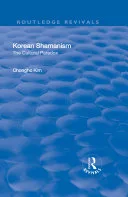
Korean Shamanism
 71
71

Korean Shamanism
Chongho Kim’s "Korean Shamanism" offers a much-needed corrective to reductive Western and even some Korean scholarly views of *Muism*. By foregrounding the agency of practitioners and the functional significance of ritual, Kim pushes back against the easy dismissal of shamanism as mere 'folk art' or 'superstition.' The analysis of shamanic ritual as a means by which individuals and communities navigate existential challenges is particularly strong, providing a vital counterpoint to the book's initial publication date of 2003. However, the text could benefit from further engagement with the global academic discourse on shamanism that has emerged since its original release, particularly regarding comparative shamanic studies. The exploration of the *mudang*'s role in contemporary society, despite facing societal pressures, is a compelling aspect. Ultimately, "Korean Shamanism" serves as a crucial, albeit somewhat dated, academic intervention for understanding a vital spiritual tradition.
📝 Description
71
### What Korean Shamanism Is Chongho Kim's "Korean Shamanism" confronts the persistent, often simplistic, categorization of this ancient practice. It challenges the notion that shamanism is merely 'popular culture,' a 'women's religion,' or a form of 'performing arts.' Instead, the work positions Korean shamanism as a dynamic cultural system integral to Korean society, wherein ritualistic practices offer vital avenues for meaning-making and problem-solving. The book examines the complex relationship between shamanic traditions and the broader social fabric, highlighting its resilience despite periods of suppression.
### Who Korean Shamanism Is For This study is essential for scholars of religious studies, anthropology, and Korean cultural history. It will also appeal to practitioners and students of shamanism seeking a nuanced understanding beyond superficial stereotypes. Those interested in the intersection of spirituality, ritual, and social dynamics within East Asian contexts will find this work particularly valuable. It is for readers who approach esoteric traditions with an academic rigor and a desire to understand their lived realities.
### Historical Context of Korean Shamanism Korean shamanism, known as Muism, has a history deeply interwoven with the Korean peninsula, predating the widespread influence of Buddhism and Confucianism. While official doctrines often marginalized or demonized shamanic practices, their persistent presence underscores a deep-seated cultural need. The work notes the paradoxical survival of shamanism, often thriving underground or adapting to new social pressures. This resilience is a key theme, demonstrating how cultural practices can endure even under duress, frequently re-emerging when dominant ideologies wane or face challenges.
### Key Concepts Explored The book dissects the socio-cultural positioning of shamans (often women, known as *mudang*) within contemporary Korean society. It moves beyond reductionist labels to explore the functional role of shamanic rituals in addressing personal and communal anxieties. A central concept is the negotiation of identity and legitimacy for shamans in a modernizing world. The text also implicitly addresses the performative aspects of ritual, not as mere entertainment, but as integral to its efficacy and cultural meaning. The work examines how ritual functions as a social and psychological resource.
💡 Why Read This Book?
• Gain a nuanced understanding of *Muism* by examining its role as a functional cultural practice, as detailed in the book's critique of its 'popular culture' categorization. • Appreciate the historical resilience of Korean shamanism, understanding how it survived periods of suppression, a context explored in the historical overview. • Learn about the specific societal position of shamans (*mudang*) and their rituals, moving beyond stereotypes to grasp their significance in contemporary Korean life, as analyzed in the text.
⭐ Reader Reviews
Honest opinions from readers who have explored this book.
❓ Frequently Asked Questions
What is the original publication year of Chongho Kim's "Korean Shamanism"?
Chongho Kim's "Korean Shamanism" was first published in 2003, with a subsequent re-publication noted for 2018. This timeline is crucial for understanding its academic context.
How does the book challenge common perceptions of Korean shamanism?
The book directly disputes the view that Korean shamanism is merely 'popular culture,' 'women's religion,' or 'performing arts,' presenting it instead as a vital cultural practice.
What is the role of shamans (mudang) discussed in the book?
The book examines the place of shamans, particularly *mudang*, within contemporary Korean society, highlighting their use of ritual to address societal and personal needs.
What historical factors influenced Korean shamanism?
The work discusses the paradoxical history of Korean shamanism, noting its periodic suppression yet consistent survival throughout Korean history, often adapting to societal changes.
Is "Korean Shamanism" suitable for beginners in esoteric studies?
While academic, the book provides foundational insights into a specific esoteric tradition, making it valuable for those serious about comparative religion or anthropological approaches to spirituality.
What is the core argument regarding shamanic ritual?
The core argument is that shamanic rituals are not simply performances but are integral to how people make use of spiritual practices to navigate life's challenges.
🔮 Key Themes & Symbolism
Muism's Social Function
This theme examines how Korean Shamanism, or *Muism*, operates not as an isolated belief system but as a functional component of Korean society. The work scrutinizes the tendency to relegate shamanism to categories like 'popular culture' or 'performing arts,' arguing instead for its role in providing practical and psychological support. It highlights how shamanic rituals are utilized by individuals and communities to address existential concerns, dispute resolution, and life transitions, thereby fulfilling crucial social needs often overlooked by mainstream analysis.
Historical Resilience
The book probes the enduring presence of Korean shamanism throughout history, despite recurring periods of official suppression. This resilience is presented as a paradoxical survival, suggesting that the deep cultural roots and perceived utility of shamanic practices allowed them to persist, often adapting to changing socio-political landscapes. The work implicitly contrasts this with more ephemeral religious or ideological movements, underscoring the tenacious nature of indigenous spiritual traditions when they meet genuine human needs.
Challenging Stereotypes
A central objective of the book is to dismantle simplistic and often pejorative labels applied to Korean shamanism, such as being solely a 'women's religion' or a niche form of entertainment. By directly confronting these prevalent views, Chongho Kim aims to reposition shamanism as a legitimate and complex cultural practice. The work seeks to elevate the understanding of *mudang* and their rituals from a folkloric curiosity to a significant element of Korean cultural identity and spiritual expression.
Ritual Efficacy
The book explores the efficacy of shamanic ritual not just from an outsider's anthropological perspective, but from the viewpoint of practitioners and participants. It investigates how these rituals serve as meaningful interventions in the lives of Koreans, providing frameworks for understanding misfortune, seeking blessings, and affirming community bonds. The focus is on how the performative and symbolic elements of ritual contribute to its perceived power and its continued relevance in contemporary society.
💬 Memorable Quotes
“Shamanism has a contradictory position within the Korean cultural system, leading to the periodical suppression of shamanism yet also, paradoxically, ensuring its survival throughout Korean history.”
— This statement captures the central paradox Chongho Kim explores: how suppression can inadvertently strengthen a tradition by forcing it to adapt and embed itself more deeply into the cultural fabric, ensuring its persistence.
“disputing the prevalent view that shamanism is 'popular culture', a 'women's religion' or 'performing arts'”
— This highlights the book's argumentative stance, directly challenging and seeking to correct common, superficial classifications of Korean shamanism by positioning it as a more integral and functional societal practice.
“people make use of shamanic ritual”
— This concise phrase emphasizes the active and practical engagement with shamanism, framing it as a resource people draw upon for tangible benefits, rather than passive adherence to abstract beliefs.
“examines the place of shamans within contemporary society”
— This indicates a focus on the current social standing and roles of shamans (*mudang*), suggesting an analysis of their lived experiences and societal contributions in modern Korea.
“its survival throughout Korean history”
— This points to the book's consideration of the long-term viability and adaptability of Korean shamanism, suggesting an exploration of the factors that have allowed it to endure across different historical epochs.
🌙 Esoteric Significance
Tradition
Korean Shamanism, or *Muism*, occupies a unique position outside the primary lineages typically studied in Western esoteric circles, such as Hermeticism or Kabbalah. However, it shares common ground with animistic and nature-based spiritualities found globally. Its significance lies in its direct engagement with the spirit world and its focus on mediating between the human and divine realms through ritual. This work fits within a broader esoteric interest in shamanic practices as ancient forms of accessing altered states of consciousness and spiritual knowledge, predating formalized esoteric systems.
Symbolism
Key symbols within Korean Shamanism, often explored in works like this, include the shaman's bell (*j jaksu*) and drum (*janggu*), which are used to induce trance and communicate with spirits. The five-colored shamanic flag (*ogi*) represents the cardinal directions and cosmic forces. The ritual costumes (*sinbok*) are imbued with spiritual power, serving as a bridge between the mundane and the sacred. These symbols are not mere decorations but are active elements in the shamanic cosmology, facilitating interaction with the spirit world and embodying cosmic principles.
Modern Relevance
In contemporary esoteric thought, there is a growing appreciation for indigenous traditions like Korean Shamanism as vital sources of spiritual practice and wisdom. Thinkers and practitioners interested in shamanic healing, altered states of consciousness, and nature-based spirituality find value in understanding *Muism*. It offers an alternative model to more structured Western esoteric systems, emphasizing direct spiritual experience and community ritual. Contemporary movements focusing on decolonizing spirituality and reclaiming ancestral practices often look to traditions like Korean Shamanism for inspiration and methodology.
👥 Who Should Read This Book
• Academic researchers in religious studies and anthropology seeking rigorous analysis of East Asian spiritual traditions, particularly those interested in the socio-cultural function of ritual. • Students of comparative religion and shamanism desiring a nuanced perspective that moves beyond stereotypical depictions of indigenous practices. • Individuals interested in Korean culture and history who wish to understand the enduring role of spiritual beliefs and practices in shaping societal identity.
📜 Historical Context
When "Korean Shamanism" was first published in 2003, the academic landscape was increasingly engaging with indigenous spiritualities and challenging colonial-era interpretations. Chongho Kim's work emerged within a broader scholarly trend that sought to validate and understand non-Western religious practices on their own terms, moving away from the ethnographic biases prevalent in earlier studies. The book directly confronted prevailing, often dismissive, views of *Muism* that categorized it simplistically as 'folk culture' or 'superstition.' While not explicitly engaging with a named contemporary author's direct critique, Kim's arguments implicitly responded to the legacy of scholars who had marginalized shamanism. The work contended with the enduring influence of Confucianism and Buddhism, which historically positioned shamanism as heterodox, yet highlighted its persistent cultural relevance. The reception, while not marked by specific events like bans or prizes, contributed to a growing body of literature seeking a more accurate portrayal of Korean spiritual life.
📔 Journal Prompts
The paradoxical survival of Korean Shamanism despite suppression.
The functional role of *mudang* rituals in contemporary Korean society.
The implications of labeling shamanism as 'popular culture'.
Comparing shamanic symbolism with other esoteric traditions.
The concept of shamanic ritual as a resource for individuals.
🗂️ Glossary
Muism
The indigenous shamanistic tradition of Korea, characterized by rituals performed by shamans (*mudang*) to communicate with the spirit world and address human concerns.
Mudang
A female shaman in Korean tradition, responsible for performing rituals, divinations, and mediating between humans and spirits. Male shamans are known as *baksu*.
Shamanic Ritual
Ceremonies performed by shamans involving singing, dancing, and offerings, aimed at appeasing spirits, healing the sick, ensuring good fortune, or diagnosing problems.
Popular Culture
A term used to categorize cultural products and practices that are widely accessible and consumed by the general public, often contrasted with elite or folk traditions.
Performing Arts
Forms of entertainment and artistic expression that involve live performance, such as theater, dance, and music, often involving elaborate costumes and staging.
Spiritual Practice
Activities undertaken to cultivate spiritual growth, connect with the divine or transcendent, and achieve inner peace or enlightenment, encompassing prayer, meditation, and ritual.
Cultural System
An integrated set of beliefs, values, practices, and institutions that define a society or group, shaping its members' understanding of the world and their place within it.




![EBOOK COLLECTION ( PART 8) [ CSI][h 33t]](/img/thumb/ebook-collection-part-8-csi-h-33t.webp)