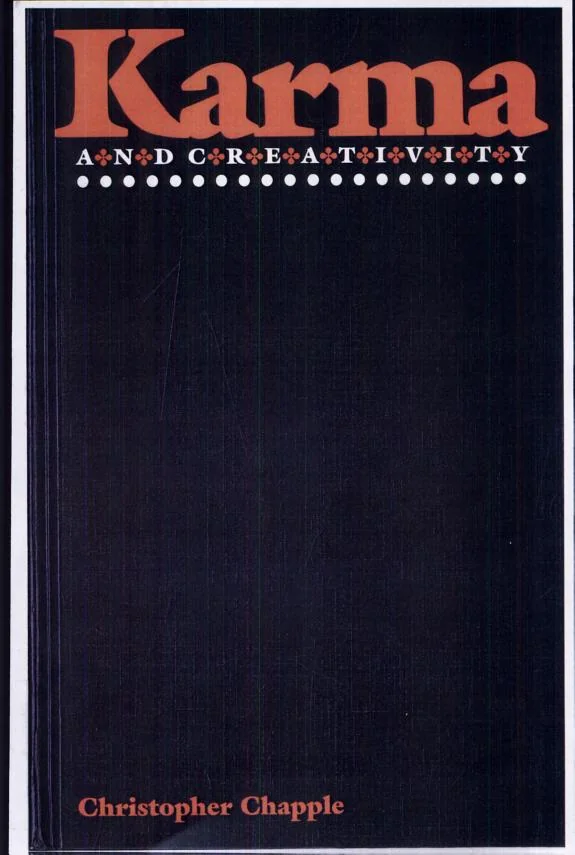
Karma and Creativity
 82
82

Karma and Creativity
Christopher Key Chapple’s "Karma and Creativity" offers a compelling re-evaluation of a foundational concept in Indian thought. By challenging the pervasive equation of karma with unalterable fate, Chapple foregrounds the generative power of human action. The book’s strength lies in its scholarly engagement with primary texts, particularly its detailed examination of the "mind-only" philosophy in Hinduism and Buddhism. However, for readers less familiar with classical Indian philosophy, the dense textual analysis might prove challenging. A particularly insightful section discusses how adherence to dharma, or righteous duty, is intrinsically linked to the effective operation of karma, not as a passive consequence but as an active cultivation of merit and order. This work provides a vital counterpoint to simplistic understandings of karma, though it demands a reader prepared for rigorous academic discourse.
📝 Description
82
### What Karma and Creativity Is
Christopher Key Chapple's "Karma and Creativity," first published in 1986, re-examines the Indian concept of karma beyond simplistic notions of predetermined fate. The work investigates karma as a dynamic force, emphasizing the efficacy of human actions in shaping both societal structures and individual spiritual progress. It grounds its analysis in classical Indian philosophical and religious texts, offering a nuanced perspective for understanding causality and agency within these traditions.
### Who Should Read Karma and Creativity
This book is intended for students and scholars of Indic religions, comparative theology, and philosophy of religion. It will appeal to those interested in the complex ethical and metaphysical frameworks of Hinduism and Buddhism, particularly those seeking to understand the role of action and intention in spiritual development. Readers who find common interpretations of karma too deterministic will appreciate Chapple's focus on human efficacy.
### Historical Context of Karma and Creativity
Published in the mid-1980s, "Karma and Creativity" emerged during a period of increasing Western academic interest in Indian philosophical traditions. The work engages with established scholarly discourse on karma, offering an alternative to interpretations that solely emphasized fatalism. It situates its discussion within the context of classical Indian thought, drawing from a range of texts to present a cohesive argument about karma's active role.
### Key Concepts Explored
The book systematically unpacks the concept of karma, moving beyond its popular association with destiny. It highlights karma as a principle of ethical action and consequence, directly influencing the attainment of both worldly order and ultimate liberation. A significant focus is placed on the "mind-only" (cittamatra) concept, examining its implications for agency and perception within both Hindu and Buddhist philosophical systems.
💡 Why Read This Book?
• Understand karma not as fate, but as a principle of active causation and ethical responsibility, a perspective illuminated by Chapple’s analysis of classical Indian texts. • Gain insight into the "mind-only" (cittamatra) concept as explored within both Hindu and Buddhist traditions, revealing how consciousness influences karmic outcomes. • Appreciate the connection between righteous action (dharma) and spiritual liberation, as presented in Chapple's 1986 work, offering a practical framework for agency.
⭐ Reader Reviews
Honest opinions from readers who have explored this book.
❓ Frequently Asked Questions
When was Christopher Key Chapple's 'Karma and Creativity' first published?
Christopher Key Chapple's 'Karma and Creativity' was first published on January 1, 1986, providing a foundational text for understanding karma beyond deterministic interpretations.
What is the central argument of 'Karma and Creativity' regarding karma?
The book argues that karma is not merely fate but emphasizes the efficacy of human activity in producing desired results, from societal order to spiritual liberation.
Which Indian religious traditions does 'Karma and Creativity' examine?
The work primarily examines the concepts of karma within Hinduism and Buddhism, with special attention given to the 'mind-only' philosophy in both traditions.
What does 'Karma and Creativity' suggest about human agency in relation to karma?
It suggests that human actions and intentions are crucial drivers of karmic consequences, empowering individuals to shape their destiny rather than be subject to it.
Is 'Karma and Creativity' suitable for beginners in Indian philosophy?
While it offers a valuable perspective, the book engages deeply with classical Indian texts, making it more suitable for students and scholars with some prior familiarity with the subject matter.
What specific philosophical concept is given special attention in the book?
The book gives special attention to the concept of 'mind-only' (cittamatra), exploring its role in shaping karmic experiences within Hinduism and Buddhism.
🔮 Key Themes & Symbolism
Karma as Efficacy
The central theme posits karma not as a fatalistic decree but as a principle of causality driven by action. Chapple draws on classical Indian texts to demonstrate how intentional human activity actively shapes outcomes, ranging from the maintenance of social order (dharma) to the ultimate goal of spiritual liberation (moksha or nirvana). This perspective reframes karma as a dynamic force that individuals can engage with, rather than a predetermined sentence.
The 'Mind-Only' Perspective
A significant portion of the book is dedicated to the 'mind-only' (cittamatra) philosophy, prevalent in certain schools of Hinduism and Buddhism. This concept suggests that reality is fundamentally consciousness or mind. Chapple explores how this perspective influences the understanding of karma, implying that our perceptions and mental constructs are integral to the karmic process and the manifestation of consequences.
Action and Spiritual Liberation
The work connects the concept of karma directly to the pursuit of spiritual liberation. It argues that understanding and applying the principles of karma through ethical action and mindful intention are essential pathways to transcending the cycle of suffering and rebirth. The efficacy of human creativity and action is thus presented as a key element in the attainment of ultimate spiritual freedom.
Dharma and Societal Order
Chapple examines karma in relation to dharma, the concept of righteousness, duty, and cosmic order. The book elucidates how upholding one's dharma is not merely a passive observance but an active participation in the karmic flow that sustains societal harmony. This interaction highlights karma's role in both personal spiritual journeys and the collective well-being of communities.
💬 Memorable Quotes
“Karma and Creativity presents a perspective on karma that emphasizes the efficacy of human activity in bringing about desired results--from upholding societal order to the attainment of spiritual liberation.”
— This statement encapsulates the book's core thesis, challenging fatalistic views by highlighting karma as a mechanism for purposeful action and personal agency.
“Karma is examined in light of several classical Indian texts.”
— This indicates the scholarly foundation of the work, relying on primary sources to build its argument about the nuanced nature of karma.
“Special attention is given to the concept of mind-only in both Hinduism and Buddhism.”
— This highlights a key philosophical focus, suggesting the book explores how consciousness itself plays a crucial role in shaping karmic experiences and reality.
“The conception of karma in the religious traditions of India has prompted numerous interpretations, many of which equate karma with notions of fate.”
— This sets the stage for the book's contrarian approach, identifying a common misconception that the author intends to correct through textual analysis.
“Karma is examined in light of several classical Indian texts.”
— This signifies the book's rigorous academic approach, grounding its reinterpretation of karma in the study of foundational scriptures and philosophical treatises.
🌙 Esoteric Significance
Tradition
While not strictly aligning with a single Western esoteric lineage, "Karma and Creativity" deeply engages with the philosophical underpinnings of Indic traditions, particularly Hinduism and Buddhism, which possess their own rich esoteric dimensions. It speaks to the broader Hermetic principle of 'As Above, So Below' by exploring the interconnectedness of action, consciousness, and cosmic order. The work's emphasis on agency and the power of the mind aligns with Gnostic and Kabbalistic concepts of creation and transformation through inner will and understanding.
Symbolism
The concept of karma itself functions as a central symbol, representing the law of cause and effect that governs existence. The 'mind-only' (cittamatra) concept symbolizes the ultimate reality of consciousness, suggesting that the perceived world and its consequences are manifestations of the mind. The idea of liberation (moksha/nirvana) symbolizes the transcendence of this cycle, the ultimate creative act of freeing oneself from karmic bondage.
Modern Relevance
Contemporary thinkers and practitioners in fields like transpersonal psychology and integral theory draw upon the nuanced understanding of karma presented in works like Chapple's. Its emphasis on agency and the creative potential of action resonates with modern self-help movements and mindfulness practices that seek to empower individuals to shape their reality through conscious intention and ethical living, bridging ancient wisdom with contemporary psychological and spiritual seeking.
👥 Who Should Read This Book
• Scholars of comparative religion and philosophy seeking rigorous textual analysis of karma within Hinduism and Buddhism. • Students of Indic traditions interested in understanding the role of human agency and the 'mind-only' concept in spiritual development. • Individuals exploring alternative interpretations of karma beyond fatalistic notions, aiming to grasp its creative and ethical dimensions.
📜 Historical Context
Christopher Key Chapple's "Karma and Creativity," published in 1986, emerged during a vibrant period of academic engagement with Eastern philosophies. The late 20th century saw a growing scholarly effort to move beyond Orientalist interpretations and delve into the complexities of Indian thought. At this time, scholars like Wendy Doniger O'Flaherty were also publishing influential works on Indian mythology and religion, contributing to a richer understanding of concepts like karma. Chapple's work contributed to a discourse that sought to present karma not as a rigid, deterministic force, but as a dynamic principle of action and consequence. This perspective offered a valuable counterpoint to more simplistic or fatalistic Western perceptions of Indian religions and engaged with the ongoing academic debate regarding the nature of agency within these traditions.
📔 Journal Prompts
The efficacy of human activity in shaping karmic outcomes.
Reflections on the 'mind-only' concept and its implications for personal reality.
Connecting dharma with the active cultivation of positive karma.
The relationship between intentional action and spiritual liberation.
Analyzing the distinction between karma as fate versus karma as creativity.
🗂️ Glossary
Karma
In Indian religions, the principle of cause and effect where actions (karma) generate consequences that influence an individual's present and future existence, shaping their destiny.
Dharma
A multifaceted concept encompassing righteousness, duty, law, cosmic order, and the inherent nature of things. Upholding dharma is often seen as a way to generate positive karma.
Mind-Only (Cittamatra)
A philosophical school, particularly in Mahayana Buddhism, asserting that reality is fundamentally consciousness or mind, and external objects lack inherent existence independent of the mind.
Spiritual Liberation
The ultimate goal in many Indian traditions (moksha in Hinduism, nirvana in Buddhism), signifying freedom from the cycle of birth, death, and rebirth (samsara) driven by karma.
Samsara
The continuous cycle of birth, death, and rebirth, driven by karma and ignorance. Liberation signifies release from this cycle.
Indic Traditions
Refers to the religious and philosophical traditions originating in the Indian subcontinent, primarily Hinduism, Buddhism, Jainism, and Sikhism.
Efficacy
The ability to produce a desired or intended result; effectiveness. In this context, the power of human actions to create specific karmic consequences.