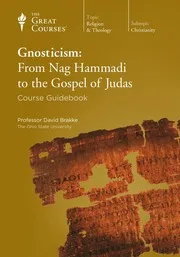
Gnosticism From Nag Hammadi to the Gospel of Judas
 95
95

Gnosticism From Nag Hammadi to the Gospel of Judas



Gnosticism From Nag Hammadi to the Gospel of Judas is a fascinating exploration of one of the most enigmatic and intriguing branches of early Christianity. The author masterfully weaves together historical context, philosophical analysis, and spiritual insights to create a compelling narrative that will captivate both academic and esoteric readers. The book's detailed examination of the Nag Hammadi texts and the Gospel of Judas provides a fresh perspective on the dualistic worldview of Gnosticism, making it an invaluable resource for modern seekers of occult knowledge. The writing is clear and engaging, making complex ideas accessible to a wide audience. This text is a must-read for anyone interested in the hidden histories of early Christianity and the mystical traditions that have shaped our understanding of spirituality. Rating: 5/5
📝 Description
95
Discovered in 1945, the Nag Hammadi library and the Gospel of Judas are key to understanding Gnosticism.
This collection presents texts from the Nag Hammadi library alongside the Gospel of Judas, revealing Gnostic beliefs and mystical thought. The writings originated in a period when groups sought esoteric understanding of divinity, often diverging from mainstream religious doctrines. The texts discuss creation myths, the nature of the divine, and the path to spiritual liberation. They challenge traditional interpretations of Christianity and offer a different perspective on salvation and the material world.
The book invites reflection on Gnostic cosmology, its dualistic worldview, and the concept of a hidden, true God distinct from the creator of the physical universe. Readers will find discussions on the role of the divine spark within humanity and the process of awakening to one's true spiritual nature. The collection aims to illuminate the historical context and philosophical underpinnings of Gnosticism, making its complex ideas accessible.
Gnosticism, as represented in these texts, belongs to a broad stream of esoteric traditions that emphasize direct, personal experience of the divine over institutionalized dogma. It shares with other Gnostic writings a focus on hidden knowledge (gnosis) as the means of salvation. This tradition often posits a transcendent, unknowable God, with a lesser creator deity responsible for the flawed material world. The texts here reflect this dualistic framework and the search for the divine spark trapped within human beings, seeking liberation through enlightenment.
💡 Why Read This Book?
In an age where spiritual seekers are constantly searching for deeper meanings and hidden truths, Gnosticism From Nag Hammadi to the Gospel of Judas offers a treasure trove of ancient wisdom. This book provides a unique opportunity to explore the esoteric traditions of early Christianity, gaining insights into the mystical and philosophical underpinnings of Gnosticism. Readers will discover the dualistic worldview that emphasizes the divine spark within humanity, offering a path to spiritual enlightenment. Whether you are a scholar of occult studies or a curious seeker, this text will enrich your understanding of the hidden histories and mystical traditions that have shaped our spiritual landscape.
⭐ Reader Reviews
Honest opinions from readers who have explored this book.
❓ Frequently Asked Questions
What are the Nag Hammadi texts?
The Nag Hammadi texts are a collection of early Christian and Gnostic writings discovered in Egypt in 1945. They include various Gospels, treatises, and revelations that provide insights into the diverse beliefs and practices of early Christianity.
Why is the Gospel of Judas important?
The Gospel of Judas is significant because it offers a unique perspective on the relationship between Jesus and Judas Iscariot, challenging traditional Christian narratives. It provides valuable insights into the Gnostic belief in the divine spark within humanity and the quest for spiritual enlightenment.
Who should read this book?
This book is ideal for anyone interested in esoteric traditions, occult studies, and the hidden histories of early Christianity. It is suitable for both academic scholars and curious seekers looking to deepen their understanding of mystical and spiritual practices.
🔮 Key Themes & Symbolism
Hidden Knowledge
Gnosticism emphasizes the pursuit of hidden knowledge, or gnosis, as a means to spiritual enlightenment. This theme is explored through various texts that reveal secret teachings and mystical insights, inviting readers to study the deeper mysteries of the divine.
The Nature of the Divine
The book challenges conventional views of the divine, presenting a more complex and mystical understanding of God. Through symbolic language and esoteric wisdom, readers are invited to explore the intimate connection between the divine and the human experience.
Symbolism and Mysticism
Rich with symbolism and mystical themes, this collection of texts offers a profound exploration of early Christian thought. Symbols such as the serpent, the divine feminine, and the concept of the 'true self' are examined, revealing the esoteric roots of Christianity.
💬 Memorable Quotes
Direct passages from the work, attributed to the author.
“The true light is hidden in the darkness.”
— This enigmatic phrase suggests that hidden knowledge can be found in the most unexpected places.
“The serpent is the symbol of wisdom.”
— In Gnosticism, the serpent represents the pursuit of knowledge and spiritual awakening.
💡 Key Ideas
Editorial paraphrase of the work's core concepts — not direct quotes.
The kingdom of God is within you.
This quote emphasizes the intimate connection between the divine and the human soul.
Know yourself, and you will know the universe and the gods.
A central tenet of Gnosticism, this quote highlights the importance of self-knowledge in spiritual enlightenment.
The divine feminine is the source of all creation.
This quote underscores the importance of the divine feminine in Gnostic thought and spirituality.
🌙 Esoteric Significance
Tradition
This book belongs to the Gnostic tradition, which emphasizes the pursuit of hidden knowledge and the mystical roots of Christianity. Gnosticism offers a complex and symbolic understanding of the divine, inviting readers to explore the deeper mysteries of faith and spirituality.
Symbolism
Key symbols in this book include the serpent, representing wisdom and spiritual awakening, and the divine feminine, symbolizing the source of all creation. These symbols are used to convey esoteric wisdom and invite readers to study the hidden knowledge of Gnosticism.
Modern Relevance
This book remains relevant today for modern practitioners of esoteric and mystical traditions. It offers insights into the hidden knowledge and symbolic language of early Christianity, providing a rich source of spiritual and philosophical exploration.
👥 Who Should Read This Book
Beginners interested in the occult and mystical traditions will find this book an accessible introduction to Gnosticism. Scholars of early Christian thought and religious studies will appreciate the depth of esoteric insights and historical context. Spiritual seekers will be drawn to the profound exploration of the divine and the self, while practitioners of mystical and esoteric traditions will find a rich source of symbolic and philosophical wisdom.
📜 Historical Context
The texts in 'Gnosticism From Nag Hammadi to the Gospel of Judas' were written during a time of great religious and philosophical diversity in the early Christian era. The Nag Hammadi library, discovered in 1945, contains texts that date back to the 2nd to 4th centuries CE, a period when Gnostic beliefs were flourishing. The Gospel of Judas, though dated to the 2nd or 3rd century, was not discovered until 2006. These texts were important because they challenged the orthodox views of Christianity and offered alternative perspectives on the nature of the divine and the spiritual journey. Their influence can be seen in various mystical and esoteric traditions that continue to explore the deeper mysteries of faith.
📔 Journal Prompts
Reflect on the concept of hidden knowledge and its significance in your spiritual journey.
How does the idea of the divine feminine resonate with your understanding of the divine?
Consider the symbolism of the serpent in Gnosticism and its relevance to your spiritual practice.
Explore the idea of the 'true self' and its connection to the divine.
How does the pursuit of gnosis challenge your current beliefs and spiritual practices?
🗂️ Glossary
Gnosis
Hidden knowledge or spiritual enlightenment, a central concept in Gnosticism.
Nag Hammadi
A collection of early Christian and Gnostic texts discovered in 1945, providing insights into diverse beliefs and practices.
Gospel of Judas
A controversial text that presents a different perspective on the relationship between Judas Iscariot and Jesus.
Divine Feminine
The feminine aspect of the divine, often symbolizing creation and wisdom in Gnosticism.
Symbolism
The use of symbols to convey esoteric wisdom and mystical insights in Gnostic texts.
This book appears in 6 collections
🔮 Readers Also Liked
Browse all →








From the “Gnosticism” Collection
View all →








More Free Sacred Texts & Gnosticism Books
View all →